Schulz Elisa, Tohge Takayuki, Zuther Ellen, Fernie Alisdair R, Hincha Dirk K
Max-Planck-Institut für Molekulare Pflanzenphysiologie, Am Mühlenberg 1, D-14476 Potsdam, Germany.
Sci Rep. 2016 Sep 23;6:34027. doi: 10.1038/srep34027.
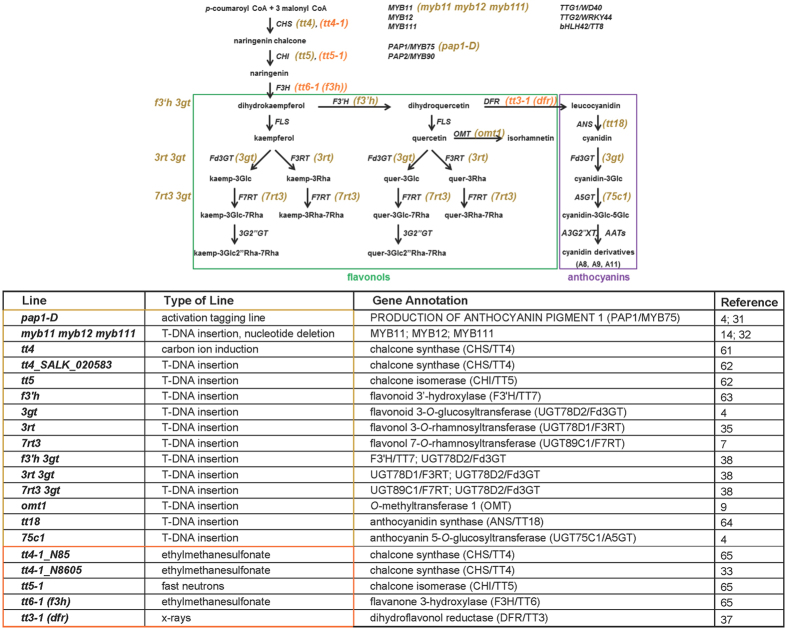
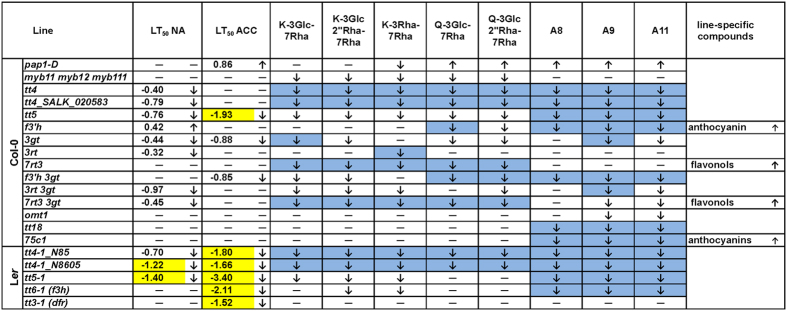
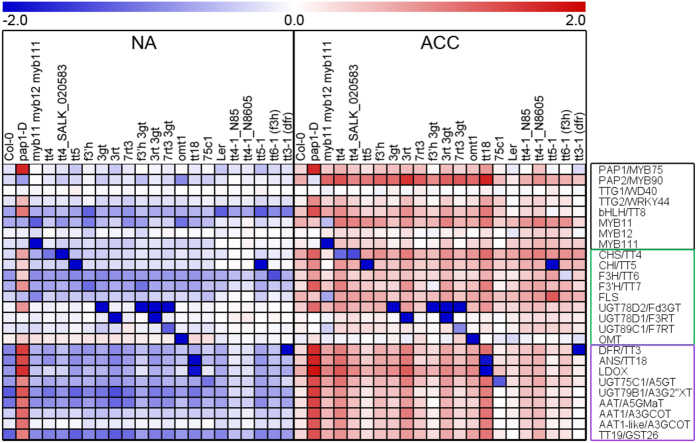
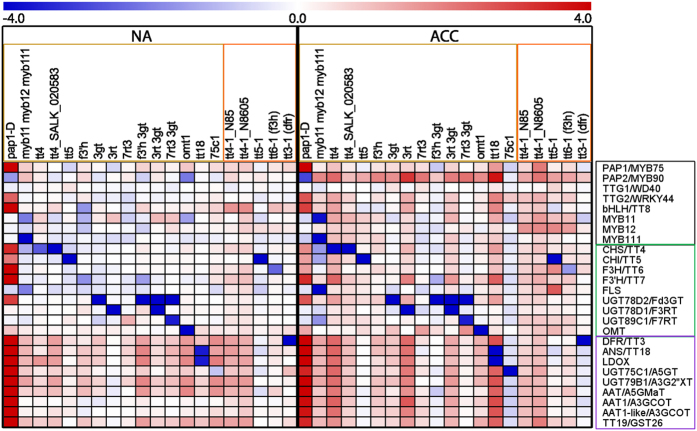
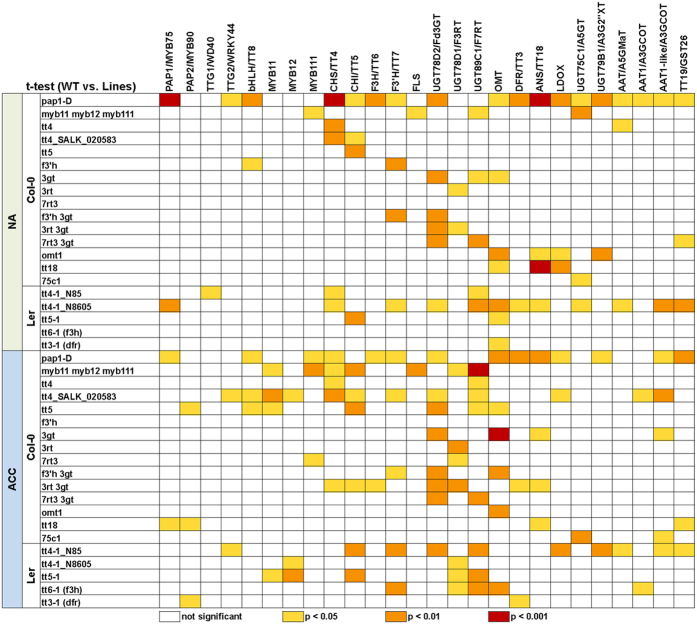
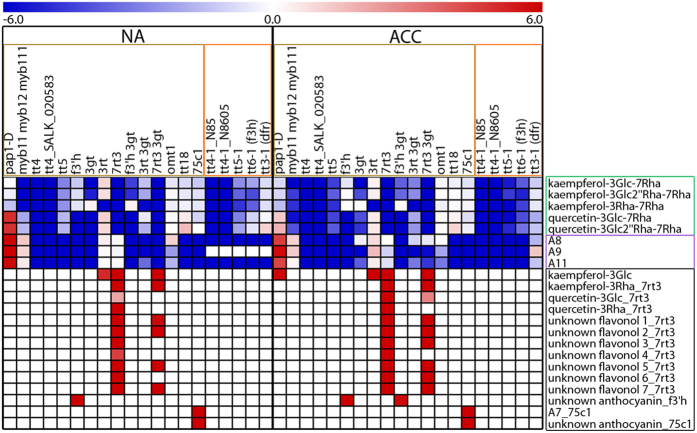
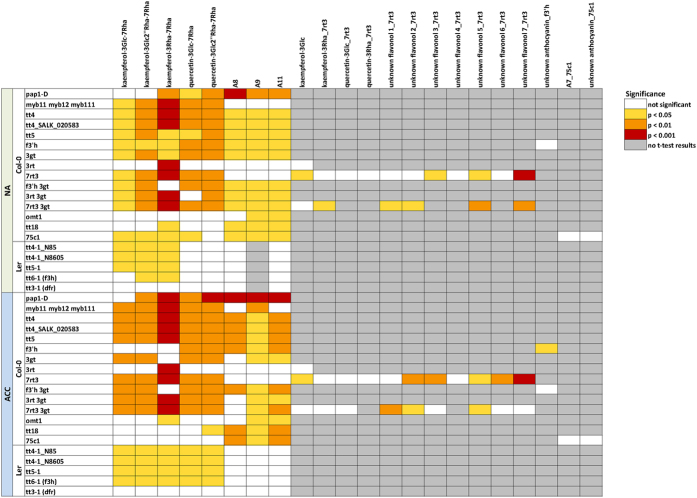
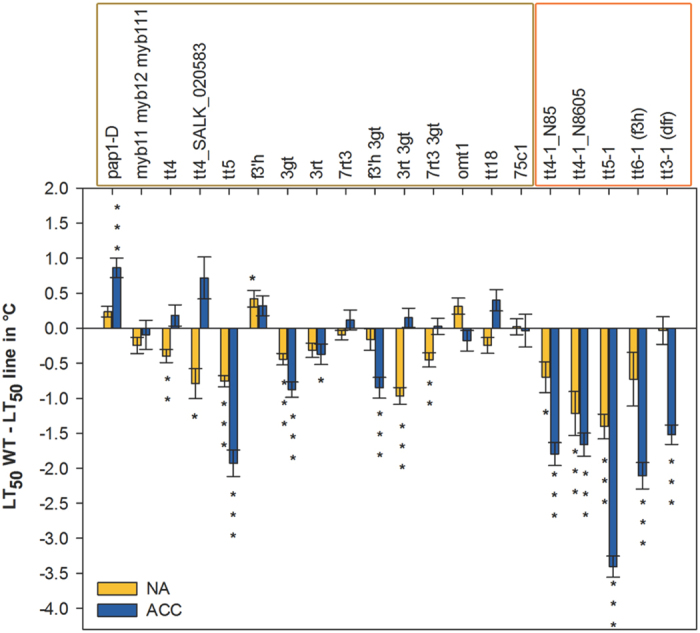
In plants from temperate climates such as Arabidopsis thaliana low, non-freezing temperatures lead to increased freezing tolerance in a process termed cold acclimation. This process is accompanied by massive changes in gene expression and in the content of primary metabolites and lipids. In addition, most flavonols and anthocyanins accumulate upon cold exposure, along with most transcripts encoding transcription factors and enzymes of the flavonoid biosynthetic pathway. However, no evidence for a functional role of flavonoids in plant freezing tolerance has been shown. Here, we present a comprehensive analysis using qRT-PCR for transcript, LC-MS for flavonoid and GC-MS for primary metabolite measurements, and an electrolyte leakage assay to determine freezing tolerance of 20 mutant lines in two Arabidopsis accessions that are affected in different steps of the flavonoid biosynthetic pathway. This analysis provides evidence for a functional role of flavonoids in plant cold acclimation. The accumulation of flavonoids in the activation tagging mutant line pap1-D improved, while reduced flavonoid content in different knock-out mutants impaired leaf freezing tolerance. Analysis of the different knock-out mutants suggests redundancy of flavonoid structures, as the lack of flavonols or anthocyanins could be compensated by other compound classes.
在拟南芥等来自温带气候的植物中,低温、非冰冻温度会在一个称为冷驯化的过程中导致植物的抗冻性增强。这个过程伴随着基因表达以及初级代谢产物和脂质含量的大量变化。此外,大多数黄酮醇和花青素在冷暴露时会积累,同时大多数编码黄酮类生物合成途径转录因子和酶的转录本也会积累。然而,尚未有证据表明黄酮类化合物在植物抗冻性中具有功能性作用。在这里,我们进行了一项全面分析,使用qRT-PCR测量转录本、LC-MS测量黄酮类化合物、GC-MS测量初级代谢产物,并通过电解质渗漏试验来确定两个拟南芥生态型中20个突变株系的抗冻性,这些突变株系在黄酮类生物合成途径的不同步骤中受到影响。该分析为黄酮类化合物在植物冷驯化中的功能性作用提供了证据。激活标签突变株系pap1-D中黄酮类化合物的积累得到改善,而不同敲除突变体中黄酮类化合物含量的降低则损害了叶片的抗冻性。对不同敲除突变体的分析表明黄酮类化合物结构存在冗余,因为黄酮醇或花青素的缺失可以由其他化合物类别来补偿。