Department of Molecular Medicine, College of Medicine, Inha University, Incheon 22212, Republic of Korea.
Hypoxia-related Disease Research Center, College of Medicine, Inha University, Incheon 22212, Republic of Korea.
Sci Rep. 2016 Sep 27;6:34223. doi: 10.1038/srep34223.
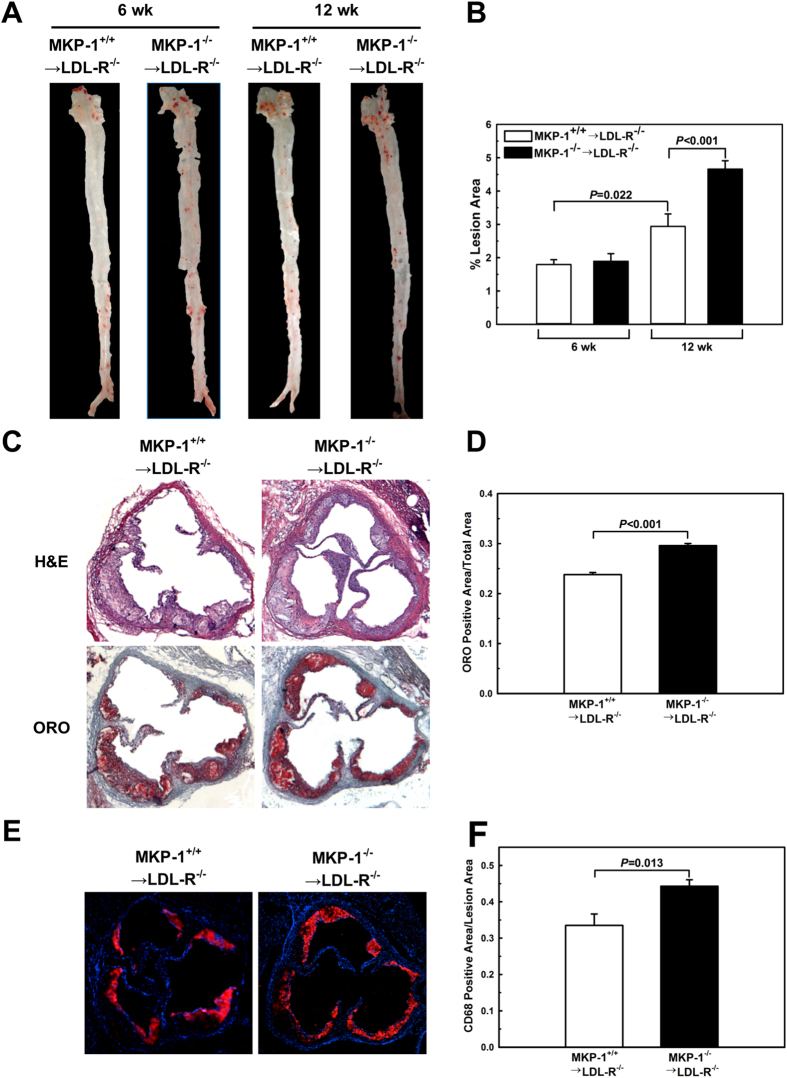
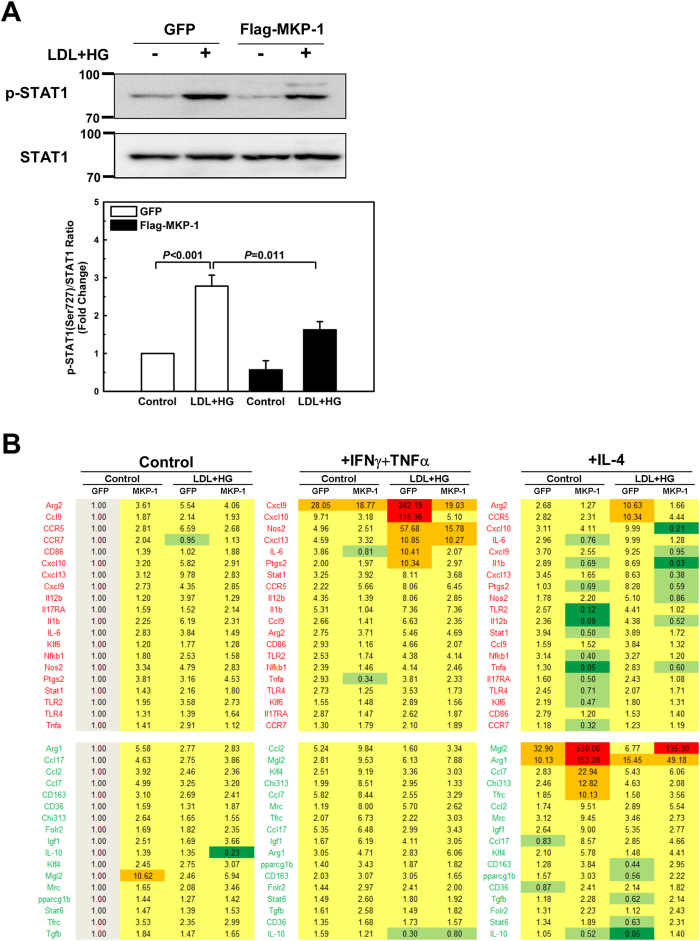
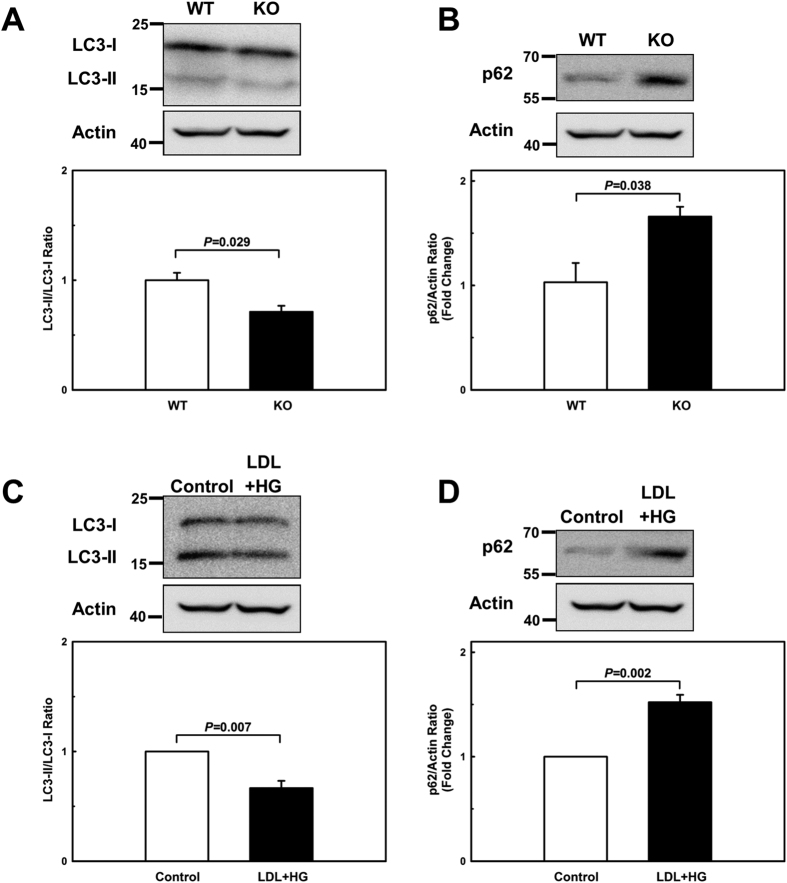
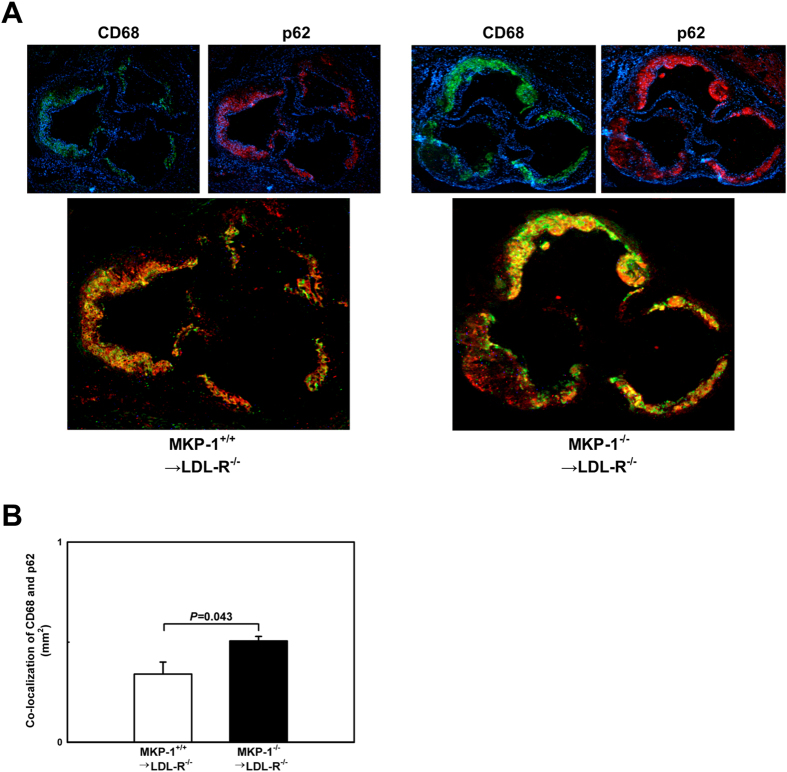
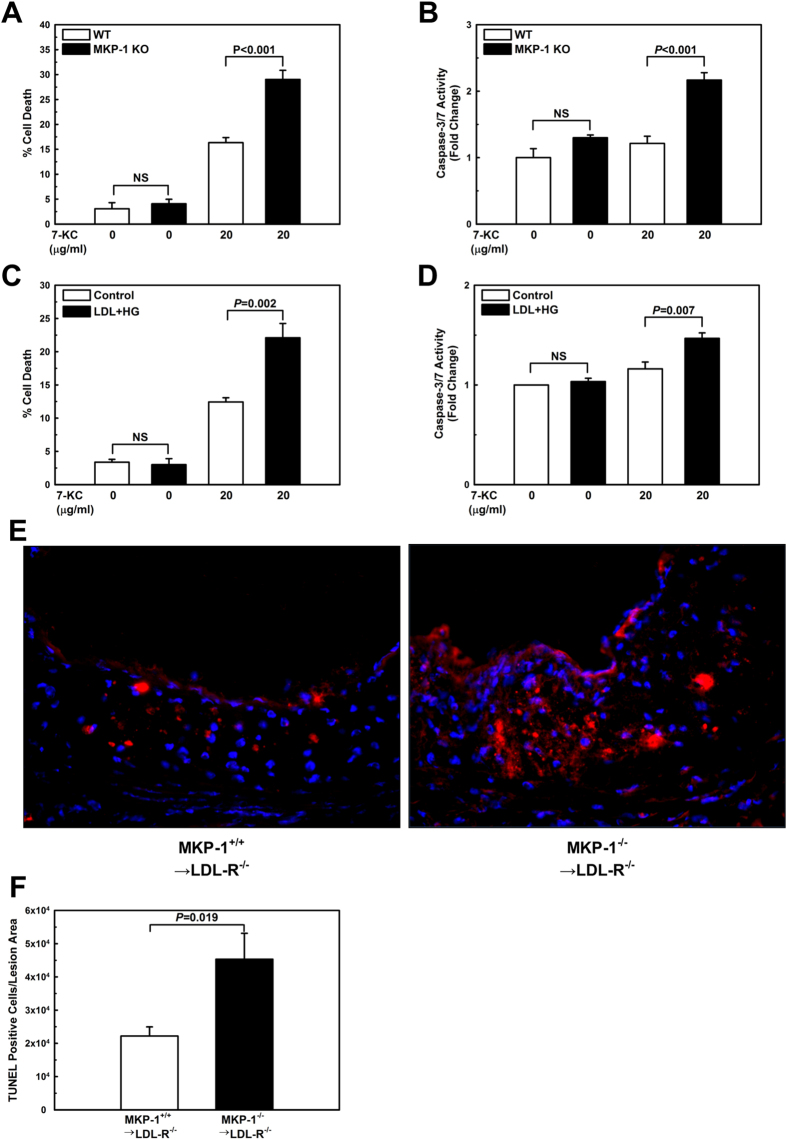
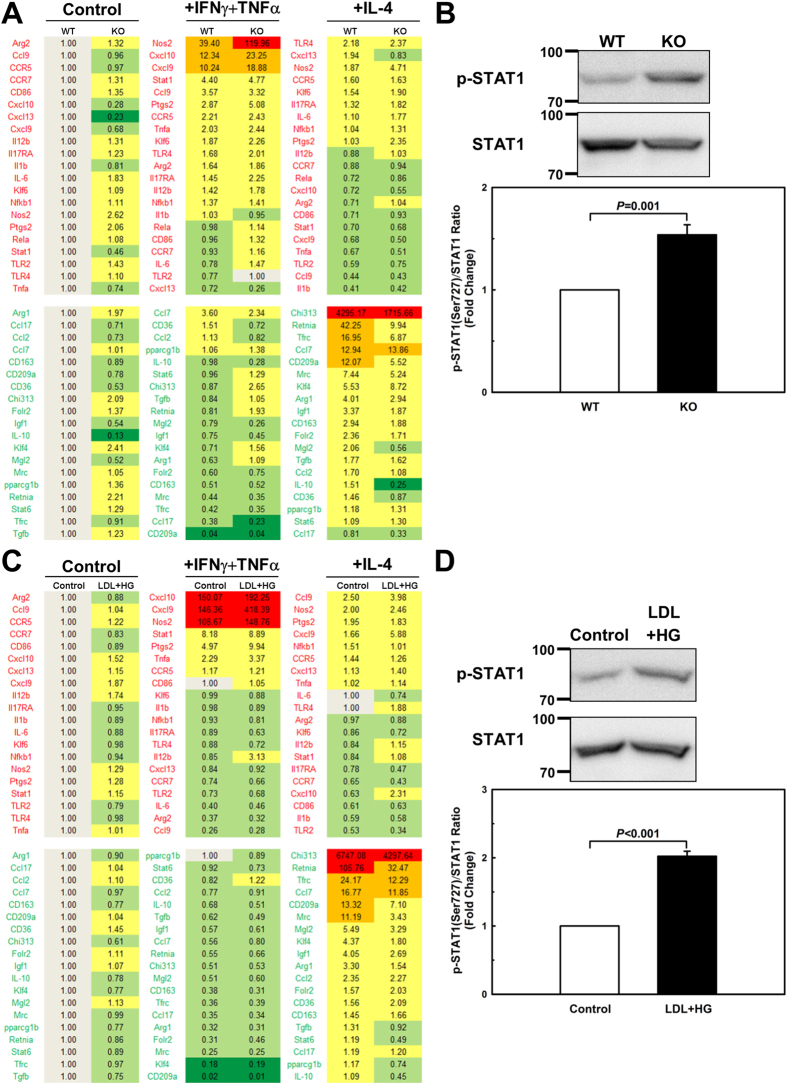
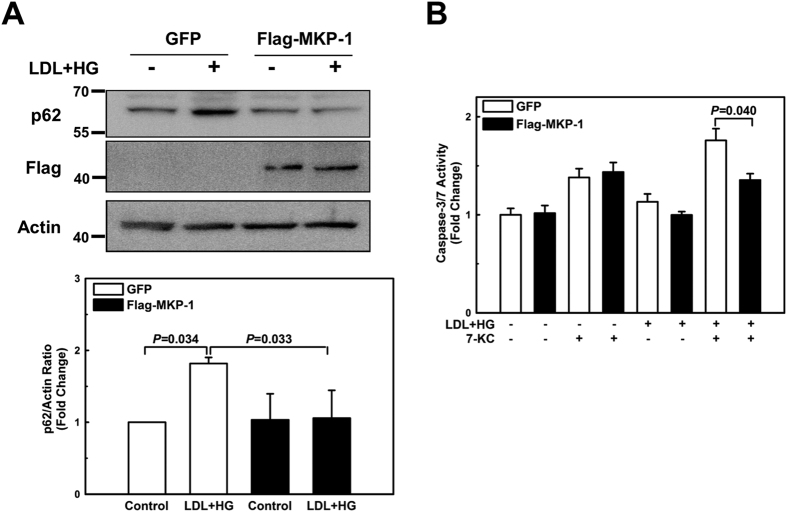
Diabetes promotes the S-glutathionylation, inactivation and subsequent degradation of mitogen-activated protein kinase phosphatase 1 (MKP-1) in blood monocytes, and hematopoietic MKP-1-deficiency in atherosclerosis-prone mice accelerates atherosclerotic lesion formation, but the underlying mechanisms were not known. Our aim was to determine the mechanisms through which MKP-1 deficiency in monocytes and macrophages promotes atherogenesis. Transplantation of MKP-1-deficient bone marrow into LDL-R (MKP-1) mice accelerated high-fat diet (HFD)-induced atherosclerotic lesion formation. After 12 weeks of HFD feeding, MKP-1 mice showed increased lesion size in both the aortic root (1.2-fold) and the aorta (1.6-fold), despite reduced plasma cholesterol levels. Macrophage content was increased in lesions of MKP-1 mice compared to mice that received wildtype bone marrow. After only 6 weeks on a HFD, in vivo chemotactic activity of monocytes was already significantly increased in MKP-1 mice. MKP-1 deficiency in monocytes and macrophages promotes and accelerates atherosclerotic lesion formation by hyper-sensitizing monocytes to chemokine-induced recruitment, predisposing macrophages to M1 polarization, decreased autophagy and oxysterol-induced cell death whereas overexpression of MKP-1 protects macrophages against metabolic stress-induced dysfunction. MKP-1 serves as a master-regulator of macrophage phenotype and function and its dysregulation by metabolic stress may be a major contributor to atherogenesis and the progression of atherosclerotic plaques.
糖尿病可促进血液单核细胞中丝裂原活化蛋白激酶磷酸酶 1(MKP-1)的 S-谷胱甘肽化、失活和随后的降解,动脉粥样硬化易感小鼠的造血 MKP-1 缺失会加速动脉粥样硬化病变的形成,但其中的机制尚不清楚。我们的目的是确定单核细胞和巨噬细胞中 MKP-1 缺失促进动脉粥样硬化形成的机制。将 MKP-1 缺陷的骨髓移植到 LDL-R(MKP-1)小鼠中会加速高脂肪饮食(HFD)诱导的动脉粥样硬化病变形成。在 HFD 喂养 12 周后,MKP-1 小鼠的主动脉根部(1.2 倍)和主动脉(1.6 倍)的病变大小均增加,尽管血浆胆固醇水平降低。与接受野生型骨髓的小鼠相比,MKP-1 小鼠的病变中巨噬细胞含量增加。在 HFD 喂养仅 6 周后,MKP-1 小鼠的单核细胞体内趋化活性已经显著增加。单核细胞和巨噬细胞中 MKP-1 的缺失通过使单核细胞对趋化因子诱导的募集过度敏感,使巨噬细胞易发生 M1 极化、自噬减少和氧化固醇诱导的细胞死亡,从而促进和加速动脉粥样硬化病变的形成,而过表达 MKP-1 可保护巨噬细胞免受代谢应激诱导的功能障碍。MKP-1 是巨噬细胞表型和功能的主要调节因子,其代谢应激失调可能是动脉粥样硬化形成和动脉粥样硬化斑块进展的主要原因之一。