Lin Angela S P, Fechter Chelsea M, Magill Mark, Wipf Felix, Moore Thomas, Guldberg Robert E
George W. Woodruff School of Mechanical Engineering, Georgia Institute of Technology, 801 Ferst Dr., Atlanta, GA, 30332, USA.
Parker H. Petit Institute for Bioengineering & Bioscience, Georgia Institute of Technology, 315 Ferst Dr. NW, Atlanta, GA, 30332, USA.
J Orthop Surg Res. 2016 Sep 26;11(1):107. doi: 10.1186/s13018-016-0439-1.
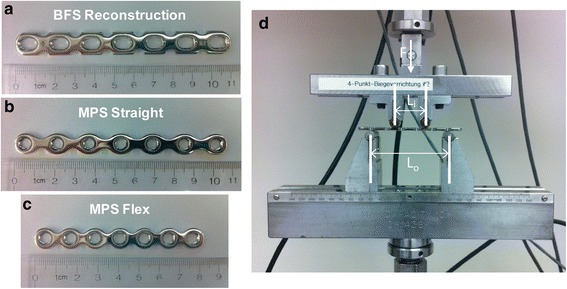
Metallic reconstruction plates used for fracture stabilization typically require intraoperative contouring for patient-specific anatomical fit. Despite this, characterization of plate mechanical properties after contouring has previously been limited. The objective of this study was to assess whether contouring affects fatigue resistance for three types of Stryker seven-hole stainless steel (SS) 316LVM fracture fixation plates. The hypothesis was that for each plate type, more contouring repetitions would result in lower fatigue resistance.
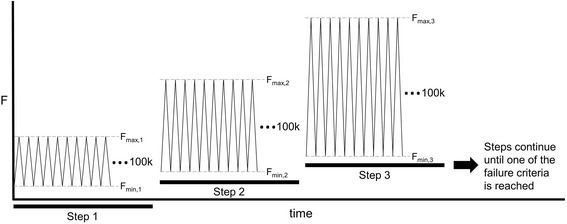
Plates were contoured using a bench-top plate bender to ±20° either 0×, 3×, 6×, or 9× (n = 5 per group) and tested in the straight configuration. Cyclic four-point bending was applied in an incremental stepwise staircase approach (one step = 100,000 cycles, 10 Hz) until failure (defined as brittle fracture or plastic deformation of 10° permanent bend). Moment-cycle product (MCP) was computed as the summation of maximum moment × number of cycles and used as the primary measure of fatigue resistance.
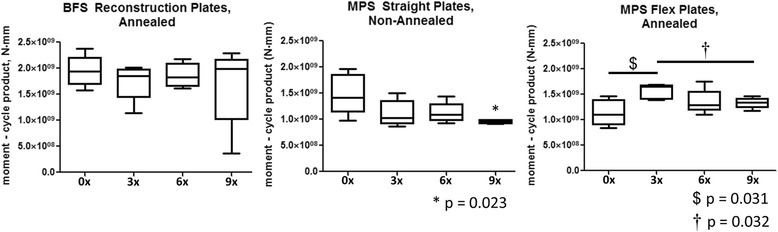
No significant differences in fatigue resistance were detected between contouring groups for Basic Fragment Set (BFS) Reconstruction Plates. Significantly lower fatigue resistance was measured for 9× contoured Matta Pelvic System (MPS) Straight Plates compared to 0× contoured plates (p = 0.023). MPS Flex Plates contoured 3× had greater fatigue resistance than 0× contoured (p = 0.031) and 9× contoured plates (p = 0.032).
This work provides fatigue resistance-based evidence that clinicians should avoid high repetitions of contouring for MPS Straight Plates. Meanwhile, BFS Reconstruction Plates and MPS Flex Plates are not negatively affected by contouring. These results allow for improved intraoperative decisions about using or discarding plates after multiple contouring repetitions.
用于骨折固定的金属重建板通常需要在术中进行塑形,以实现与患者特定解剖结构的适配。尽管如此,此前对于塑形后钢板力学性能的表征仍较为有限。本研究的目的是评估塑形是否会影响三种史赛克七孔不锈钢(SS)316LVM骨折固定钢板的抗疲劳性能。假设是对于每种钢板类型,更多的塑形重复次数会导致抗疲劳性能降低。
使用台式钢板弯曲机将钢板塑形至±20°,塑形次数分别为0次、3次、6次或9次(每组n = 5),并在直线构型下进行测试。采用递增阶梯式方法施加循环四点弯曲(一步 = 100,000次循环,10Hz),直至失效(定义为脆性骨折或10°永久弯曲的塑性变形)。弯矩 - 循环乘积(MCP)计算为最大弯矩×循环次数的总和,并用作抗疲劳性能 的主要指标。
基础骨折块套装(BFS)重建板的塑形组之间未检测到抗疲劳性能的显著差异。与0次塑形的钢板相比,9次塑形的马塔骨盆系统(MPS)直形钢板的抗疲劳性能显著降低(p = 0.023)。塑形3次的MPS弯形钢板比0次塑形的(p = 0.031)和9次塑形的钢板(p = 0.032)具有更高的抗疲劳性能。
本研究提供了基于抗疲劳性能的证据,表明临床医生应避免对MPS直形钢板进行高重复次数的塑形。同时,BFS重建板和MPS弯形钢板不受塑形的负面影响。这些结果有助于在多次塑形重复后,就钢板 的使用或丢弃做出更好的术中决策。