Davies Lindsay C, Heldring Nina, Kadri Nadir, Le Blanc Katarina
Center for Hematology and Regenerative Medicine (HERM).
Division of Clinical Immunology and Transfusion Medicine, Department of Laboratory Medicine.
Stem Cells. 2017 Mar;35(3):766-776. doi: 10.1002/stem.2509. Epub 2016 Oct 26.
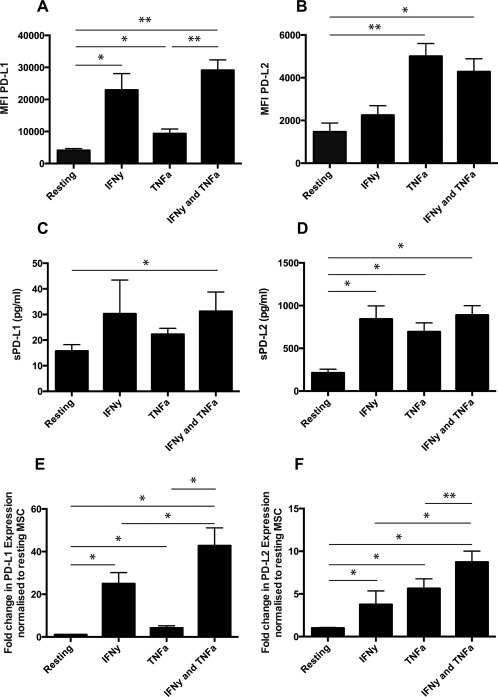
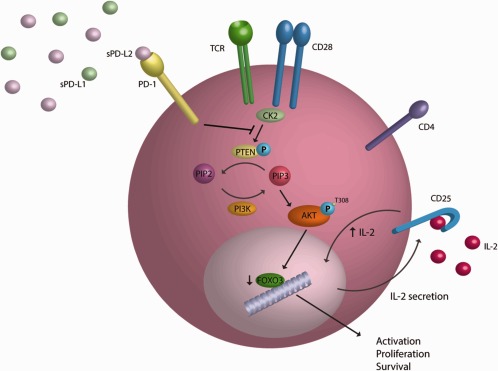
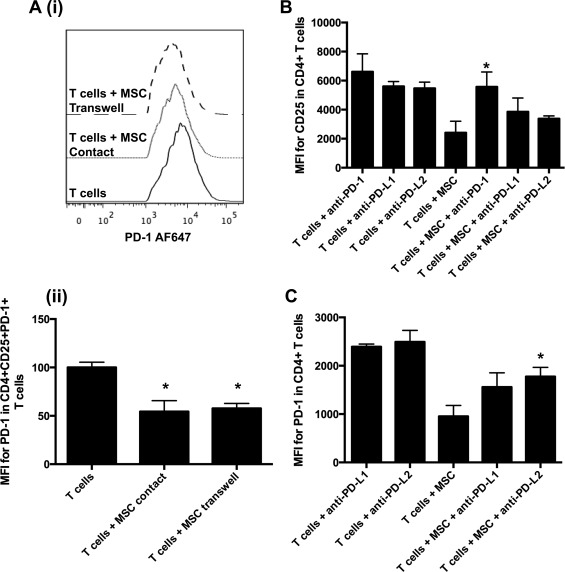
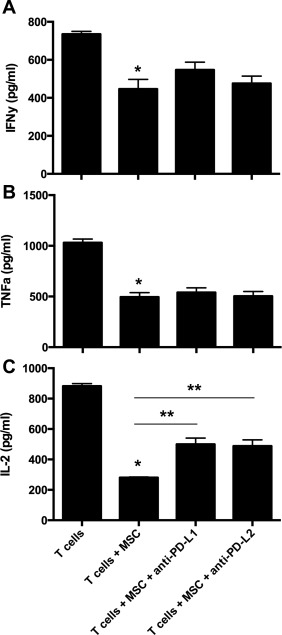
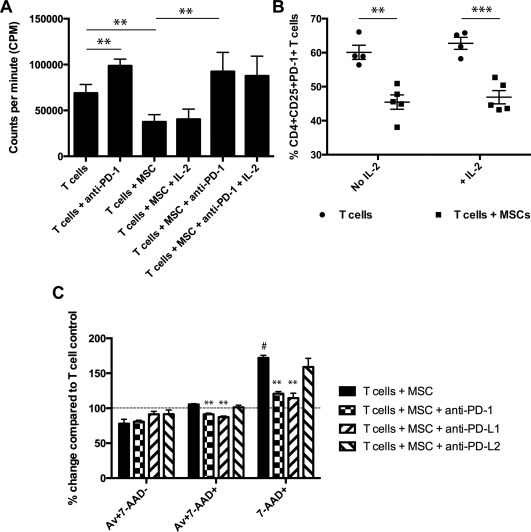
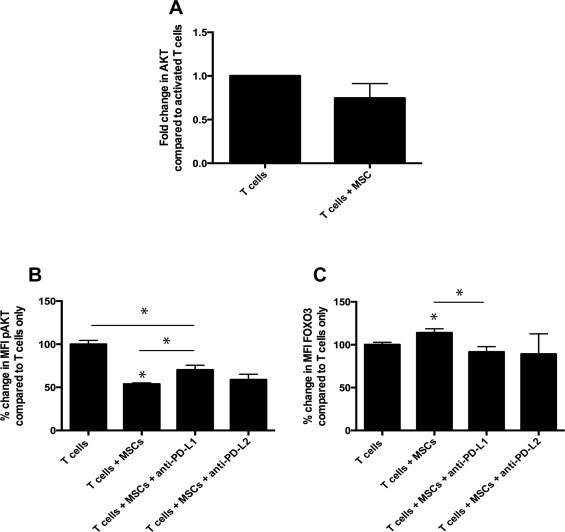
Mesenchymal stromal cells (MSCs) exert broad immunosuppressive potential, modulating the activity of cells of innate and adaptive immune systems. As MSCs become accepted as a therapeutic option for the treatment of immunological disorders such as Graft versus Host Disease, our need to understand the intricate details by which they exert their effects is crucial. Programmed death-1 (PD-1) is an important regulator in T cell activation and homeostatic control. It has been reported that this pathway may be important in contact-dependent mediated immunomodulation by MSCs. The aim of this study was to establish whether MSCs, in addition to their cell-surface expression, are able to secrete PD-1 ligands (PD-L1 and PD-L2) and their potential importance in modulating contact-independent mechanisms of MSC immunosuppression. Here we report that MSCs express and secrete PD-L1 and PD-L2 and that this is regulated by exposure to interferon γ and tumor necrosis factor α. MSCs, via their secretion of PD-1 ligands, suppress the activation of CD4+ T cells, downregulate interleukin-2 secretion and induce irreversible hyporesponsiveness and cell death. Suppressed T cells demonstrated a reduction in AKT phosphorylation at T308 and a subsequent increase in FOXO3 expression that could be reversed with blockade of PD-L1. In conclusion, we demonstrate for the first time, that MSCs are able to secrete PD-1 ligands, with this being the first known report of a biological role for PD-L2 in MSCs. These soluble factors play an important role in modulating immunosuppressive effects of MSCs directly on T cell behavior and induction of peripheral tolerance. Stem Cells 2017;35:766-776.
间充质基质细胞(MSCs)具有广泛的免疫抑制潜能,可调节先天性和适应性免疫系统细胞的活性。随着MSCs被公认为治疗移植物抗宿主病等免疫疾病的一种治疗选择,我们深入了解它们发挥作用的复杂细节至关重要。程序性死亡-1(PD-1)是T细胞活化和稳态控制中的重要调节因子。据报道,该途径可能在MSCs接触依赖性介导的免疫调节中起重要作用。本研究的目的是确定MSCs除了细胞表面表达外,是否能够分泌PD-1配体(PD-L1和PD-L2)以及它们在调节MSCs免疫抑制的非接触依赖性机制中的潜在重要性。在此我们报告,MSCs表达并分泌PD-L1和PD-L2,且这受干扰素γ和肿瘤坏死因子α的暴露调节。MSCs通过分泌PD-1配体,抑制CD4+T细胞的活化,下调白细胞介素-2的分泌,并诱导不可逆的低反应性和细胞死亡。受抑制的T细胞在T308处的AKT磷酸化减少,随后FOXO3表达增加,而这可通过阻断PD-L1来逆转。总之,我们首次证明,MSCs能够分泌PD-1配体,这是关于PD-L2在MSCs中的生物学作用的首次已知报道。这些可溶性因子在直接调节MSCs对T细胞行为的免疫抑制作用和诱导外周耐受中起重要作用。《干细胞》2017年;35:766 - 776。