Das Joydeep, Choi Yun-Jung, Yasuda Hideyo, Han Jae Woong, Park Chankyu, Song Hyuk, Bae Hojae, Kim Jin-Hoi
Dept. of Stem Cell and Regenerative Biology, Humanized Pig Research Center (SRC), Konkuk University, Seoul 143-701, South Korea.
Dept. of Bioindustrial Technologies, College of Animal Bioscience and Technology, Konkuk University, Seoul 143-701, South Korea.
Sci Rep. 2016 Sep 28;6:33784. doi: 10.1038/srep33784.
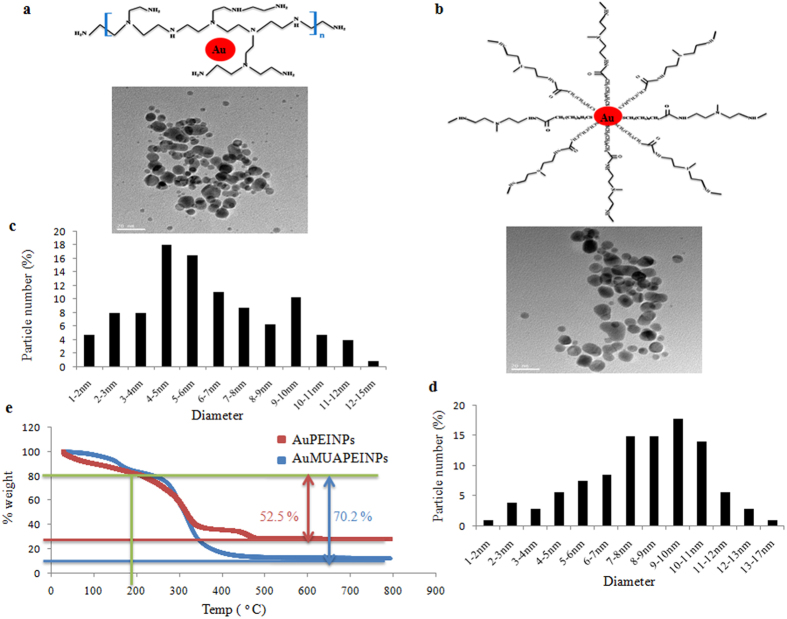
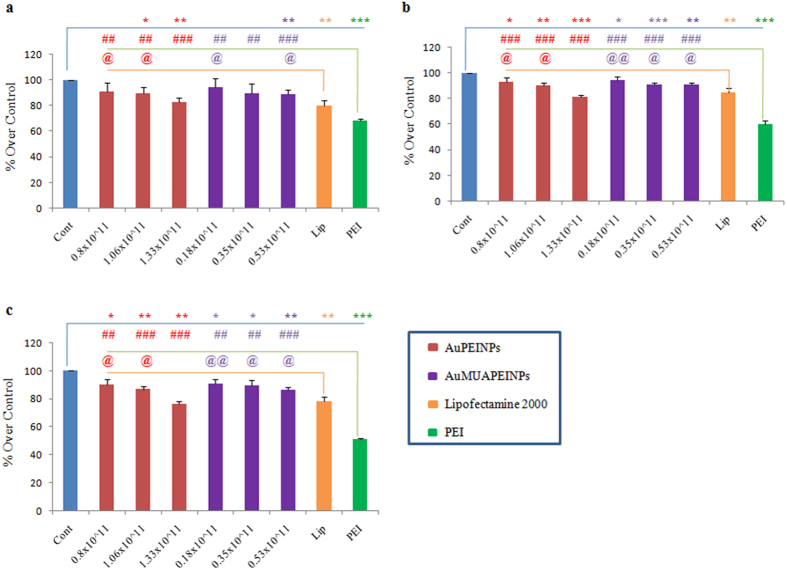
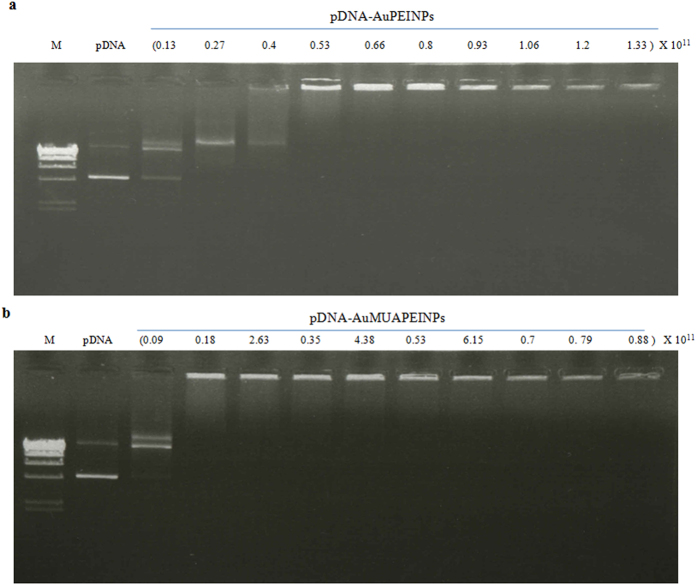
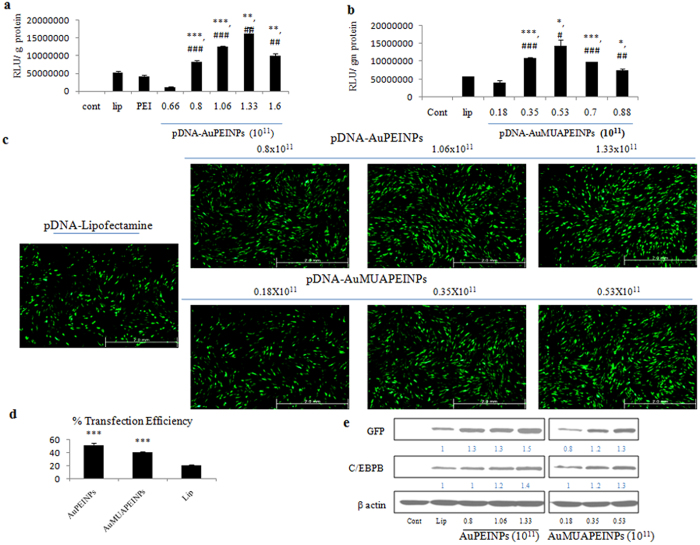
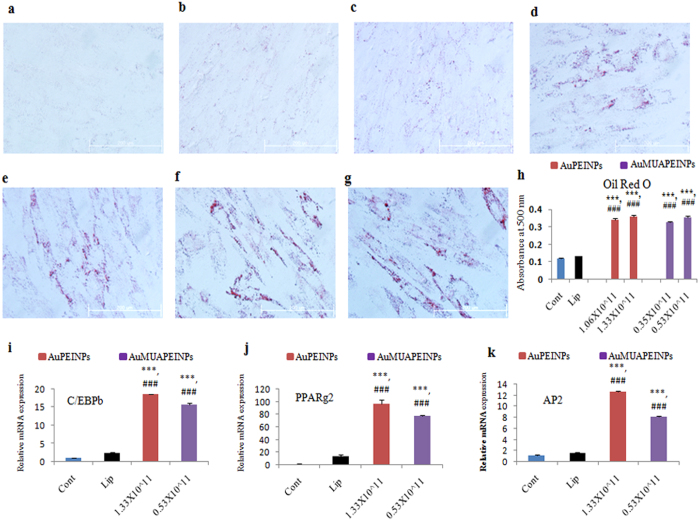
The controlled differentiation of stem cells via the delivery of specific genes encoding appropriate differentiation factors may provide useful models for regenerative medicine and aid in developing therapies for human patients. However, the majority of non-viral vectors are not efficient enough to manipulate difficult-to-transfect adult human stem cells in vitro. Herein, we report the first use of 25 kDa branched polyethylenimine-entrapped gold nanoparticles (AuPEINPs) and covalently bound polyethylenimine-gold nanoparticles (AuMUAPEINPs) as carriers for efficient gene delivery into human mesenchymal stem cells (hMSCs). We determined a functional application of these nanoparticles by transfecting hMSCs with the C/EBP beta gene, fused to EGFP, to induce adipogenic differentiation. Transfection efficacy with AuPEINPs and AuMUAPEINPs was 52.3% and 40.7%, respectively, which was 2.48 and 1.93 times higher than that by using Lipofectamine 2000. Luciferase assay results also demonstrated improved gene transfection efficiency of AuPEINPs/AuMUAPEINPs over Lipofectamine 2000 and polyethylenimine. Overexpression of exogenous C/EBP beta significantly enhanced adipogenesis in hMSCs as indicated by both of Oil Red O staining and mRNA expression analyses. Nanoparticle/DNA complexes exhibited favorable cytocompatibility in hMSCs. Taken together, AuPEINPs and AuMUAPEINPs potentially represent safe and highly efficient vehicles for gene delivery to control hMSC differentiation and for therapeutic gene delivery applications.
通过递送编码适当分化因子的特定基因来控制干细胞分化,可能为再生医学提供有用的模型,并有助于开发针对人类患者的治疗方法。然而,大多数非病毒载体在体外操纵难以转染的成人人类干细胞时效率不够高。在此,我们报告首次使用25 kDa支链聚乙烯亚胺包裹的金纳米颗粒(AuPEINPs)和共价结合的聚乙烯亚胺-金纳米颗粒(AuMUAPEINPs)作为载体,将基因高效递送至人间充质干细胞(hMSCs)。我们通过用与EGFP融合的C/EBPβ基因转染hMSCs以诱导脂肪生成分化,确定了这些纳米颗粒的功能应用。AuPEINPs和AuMUAPEINPs的转染效率分别为52.3%和40.7%,比使用Lipofectamine 2000高2.48倍和1.93倍。荧光素酶测定结果也表明,AuPEINPs/AuMUAPEINPs的基因转染效率优于Lipofectamine 2000和聚乙烯亚胺。如油红O染色和mRNA表达分析所示,外源性C/EBPβ的过表达显著增强了hMSCs中的脂肪生成。纳米颗粒/DNA复合物在hMSCs中表现出良好的细胞相容性。综上所述,AuPEINPs和AuMUAPEINPs可能代表用于控制hMSC分化的基因递送以及治疗性基因递送应用的安全且高效的载体。