Hatfield Johannes L
Music Education, Norwegian Academy of Music Oslo, Norway.
Front Psychol. 2016 Sep 13;7:1356. doi: 10.3389/fpsyg.2016.01356. eCollection 2016.
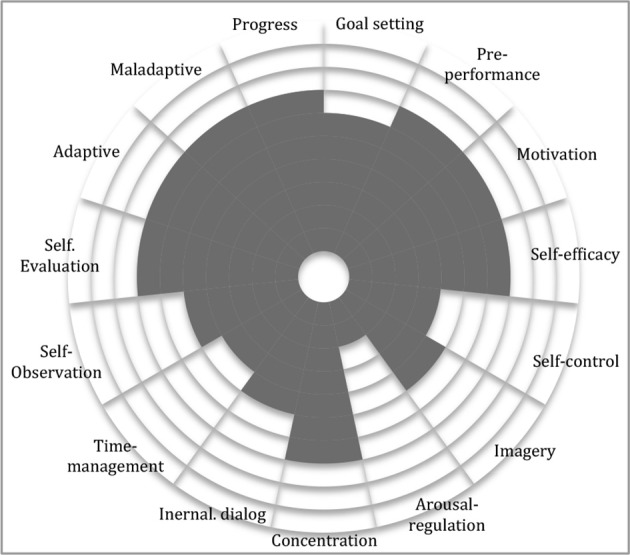
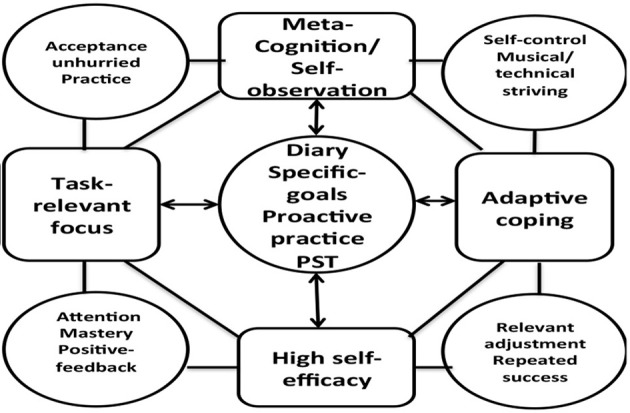
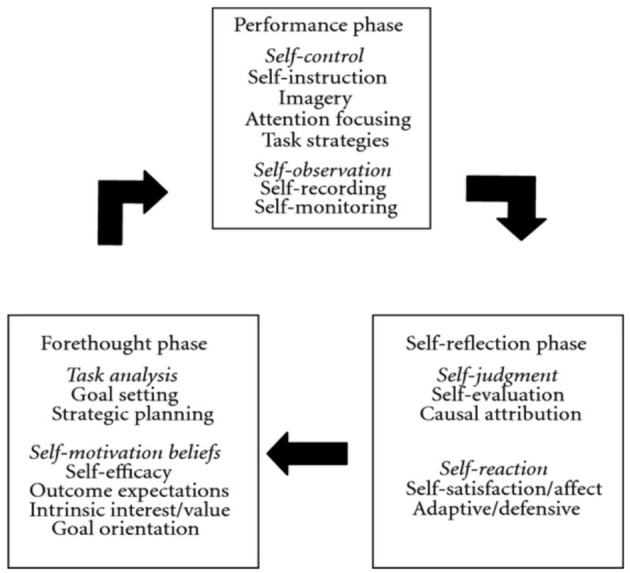
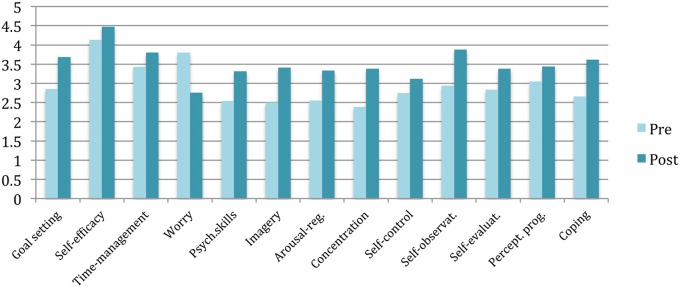
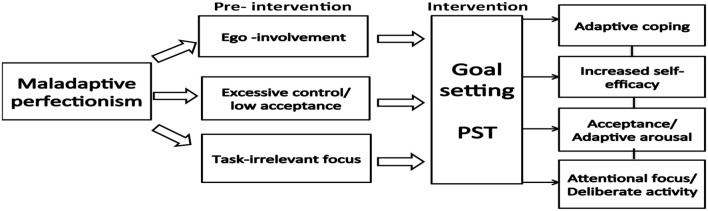
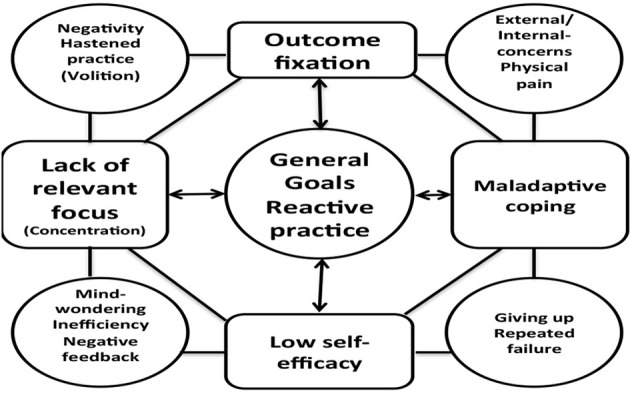
The purpose of the present mixed method study was to investigate personal benefits, perceptions, and the effect of a 15-week sport psychological skills training program adapted for musicians. The program was individually tailored for six music performance students with the objective of facilitating the participants' instrumental practice and performance. The participants learnt techniques such as goal setting, attentional focus, arousal regulation, imagery, and acceptance training/self-talk. Zimmerman's (1989) cyclical model of self-regulated learning was applied as a theoretical frame for the intervention. The present study's mixed-method approach (i.e., quan+ QUAL) included effect size, semi-structured interviews, a research log, and practice diaries of the participants (Creswell, 2009). Thematic analysis revealed that participants had little or no experience concerning planning and goal setting in regard to instrumental practice. Concentration, volition, and physical pain were additional issues that the participants struggled with at the time of pre-intervention. The study found that psychological skills training (with special emphasis on planning and goal setting) facilitated cyclical self-regulated learning patterns in the participants. In essence, the intervention was found to facilitate the participants' concentration, self-observation, self-efficacy, and coping in the face of failure. The appliance of practice journals facilitated the participants' self-observation, self-evaluation, and awareness of instrumental practice. Finally, the psychological skills intervention reduced participants' worry and anxiety in performance situations. An 8-month follow up interview revealed that the participants were still actively applying psychological skills.
本混合方法研究的目的是调查针对音乐家的为期15周的运动心理技能训练计划的个人收益、认知以及效果。该计划是为六名音乐表演专业学生量身定制的,目的是促进参与者的乐器练习和表演。参与者学习了目标设定、注意力集中、唤醒调节、意象以及接纳训练/自我对话等技巧。齐默尔曼(1989年)的自我调节学习循环模型被用作干预的理论框架。本研究的混合方法(即定量+定性)包括效应量、半结构化访谈、研究日志以及参与者的练习日记(克雷斯韦尔,2009年)。主题分析表明,参与者在乐器练习的计划和目标设定方面几乎没有经验。注意力集中、意志力和身体疼痛是干预前参与者面临的其他问题。研究发现,心理技能训练(特别强调计划和目标设定)促进了参与者的循环自我调节学习模式。从本质上讲,该干预措施被发现有助于参与者在面对失败时的注意力集中、自我观察、自我效能感和应对能力。练习日志的应用促进了参与者的自我观察、自我评价以及对乐器练习的认知。最后,心理技能干预减少了参与者在表演情境中的担忧和焦虑。一次为期8个月的随访访谈显示,参与者仍在积极应用心理技能。