Lu Suwen, Zhang Yin, Zheng Xiongjie, Zhu Kaijie, Xu Qiang, Deng Xiuxin
Key Laboratory of Horticultural Plant Biology, Ministry of Education, Huazhong Agricultural University Wuhan, China.
Front Plant Sci. 2016 Sep 13;7:1367. doi: 10.3389/fpls.2016.01367. eCollection 2016.
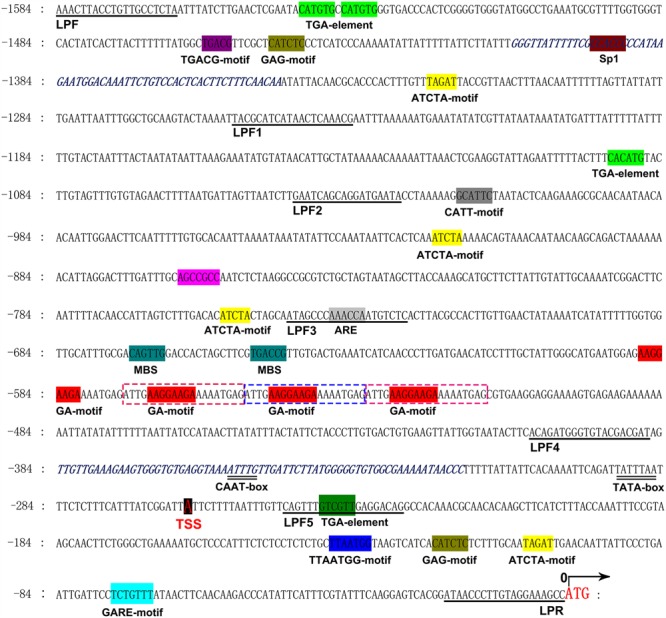
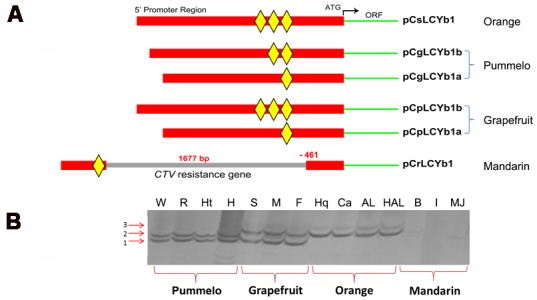
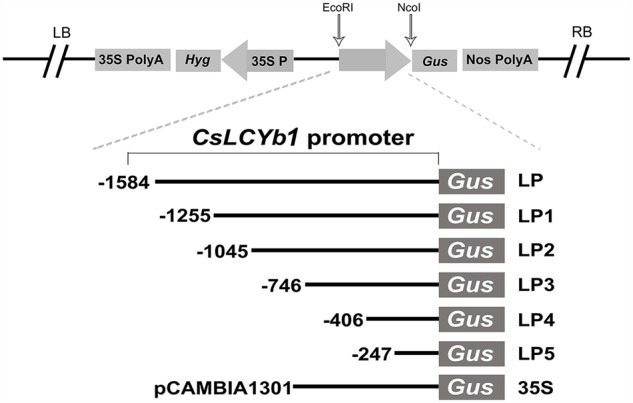
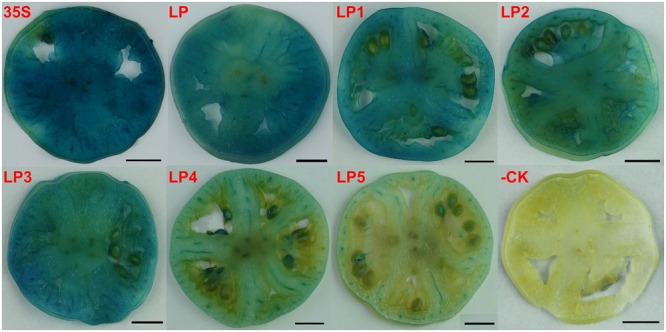
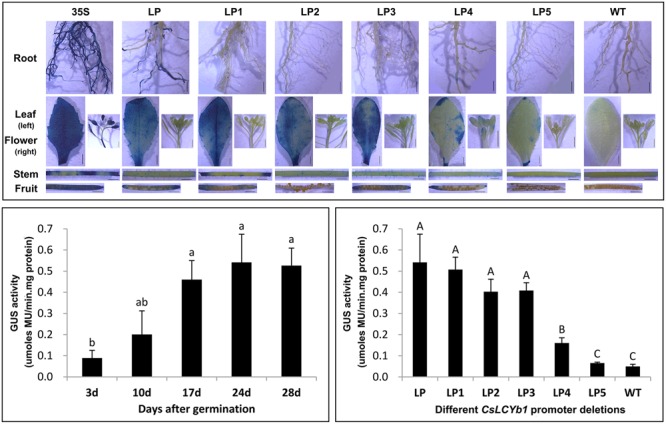
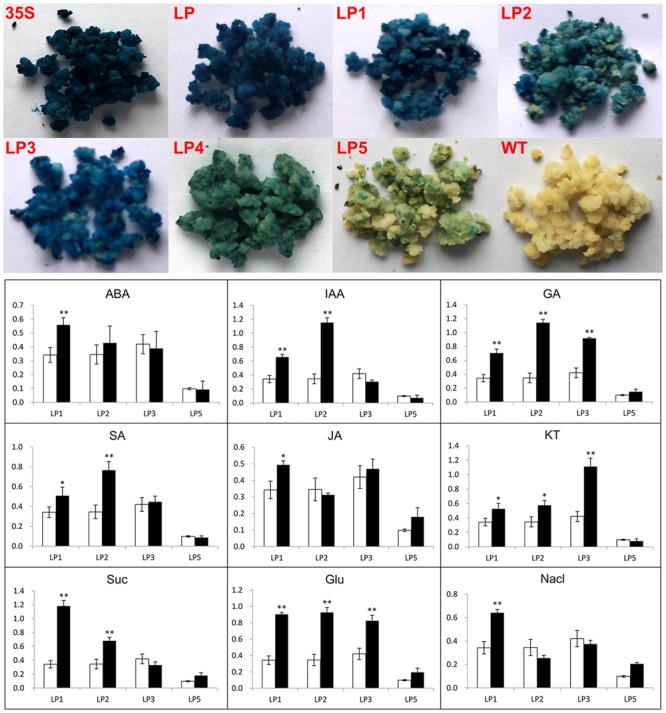
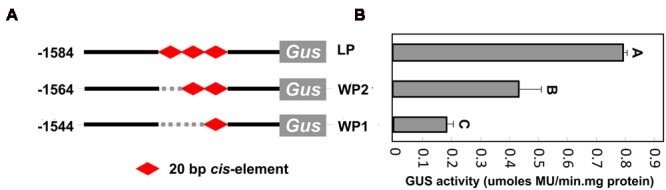
Lycopene β-cyclases are key enzymes located at the branch point of the carotenoid biosynthesis pathway. However, the transcriptional regulatory mechanisms of LCYb1 in citrus with abundant carotenoid accumulation are still unclear. To understand the molecular basis of CsLCYb1 expression, we isolated and functionally characterized the 5' upstream sequences of CsLCYb1 from citrus. The full-length CsLCYb1 promoter and a series of its 5' deletions were fused to the β-glucuronidase (GUS) reporter gene and transferred into different plants (tomato, Arabidopsis and citrus callus) to test the promoter activities. The results of all transgenic species showed that the 1584 bp upstream region from the translational start site displayed maximal promoter activity, and the minimal promoter containing 746 bp upstream sequences was sufficient for strong basal promoter activity. Furthermore, the CsLCYb1 promoter activity was developmentally and tissue-specially regulated in transgenic Arabidopsis, and it was affected by multiple hormones and environmental cues in transgenic citrus callus under various treatments. Finer deletion analysis identified an enhancer element existing as a tandem repeat in the promoter region between -574 to -513 bp and conferring strong promoter activity. The copy numbers of the enhancer element differed among various citrus species, leading to the development of a derived simple sequence repeat marker to distinguish different species. In conclusion, this study elucidates the expression characteristics of the LCYb1 promoter from citrus and further identifies a novel enhancer element required for the promoter activity. The characterized promoter fragment would be an ideal candidate for genetic engineering and seeking of upstream trans-acting elements.
番茄红素β-环化酶是类胡萝卜素生物合成途径分支点处的关键酶。然而,在类胡萝卜素积累丰富的柑橘中,LCYb1的转录调控机制仍不清楚。为了解CsLCYb1表达的分子基础,我们从柑橘中分离并对CsLCYb1的5'上游序列进行了功能表征。将全长CsLCYb1启动子及其一系列5'缺失片段与β-葡萄糖醛酸酶(GUS)报告基因融合,并转入不同植物(番茄、拟南芥和柑橘愈伤组织)中检测启动子活性。所有转基因物种的结果表明,翻译起始位点上游1584 bp区域表现出最大启动子活性,包含746 bp上游序列的最小启动子足以产生强大的基础启动子活性。此外,CsLCYb1启动子活性在转基因拟南芥中受发育和组织特异性调控,在不同处理下的转基因柑橘愈伤组织中受多种激素和环境信号影响。更精细的缺失分析确定了一个增强子元件,它以串联重复的形式存在于-574至-513 bp之间的启动子区域,赋予强大的启动子活性。不同柑橘物种中增强子元件的拷贝数不同,由此开发出一种衍生的简单序列重复标记来区分不同物种。总之,本研究阐明了柑橘中LCYb1启动子的表达特征,并进一步鉴定出启动子活性所需的新型增强子元件。所表征的启动子片段将是基因工程和寻找上游反式作用元件的理想候选者。