Su Liyan, Diretto Gianfranco, Purgatto Eduardo, Danoun Saïda, Zouine Mohamed, Li Zhengguo, Roustan Jean-Paul, Bouzayen Mondher, Giuliano Giovanni, Chervin Christian
Université de Toulouse, INP-ENSA Toulouse, UMR990 Génomique et Biotechnologie des Fruits, Avenue de l'Agrobiopole, CS 32607, F-31326, Castanet-Tolosan, France.
Actual address: Department of Life Sciences, Xi'an University of Arts and Science, Xi'an, 710065, PR China.
BMC Plant Biol. 2015 May 8;15:114. doi: 10.1186/s12870-015-0495-4.
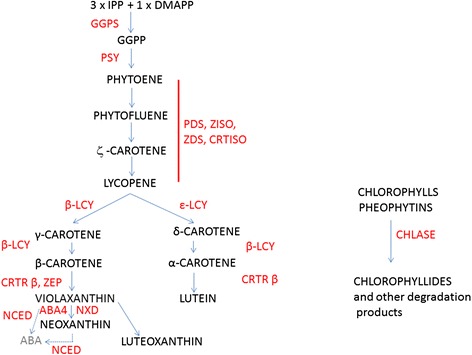
Tomato fruit ripening is controlled by ethylene and is characterized by a shift in color from green to red, a strong accumulation of lycopene, and a decrease in β-xanthophylls and chlorophylls. The role of other hormones, such as auxin, has been less studied. Auxin is retarding the fruit ripening. In tomato, there is no study of the carotenoid content and related transcript after treatment with auxin.
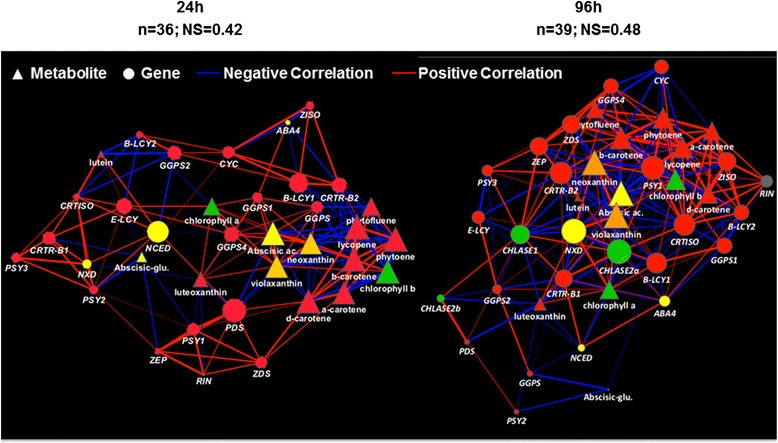
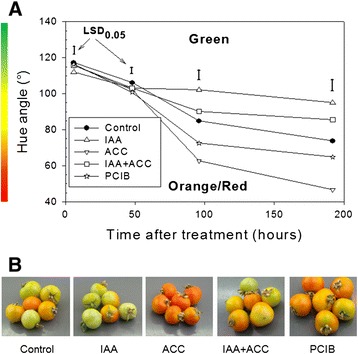
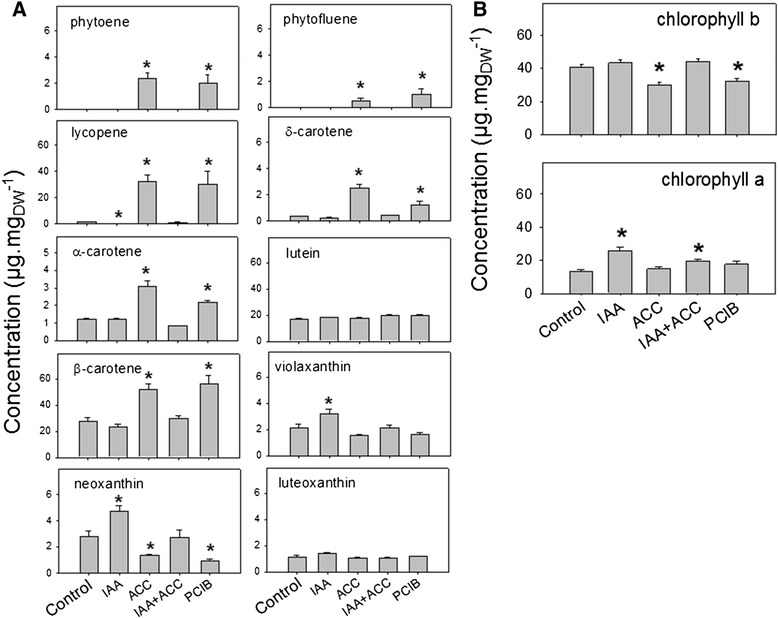
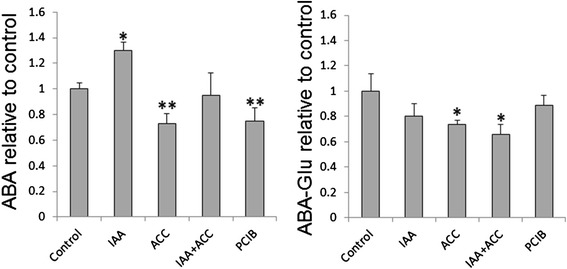
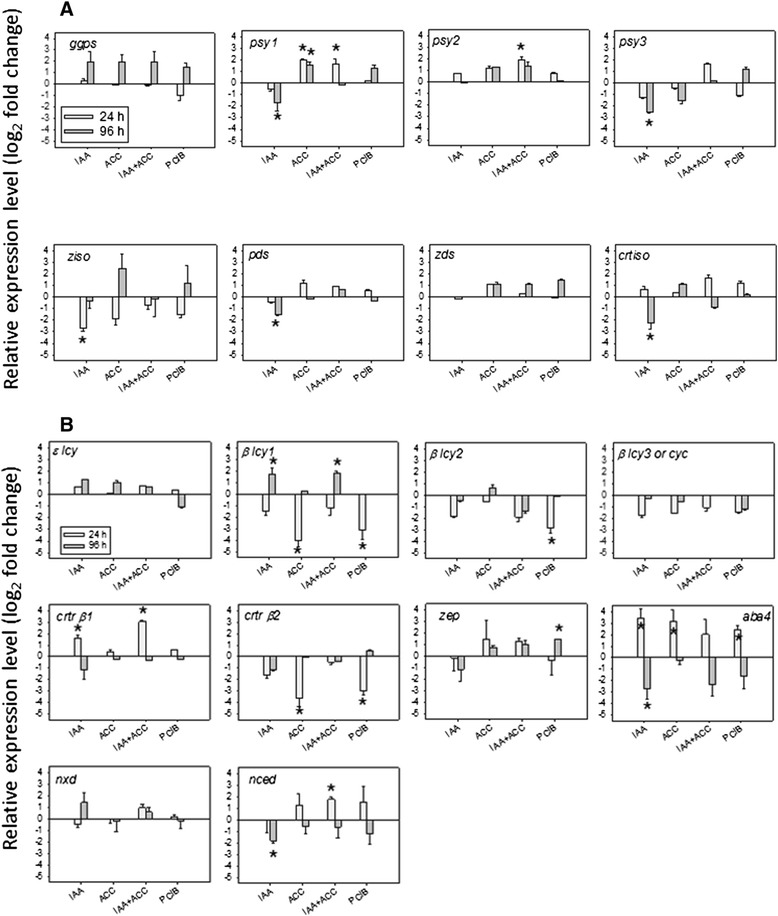
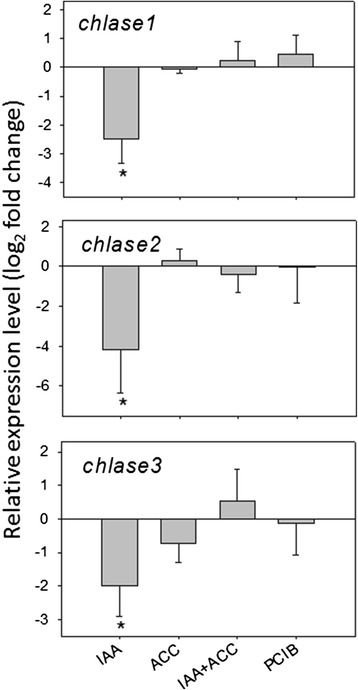
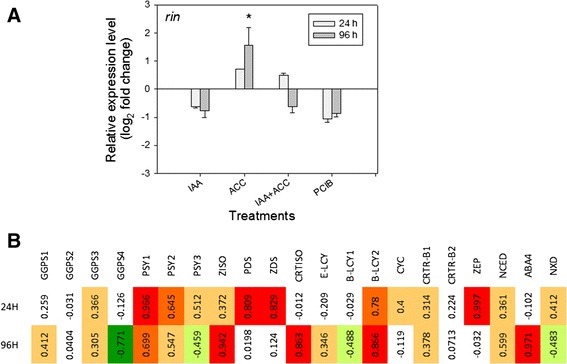
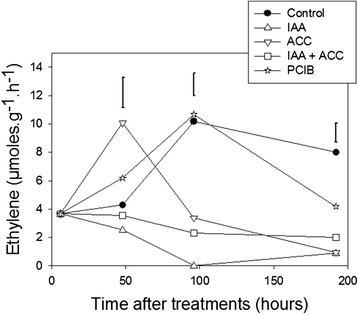
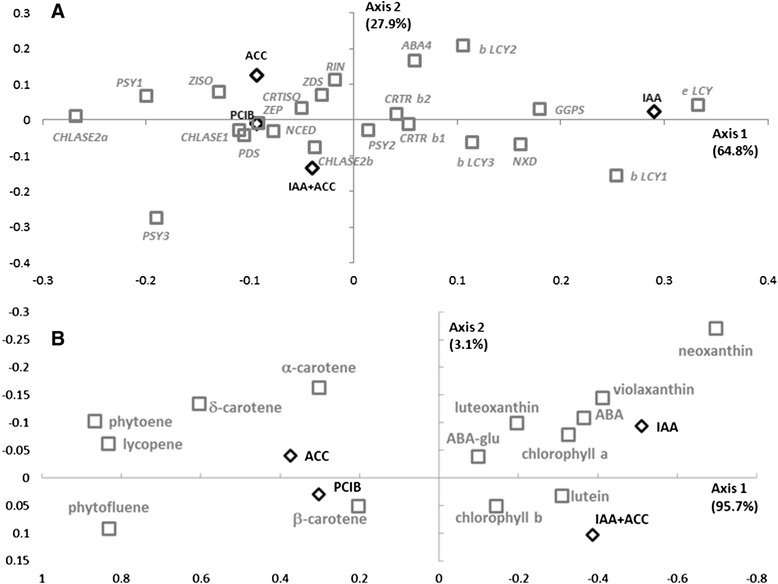
We followed the effects of application of various hormone-like substances to "Mature-Green" fruits. Application of an ethylene precursor (ACC) or of an auxin antagonist (PCIB) to tomato fruits accelerated the color shift, the accumulation of lycopene, α-, β-, and δ-carotenes and the disappearance of β-xanthophylls and chlorophyll b. By contrast, application of auxin (IAA) delayed the color shift, the lycopene accumulation and the decrease of chlorophyll a. Combined application of IAA + ACC led to an intermediate phenotype. The levels of transcripts coding for carotenoid biosynthesis enzymes, for the ripening regulator Rin, for chlorophyllase, and the levels of ethylene and abscisic acid (ABA) were monitored in the treated fruits. Correlation network analyses suggest that ABA, may also be a key regulator of several responses to auxin and ethylene treatments.
The results suggest that IAA retards tomato ripening by affecting a set of (i) key regulators, such as Rin, ethylene and ABA, and (ii) key effectors, such as genes for lycopene and β-xanthophyll biosynthesis and for chlorophyll degradation.
番茄果实成熟受乙烯控制,其特征为颜色从绿色转变为红色、番茄红素大量积累以及β-叶黄素和叶绿素含量降低。其他激素如生长素的作用研究较少。生长素会延缓果实成熟。在番茄中,尚未有关于生长素处理后类胡萝卜素含量及相关转录本的研究。
我们追踪了向“绿熟期”果实施用各种激素类似物的效果。向番茄果实施用乙烯前体(ACC)或生长素拮抗剂(PCIB)会加速颜色转变、番茄红素、α-、β-和δ-胡萝卜素的积累以及β-叶黄素和叶绿素b的消失。相比之下,施用生长素(IAA)会延迟颜色转变、番茄红素积累和叶绿素a的减少。IAA + ACC联合施用导致中间表型。在处理过的果实中监测了编码类胡萝卜素生物合成酶、成熟调节因子Rin、叶绿素酶的转录本水平以及乙烯和脱落酸(ABA)的水平。相关网络分析表明,ABA也可能是几种生长素和乙烯处理反应的关键调节因子。
结果表明,IAA通过影响一组(i)关键调节因子,如Rin、乙烯和ABA,以及(ii)关键效应因子,如番茄红素和β-叶黄素生物合成基因以及叶绿素降解基因,来延缓番茄成熟。