Peri Suraj, Caretti Elena, Tricarico Rossella, Devarajan Karthik, Cheung Mitchell, Sementino Eleonora, Menges Craig W, Nicolas Emmanuelle, Vanderveer Lisa A, Howard Sharon, Conrad Peggy, Crowell James A, Campbell Kerry S, Ross Eric A, Godwin Andrew K, Yeung Anthony T, Clapper Margie L, Uzzo Robert G, Henske Elizabeth P, Ricketts Christopher J, Vocke Cathy D, Linehan W Marston, Testa Joseph R, Bellacosa Alfonso, Kopelovich Levy, Knudson Alfred G
Department of Biostatistics and Bioinformatics, Fox Chase Cancer Center, Philadelphia, PA, USA.
Cancer Epigenetics, Fox Chase Cancer Center, Philadelphia, PA, USA.
Oncotarget. 2017 Mar 14;8(11):17628-17642. doi: 10.18632/oncotarget.12192.
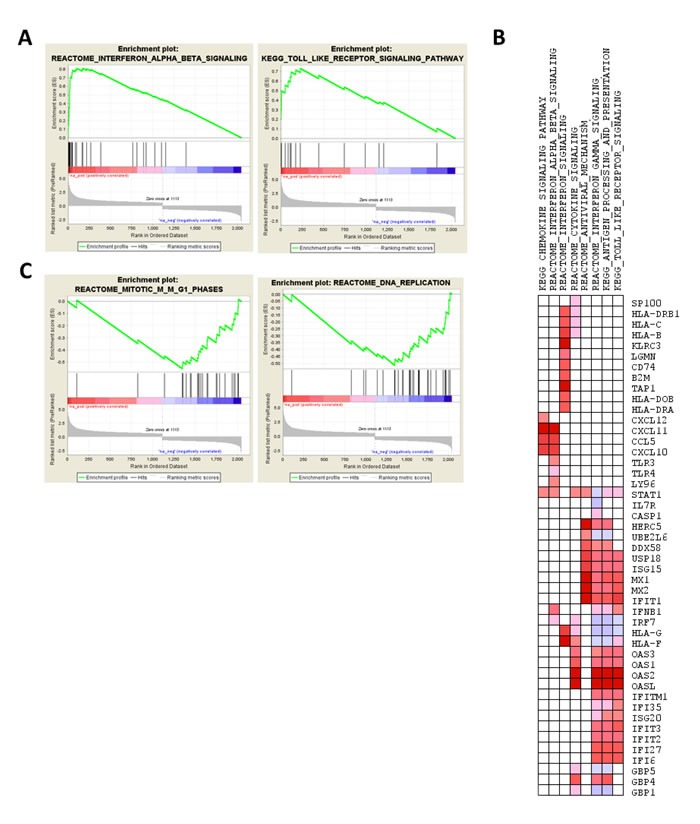
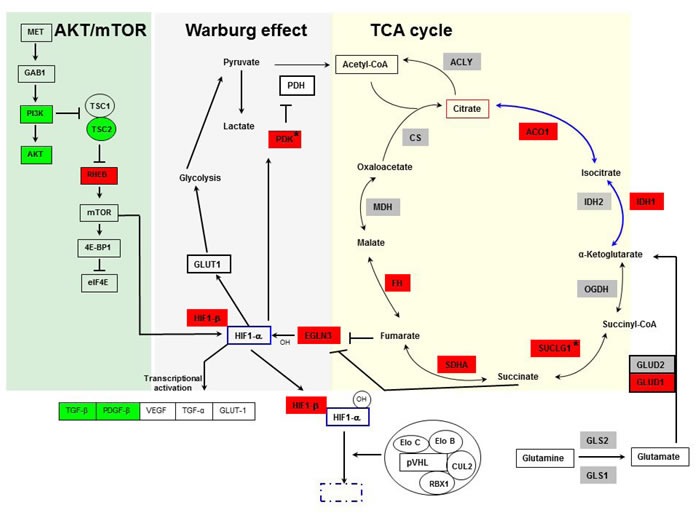
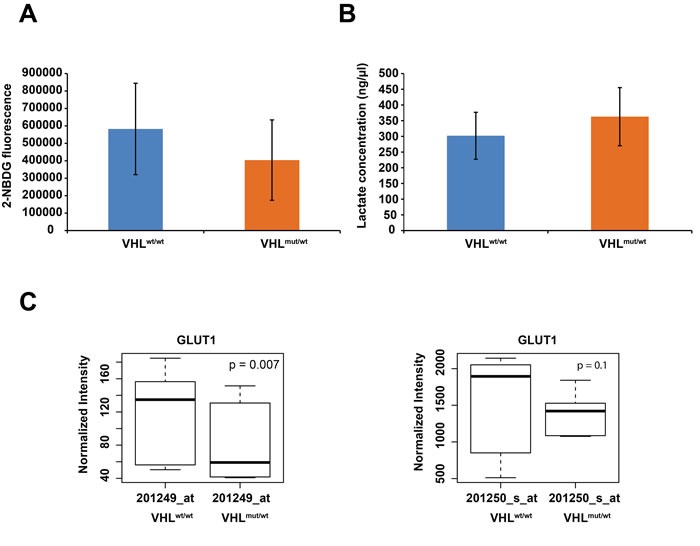
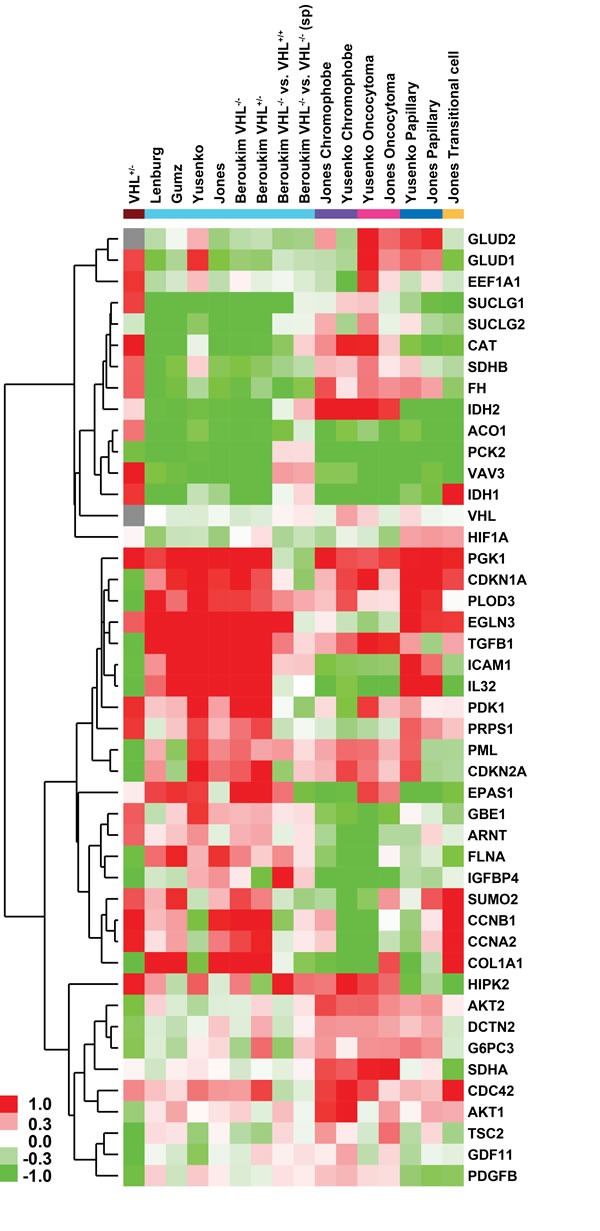
Tumor suppressor genes and their effector pathways have been identified for many dominantly heritable cancers, enabling efforts to intervene early in the course of disease. Our approach on the subject of early intervention was to investigate gene expression patterns of morphologically normal "one-hit" cells before they become hemizygous or homozygous for the inherited mutant gene which is usually required for tumor formation. Here, we studied histologically non-transformed renal epithelial cells from patients with inherited disorders that predispose to renal tumors, including von Hippel-Lindau (VHL) disease and Tuberous Sclerosis (TSC). As controls, we studied histologically normal cells from non-cancerous renal epithelium of patients with sporadic clear cell renal cell carcinoma (ccRCC). Gene expression analyses of VHLmut/wt or TSC1/2mut/wt versus wild-type (WT) cells revealed transcriptomic alterations previously implicated in the transition to precancerous renal lesions. For example, the gene expression changes in VHLmut/wt cells were consistent with activation of the hypoxia response, associated, in part, with the "Warburg effect". Knockdown of any remaining VHL mRNA using shRNA induced secondary expression changes, such as activation of NFκB and interferon pathways, that are fundamentally important in the development of RCC. We posit that this is a general pattern of hereditary cancer predisposition, wherein haploinsufficiency for VHL or TSC1/2, or potentially other tumor susceptibility genes, is sufficient to promote development of early lesions, while cancer results from inactivation of the remaining normal allele. The gene expression changes identified here are related to the metabolic basis of renal cancer and may constitute suitable targets for early intervention.
对于许多显性遗传性癌症,肿瘤抑制基因及其效应途径已被确定,这使得在疾病进程的早期进行干预成为可能。我们针对早期干预这一主题的方法是,研究形态学上正常的“一击”细胞在成为遗传性突变基因半合子或纯合子之前的基因表达模式,而遗传性突变基因通常是肿瘤形成所必需的。在此,我们研究了患有遗传性疾病(包括冯·希佩尔-林道病(VHL)和结节性硬化症(TSC))且易患肾肿瘤患者的组织学未转化的肾上皮细胞。作为对照,我们研究了散发性透明细胞肾细胞癌(ccRCC)患者非癌性肾上皮的组织学正常细胞。对VHLmut/wt或TSC1/2mut/wt与野生型(WT)细胞进行基因表达分析,揭示了先前与癌前肾病变转变相关的转录组改变。例如,VHLmut/wt细胞中的基因表达变化与缺氧反应的激活一致,部分与“瓦伯格效应”相关。使用shRNA敲低任何剩余的VHL mRNA会诱导二级表达变化,如NFκB和干扰素途径的激活,这些在RCC的发展中至关重要。我们认为这是遗传性癌症易感性的一般模式,其中VHL或TSC1/2,或潜在的其他肿瘤易感基因的单倍体不足足以促进早期病变的发展,而癌症则是由剩余正常等位基因的失活导致的。此处确定的基因表达变化与肾癌的代谢基础相关,可能构成早期干预的合适靶点。