Golan Tal, Davidesco Ido, Meshulam Meir, Groppe David M, Mégevand Pierre, Yeagle Erin M, Goldfinger Matthew S, Harel Michal, Melloni Lucia, Schroeder Charles E, Deouell Leon Y, Mehta Ashesh D, Malach Rafael
Edmond and Lily Safra Center for Brain Sciences, The Hebrew University of Jerusalem, Jerusalem, Israel.
Department of Psychology, New York University, New York, United States.
Elife. 2016 Sep 29;5:e17243. doi: 10.7554/eLife.17243.
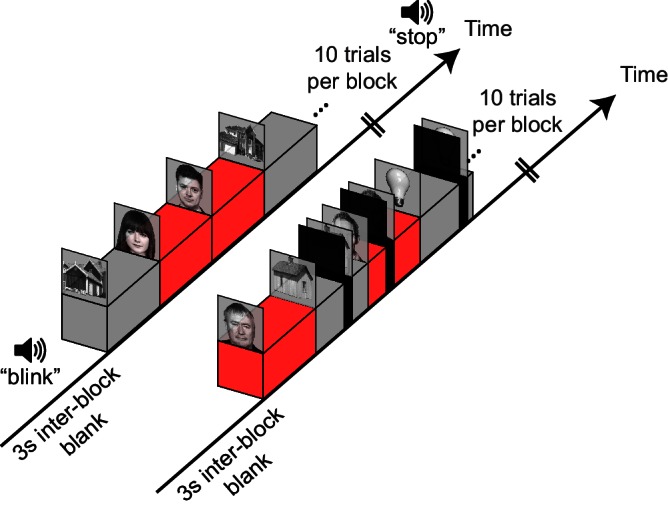
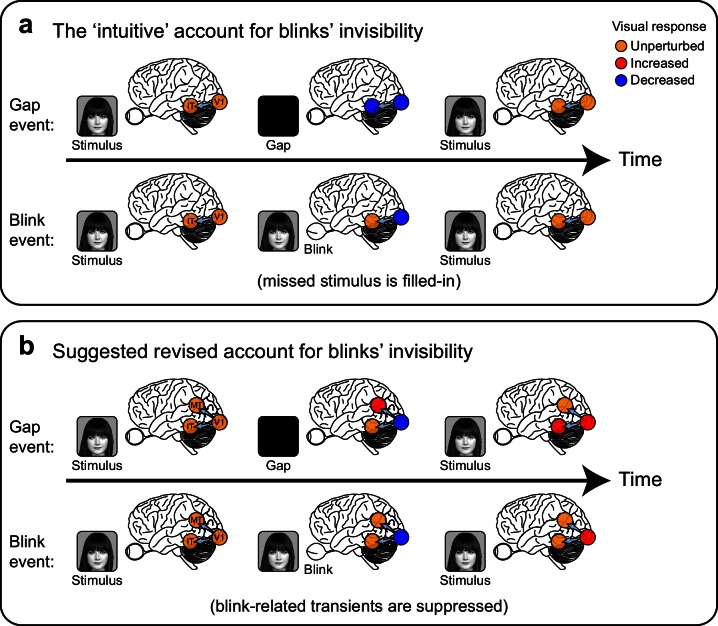
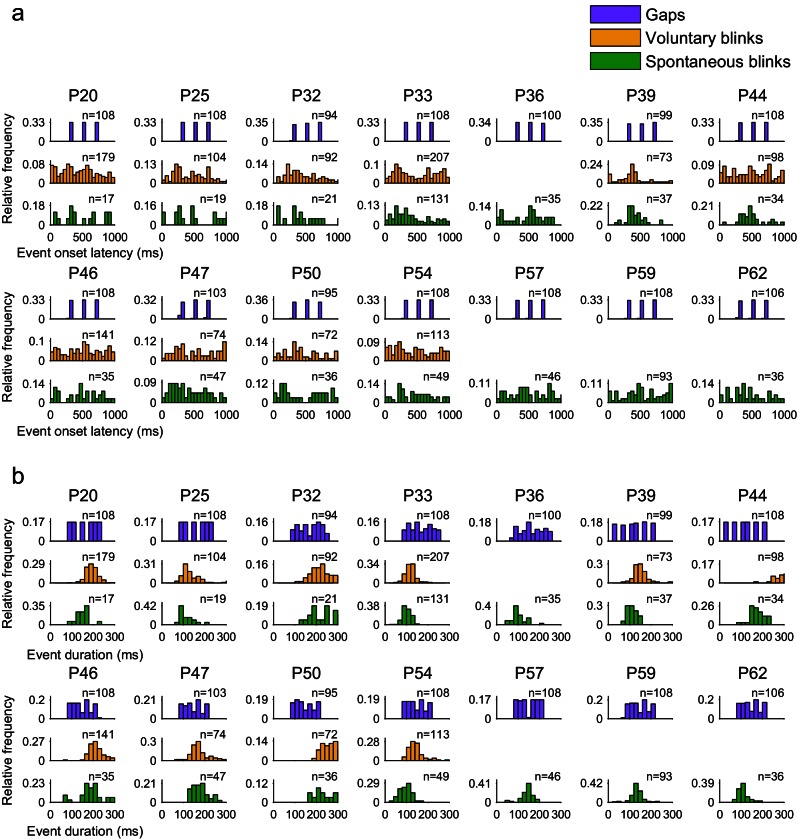
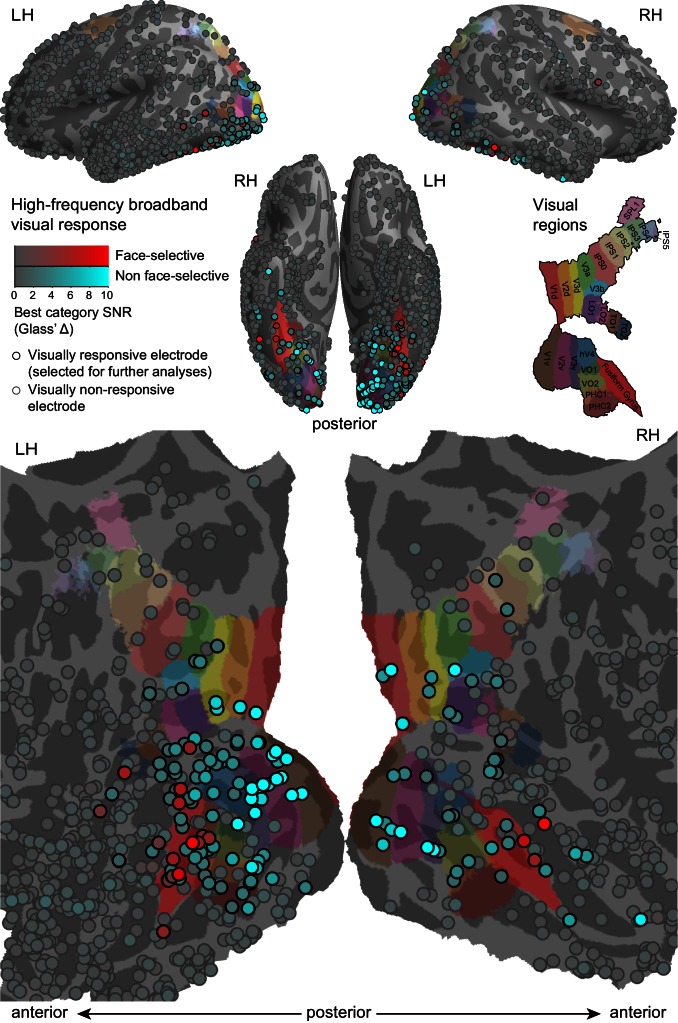
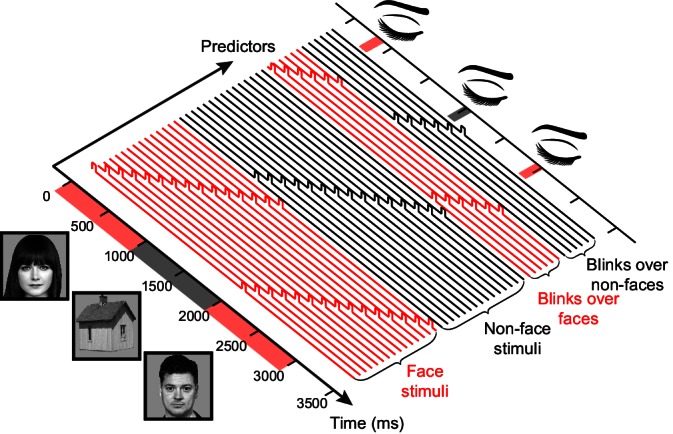
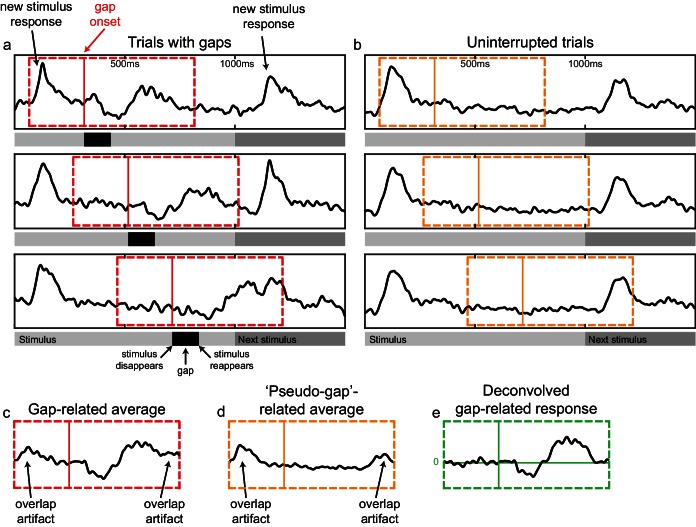
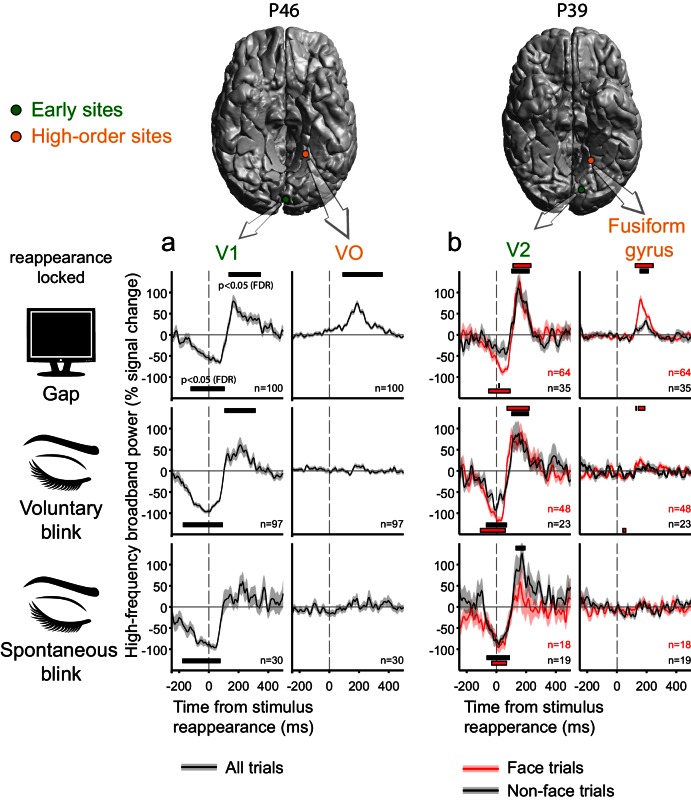
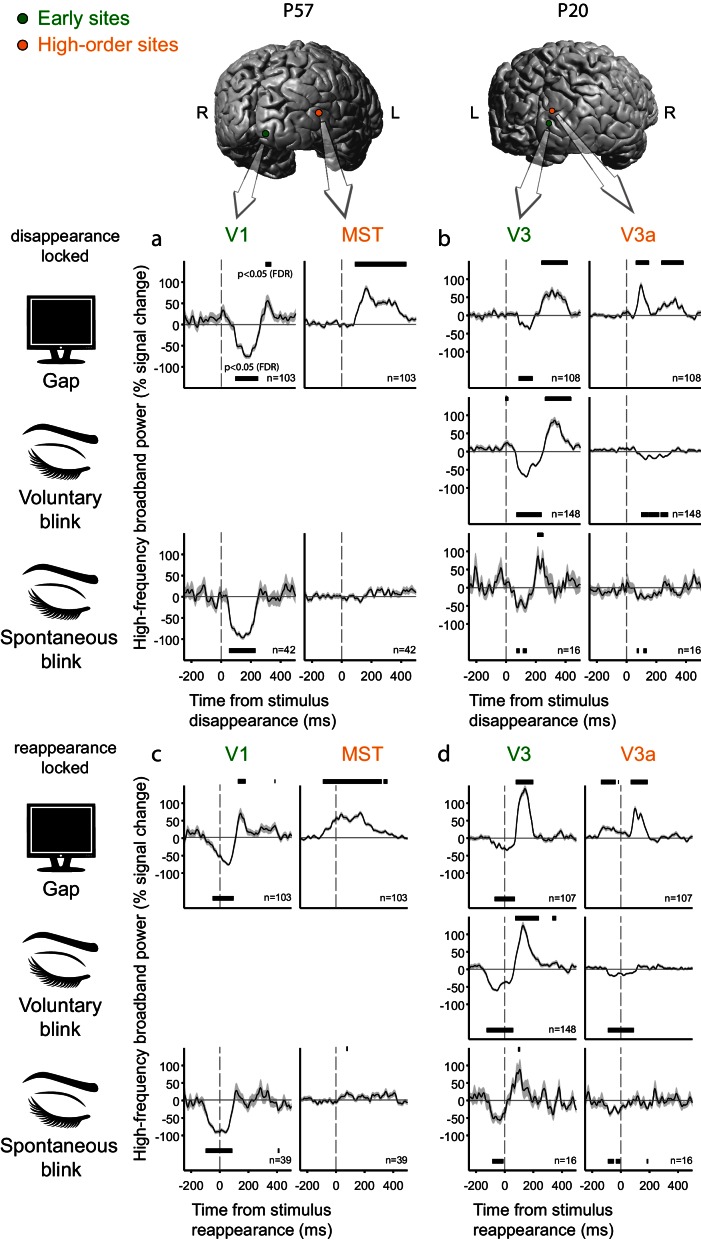
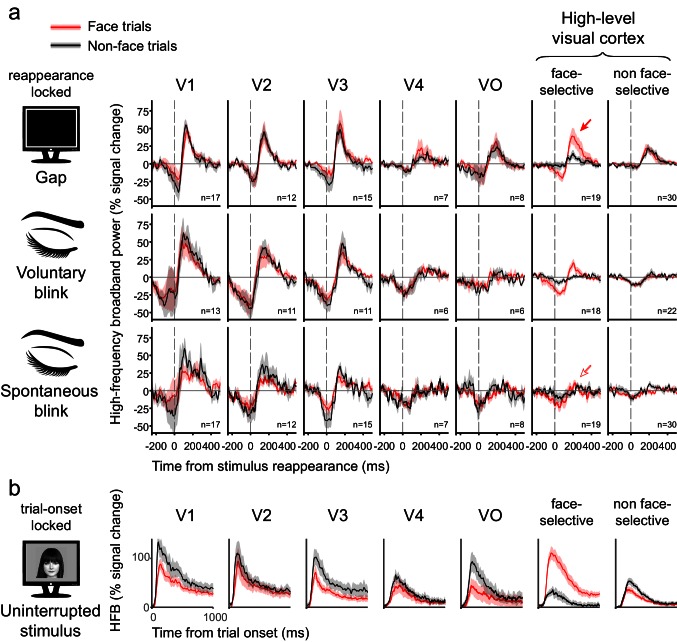
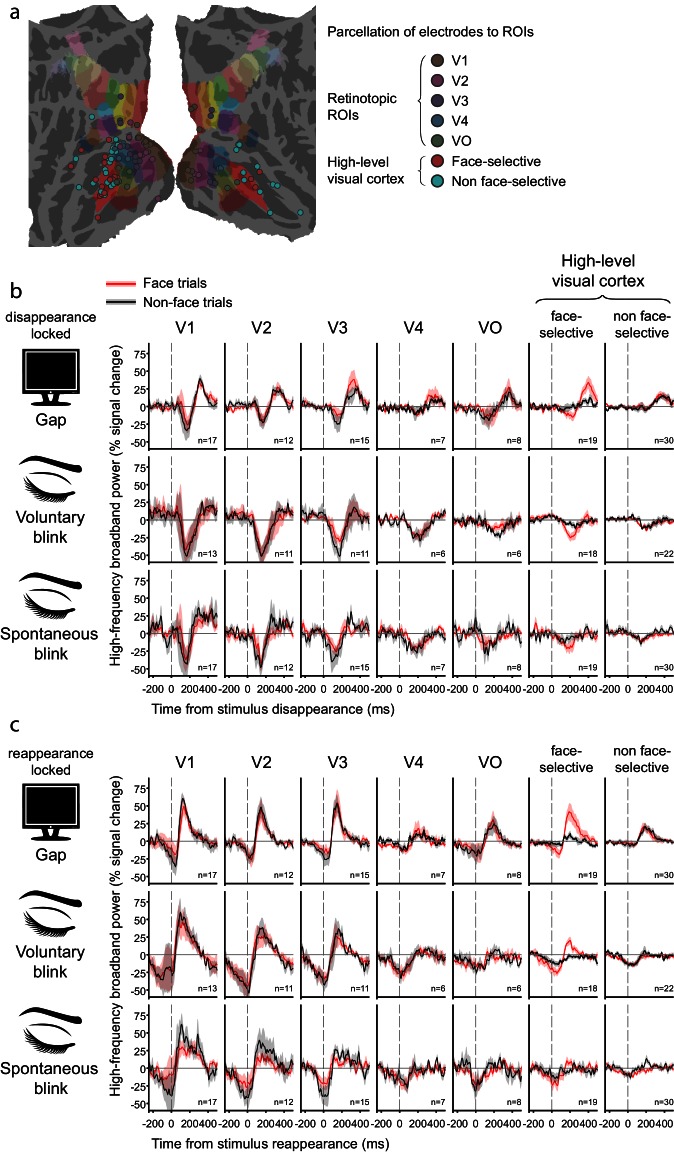
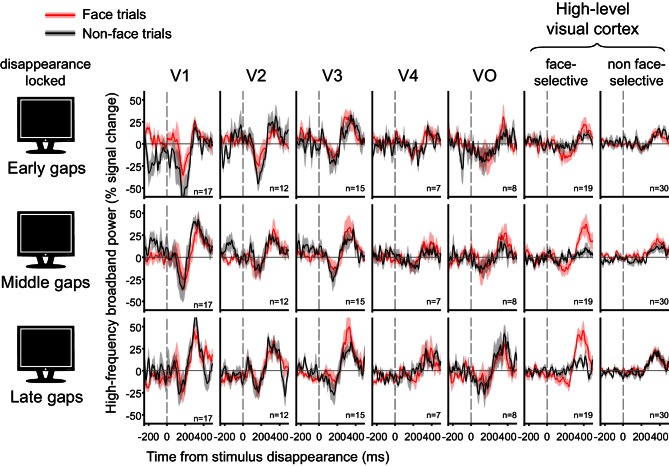
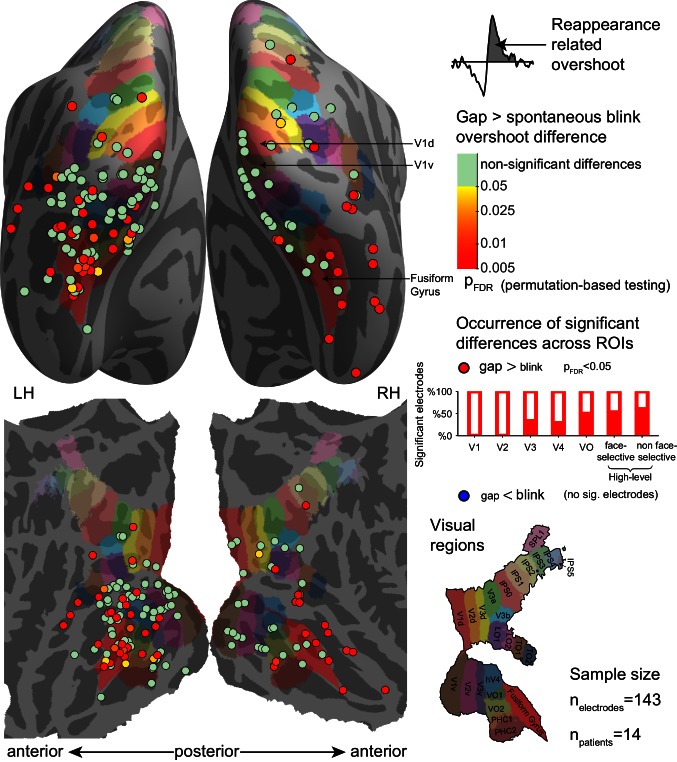
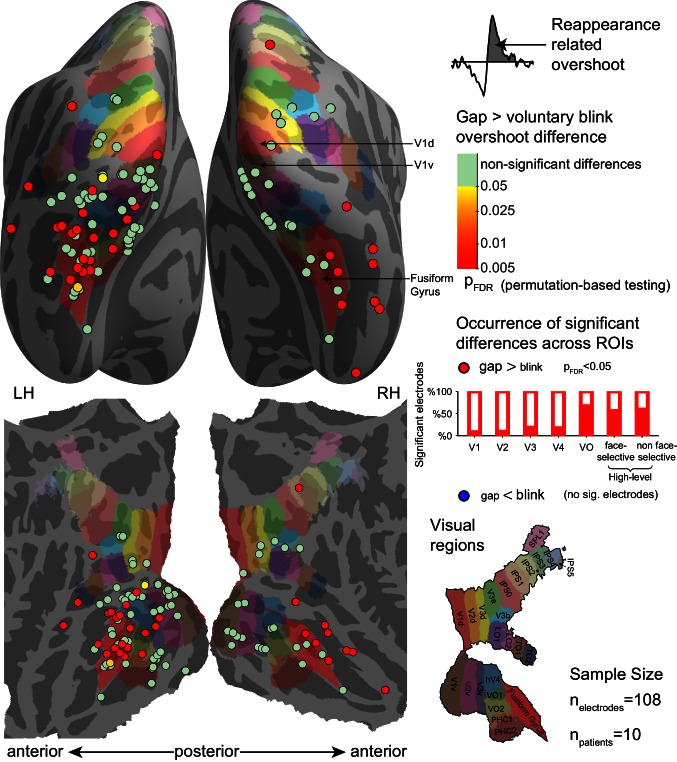
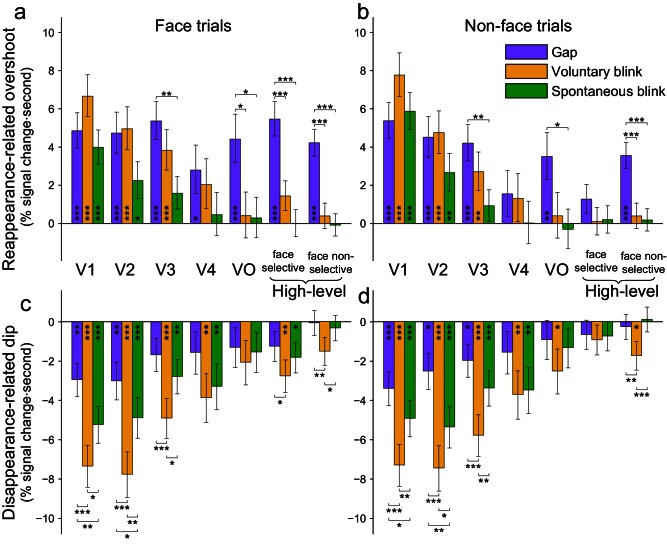
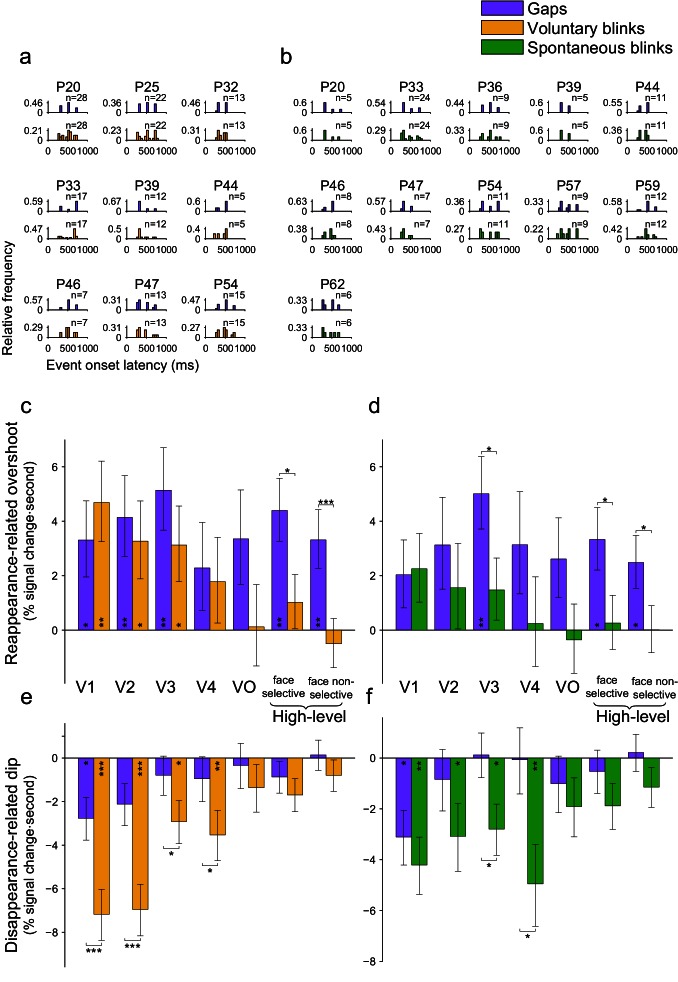
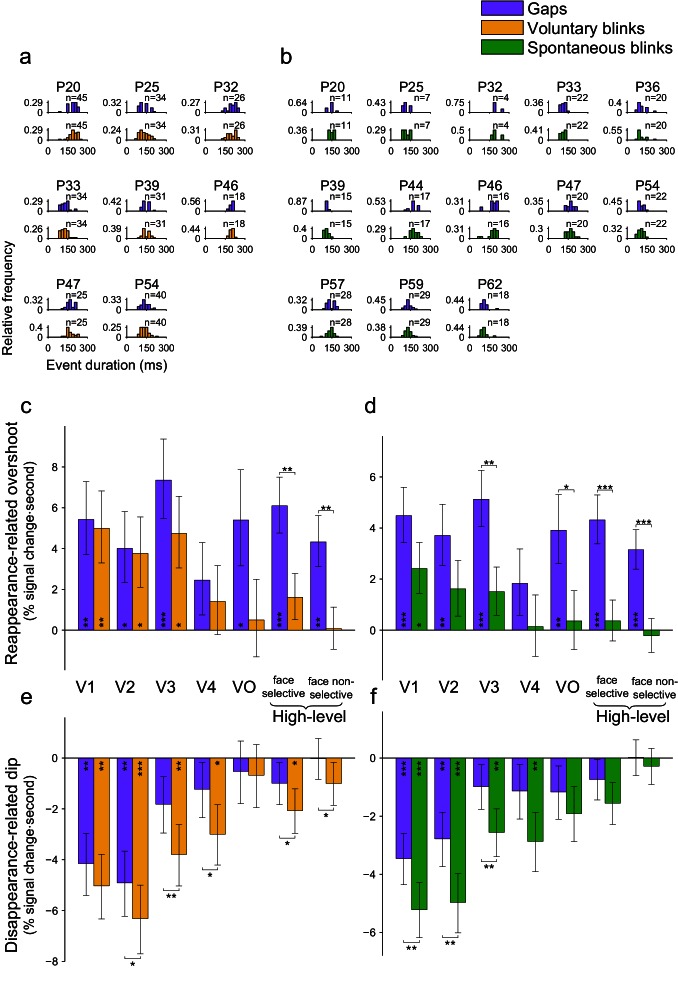
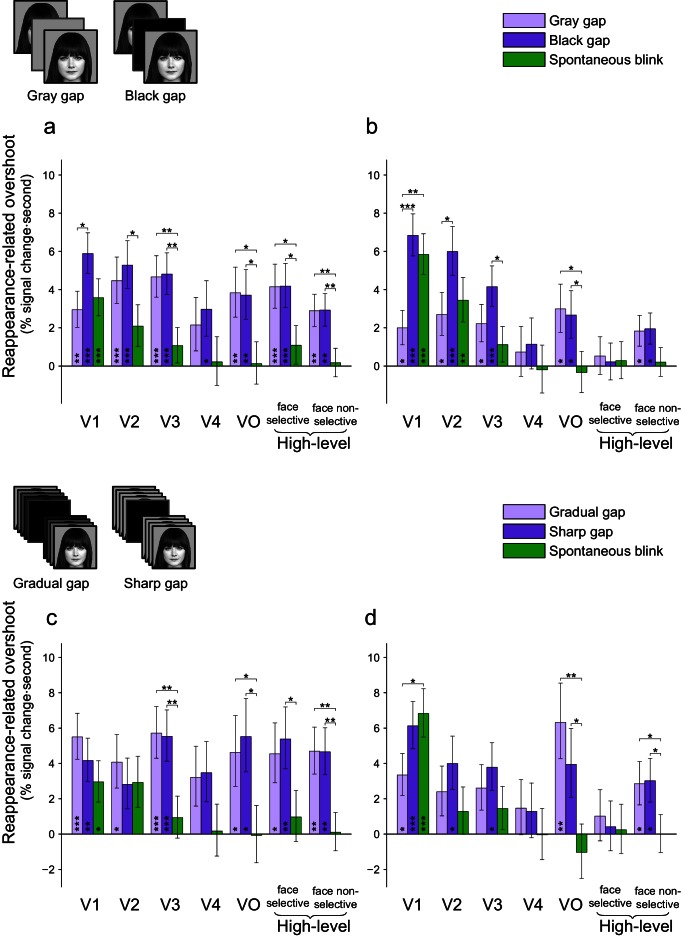
We hardly notice our eye blinks, yet an externally generated retinal interruption of a similar duration is perceptually salient. We examined the neural correlates of this perceptual distinction using intracranially measured ECoG signals from the human visual cortex in 14 patients. In early visual areas (V1 and V2), the disappearance of the stimulus due to either invisible blinks or salient blank video frames ('gaps') led to a similar drop in activity level, followed by a positive overshoot beyond baseline, triggered by stimulus reappearance. Ascending the visual hierarchy, the reappearance-related overshoot gradually subsided for blinks but not for gaps. By contrast, the disappearance-related drop did not follow the perceptual distinction - it was actually slightly more pronounced for blinks than for gaps. These findings suggest that blinks' limited visibility compared with gaps is correlated with suppression of blink-related visual activity transients, rather than with "filling-in" of the occluded content during blinks.
我们几乎不会注意到自己的眨眼动作,然而,持续时间相似的外部产生的视网膜中断却在感知上很突出。我们利用14名患者颅内测量的来自人类视觉皮层的脑电信号,研究了这种感知差异的神经关联。在早期视觉区域(V1和V2),由于不可见的眨眼或显著的空白视频帧(“间隙”)导致的刺激消失,会导致活动水平出现类似程度的下降,随后在刺激重新出现时引发超过基线的正向过冲。在视觉层级上升的过程中,与重新出现相关的过冲对于眨眼逐渐减弱,但对于间隙则不然。相比之下,与消失相关的下降并没有遵循感知差异——实际上,眨眼时的下降比间隙时略微更明显。这些发现表明,与间隙相比,眨眼的可见性有限与对眨眼相关视觉活动瞬变的抑制有关,而不是与眨眼期间被遮挡内容的“填补”有关。