El Azzouny Mahmoud, Longacre Melissa J, Ansari Israr-Ul H, Kennedy Robert T, Burant Charles F, MacDonald Michael J
Metabolism, Endocrinology and Diabetes, University of Michigan Medical School, Ann Arbor, MI 48109, United States.
Childrens Diabetes Center, University of Wisconsin School of Medicine and Public Health, Madison, WI 53706, United States.
Mol Metab. 2016 Aug 8;5(10):980-987. doi: 10.1016/j.molmet.2016.07.011. eCollection 2016 Oct.
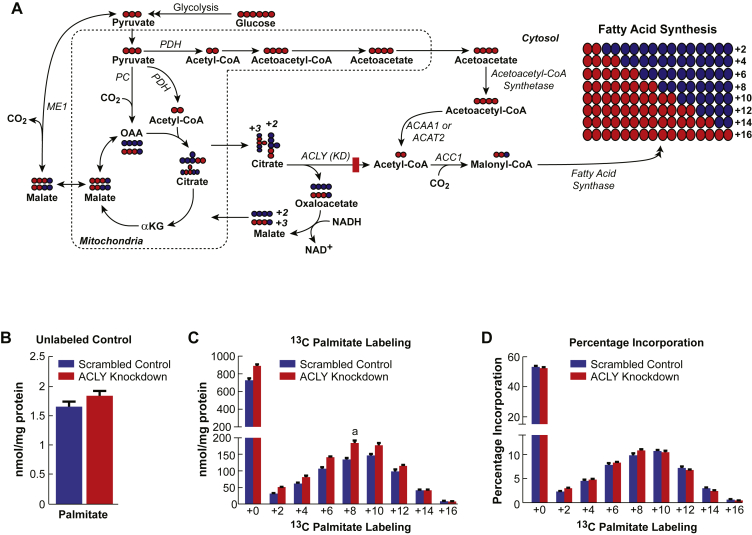
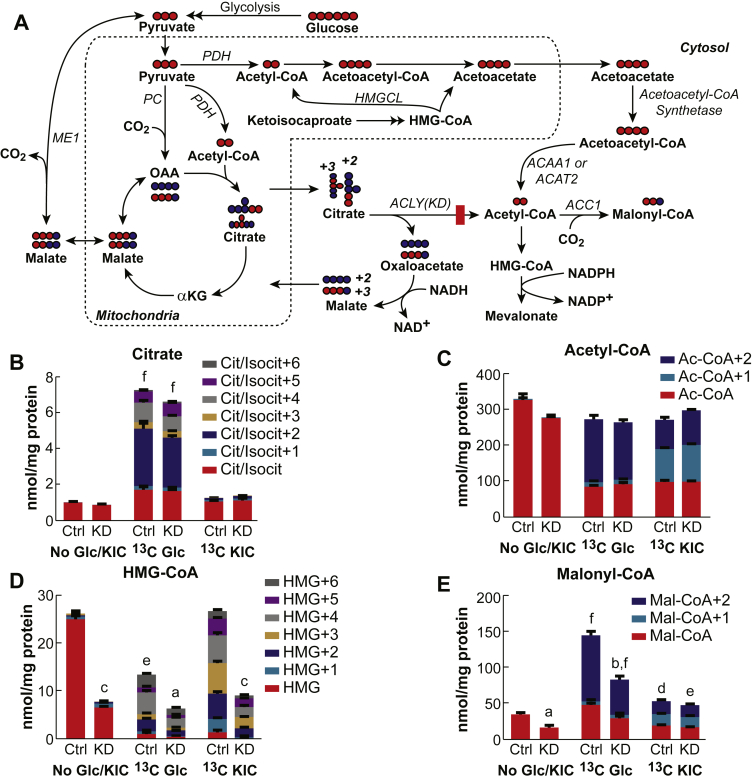
Glucose-stimulated insulin secretion in pancreatic beta cells requires metabolic signals including the generation of glucose-derived short chain acyl-CoAs in the cytosol from mitochondrially-derived metabolites. One concept of insulin secretion is that ATP citrate lyase generates short chain acyl-CoAs in the cytosol from mitochondrially-derived citrate. Of these, malonyl-CoA, is believed to be an important signal in insulin secretion. Malonyl-CoA is also a precursor for lipids. Our recent evidence suggested that, in the mitochondria of beta cells, glucose-derived pyruvate can be metabolized to acetoacetate that is exported to the cytosol and metabolized to the same short chain acyl-CoAs and fatty acids that can be derived from citrate. We tested for redundancy of the citrate pathway.
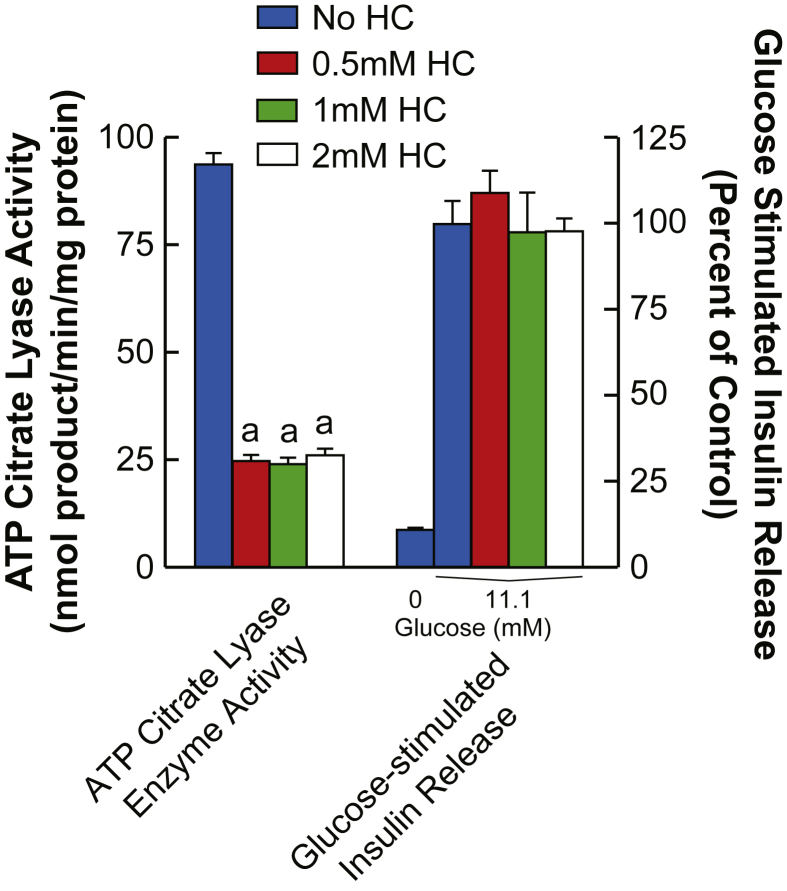
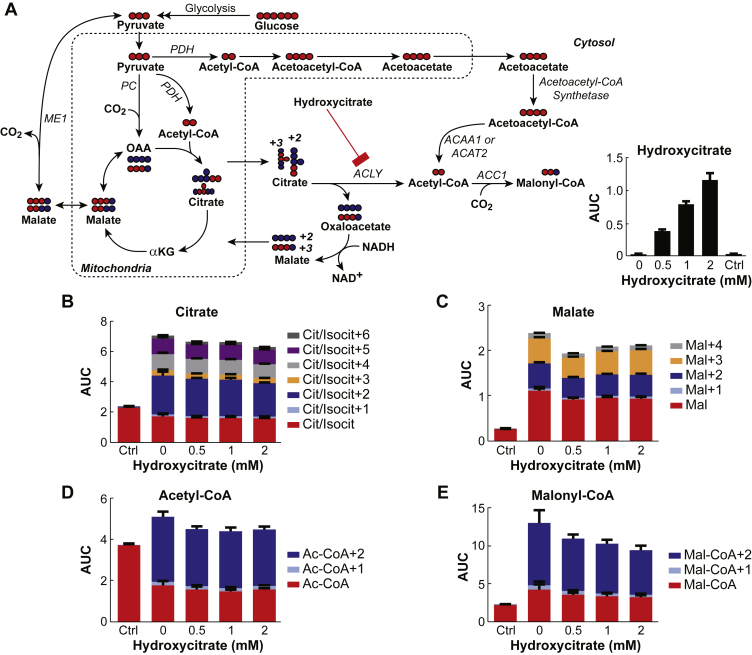
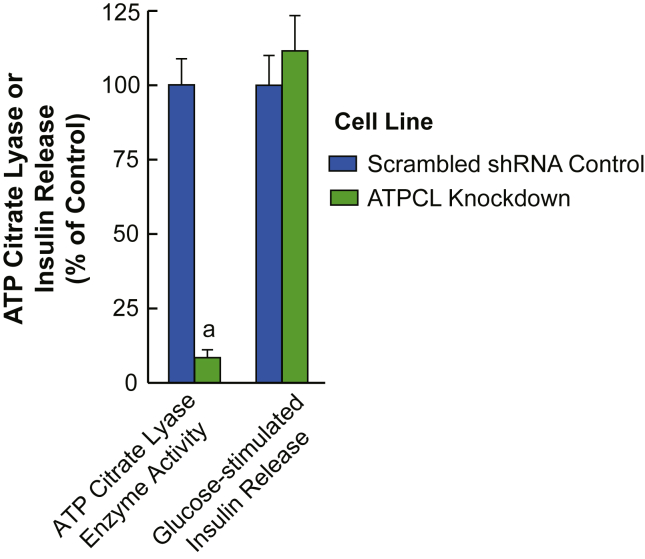
We inhibited ATP citrate lyase activity using hydroxycitrate as well as studying a stable cell line generated with shRNA knockdown of ATP citrate lyase in the pancreatic beta cell line INS-1 832/13.
In both instances glucose-stimulated insulin release was not inhibited. Mass spectrometry analysis showed that the flux of carbon from [U-(13)C]glucose and/or [U-(13)C]α-ketoisocaproic acid (KIC) into short chain acyl-CoAs in cells with hydroxycitrate-inhibited ATP citrate lyase or in the cell line with stable severe (>90%) shRNA knockdown of ATP citrate lyase was similar to the controls. Both (13)C-glucose and (13)C-KIC introduced substantial (13)C labeling into acetyl-CoA, malonyl-CoA, and HMG-CoA under both conditions. Glucose flux into fatty acids was not affected by ATP citrate lyase knockdown.
The results establish the involvement of the acetoacetate pathway in insulin secretion in pancreatic beta cells.
胰腺β细胞中葡萄糖刺激的胰岛素分泌需要代谢信号,包括线粒体衍生代谢物在细胞质中生成葡萄糖衍生的短链酰基辅酶A。胰岛素分泌的一个概念是,ATP柠檬酸裂解酶从线粒体衍生的柠檬酸中在细胞质中生成短链酰基辅酶A。其中,丙二酰辅酶A被认为是胰岛素分泌中的一个重要信号。丙二酰辅酶A也是脂质的前体。我们最近的证据表明,在β细胞的线粒体中,葡萄糖衍生的丙酮酸可代谢为乙酰乙酸,后者被输出到细胞质中,并代谢为与可从柠檬酸衍生的相同短链酰基辅酶A和脂肪酸。我们测试了柠檬酸途径的冗余性。
我们使用羟基柠檬酸抑制ATP柠檬酸裂解酶活性,并研究了在胰腺β细胞系INS-1 832/13中通过shRNA敲低ATP柠檬酸裂解酶产生的稳定细胞系。
在这两种情况下,葡萄糖刺激的胰岛素释放均未受到抑制。质谱分析表明,在羟基柠檬酸抑制ATP柠檬酸裂解酶的细胞或ATP柠檬酸裂解酶稳定严重(>90%)shRNA敲低的细胞系中,[U-(13)C]葡萄糖和/或[U-(13)C]α-酮异己酸(KIC)进入短链酰基辅酶A的碳通量与对照相似。在两种条件下,(13)C-葡萄糖和(13)C-KIC均将大量(13)C标记引入乙酰辅酶A、丙二酰辅酶A和HMG-CoA。ATP柠檬酸裂解酶敲低不影响葡萄糖向脂肪酸的通量。
这些结果证实了乙酰乙酸途径参与胰腺β细胞的胰岛素分泌。