Jahn Lorenz, Hagedoorn Renate S, van der Steen Dirk M, Hombrink Pleun, Kester Michel G D, Schoonakker Marjolein P, de Ridder Daniëlle, van Veelen Peter A, Falkenburg J H Frederik, Heemskerk Mirjam H M
Department of Hematology, Leiden University Medical Center, 2300 RC Leiden, The Netherlands.
Department of Hematopoiesis, Sanquin Research, 1006 AD Amsterdam, The Netherlands.
Oncotarget. 2016 Nov 1;7(44):71536-71547. doi: 10.18632/oncotarget.12247.
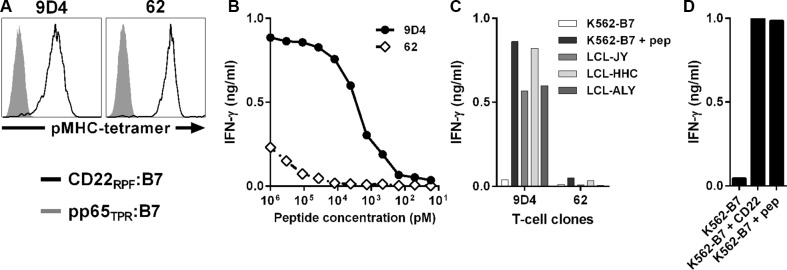
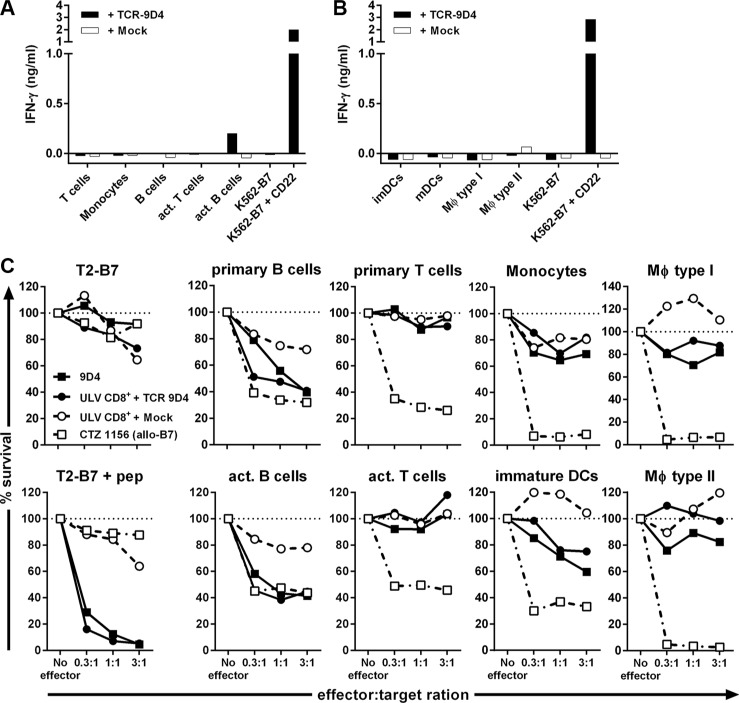
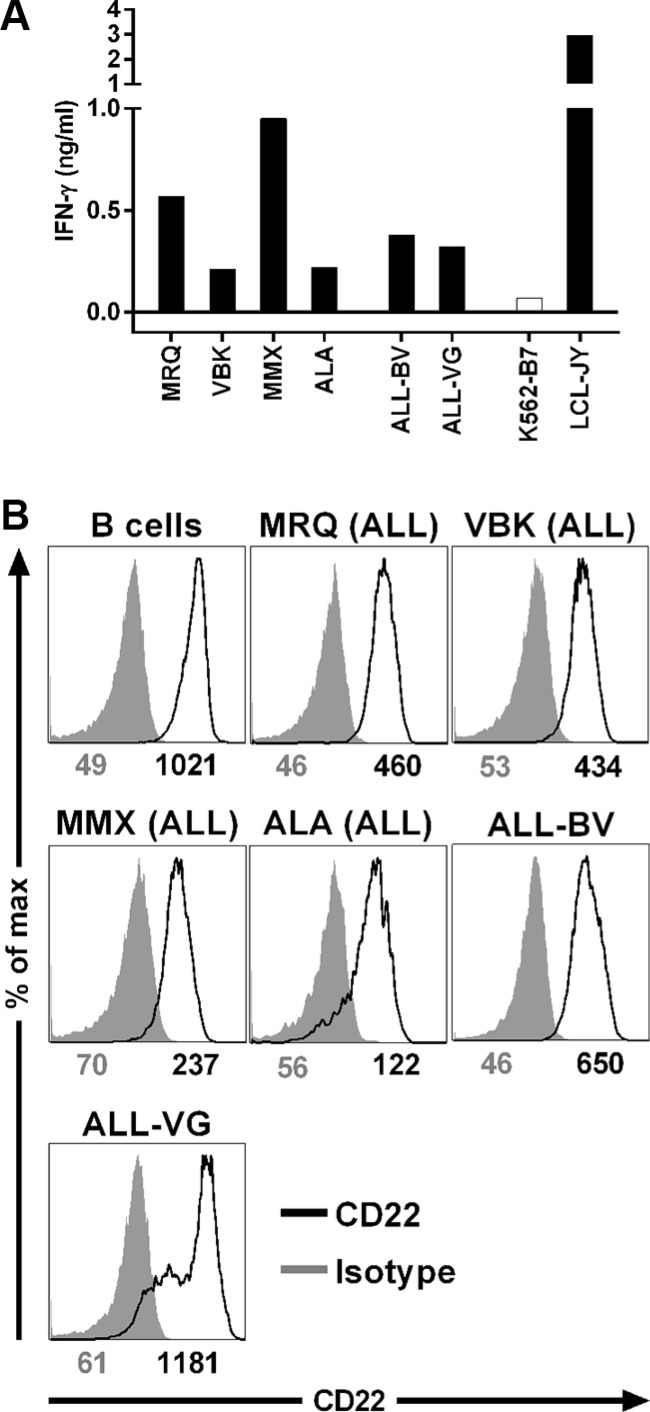
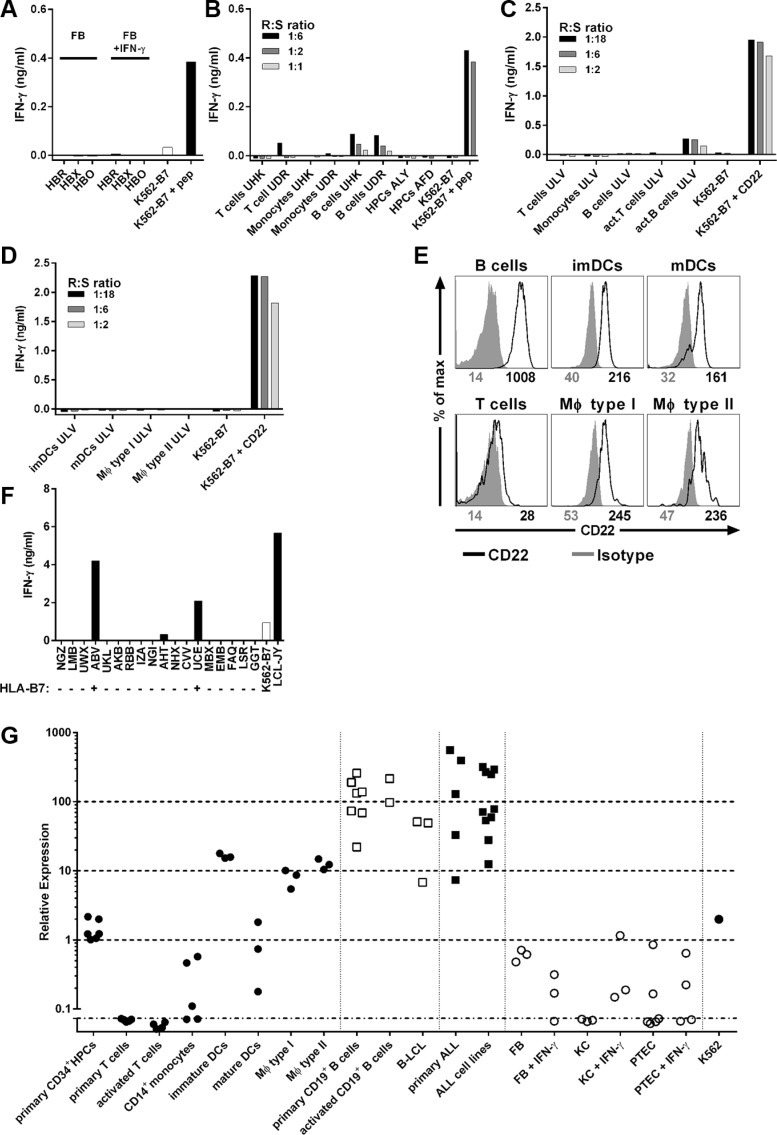
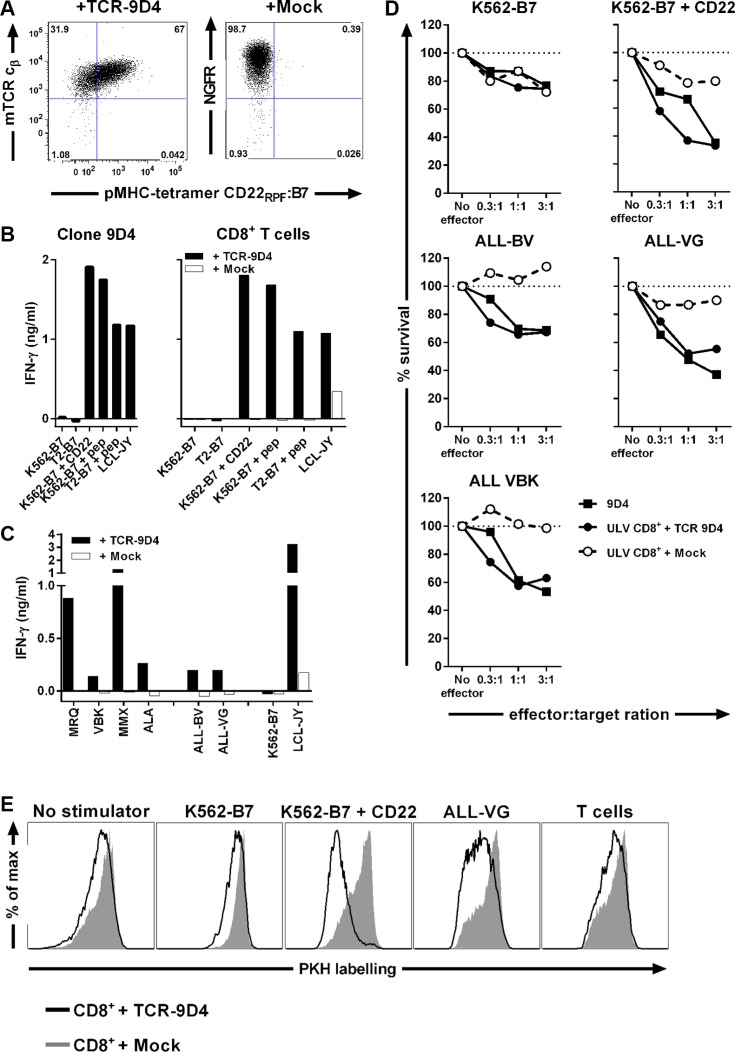
CD22 is currently evaluated as a target-antigen for the treatment of B-cell malignancies using chimeric antigen receptor (CAR)-engineered T-cells or monoclonal antibodies (mAbs). CAR- and mAbs-based immunotherapies have been successfully applied targeting other antigens, however, occurrence of refractory disease to these interventions urges the identification of additional strategies. Here, we identified a TCR recognizing the CD22-derived peptide RPFPPHIQL (CD22RPF) presented in human leukocyte antigen (HLA)-B07:02. To overcome tolerance to self-antigens such as CD22, we exploited the immunogenicity of allogeneic HLA. CD22RPF-specific T-cell clone 9D4 was isolated from a healthy HLA-B07:02neg individual, efficiently produced cytokines upon stimulation with primary acute lymphoblastic leukemia and healthy B-cells, but did not react towards healthy hematopoietic and nonhematopoietic cell subsets, including dendritic cells (DCs) and macrophages expressing low levels of CD22. Gene transfer of TCR-9D4 installed potent CD22-specificity onto recipient CD8+ T-cells that recognized and lysed primary B-cell leukemia. TCR-transduced T-cells spared healthy CD22neg hematopoietic cell subsets but weakly lysed CD22low-expressing DCs and macrophages. CD22-specific TCR-engineered T-cells could form an additional immunotherapeutic strategy with a complementary role to CAR- and antibody-based interventions in the treatment of B-cell malignancies. However, CD22 expression on non-B-cells may limit the attractiveness of CD22 as target-antigen in cellular immunotherapy.
CD22目前正被评估为使用嵌合抗原受体(CAR)工程化T细胞或单克隆抗体(mAb)治疗B细胞恶性肿瘤的靶抗原。基于CAR和mAb的免疫疗法已成功应用于靶向其他抗原,然而,这些干预措施出现难治性疾病促使人们寻找其他策略。在这里,我们鉴定了一种识别在人类白细胞抗原(HLA)-B07:02中呈递的CD22衍生肽RPFPPHIQL(CD22RPF)的T细胞受体(TCR)。为了克服对自身抗原如CD22的耐受性,我们利用了同种异体HLA的免疫原性。从健康的HLA-B07:02阴性个体中分离出CD22RPF特异性T细胞克隆9D4,在用原发性急性淋巴细胞白血病和健康B细胞刺激后能有效产生细胞因子,但对健康的造血和非造血细胞亚群无反应,包括表达低水平CD22的树突状细胞(DC)和巨噬细胞。TCR-9D4的基因转移将强大的CD22特异性赋予了识别并裂解原发性B细胞白血病的受体CD8 + T细胞。TCR转导的T细胞放过了健康的CD22阴性造血细胞亚群,但对低表达CD22的DC和巨噬细胞的裂解作用较弱。CD22特异性TCR工程化T细胞可以形成一种额外的免疫治疗策略,在B细胞恶性肿瘤的治疗中与基于CAR和抗体的干预措施发挥互补作用。然而,非B细胞上的CD22表达可能会限制CD22作为细胞免疫治疗靶抗原的吸引力。