Siqueira José F, Antunes Henrique S, Rôças Isabela N, Rachid Caio T C C, Alves Flávio R F
Molecular Microbiology Laboratory, Department of Endodontics, Faculty of Dentistry, Estácio de Sá University, Rio de Janeiro, Rio de Janeiro, Brazil.
Department of Endodontics, Faculty of Dentistry, Grande Rio University, Duque de Caxias, Rio de Janeiro, Brazil.
PLoS One. 2016 Sep 30;11(9):e0162887. doi: 10.1371/journal.pone.0162887. eCollection 2016.
Bacteria present in the apical root canal system are directly involved with the pathogenesis of post-treatment apical periodontitis. This study used a next-generation sequencing approach to identify the bacterial taxa occurring in cryopulverized apical root samples from root canal-treated teeth with post-treatment disease.
Apical root specimens obtained during periradicular surgery of ten adequately treated teeth with persistent apical periodontitis were cryogenically ground. DNA was extracted from the powder and the microbiome was characterized on the basis of the V4 hypervariable region of the 16S rRNA gene by using paired-end sequencing on Illumina MiSeq device.
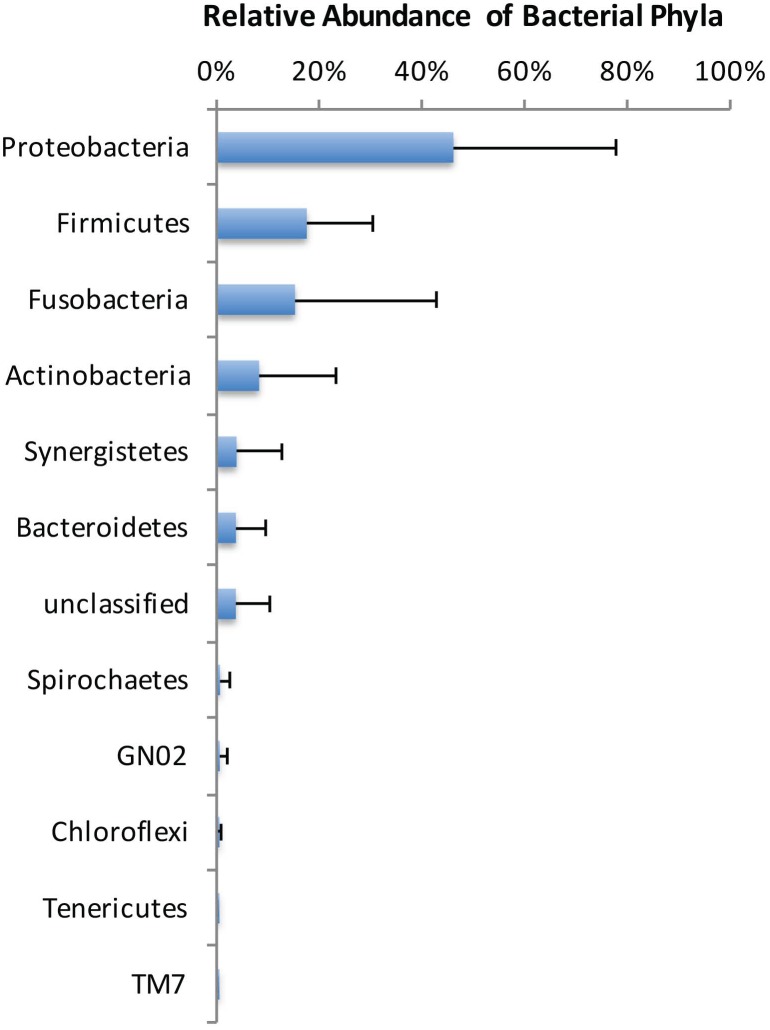
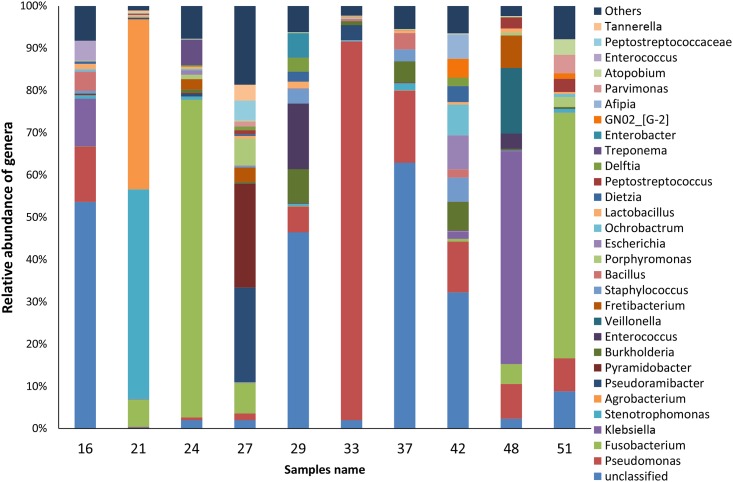
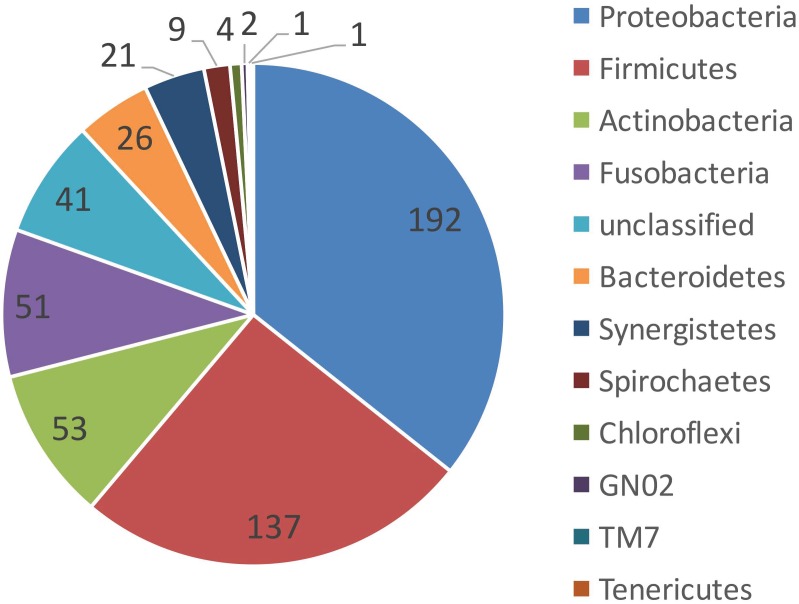
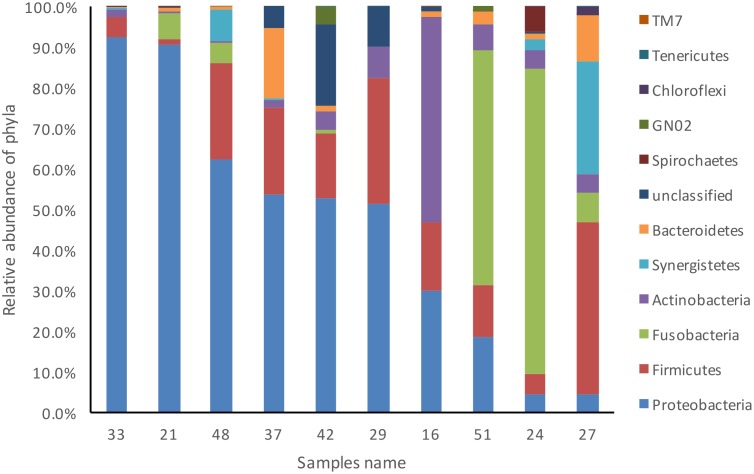
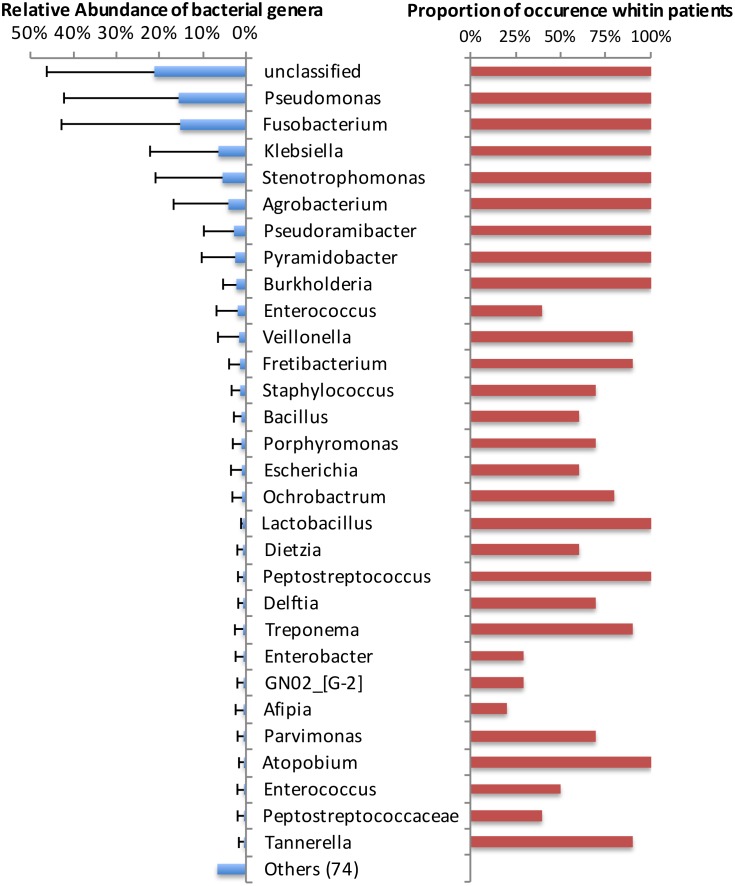
All samples were positive for the presence of bacterial DNA. Bacterial taxa were mapped to 11 phyla and 103 genera composed by 538 distinct operational taxonomic units (OTUs) at 3% of dissimilarity. Over 85% of the sequences belonged to 4 phyla: Proteobacteria, Firmicutes, Fusobacteria and Actinobacteria. In general, these 4 phyla accounted for approximately 80% of the distinct OTUs found in the apical root samples. Proteobacteria was the most abundant phylum in 6/10 samples. Fourteen genera had representatives identified in all cases. Overall, the genera Fusobacterium and Pseudomonas were the most dominant. Enterococcus was found in 4 cases, always in relatively low abundance.
This study showed a highly complex bacterial community in the apical root canal system of adequately treated teeth with persistent apical periodontitis. This suggests that this disease is characterized by multispecies bacterial communities and has a heterogeneous etiology, because the community composition largely varied from case to case.
根尖根管系统中存在的细菌直接参与治疗后根尖周炎的发病机制。本研究采用新一代测序方法,以鉴定来自根管治疗后患治疗后疾病牙齿的冷冻粉碎根尖样本中存在的细菌分类群。
从10颗经充分治疗但仍患有持续性根尖周炎的牙齿的根尖周手术中获取根尖标本,进行低温研磨。从粉末中提取DNA,并基于16S rRNA基因的V4高变区,使用Illumina MiSeq设备进行双端测序,对微生物群落进行表征。
所有样本的细菌DNA检测均呈阳性。细菌分类群被映射到11个门和103个属,由538个不同的可操作分类单元(OTU)组成,差异度为3%。超过85%的序列属于4个门:变形菌门、厚壁菌门、梭杆菌门和放线菌门。总体而言,这4个门约占根尖样本中发现的不同OTU的80%。变形菌门是6/10样本中最丰富的门。在所有病例中均鉴定出14个属的代表。总体而言,梭杆菌属和假单胞菌属最为占主导地位。在4例病例中发现了肠球菌,其丰度始终相对较低。
本研究显示,在经充分治疗但仍患有持续性根尖周炎的牙齿的根尖根管系统中,存在高度复杂的细菌群落。这表明该疾病的特征是多物种细菌群落,病因具有异质性,因为不同病例之间的群落组成差异很大。