Liu Weixi, Ma Hang, DaSilva Nicholas A, Rose Kenneth N, Johnson Shelby L, Zhang Lu, Wan Chunpeng, Dain Joel A, Seeram Navindra P
Department of Chemistry, University of Rhode Island, Kingston, RI 02881, USA.
Bioactive Botanical Research Laboratory, Department of Biomedical and Pharmaceutical Sciences, College of Pharmacy, University of Rhode Island, Kingston, RI 02881, USA.
Neurochem Int. 2016 Nov;100:164-177. doi: 10.1016/j.neuint.2016.09.014. Epub 2016 Sep 29.
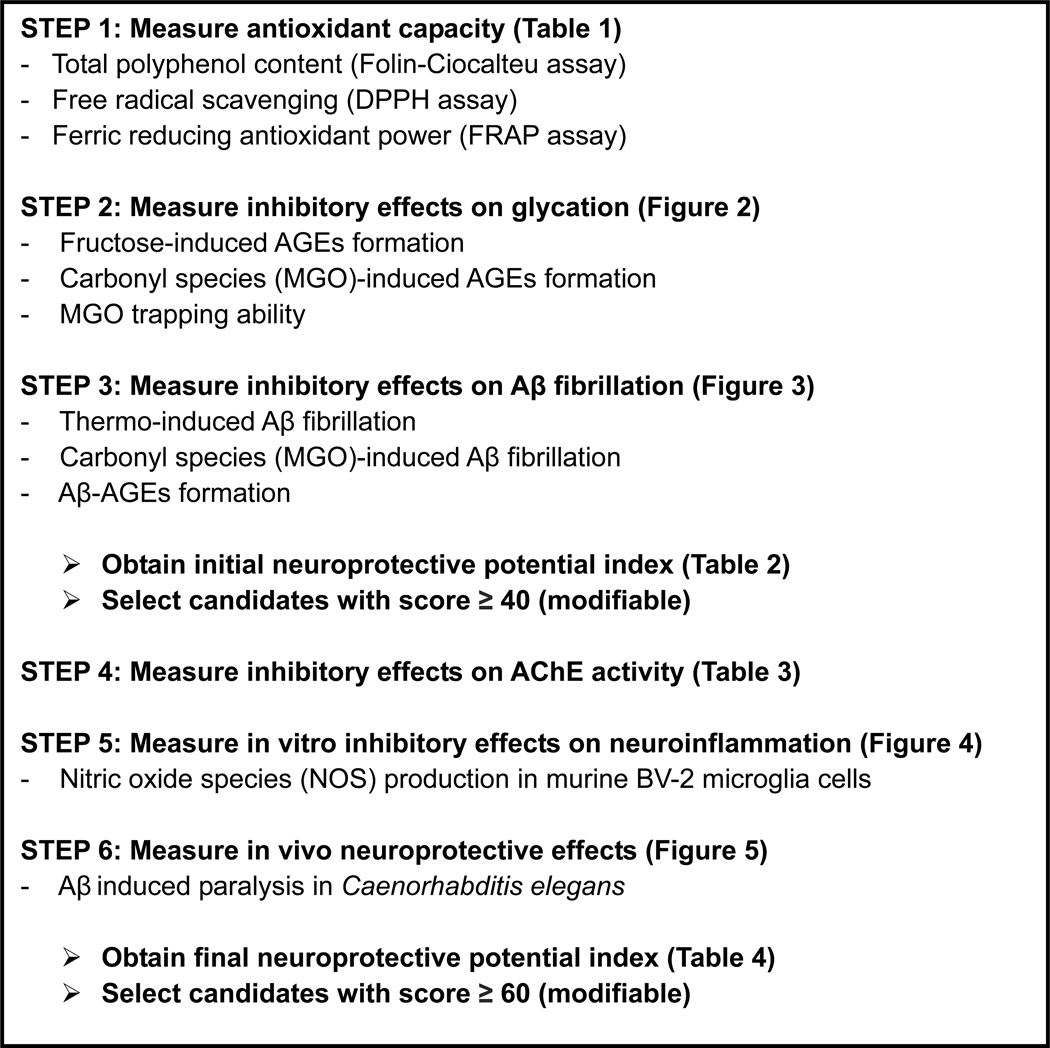
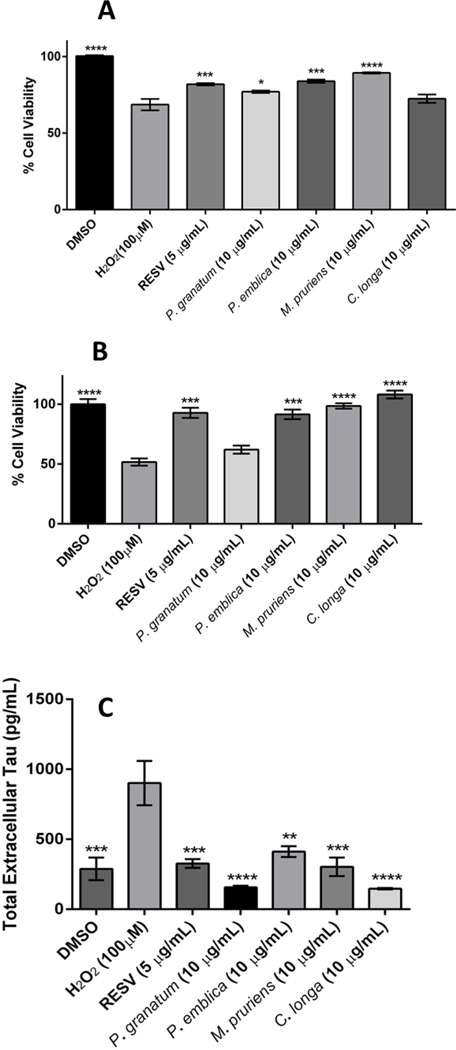
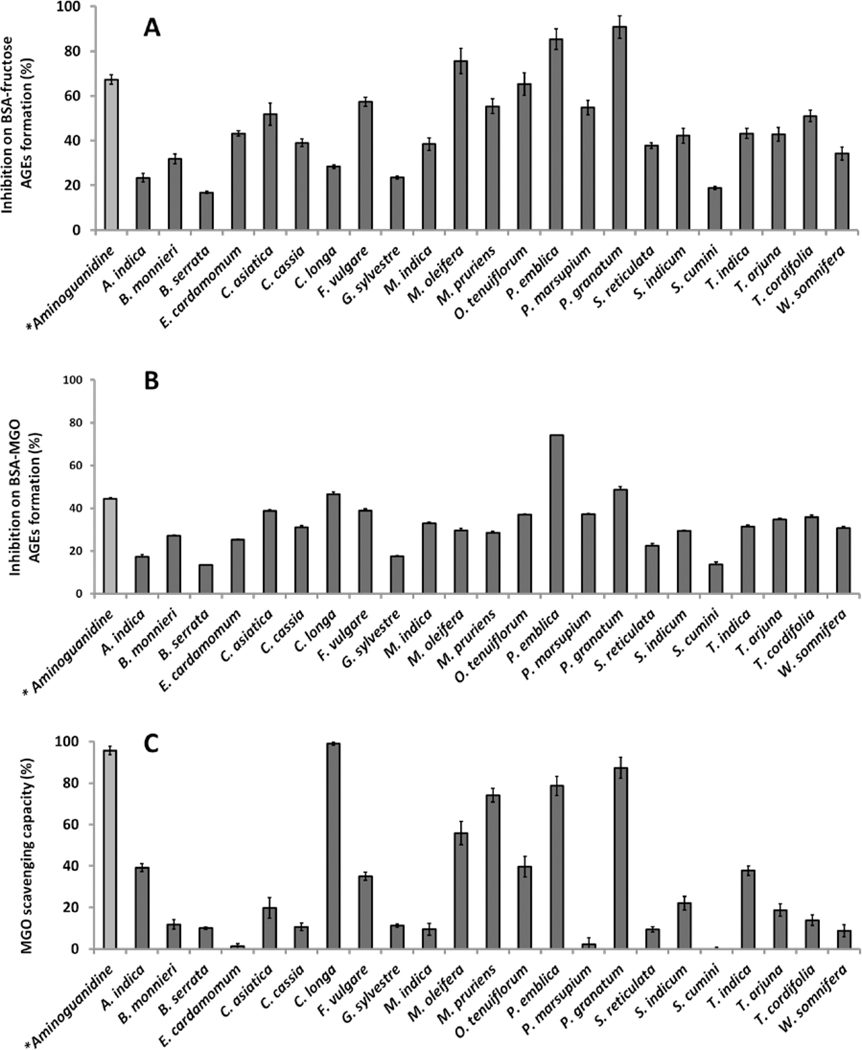
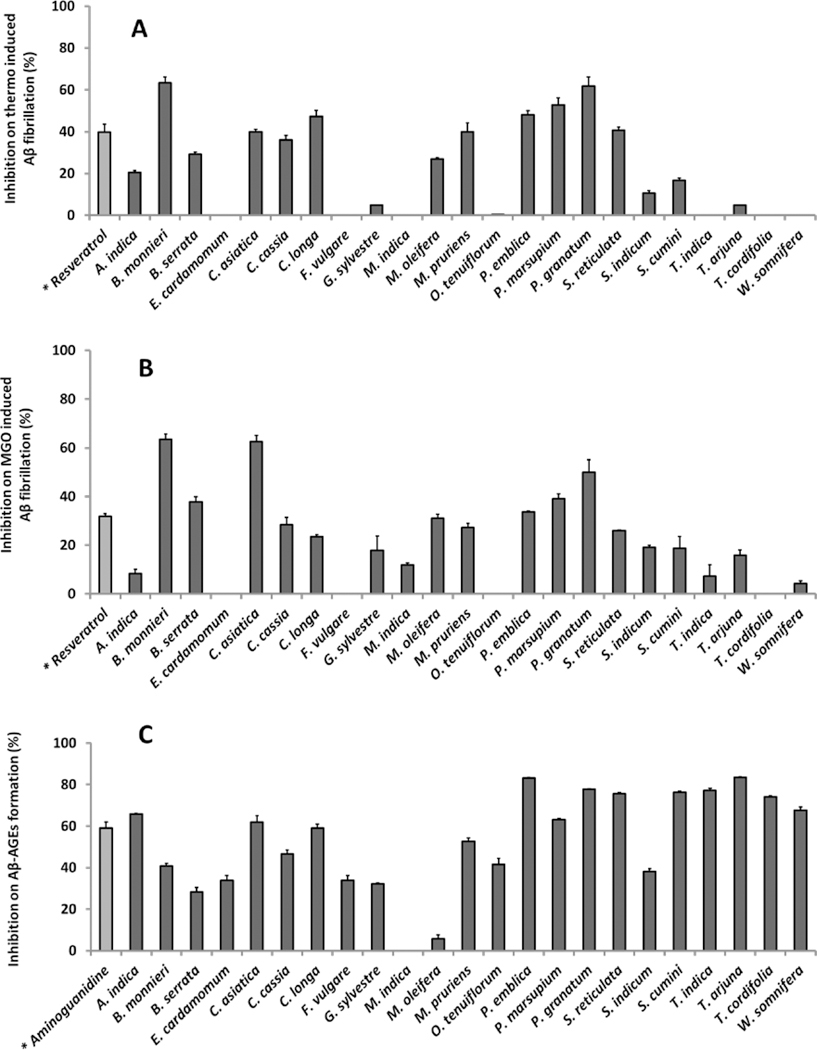
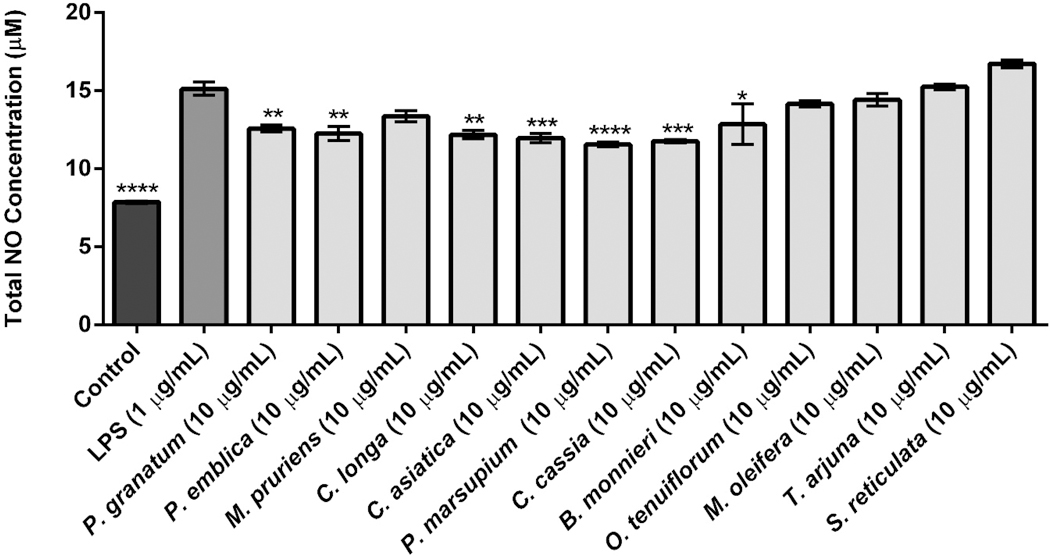
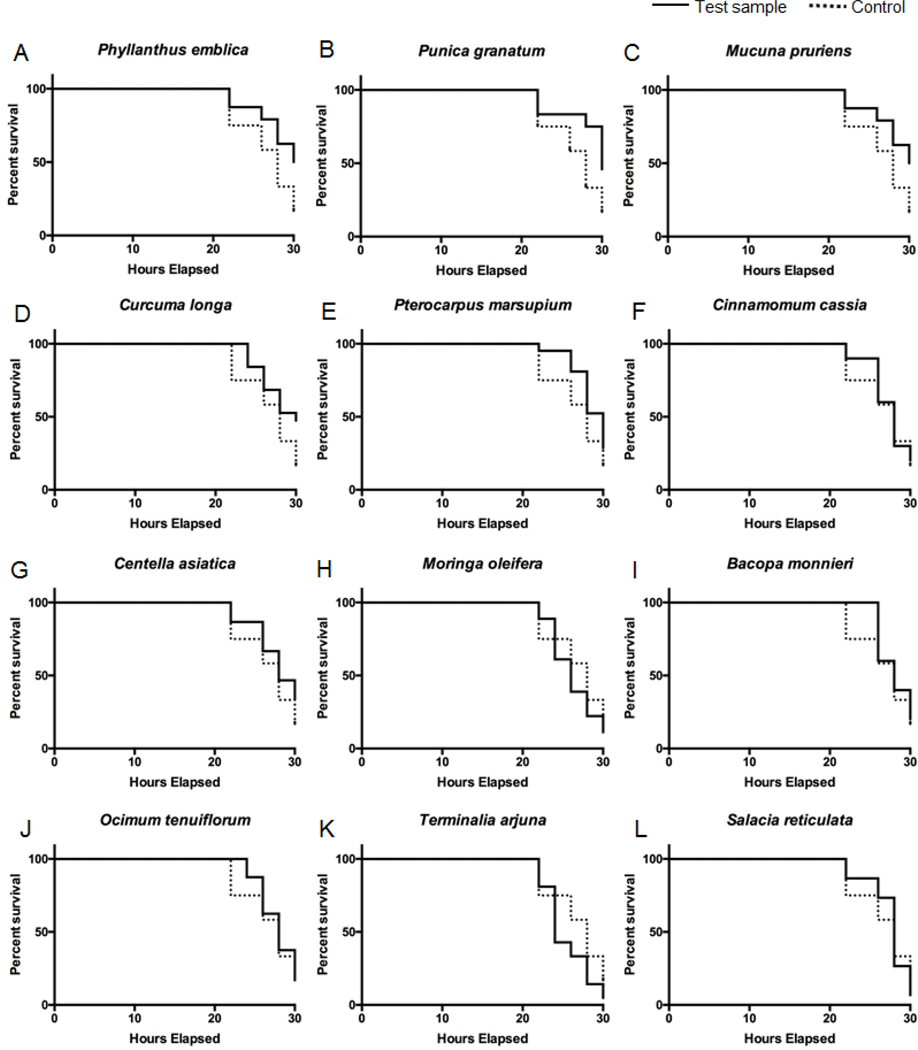
Medicinal plants are promising candidates for Alzheimer's disease (AD) research but there is lack of systematic algorithms and procedures to guide their selection and evaluation. Herein, we developed a Neuroprotective Potential Algorithm (NPA) by evaluating twenty-three standardized and chemically characterized Ayurvedic medicinal plant extracts in a panel of bioassays targeting oxidative stress, carbonyl stress, protein glycation, amyloid beta (Aβ) fibrillation, acetylcholinesterase (AChE) inhibition, and neuroinflammation. The twenty-three herbal extracts were initially evaluated for: 1) total polyphenol content (Folin-Ciocalteu assay), 2) free radical scavenging capacity (DPPH assay), 3) ferric reducing antioxidant power (FRAP assay), 4) reactive carbonyl species scavenging capacity (methylglyoxal trapping assay), 5) anti-glycative effects (BSA-fructose, and BSA-methylglyoxal assays) and, 6) anti-Aβ fibrillation effects (thioflavin-T assay). Based on assigned index scores from the initial screening, twelve extracts with a cumulative NPA score ≥40 were selected for further evaluation for their: 1) inhibitory effects on AChE activity, 2) in vitro anti-inflammatory effects on murine BV-2 microglial cells (Griess assay measuring levels of lipopolysaccharide-induced nitric oxide species), and 3) in vivo neuroprotective effects on Caenorhabditis elegans post induction of Aβ induced neurotoxicity and paralysis. Among these, four extracts had a cumulative NPA score ≥60 including Phyllanthus emblica (amla; Indian gooseberry), Mucuna pruriens (velvet bean), Punica granatum (pomegranate) and Curcuma longa (turmeric; curcumin). These extracts also showed protective effects on HO induced cytotoxicity in differentiated cholinergic human neuronal SH-SY5Y and murine BV-2 microglial cells and reduced tau protein levels in the SH-SY5Y neuronal cells. While published animal data support the neuroprotective effects of several of these Ayurvedic medicinal plant extracts, some remain unexplored for their anti-AD potential. Therefore, the NPA may be utilized, in part, as a strategy to help guide the selection of promising medicinal plant candidates for future AD-based research using animal models.
药用植物是阿尔茨海默病(AD)研究中很有前景的候选对象,但缺乏系统的算法和程序来指导其选择和评估。在此,我们通过在一系列针对氧化应激、羰基应激、蛋白质糖基化、淀粉样β蛋白(Aβ)纤维化、乙酰胆碱酯酶(AChE)抑制和神经炎症的生物测定中评估23种标准化且经过化学表征的阿育吠陀药用植物提取物,开发了一种神经保护潜力算法(NPA)。这23种草药提取物最初被评估了以下方面:1)总多酚含量(福林 - 西奥尔特法),2)自由基清除能力(DPPH法),3)铁还原抗氧化能力(FRAP法),4)活性羰基物种清除能力(甲基乙二醛捕获法),5)抗糖基化作用(牛血清白蛋白 - 果糖和牛血清白蛋白 - 甲基乙二醛法),以及6)抗Aβ纤维化作用(硫黄素 - T法)。根据初步筛选分配的指标分数,选择了12种累积NPA分数≥40的提取物进行进一步评估,评估内容包括:1)对AChE活性的抑制作用,2)对小鼠BV - 2小胶质细胞的体外抗炎作用(通过格里斯法测量脂多糖诱导的一氧化氮水平),以及3)对秀丽隐杆线虫在Aβ诱导的神经毒性和麻痹后的体内神经保护作用。其中,有4种提取物的累积NPA分数≥60,包括余甘子(印度醋栗)、刺毛黧豆、石榴和姜黄(姜黄素)。这些提取物还对分化的胆碱能人神经元SH - SY5Y细胞和小鼠BV - 2小胶质细胞中HO诱导的细胞毒性表现出保护作用,并降低了SH - SY5Y神经元细胞中的tau蛋白水平。虽然已发表的动物数据支持其中几种阿育吠陀药用植物提取物的神经保护作用,但有些提取物的抗AD潜力仍未被探索。因此,NPA可部分用作一种策略,以帮助指导选择有前景的药用植物候选物,用于未来基于动物模型的AD研究。