Li Cong, Guo Xiao-Dan, Lei Min, Wu Jia-Yi, Jin Jia-Zhen, Shi Xiao-Fan, Zhu Zhi-Yuan, Rukachaisirikul Vatcharin, Hu Li-Hong, Wen Tie-Qiao, Shen Xu
School of Life Sciences, Shanghai University, Shanghai 200444, China.
Key Laboratory of Receptor Research, Shanghai Institute of Materia Medica, Chinese Academy of Sciences, Shanghai 201203, China.
Acta Pharmacol Sin. 2017 Jan;38(1):9-28. doi: 10.1038/aps.2016.94. Epub 2016 Oct 3.
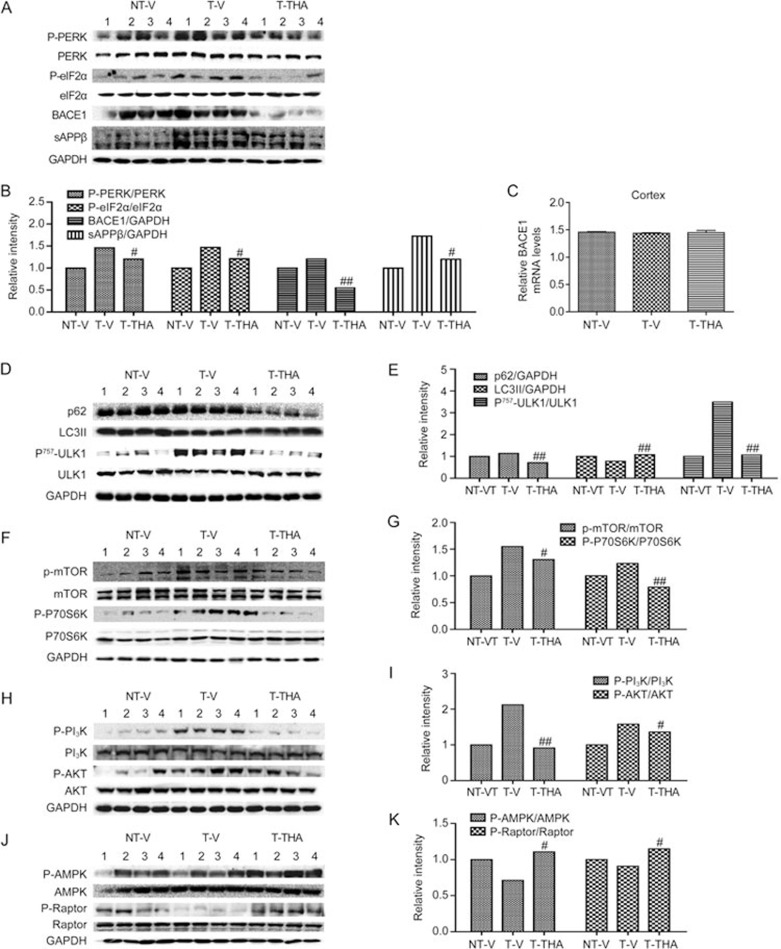
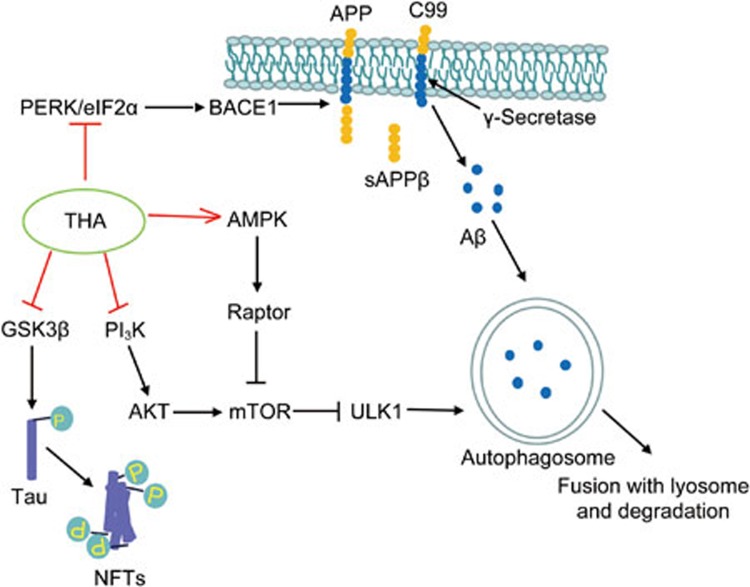
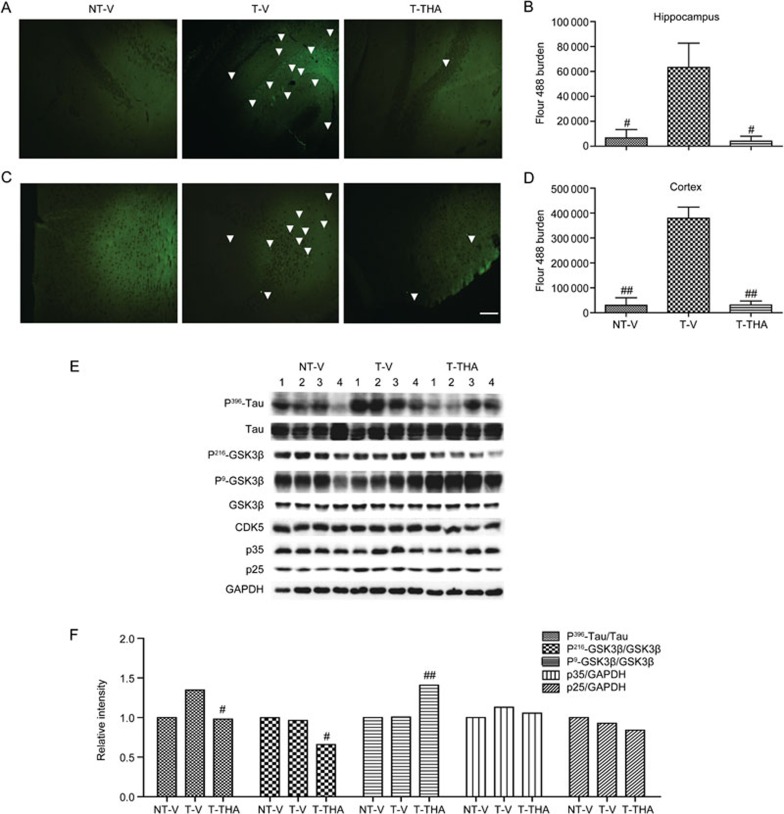
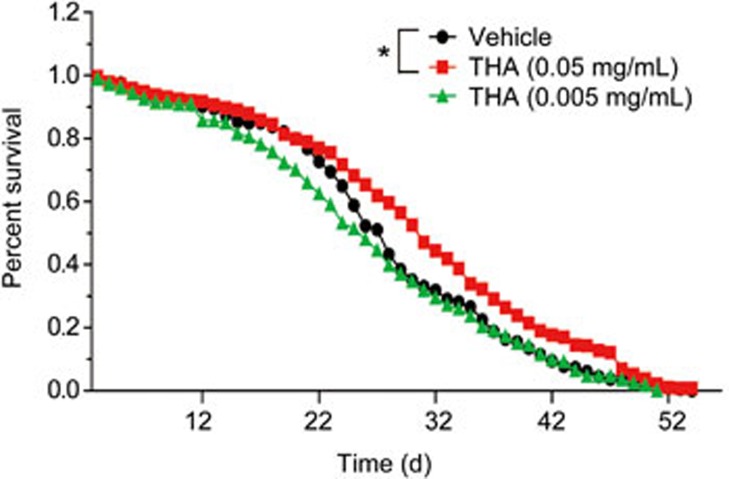
Considering the complicated pathogenesis of Alzheimer's disease (AD), multi-targets have become a focus in the discovery of drugs for treatment of this disease. In the current work, we established a multi-target strategy for discovering active reagents capable of suppressing both Aβ level and Tau hyperphosphorylation from natural products, and found that the ethanol extract of Thamnolia vermicularis (THA) was able to improve learning ability in APP/PS1 transgenic mice by inhibiting both Aβ levels and Tau hyperphosphorylation. SH-SY5Y and CHO-APP/BACE1 cells and primary astrocytes were used in cell-based assays. APP/PS1 transgenic mice [B6C3-Tg(APP, PS1dE9)] were administered THA (300 mg·kg·d, ig) for 100 d. After the administration was completed, the learning ability of the mice was detected using a Morris water maze (MWM) assay; immunofluorescence staining, Congo red staining and Thioflavine S staining were used to detect the senile plaques in the brains of the mice. ELISA was used to evaluate Aβ and sAPPβ contents, and Western blotting and RT-PCR were used to investigate the relevant signaling pathway regulation in response to THA treatment. In SH-SY5Y cells, THΑ (1, 10, 20 μg/mL) significantly stimulated PIK/AKT/mTOR and AMPK/raptor/mTOR signaling-mediated autophagy in the promotion of Aβ clearance as both a PIK inhibitor and an AMPK indirect activator, and restrained Aβ production as a suppressor against PERK/eIF2α-mediated BACE1 expression. Additionally, THA functioned as a GSK3β inhibitor with an IC of 1.32±0.85 μg/mL, repressing Tau hyperphosphorylation. Similar effects on Aβ accumulation and Tau hyperphosphorylation were observed in APP/PS1 transgenic mice treated with THA. Furthermore, administration of THA effectively improved the learning ability of APP/PS1 transgenic mice, and markedly reduced the number of senile plaques in their hippocampus and cortex. The results highlight the potential of the natural product THA for the treatment of AD.
考虑到阿尔茨海默病(AD)复杂的发病机制,多靶点已成为治疗该疾病药物研发的重点。在当前工作中,我们建立了一种多靶点策略,用于从天然产物中发现能够同时抑制Aβ水平和Tau蛋白过度磷酸化的活性试剂,并发现松萝(THA)的乙醇提取物能够通过抑制Aβ水平和Tau蛋白过度磷酸化来提高APP/PS1转基因小鼠的学习能力。基于细胞的实验使用了SH-SY5Y和CHO-APP/BACE1细胞以及原代星形胶质细胞。给APP/PS1转基因小鼠[B6C3-Tg(APP, PS1dE9)]灌胃THA(300 mg·kg·d,ig),持续100天。给药结束后,使用莫里斯水迷宫(MWM)实验检测小鼠的学习能力;采用免疫荧光染色、刚果红染色和硫黄素S染色检测小鼠大脑中的老年斑。使用ELISA评估Aβ和sAPPβ含量,使用蛋白质免疫印迹法和逆转录-聚合酶链反应研究THA处理后相关信号通路的调控。在SH-SY5Y细胞中,THA(1、10、20 μg/mL)作为PI3K抑制剂和AMPK间接激活剂,显著刺激PI3K/AKT/mTOR和AMPK/raptor/mTOR信号介导的自噬以促进Aβ清除,并作为PERK/eIF2α介导的BACE1表达的抑制剂抑制Aβ生成。此外,THA作为GSK3β抑制剂,IC50为1.32±0.85 μg/mL,可抑制Tau蛋白过度磷酸化。在用THA处理的APP/PS1转基因小鼠中观察到对Aβ积累和Tau蛋白过度磷酸化有类似影响。此外,给予THA有效提高了APP/PS1转基因小鼠的学习能力,并显著减少了其海马体和皮质中的老年斑数量。结果突出了天然产物THA治疗AD的潜力。