Zheng Hailin, Fridkin Mati, Youdim Moussa
Department of Medicinal Chemistry, Intra-cellular Therapies Inc., New York, NY, USA.
Department of Organic Chemistry, Weizmann Institute of Science, Rehovot, Israel.
Perspect Medicin Chem. 2015 Feb 9;7:1-8. doi: 10.4137/PMC.S13210. eCollection 2015.
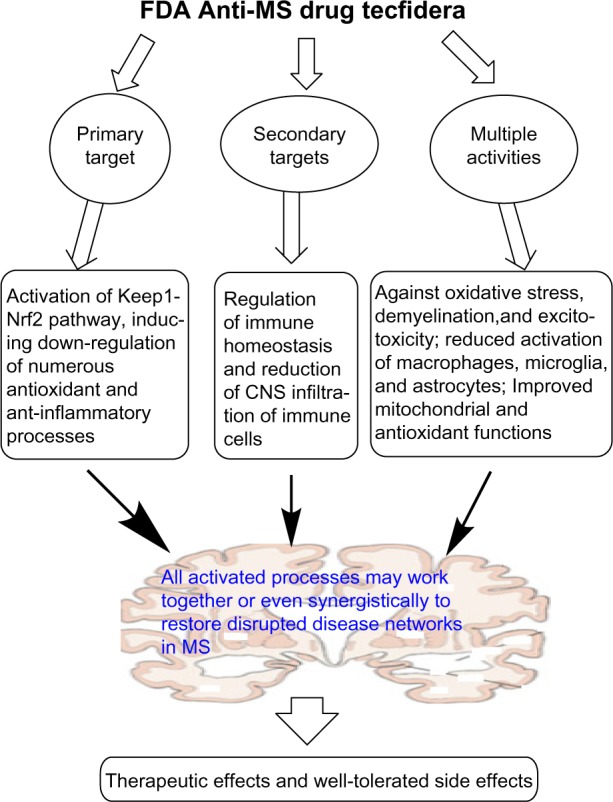
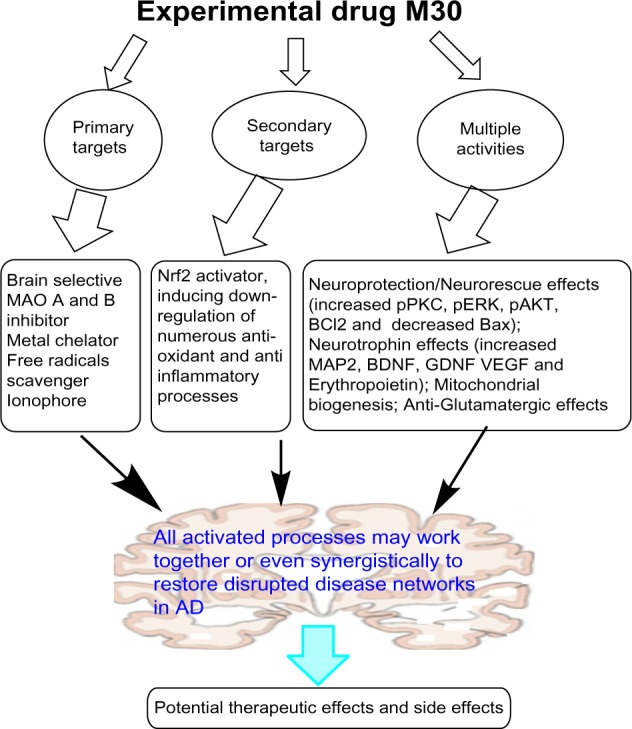
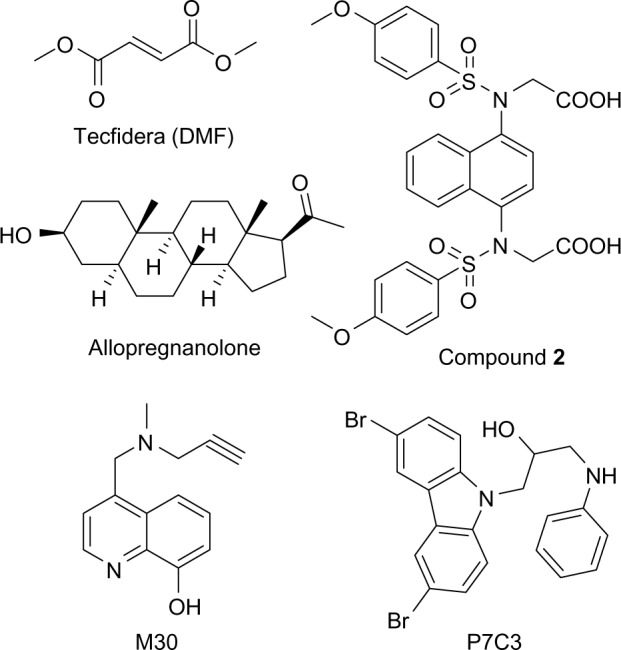
To date, no truly efficacious drugs for Alzheimer's disease (AD) have been developed; moreover, all new anti-AD drugs developed since 2003 have failed. To succeed where previous ones have failed in drug development, new approaches for AD therapy are needed. Here we discuss the potential application of network medicine as a new approach to AD treatment. Unlike traditional approaches focused on a single target/pathway, network medicine targets and restores disease-disrupted networks through simultaneous modulation of numerous proteins (targets)/pathways involved in AD pathogenesis. We consider several drug candidates under development for AD therapy, including Keap1-Nrf2 regulators, endogenous neurogenic agents, and hypoxia-inducible factor 1 (HIF-1) activators. These drug candidates are multi-target ligands with the potential to further develop as network medicines, since they act as master regulators to initiate a broad range of cellular defense mechanisms/cytoprotective genes that exert their efficacy in a holistic way. We also explore their diverse mechanisms of action and potential disease-modifying effects, which may have profound implications for drug discovery.
迄今为止,尚未研发出真正有效的治疗阿尔茨海默病(AD)的药物;此外,自2003年以来研发的所有新型抗AD药物均告失败。为了在先前药物研发失败的领域取得成功,需要采用新的AD治疗方法。在此,我们讨论网络医学作为一种新的AD治疗方法的潜在应用。与专注于单一靶点/途径的传统方法不同,网络医学通过同时调节AD发病机制中涉及的众多蛋白质(靶点)/途径,来靶向并恢复疾病破坏的网络。我们考虑了几种正在研发用于AD治疗的候选药物,包括Keap1-Nrf2调节剂、内源性神经生成剂和缺氧诱导因子1(HIF-1)激活剂。这些候选药物是多靶点配体,有潜力进一步发展成为网络药物,因为它们作为主要调节因子启动广泛的细胞防御机制/细胞保护基因,以整体方式发挥其功效。我们还探讨了它们多样的作用机制和潜在的疾病修饰作用,这可能对药物发现具有深远意义。