Institute of Learning Sciences, National Tsing Hua University, Hsinchu, Taiwan.
Sci Rep. 2016 Oct 3;6:34580. doi: 10.1038/srep34580.
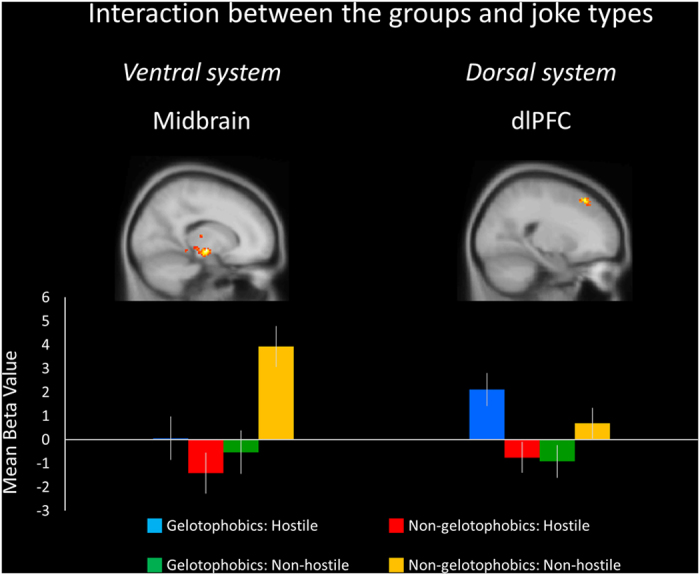
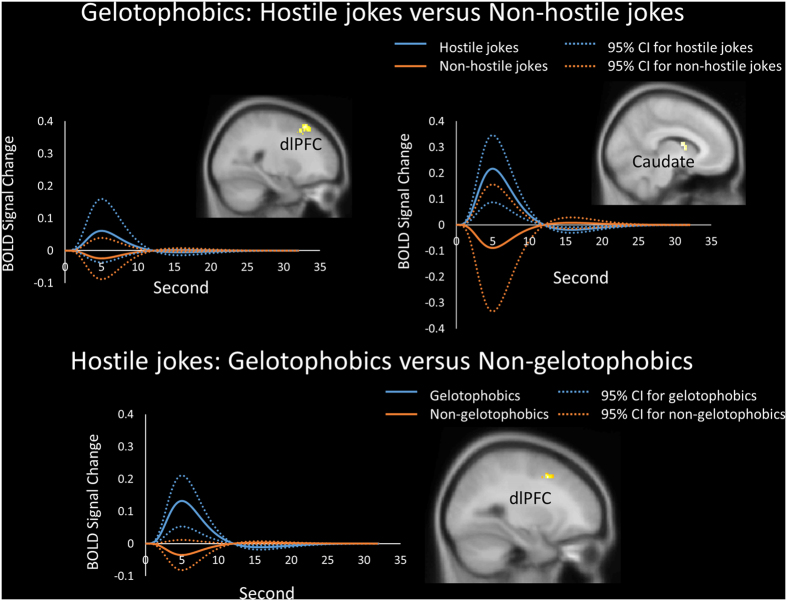
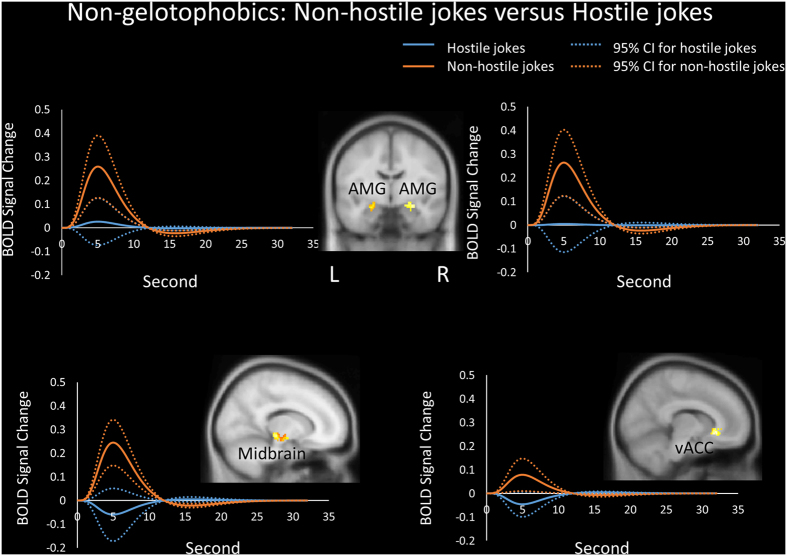
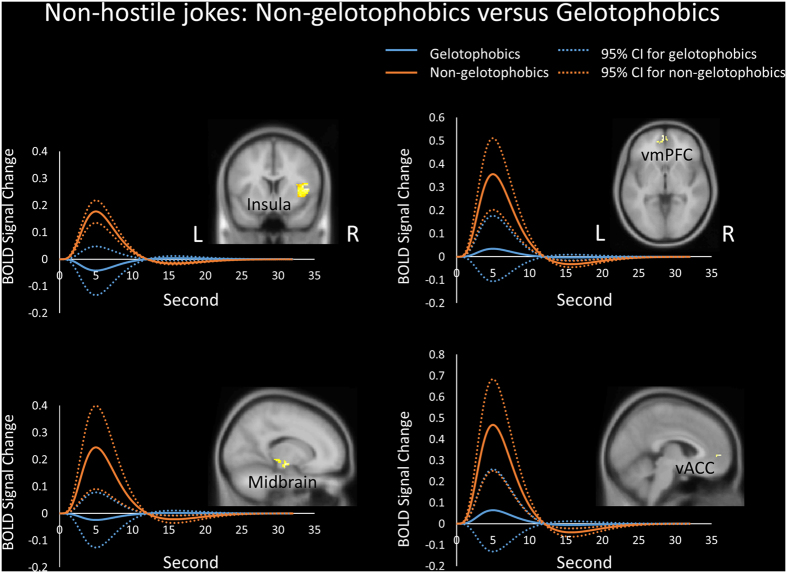
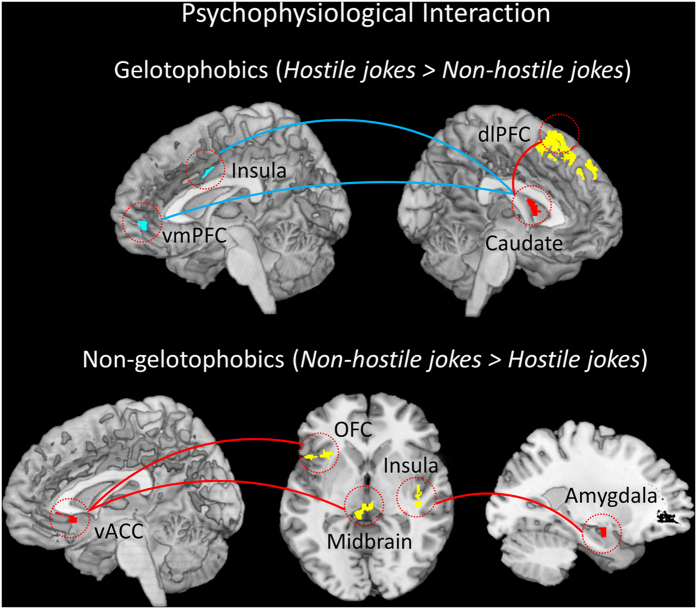
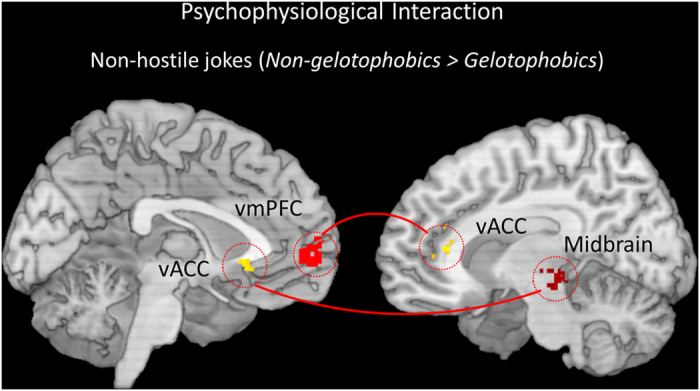
Gelotophobics have social deficits in the form of relative humorlessness and heightened sensitivity to aggressive humor; however, little is known about the neural reward mechanisms for this group. The present study attempted to identify the neural substrates of responses to hostile and non-hostile jokes in gelotophobics and non-gelotophobics. Gelotophobics showed greater activation than did non-gelotophobics in the dorsal corticostriatal system, which comprises the dorsolateral prefrontal cortex and dorsal striatum, suggesting a higher degree of voluntary top-down cognitive control of emotion. As expected, gelotophobics showed less activation in the ventral mesocorticolimbic system (MCL) in response to both hostile and non-hostile jokes, suggesting a relative deficit in the reward system. Conversely, non-gelotophobics displayed greater activation than gelotophobics did in the MCL system, particularly for non-hostile jokes, which suggests a more robust bottom-up emotional response. In response to non-hostile jokes, non-gelotophobics showed greater activation in the ventral MCL reward system, which comprises the midbrain, amygdalae, nucleus accumbens, ventral anterior cingulate cortex, and insula. Psychophysiological interaction analyses further showed that gelotophobics exhibited diminished MCL activation in response to hostile jokes. These group differences may have important implications for our understanding of the neural correlates of social motivation and humor appreciation.
恐笑症患者在幽默感相对缺乏和对攻击性幽默的敏感性增强方面存在社交缺陷;然而,对于该群体的神经奖励机制知之甚少。本研究试图确定恐笑症患者和非恐笑症患者对敌对和非敌对笑话的反应的神经基质。与非恐笑症患者相比,恐笑症患者在包括背外侧前额叶皮层和背侧纹状体在内的背侧皮质纹状体系统中表现出更高的激活,表明对情绪的自愿自上而下的认知控制程度更高。正如预期的那样,恐笑症患者在对敌对和非敌对笑话的反应中,中脑边缘奖赏系统(MCL)的激活程度较低,这表明奖赏系统存在相对缺陷。相反,非恐笑症患者在 MCL 系统中的激活程度高于恐笑症患者,尤其是对非敌对笑话,这表明他们的情绪反应更为强烈。非恐笑症患者在对非敌对笑话的反应中,中脑、杏仁核、伏隔核、腹侧前扣带回皮层和脑岛等组成的腹侧 MCL 奖赏系统表现出更高的激活。心理生理交互分析进一步表明,恐笑症患者在对敌对笑话的反应中 MCL 的激活程度降低。这些群体差异可能对我们理解社交动机和幽默欣赏的神经相关性具有重要意义。