Dong Dan-Dan, Zhou Hui, Li Gao
Department of Pathology, Sichuan Academy of Medical Sciences, Sichuan Provincial People's Hospital, Chengdu 610072, Sichuan, China.
Department of Thoracic Medicine, The Affiliated Cancer Hospital of Xiangya School of Medicine, Central South University, Changsha 410013, Hunan, China.
BMB Rep. 2016 Nov;49(11):623-628. doi: 10.5483/bmbrep.2016.49.11.133.
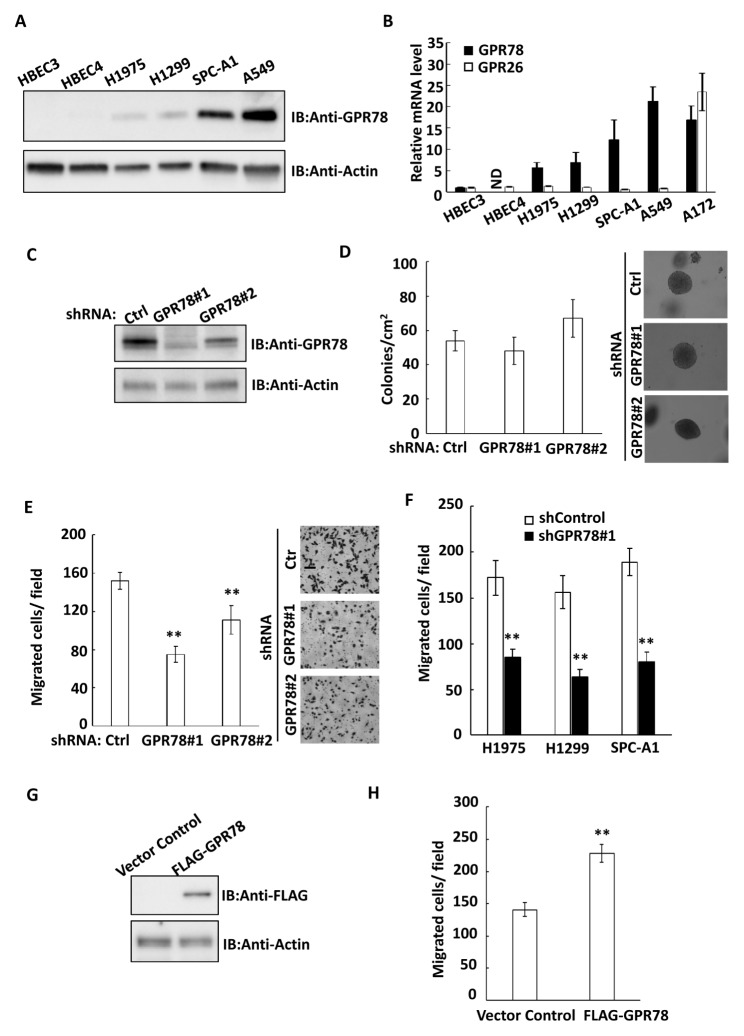
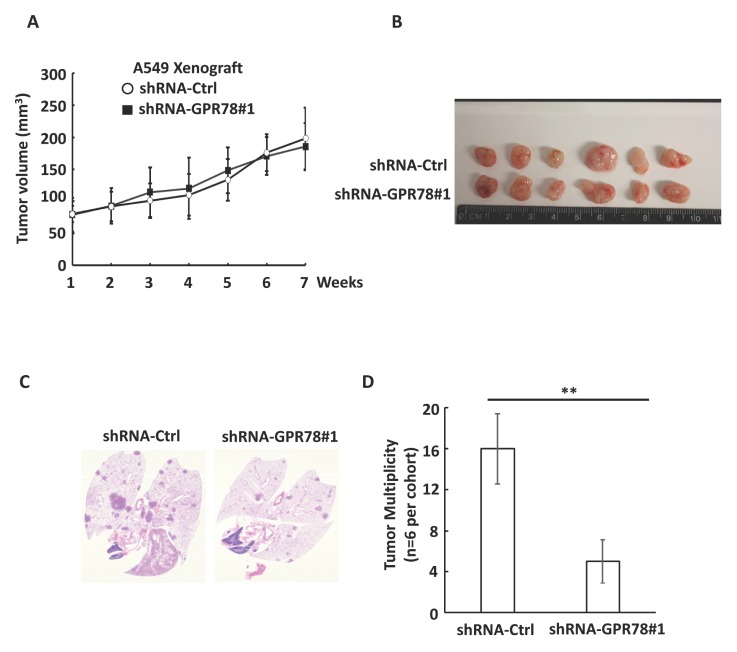
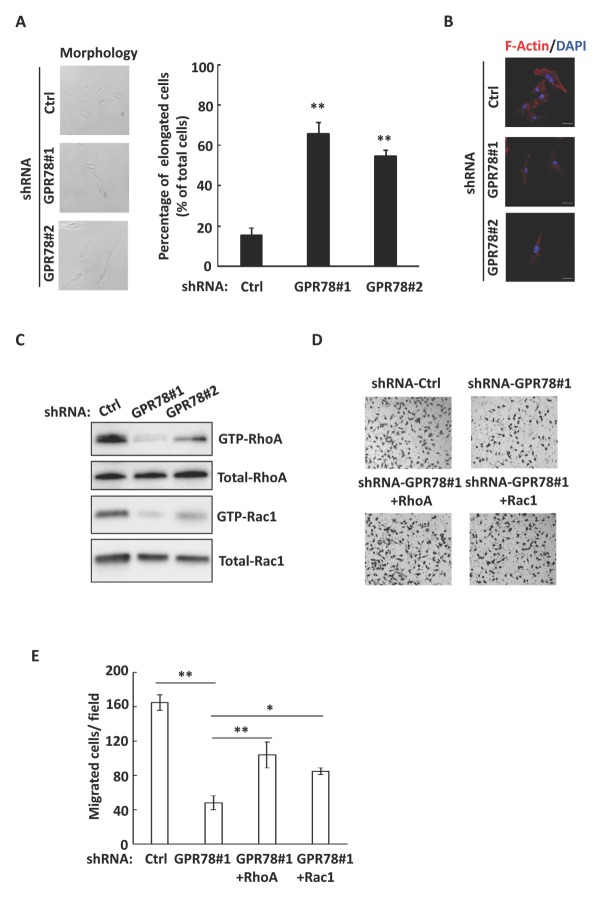
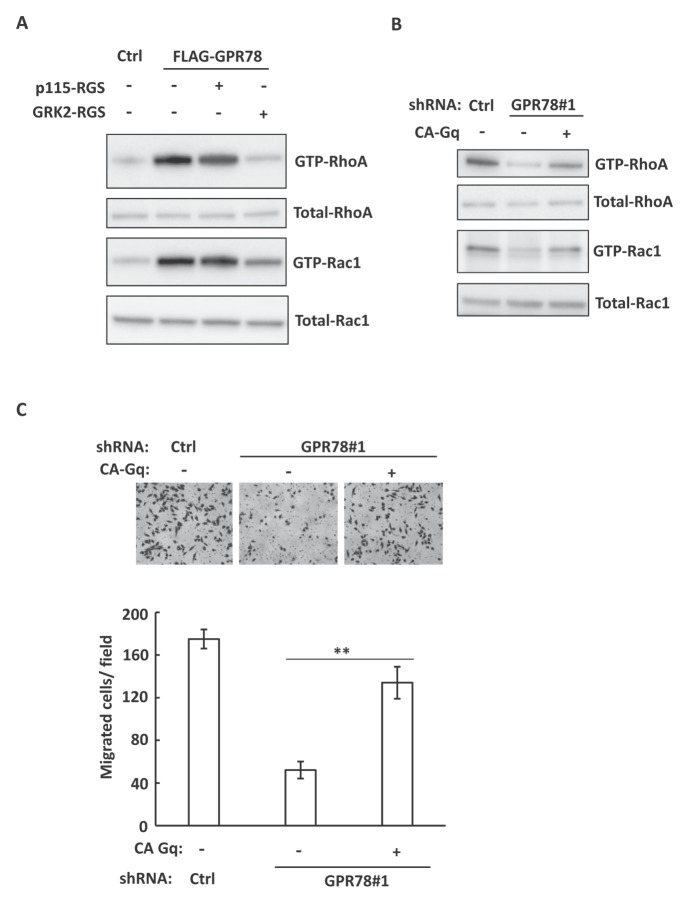
GPR78 is an orphan G-protein coupled receptor (GPCR) that is predominantly expressed in human brain tissues. Currently, the function of GPR78 is unknown. This study revealed that GPR78 was expressed in lung cancer cells and functioned as a novel regulator of lung cancer cell migration and metastasis. We found that knockdown of GPR78 in lung cancer cells suppressed cell migration. Moreover, GPR78 modulated the formation of actin stress fibers in A549 cells, in a RhoA- and Rac1-dependent manner. At the molecular level, GPR78 regulated cell motility through the activation of Gαq-RhoA/Rac1 pathway. We further demonstrated that in vivo, the knockdown of GPR78 inhibited lung cancer cell metastasis. These findings suggest that GPR78 is a novel regulator for lung cancer metastasis and may serve as a potential drug target against metastatic human lung cancer. [BMB Reports 2016; 49(11): 623-628].
GPR78是一种孤儿G蛋白偶联受体(GPCR),主要在人类脑组织中表达。目前,GPR78的功能尚不清楚。本研究表明,GPR78在肺癌细胞中表达,并作为肺癌细胞迁移和转移的新型调节因子发挥作用。我们发现,敲低肺癌细胞中的GPR78可抑制细胞迁移。此外,GPR78以RhoA和Rac1依赖的方式调节A549细胞中肌动蛋白应力纤维的形成。在分子水平上,GPR78通过激活Gαq-RhoA/Rac1途径调节细胞运动。我们进一步证明,在体内,敲低GPR78可抑制肺癌细胞转移。这些发现表明,GPR78是肺癌转移的新型调节因子,可能作为抗转移性人类肺癌的潜在药物靶点。[《BMB报告》2016年;49(11): 623 - 628]