Woods Andy T, Spence Charles
Crossmodal Research Laboratory, Oxford University, UK.
Iperception. 2016 Jul 7;7(4):2041669516658817. doi: 10.1177/2041669516658817. eCollection 2016 Jul-Aug.
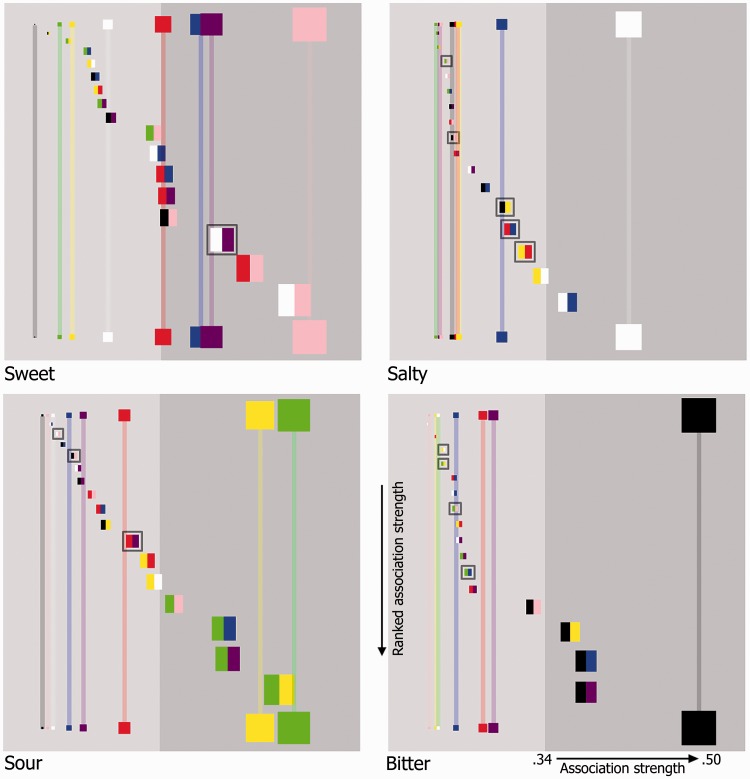
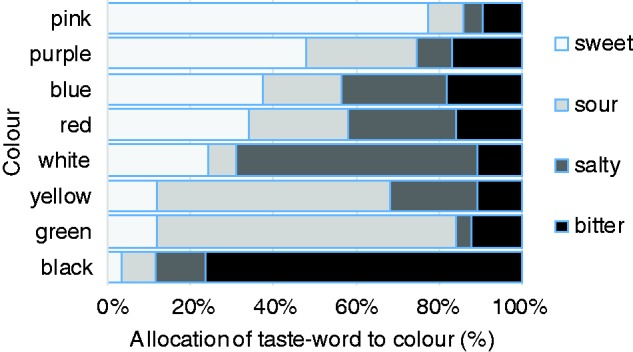
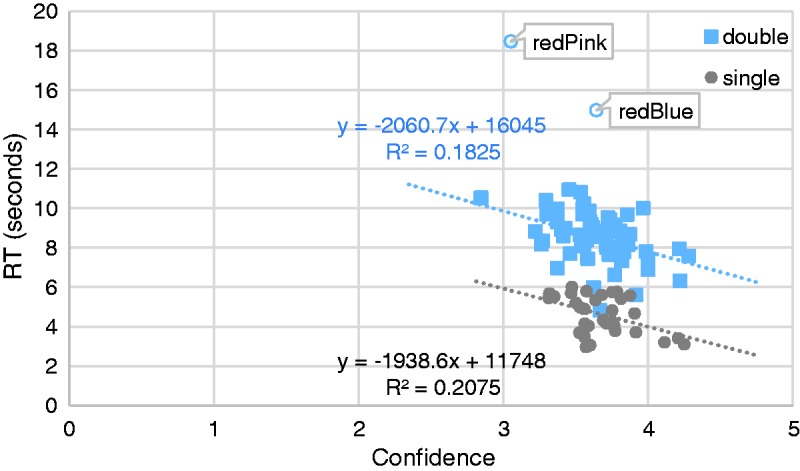
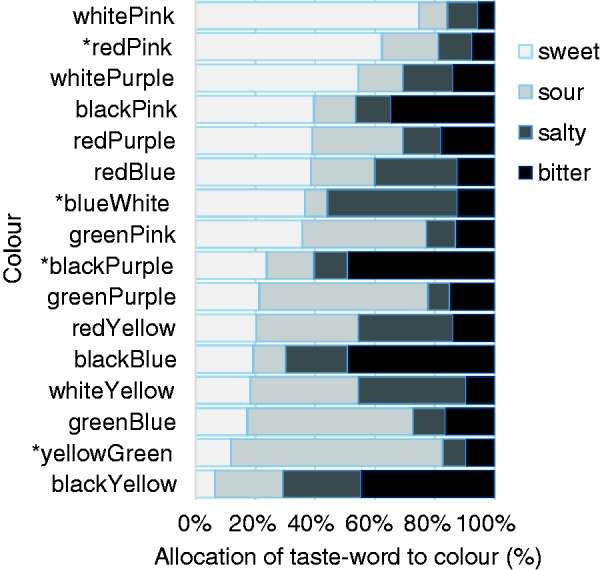
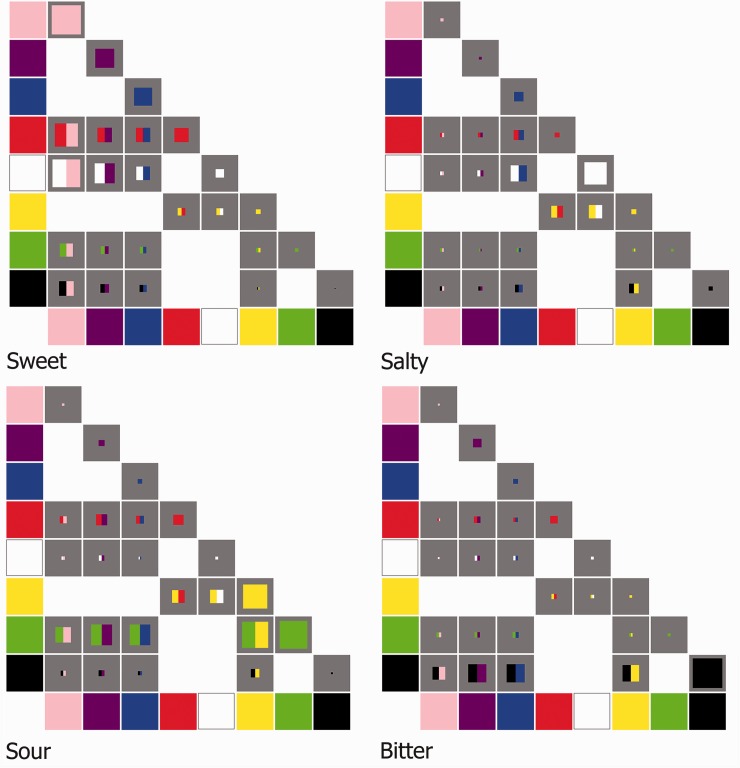
Recently, it has been demonstrated that people associate each of the basic tastes (e.g., sweet, sour, bitter, and salty) with specific colors (e.g., red, green, black, and white). In the present study, we investigated whether pairs of colors (both associated with a particular taste or taste word) would give rise to stronger associations relative to pairs of colors that were associated with different tastes. We replicate the findings of previous studies highlighting the existence of a robust crossmodal correspondence between individual colors and basic tastes. However, while there was evidence that pairs of colors could indeed communicate taste information more consistently than single colors, our participants took more than twice as long to match the color pairs with tastes than the single colors. Possible reasons for these results are discussed.
最近,已有研究表明,人们会将每种基本味道(如甜、酸、苦、咸)与特定颜色(如红、绿、黑、白)联系起来。在本研究中,我们调查了相对于与不同味道相关联的颜色对,与特定味道或味道词汇相关联的颜色对是否会产生更强的联想。我们重复了先前研究的结果,这些结果突出了个体颜色与基本味道之间存在着稳固的跨模态对应关系。然而,虽然有证据表明颜色对确实比单一颜色能更一致地传达味道信息,但我们的参与者将颜色对与味道进行匹配所花费的时间是将单一颜色与味道进行匹配的两倍多。本文讨论了这些结果可能的原因。