Wang Quanquan, Zhang Lili, Yuan Xiaodong, Ou Ya, Zhu Xuhong, Cheng Zanzan, Zhang Pingshu, Wu Xiaoying, Meng Yan, Zhang Liping
Department of Neurology, Affiliated Kailuan General Hospital of North China, University of Science and Technology, Tangshan, 063000, Hebei Province, China.
Key Laboratory of Neurological and Biological Function of Hebei Province, Tangshan, 063000, Hebei Province, China.
PLoS One. 2016 Oct 5;11(10):e0163327. doi: 10.1371/journal.pone.0163327. eCollection 2016.
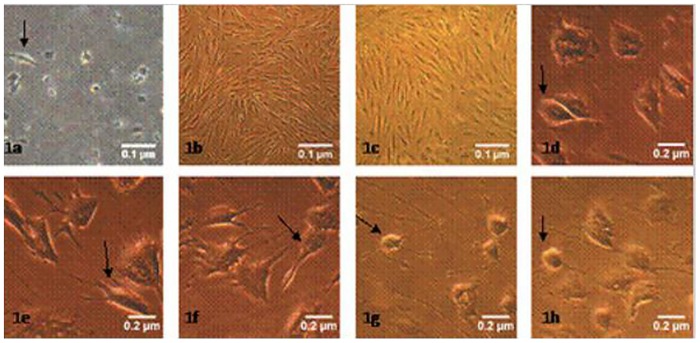
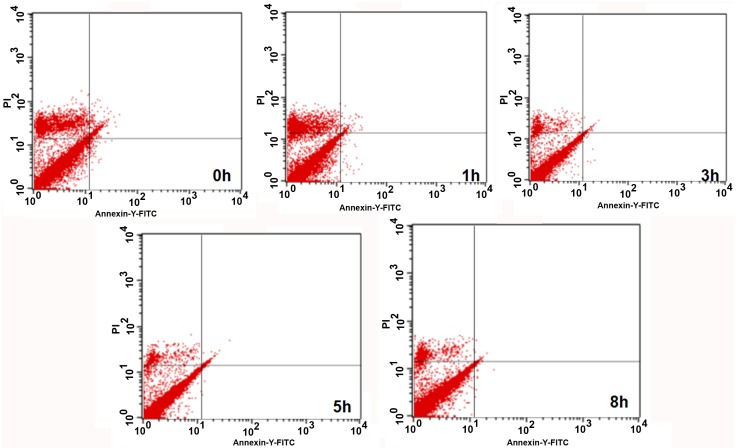
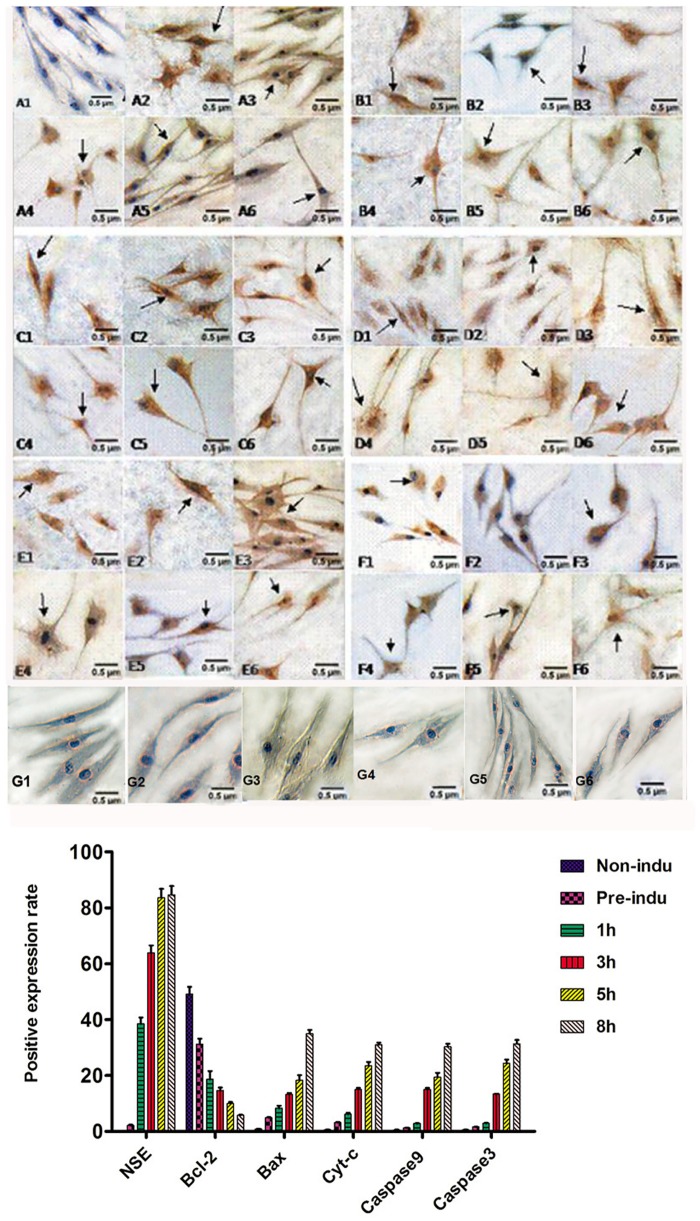
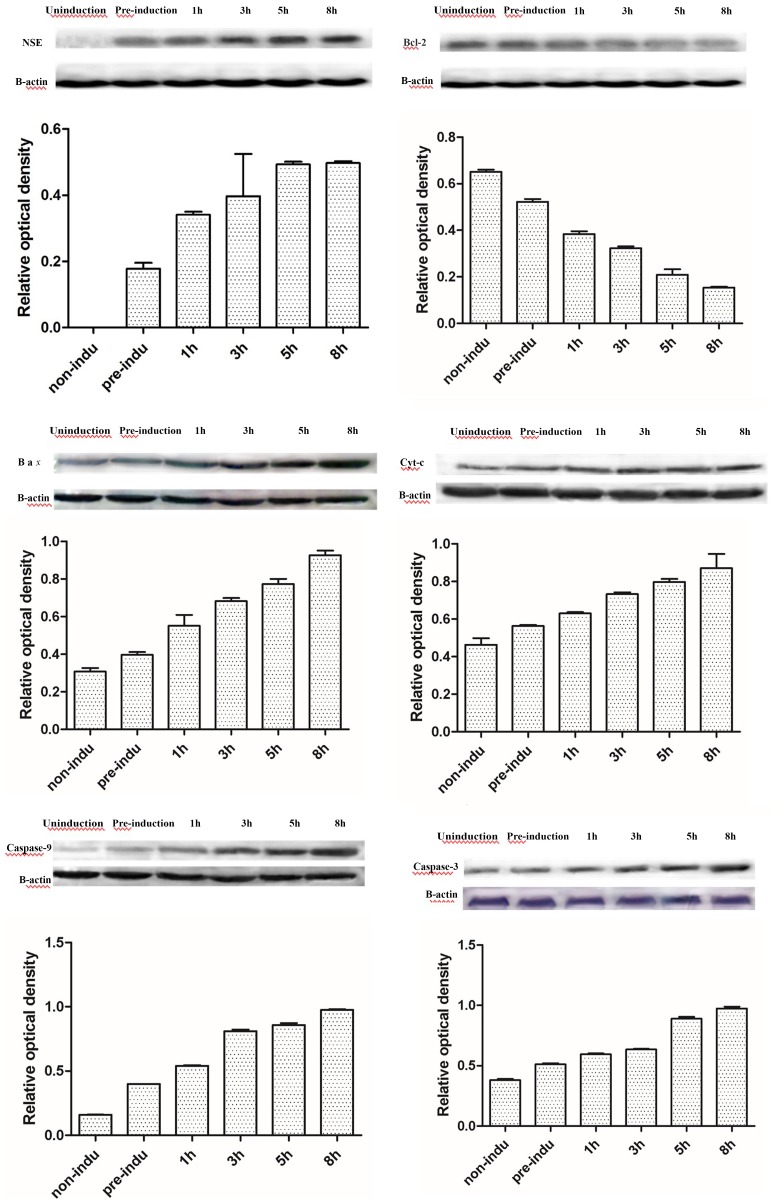
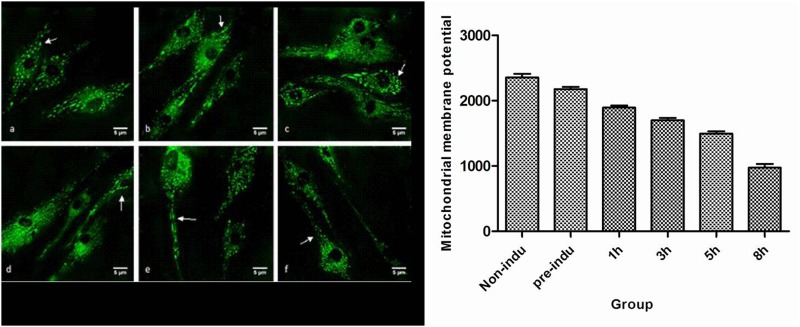
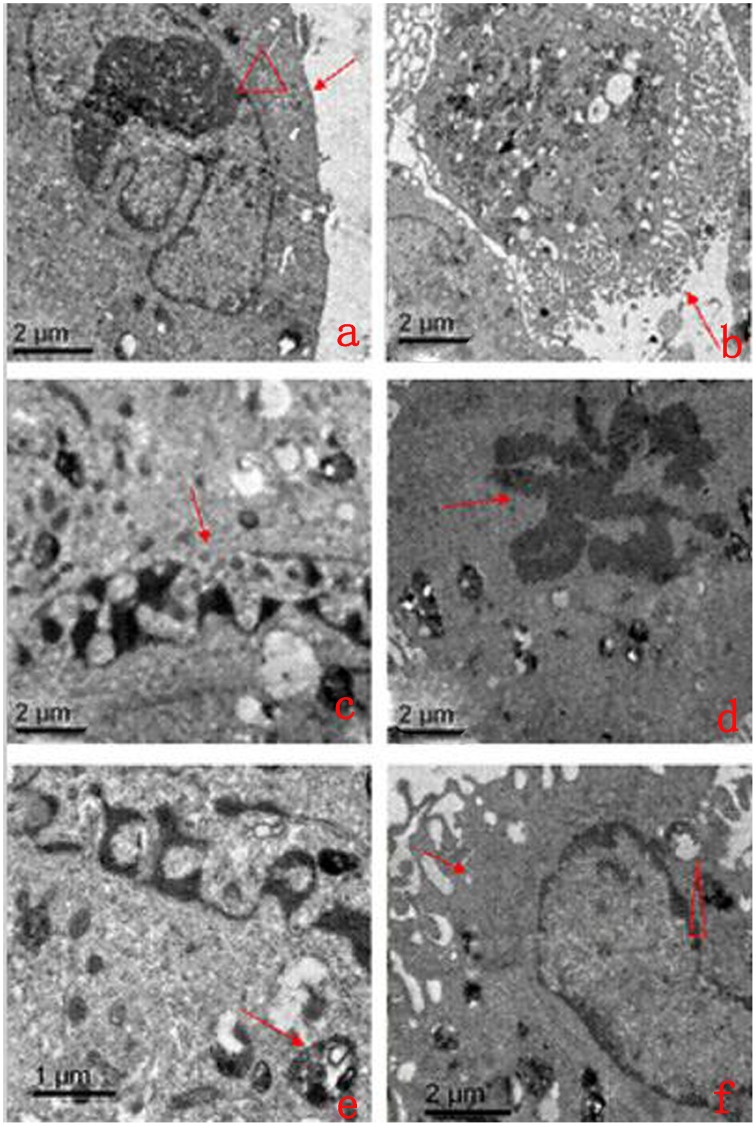
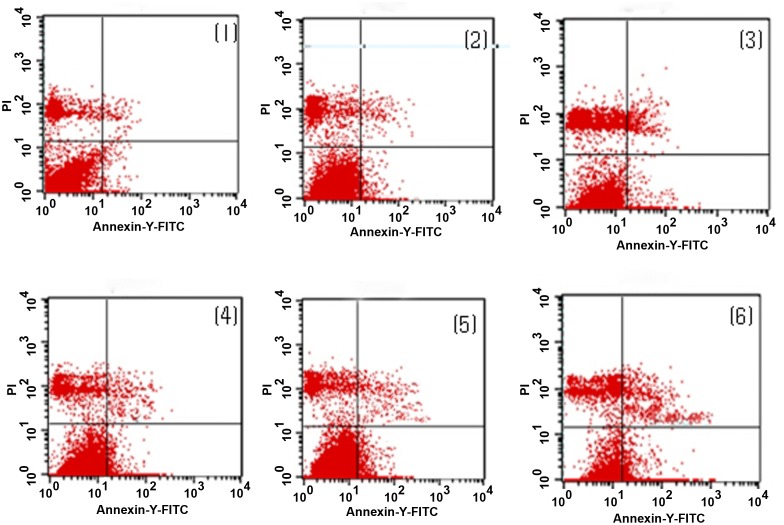
Our objective is to study the relationship between the regulatory proteins Bcl-2/Bax and mitochondria-mediated apoptosis during the differentiation of adipose-derived stromal cells (ADSCs) into neurons. Immunocytochemistry and western blotting showed that the cells weakly expressed neuron-specific enolase (NSE) in the non-induced group and expressed NSE more strongly in the groups induced for 1 h, 3 h, 5 h and 8 h. NSE expression peaked at 5 h (P < 0.05), although there was no significant difference between 5 and 8 h (P > 0.05). Bcl-2 expression gradually decreased over time in the non-induced group (P < 0.05). However, Bax, caspase-9, Cyt-c and caspase-3 expression gradually increased and peaked at 8 h (P < 0.05). Transmission electron microscopy revealed karyopyknosis, chromatin edge setting, mitochondria swelling and cavitation in cells at 5 h, and the mitochondrial membrane potential decreased over time, as demonstrated by laser scanning confocal microscopy. After a 5 h induction, cells differentiated into typical neurons and expressed Bcl-2, which inhibited apoptosis. Bax showed a strong apoptosis-promoting capacity, leading to changes in the mitochondrial membrane potential and structure, and then triggered the caspase-independent apoptotic response through the mitochondrial pathway. At the same time, Cyt-c was directly or indirectly released from the mitochondria to the cytoplasm to trigger the caspase-dependent apoptotic response through the mitochondrial pathway. Therefore, Bcl-2/Bax play an important role in regulating caspase-dependent and caspase-independent apoptosis mediated by the mitochondrial pathway during the differentiation of ADSCs into neurons.
我们的目的是研究脂肪来源的基质细胞(ADSCs)向神经元分化过程中调节蛋白Bcl-2/Bax与线粒体介导的细胞凋亡之间的关系。免疫细胞化学和蛋白质印迹法显示,未诱导组细胞中神经元特异性烯醇化酶(NSE)表达较弱,而在诱导1小时、3小时、5小时和8小时的组中NSE表达更强。NSE表达在5小时达到峰值(P<0.05),尽管5小时和8小时之间无显著差异(P>0.05)。未诱导组中Bcl-2表达随时间逐渐降低(P<0.05)。然而,Bax、半胱天冬酶-9、细胞色素C和半胱天冬酶-3表达逐渐增加并在8小时达到峰值(P<0.05)。透射电子显微镜显示5小时时细胞出现核固缩、染色质边缘化、线粒体肿胀和空泡化,激光扫描共聚焦显微镜显示线粒体膜电位随时间降低。诱导5小时后,细胞分化为典型神经元并表达Bcl-2,其抑制细胞凋亡。Bax显示出强大的促凋亡能力,导致线粒体膜电位和结构发生变化,然后通过线粒体途径触发不依赖半胱天冬酶的凋亡反应。同时,细胞色素C直接或间接从线粒体释放到细胞质中,通过线粒体途径触发依赖半胱天冬酶的凋亡反应。因此,Bcl-2/Bax在ADSCs向神经元分化过程中通过线粒体途径调节依赖半胱天冬酶和不依赖半胱天冬酶的凋亡中起重要作用。