Velasco Dianne, Hough Josh, Aradhya Mallikarjuna, Ross-Ibarra Jeffrey
Department of Plant Sciences, University of California, Davis, California 95616
United States Department of Agriculture, Agricultural Research Service, National Clonal Germplasm Repository, Davis, California 95616.
G3 (Bethesda). 2016 Dec 7;6(12):3985-3993. doi: 10.1534/g3.116.032672.
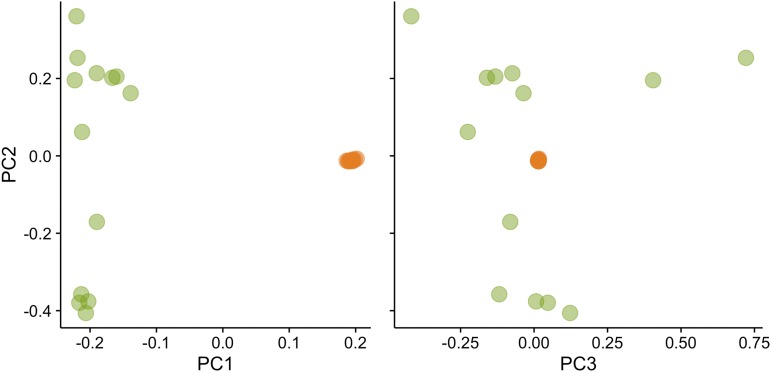
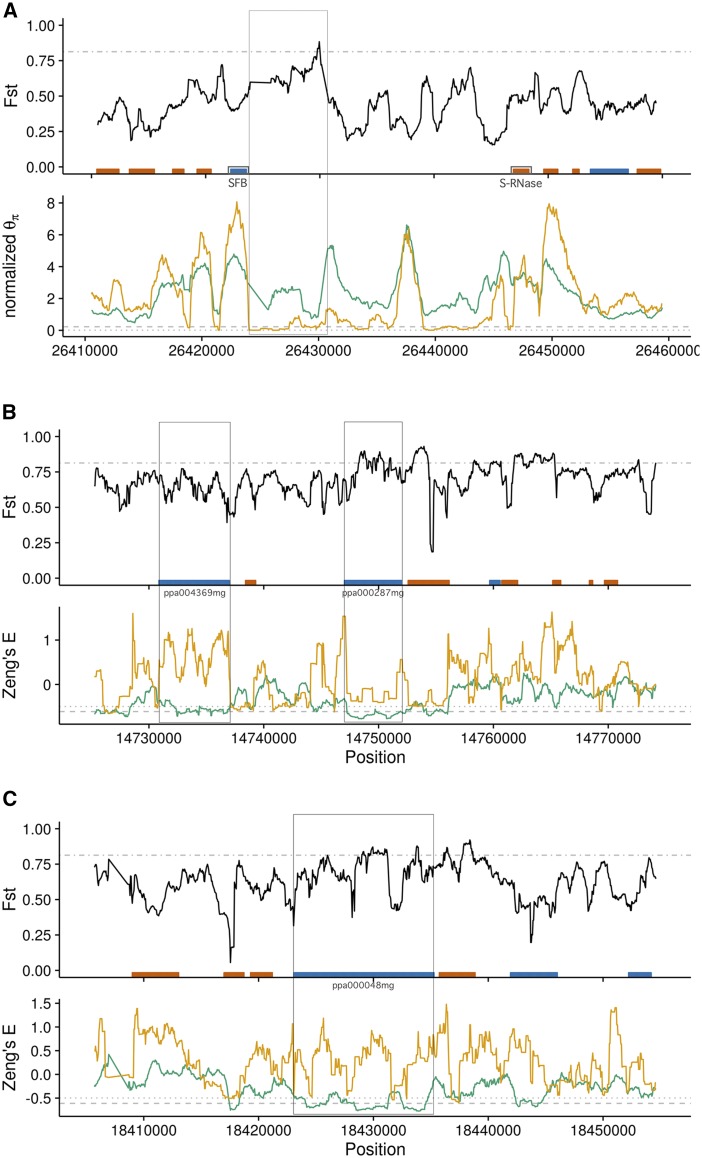
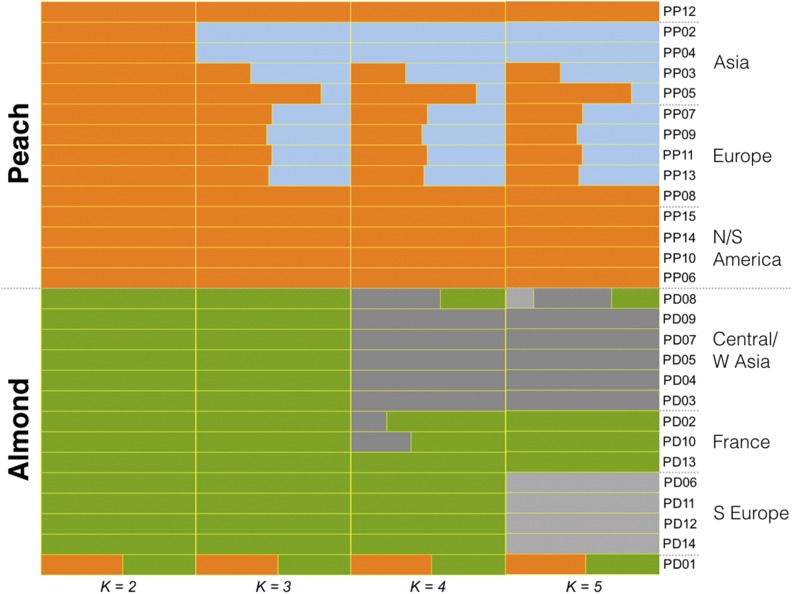
The domesticated almond [Prunus dulcis (L.) Batsch] and peach [P. persica (Mill.) D. A. Webb] originated on opposite sides of Asia and were independently domesticated ∼5000 yr ago. While interfertile, they possess alternate mating systems and differ in a number of morphological and physiological traits. Here, we evaluated patterns of genome-wide diversity in both almond and peach to better understand the impacts of mating system, adaptation, and domestication on the evolution of these taxa. Almond has around seven times the genetic diversity of peach, and high genome-wide [Formula: see text] values support their status as separate species. We estimated a divergence time of ∼8 MYA (million years ago), coinciding with an active period of uplift in the northeast Tibetan Plateau and subsequent Asian climate change. We see no evidence of a bottleneck during domestication of either species, but identify a number of regions showing signatures of selection during domestication and a significant overlap in candidate regions between peach and almond. While we expected gene expression in fruit to overlap with candidate selected regions, instead we find enrichment for loci highly differentiated between the species, consistent with recent fossil evidence suggesting fruit divergence long preceded domestication. Taken together, this study tells us how closely related tree species evolve and are domesticated, the impact of these events on their genomes, and the utility of genomic information for long-lived species. Further exploration of this data will contribute to the genetic knowledge of these species and provide information regarding targets of selection for breeding application, and further the understanding of evolution in these species.
驯化的杏仁[扁桃(Prunus dulcis (L.) Batsch)]和桃子[桃(P. persica (Mill.) D. A. Webb)]起源于亚洲的两端,大约在5000年前被独立驯化。虽然它们可以杂交,但具有不同的交配系统,并且在许多形态和生理特征上存在差异。在这里,我们评估了杏仁和桃子全基因组多样性的模式,以更好地了解交配系统、适应性和驯化对这些分类群进化的影响。杏仁的遗传多样性约为桃子的七倍,全基因组范围内较高的[公式:见正文]值支持它们作为独立物种的地位。我们估计它们的分化时间约为800万年前(百万年前),这与青藏高原东北部的活跃隆升期以及随后的亚洲气候变化相吻合。我们没有发现这两个物种在驯化过程中出现瓶颈的证据,但确定了一些在驯化过程中显示出选择特征的区域,并且桃子和杏仁的候选区域有显著重叠。虽然我们预期果实中的基因表达会与候选选择区域重叠,但相反,我们发现物种间高度分化的基因座富集,这与最近的化石证据一致,表明果实分化早在驯化之前就已发生。综上所述,这项研究告诉我们亲缘关系密切的树种是如何进化和被驯化的,这些事件对它们基因组的影响,以及基因组信息对长寿物种的实用性。对这些数据的进一步探索将有助于了解这些物种的遗传知识,并提供有关育种应用选择目标的信息,进而加深对这些物种进化的理解。