Zhengzhou Fruit Research Institute, Chinese Academy of Agricultural Sciences, Zhengzhou, China.
Key Laboratory of Horticultural Plant Biology (Ministry of Education), College of Horticulture and Forestry Sciences, Huazhong Agricultural University, Wuhan, China.
Genome Biol. 2019 Feb 21;20(1):36. doi: 10.1186/s13059-019-1648-9.
Human selection has a long history of transforming crop genomes. Peach (Prunus persica) has undergone more than 5000 years of domestication that led to remarkable changes in a series of agronomically important traits, but genetic bases underlying these changes and the effects of artificial selection on genomic diversity are not well understood.
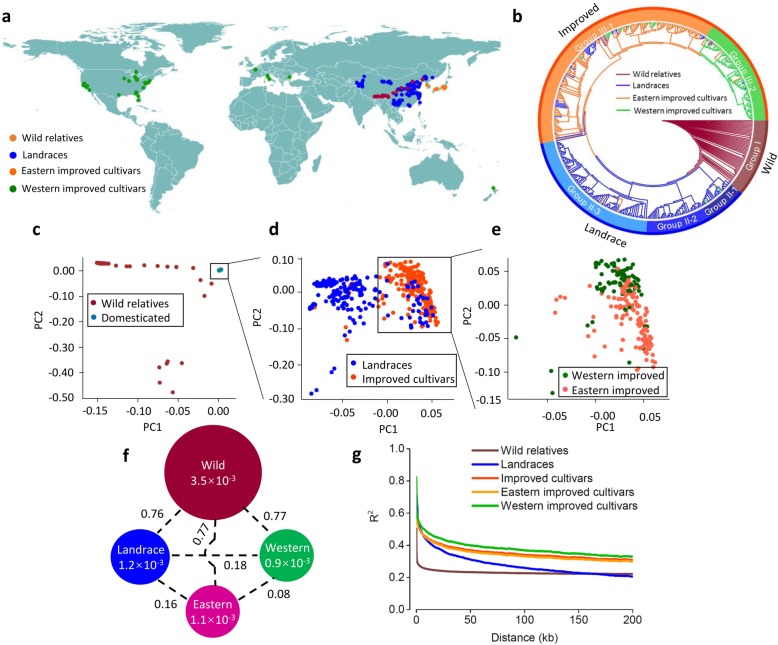
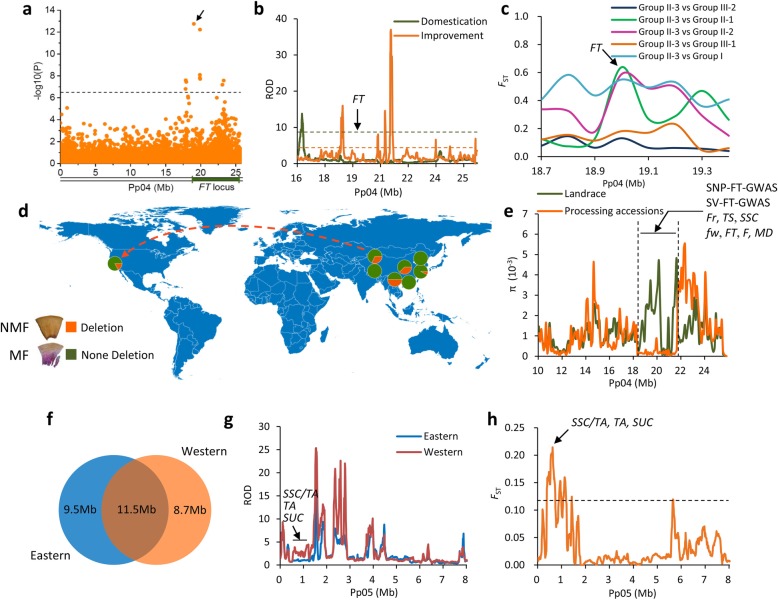
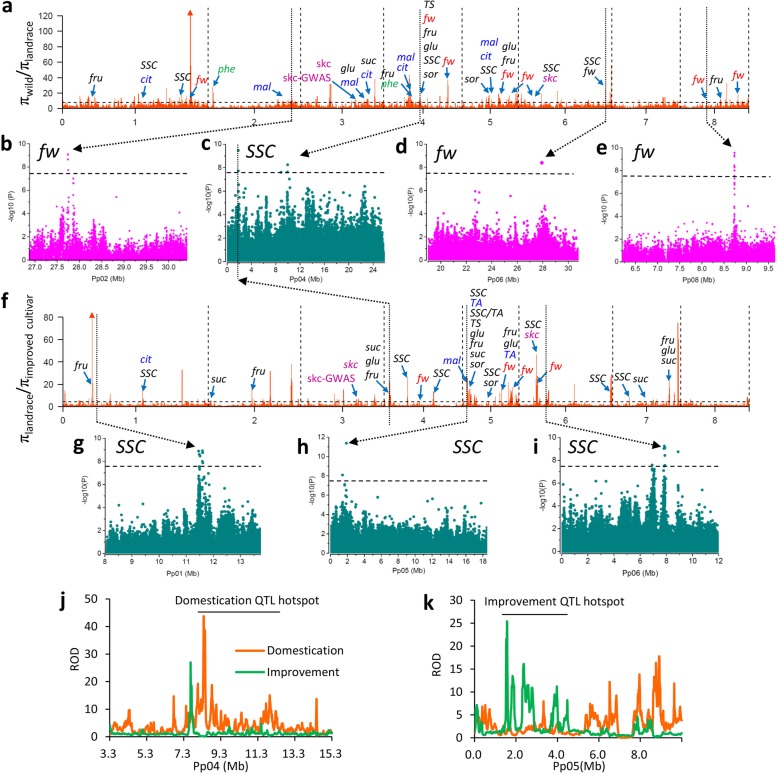
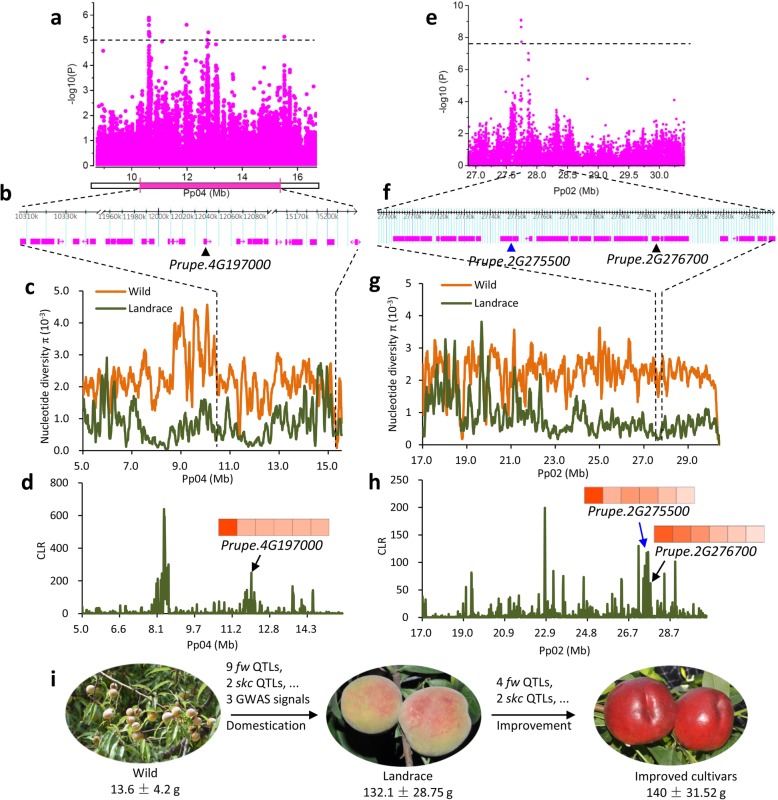
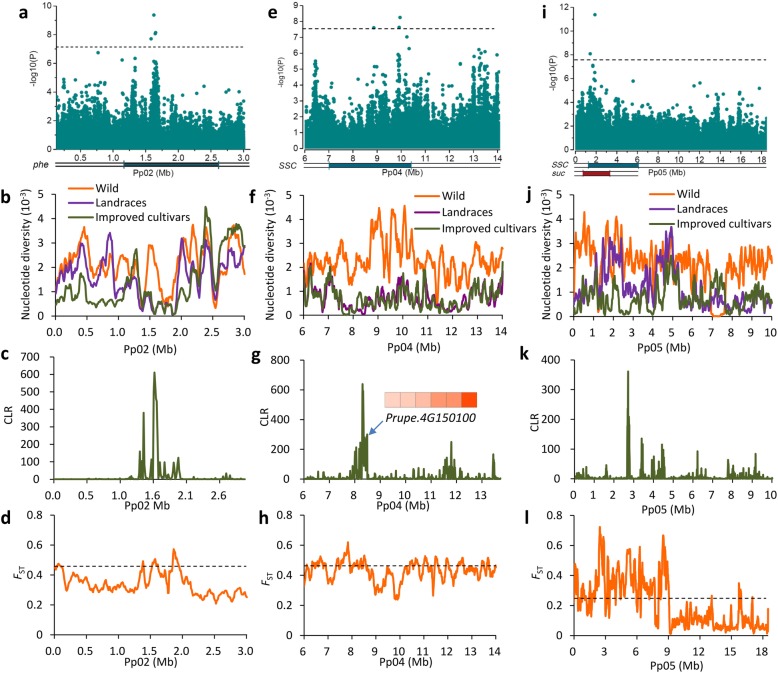
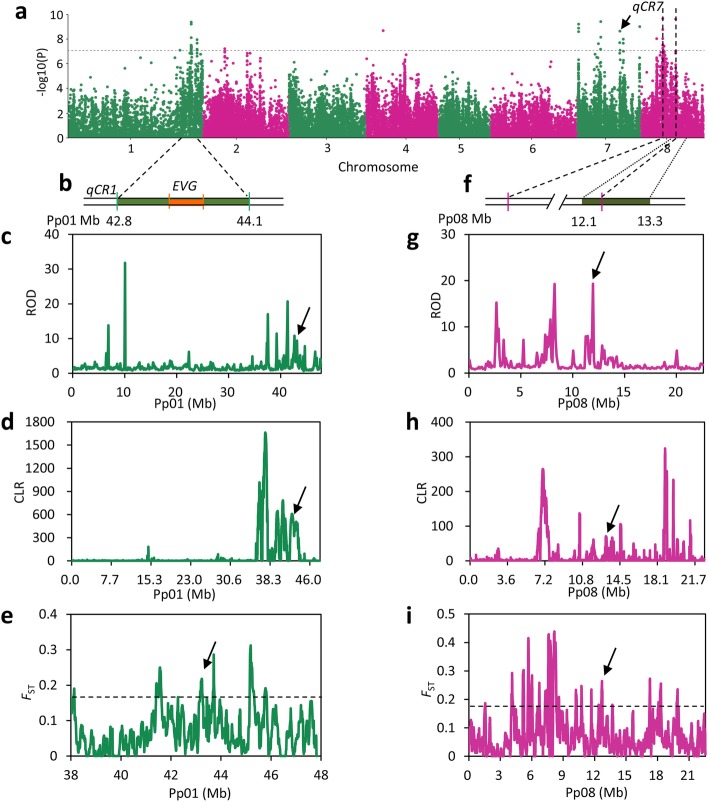
Here, we report a comprehensive analysis of peach evolution based on genome sequences of 480 wild and cultivated accessions. By focusing on a set of quantitative trait loci (QTLs), we provide evidence supporting that distinct phases of domestication and improvement have led to an increase in fruit size and taste and extended its geographic distribution. Fruit size was predominantly selected during domestication, and selection for large fruits has led to the loss of genetic diversity in several fruit weight QTLs. In contrast, fruit taste-related QTLs were successively selected for by domestication and improvement, with more QTLs selected for during improvement. Genome-wide association studies of 11 agronomic traits suggest a set of candidate genes controlling these traits and potential markers for molecular breeding. Candidate loci for genes that contributed to the adaption to low-chill regions were identified. Furthermore, the genomic bases of divergent selection for fruit texture and local breeding for different flavors between Asian and European/North American cultivars were also determined.
Our results elucidate the genetic basis of peach evolution and provide new resources for future genomics-guided peach breeding.
人类的选择对作物基因组的改变有着悠久的历史。桃(Prunus persica)经历了 5000 多年的驯化,导致一系列农艺重要性状发生了显著变化,但这些变化的遗传基础以及人工选择对基因组多样性的影响还不是很清楚。
在这里,我们基于 480 个野生和栽培桃品种的基因组序列,对桃的进化进行了全面分析。通过聚焦于一组数量性状基因座(QTLs),我们提供了证据支持,不同的驯化和改良阶段导致了果实大小和口感的增加,并扩展了其地理分布。在驯化过程中,果实大小是主要的选择对象,选择大果实导致了几个与果实重量相关的 QTL 遗传多样性的丧失。相比之下,与果实口感相关的 QTLs在驯化和改良过程中相继被选择,改良过程中选择的 QTL 更多。对 11 个农艺性状的全基因组关联研究表明,有一组候选基因控制着这些性状,以及潜在的分子育种标记。确定了与适应低温地区相关的基因的候选位点,以及亚洲和欧洲/北美品种之间果实质地和不同风味的局部选育的基因组基础。
我们的研究结果阐明了桃进化的遗传基础,并为未来的基因组指导桃的育种提供了新的资源。