Gaceb Abderahim, Vergori Luisa, Martinez M C, Andriantsitohaina Ramaroson
INSERM U1063, Université d'Angers Angers, France.
INSERM U1063, Université d'AngersAngers, France; Centre Hospitalo-Universitaire d'AngersAngers, France.
Front Pharmacol. 2016 Sep 21;7:322. doi: 10.3389/fphar.2016.00322. eCollection 2016.
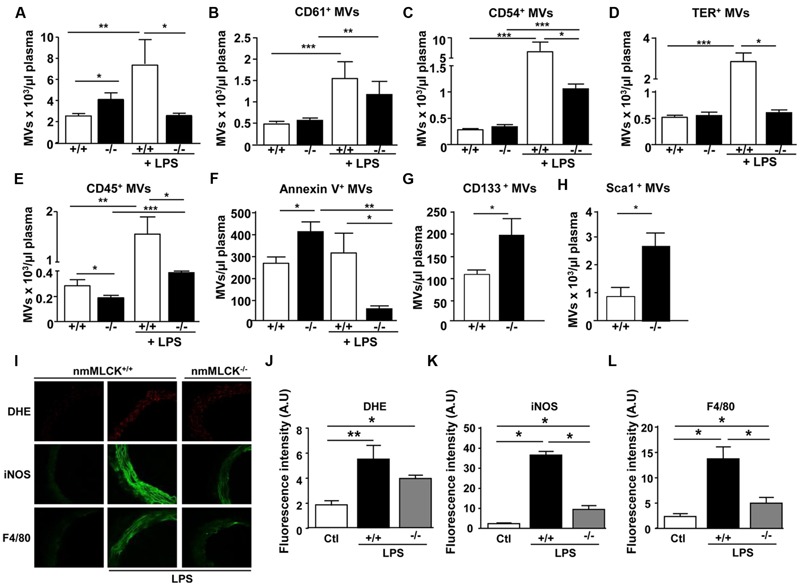
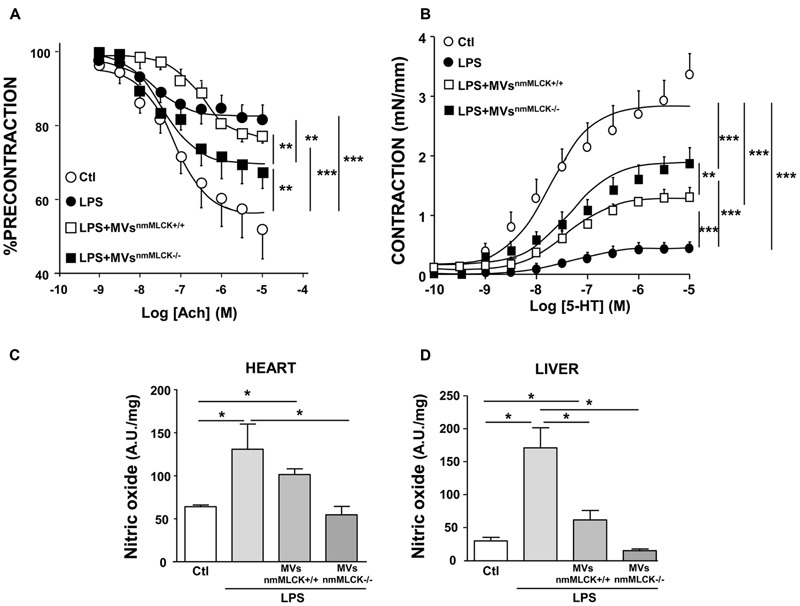
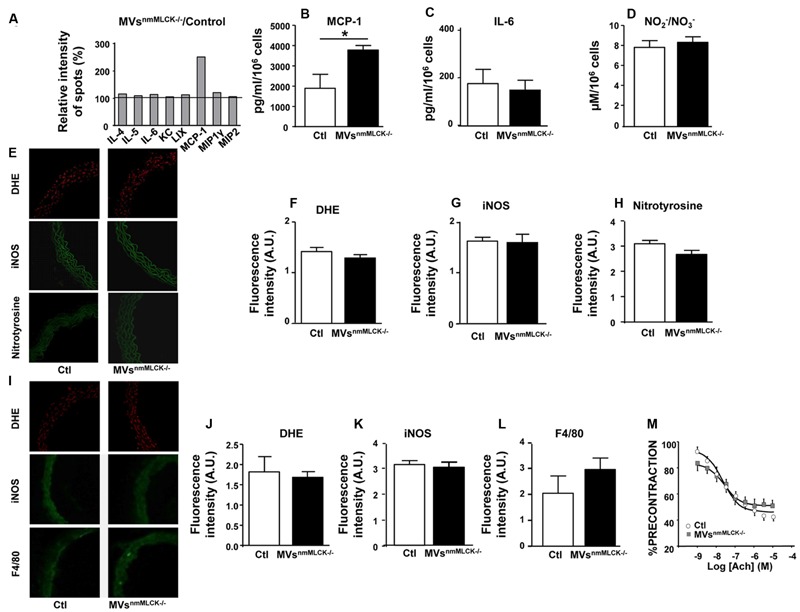
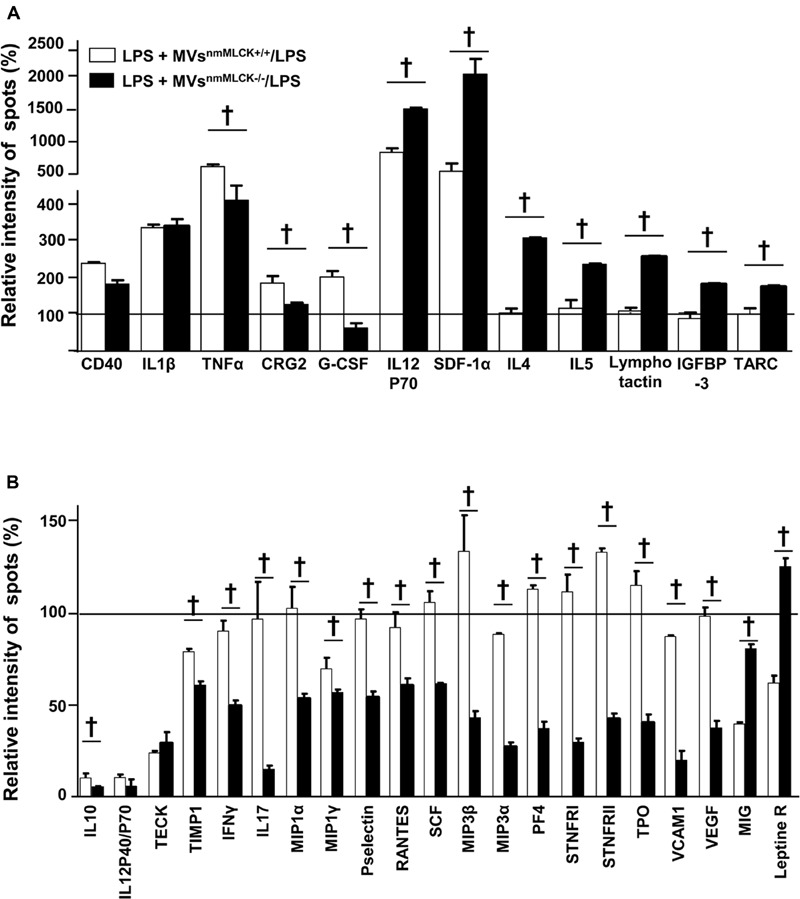
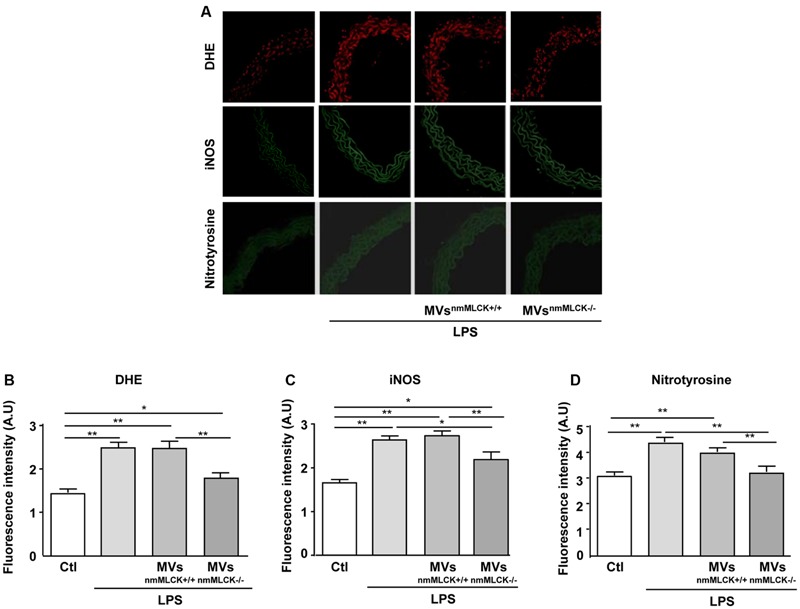
Microvesicles, small membrane vesicles released from cells, have beneficial and/or deleterious effects in sepsis. We previously reported that non-muscle myosin light chain kinase (nmMLCK) deletion protects mice against endotoxic shock by reducing inflammation. Here, we have evaluated the consequences of nmMLCK deletion on microvesicle phenotypes and their effects on mouse aortic endothelial cells in association with vascular inflammation and endothelial dysfunction during endotoxic shock induced by lipopolysaccharide in mice. Treatment with lipopolysaccharide induced an increase in levels of circulating microvesicles in wild type but not in nmMLCK-deficient mice. Microvesicles from nmMLCK-deficient mice (MVs) prevented the inflammatory effects of lipopolysaccharide with concomitant increase of anti- inflammatory and reduction of pro-inflammatory secretome in mouse aortic endothelial cells. In addition, MVs reduced the efficacy of lipopolysaccharide to increase aortic oxidative and nitrosative stresses as well as macrophage infiltration in the aorta. Moreover, MVs prevented endothelial dysfunction, vascular hyporeactivity, and overproduction of nitric oxide in heart and liver in response to lipopolysaccharide. Altogether, these findings provide evidence that nmMLCK deletion generates circulating microvesicles displaying protective effects by activating endothelial pro-resolving anti-inflammatory pathways allowing the effective down-regulation of oxidative and nitrative stresses associated with endotoxic shock. Thus, nmMLCK plays a pivotal role in susceptibility to sepsis via the control of cellular activation and release of circulating microvesicles.
微泡是从细胞释放的小膜泡,在脓毒症中具有有益和/或有害作用。我们之前报道过,非肌肉肌球蛋白轻链激酶(nmMLCK)缺失可通过减轻炎症保护小鼠免受内毒素休克。在此,我们评估了nmMLCK缺失对微泡表型的影响,以及在小鼠内毒素休克期间,微泡与血管炎症和内皮功能障碍相关的对小鼠主动脉内皮细胞的影响。用脂多糖处理可使野生型小鼠循环微泡水平升高,但对nmMLCK缺陷型小鼠无效。来自nmMLCK缺陷型小鼠的微泡(MVs)可预防脂多糖的炎症作用,同时增加小鼠主动脉内皮细胞中的抗炎分泌组并减少促炎分泌组。此外,MVs降低了脂多糖增加主动脉氧化应激和亚硝化应激以及巨噬细胞浸润主动脉的效力。而且,MVs可预防内皮功能障碍、血管反应性降低以及心脏和肝脏中因脂多糖产生的一氧化氮过量。总之,这些发现提供了证据,表明nmMLCK缺失产生的循环微泡通过激活内皮促消退抗炎途径发挥保护作用,从而有效下调与内毒素休克相关的氧化应激和硝化应激。因此,nmMLCK通过控制细胞活化和循环微泡的释放,在脓毒症易感性中起关键作用。