de Peralta Mauro S Porcel, Mouguelar Valeria S, Sdrigotti María Antonella, Ishiy Felipe A A, Fanganiello Roberto D, Passos-Bueno Maria R, Coux Gabriela, Calcaterra Nora B
IBR (Instituto de Biología Molecular y Celular de Rosario), Consejo Nacional de Investigaciones Científicas y Técnicas (CONICET), Facultad de Ciencias Bioquímicas y Farmacéuticas, Universidad Nacional de Rosario (UNR), Ocampo y Esmeralda, Rosario, 2000 Argentina.
Departmento de Genetica e Biologia Evolutiva, Instituto de Biociencias, Universidade de São Paulo, Rua do Matao, 277, Sala 200. Sao Paulo, Brazil.
Cell Death Dis. 2016 Oct 6;7(10):e2397. doi: 10.1038/cddis.2016.299.
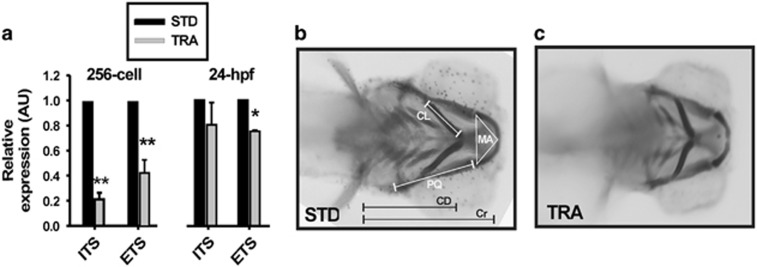
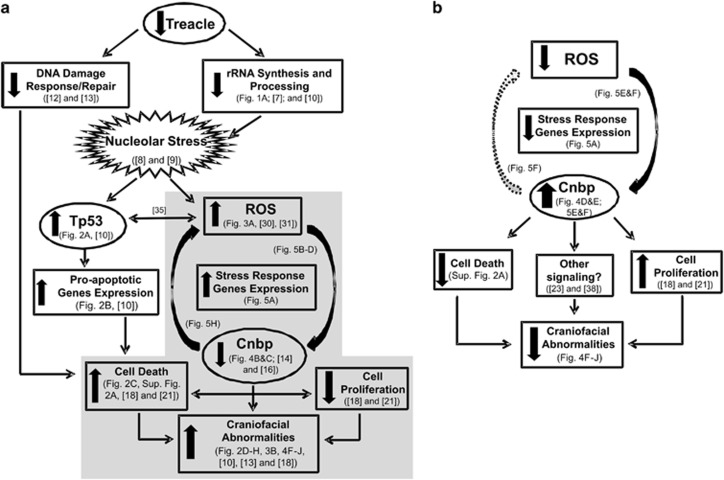
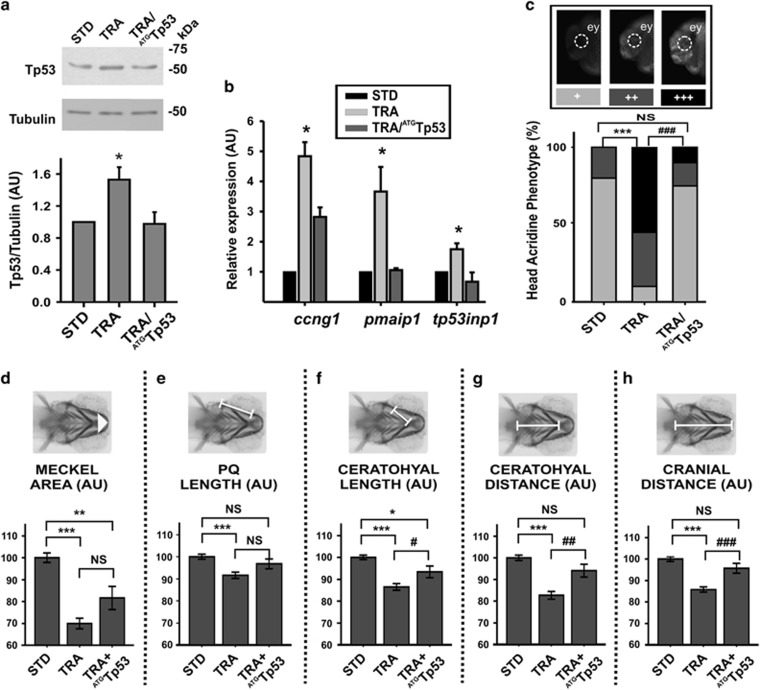
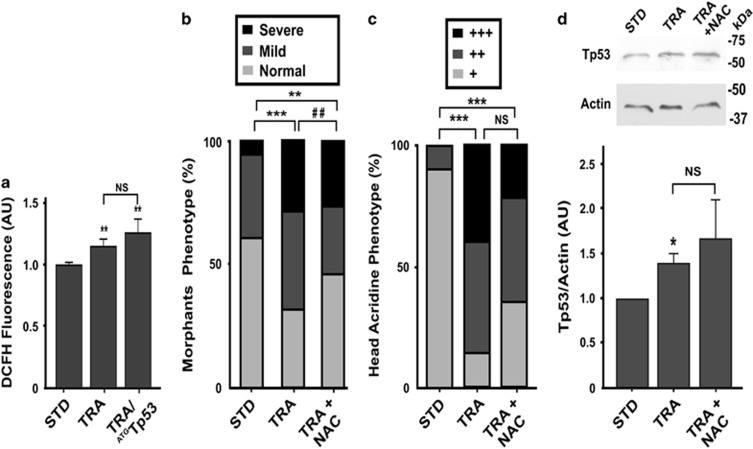
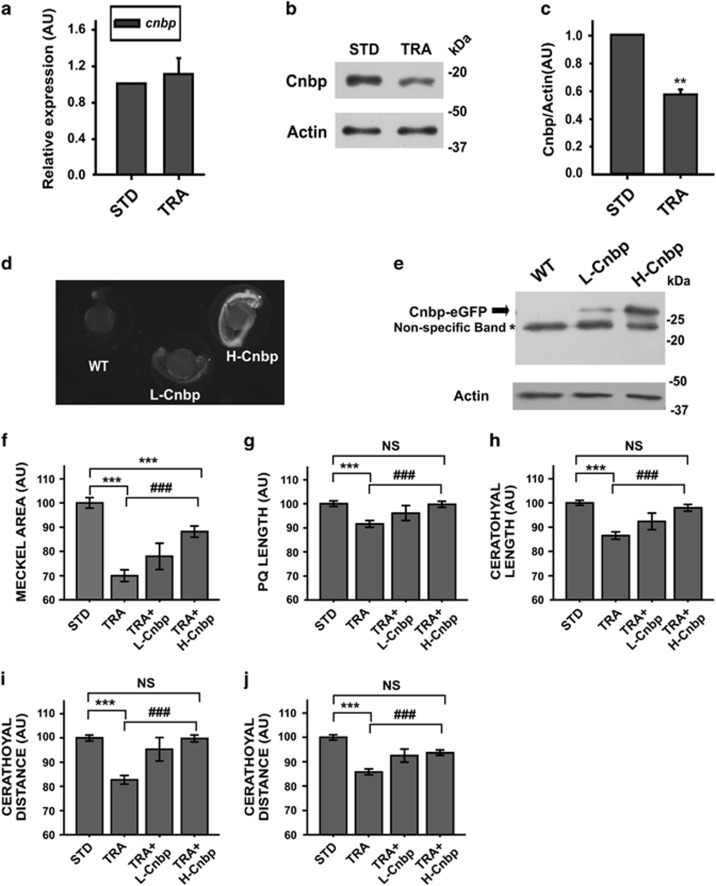
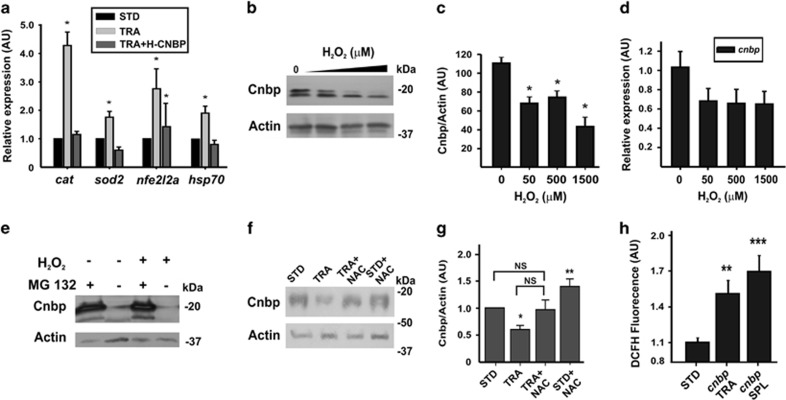
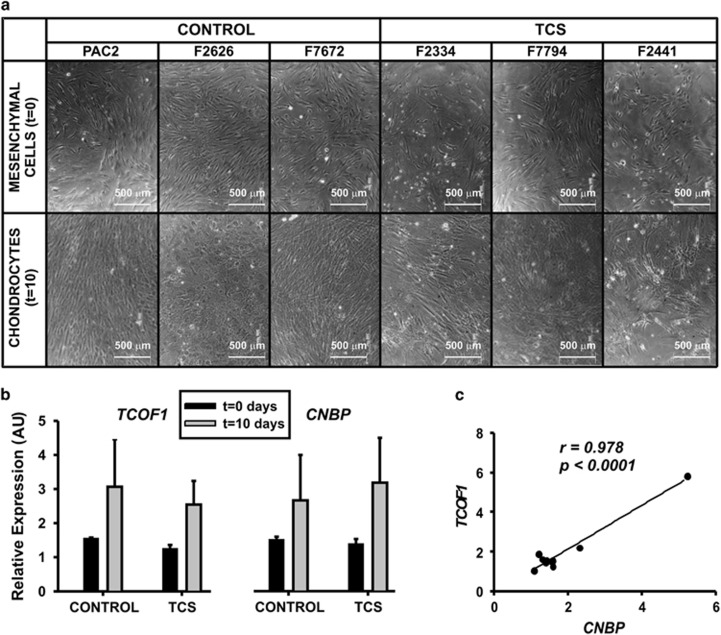
Treacher Collins Syndrome (TCS) is a rare congenital disease (1:50 000 live births) characterized by craniofacial defects, including hypoplasia of facial bones, cleft palate and palpebral fissures. Over 90% of the cases are due to mutations in the TCOF1 gene, which codifies the nucleolar protein Treacle. Here we report a novel TCS-like zebrafish model displaying features that fully recapitulate the spectrum of craniofacial abnormalities observed in patients. As it was reported for a Tcof1 mouse model, Treacle depletion in zebrafish caused reduced rRNA transcription, stabilization of Tp53 and increased cell death in the cephalic region. An increase of ROS along with the overexpression of redox-responsive genes was detected; furthermore, treatment with antioxidants ameliorated the phenotypic defects of craniofacial anomalies in TCS-like larvae. On the other hand, Treacle depletion led to a lowering in the abundance of Cnbp, a protein required for proper craniofacial development. Tcof1 knockdown in transgenic zebrafish overexpressing cnbp resulted in barely affected craniofacial cartilage development, reinforcing the notion that Cnbp has a role in the pathogenesis of TCS. The cnbp overexpression rescued the TCS phenotype in a dose-dependent manner by a ROS-cytoprotective action that prevented the redox-responsive genes' upregulation but did not normalize the synthesis of rRNAs. Finally, a positive correlation between the expression of CNBP and TCOF1 in mesenchymal cells from both control and TCS subjects was found. Based on this, we suggest CNBP as an additional target for new alternative therapeutic treatments to reduce craniofacial defects not only in TCS but also in other neurocristopathies.
特雷彻·柯林斯综合征(TCS)是一种罕见的先天性疾病(活产儿中发病率为1:50000),其特征为颅面缺陷,包括面部骨骼发育不全、腭裂和睑裂。超过90%的病例是由TCOF1基因突变引起的,该基因编码核仁蛋白Treacle。在此,我们报告了一种新型的类TCS斑马鱼模型,其表现出的特征完全概括了在患者中观察到的颅面异常谱。正如在一个Tcof1小鼠模型中所报道的那样,斑马鱼中Treacle缺失导致rRNA转录减少、Tp53稳定以及头部区域细胞死亡增加。检测到活性氧(ROS)增加以及氧化还原反应相关基因的过表达;此外,用抗氧化剂处理可改善类TCS幼虫颅面异常的表型缺陷。另一方面,Treacle缺失导致Cnbp丰度降低,Cnbp是正常颅面发育所需的一种蛋白质。在过表达cnbp的转基因斑马鱼中敲低Tcof1导致颅面软骨发育几乎未受影响,这强化了Cnbp在TCS发病机制中起作用的观点。cnbp过表达通过一种ROS细胞保护作用以剂量依赖方式挽救了TCS表型,该作用阻止了氧化还原反应相关基因的上调,但未使rRNA的合成正常化。最后,在对照和TCS受试者的间充质细胞中发现了CNBP和TCOF1表达之间的正相关。基于此,我们建议将CNBP作为新的替代治疗方法的额外靶点,以减少不仅在TCS而且在其他神经嵴病中的颅面缺陷。