Wang Xiangru, Maruvada Ravi, Morris Andrew J, Liu Jun O, Wolfgang Michael J, Baek Dong Jae, Bittman Robert, Kim Kwang Sik
Department of Pediatrics, Division of Pediatric Infectious Diseases, Johns Hopkins University School of Medicine, Baltimore, Maryland, United States of America.
State Key Laboratory of Agricultural Microbiology, College of Veterinary Medicine, Huazhong Agricultural University, Wuhan, Hubei, China.
PLoS Pathog. 2016 Oct 6;12(10):e1005926. doi: 10.1371/journal.ppat.1005926. eCollection 2016 Oct.
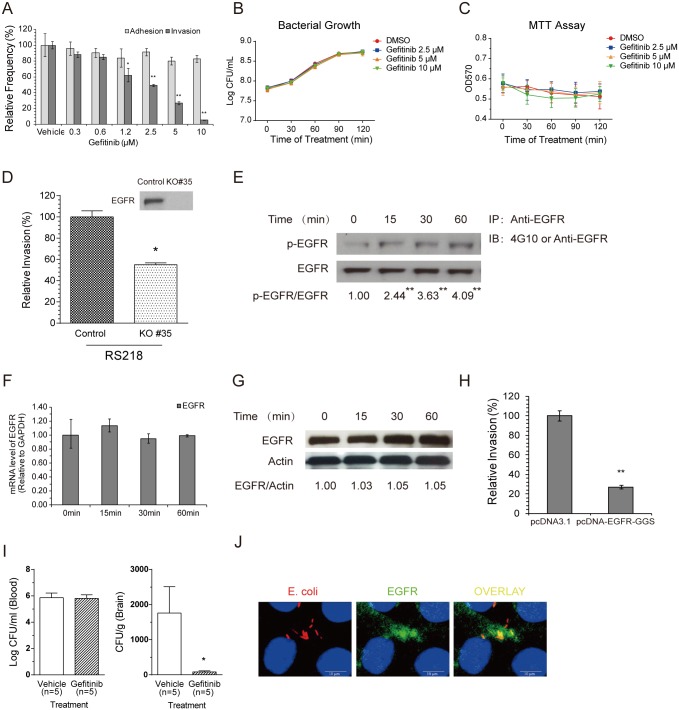
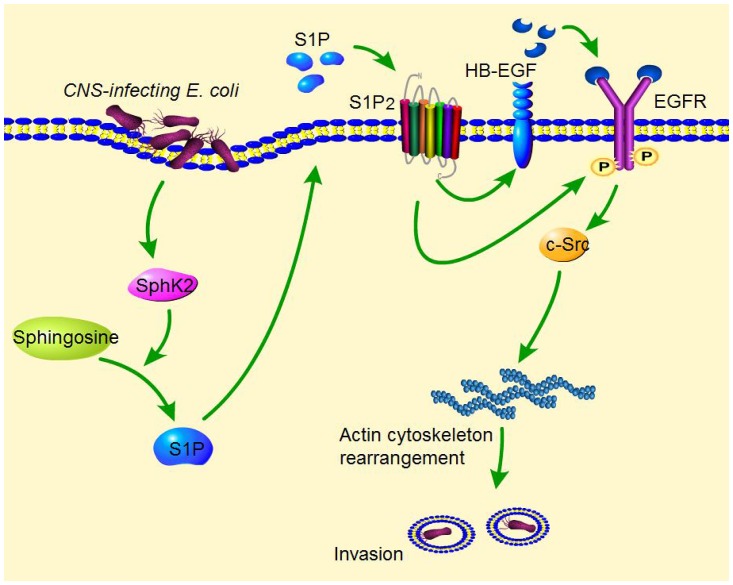
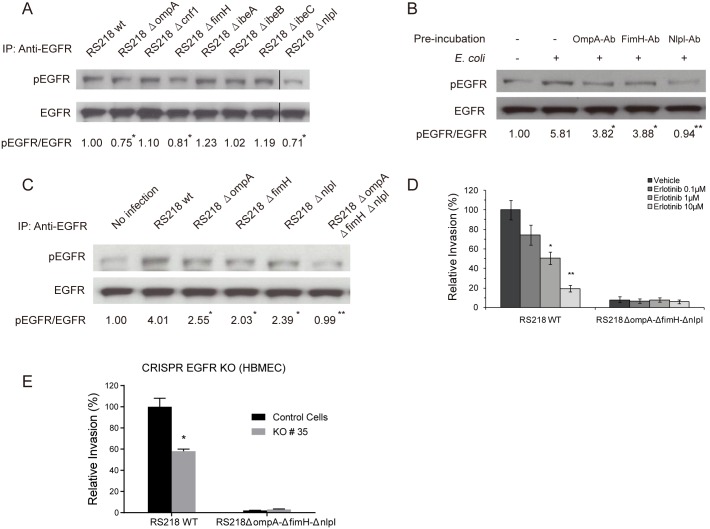
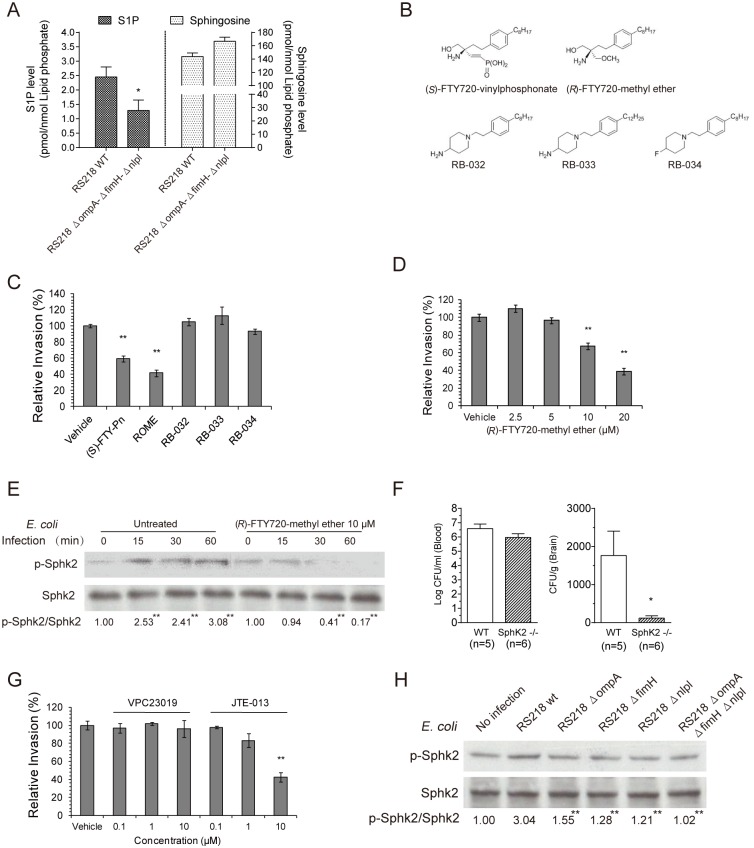
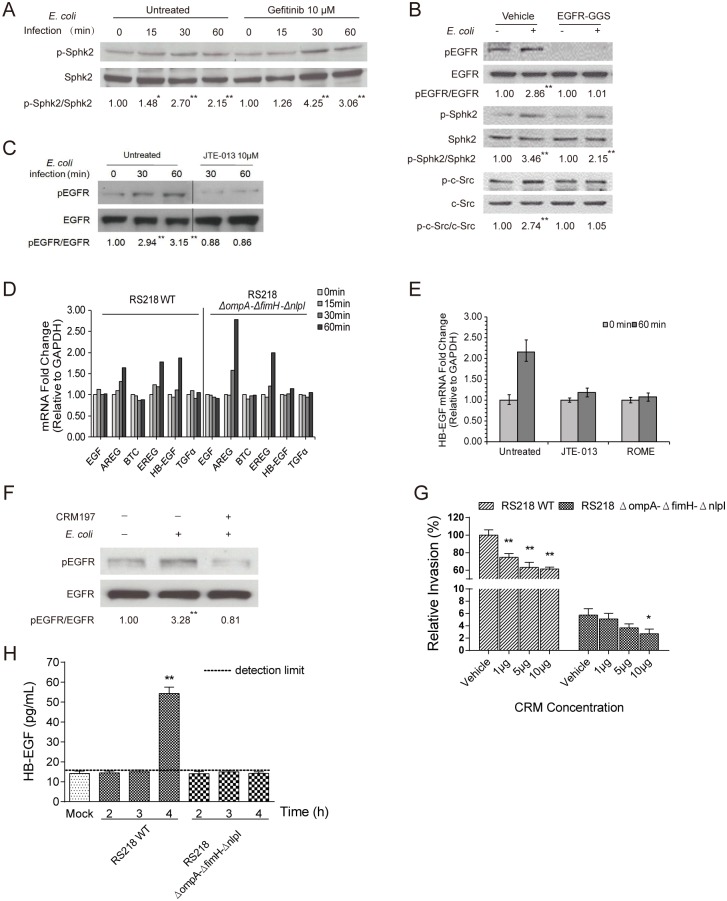
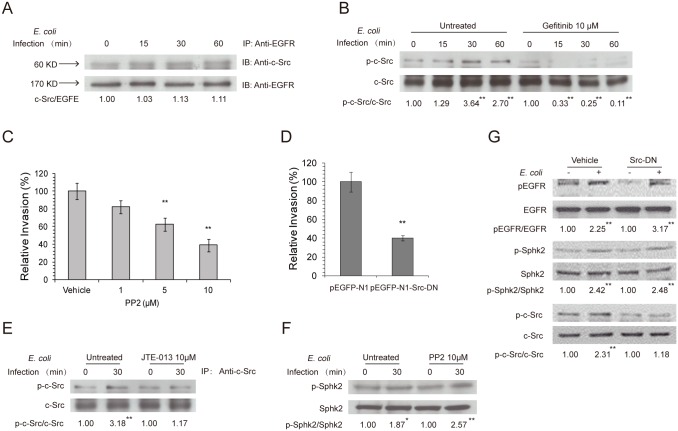
Central nervous system (CNS) infection continues to be an important cause of mortality and morbidity, necessitating new approaches for investigating its pathogenesis, prevention and therapy. Escherichia coli is the most common Gram-negative bacillary organism causing meningitis, which develops following penetration of the blood-brain barrier (BBB). By chemical library screening, we identified epidermal growth factor receptor (EGFR) as a contributor to E. coli invasion of the BBB in vitro. Here, we obtained the direct evidence that CNS-infecting E. coli exploited sphingosine 1-phosphate (S1P) for EGFR activation in penetration of the BBB in vitro and in vivo. We found that S1P was upstream of EGFR and participated in EGFR activation through S1P receptor as well as through S1P-mediated up-regulation of EGFR-related ligand HB-EGF, and blockade of S1P function through targeting sphingosine kinase and S1P receptor inhibited EGFR activation, and also E. coli invasion of the BBB. We further found that both S1P and EGFR activations occurred in response to the same E. coli proteins (OmpA, FimH, NlpI), and that S1P and EGFR promoted E. coli invasion of the BBB by activating the downstream c-Src. These findings indicate that S1P and EGFR represent the novel host targets for meningitic E. coli penetration of the BBB, and counteracting such targets provide a novel approach for controlling E. coli meningitis in the era of increasing resistance to conventional antibiotics.
中枢神经系统(CNS)感染仍然是导致死亡和发病的重要原因,因此需要新的方法来研究其发病机制、预防和治疗。大肠杆菌是引起脑膜炎最常见的革兰氏阴性杆菌,它在血脑屏障(BBB)被穿透后发病。通过化学文库筛选,我们确定表皮生长因子受体(EGFR)是体外大肠杆菌侵袭血脑屏障的一个促成因素。在此,我们获得了直接证据,即感染中枢神经系统的大肠杆菌在体外和体内穿透血脑屏障的过程中利用鞘氨醇-1-磷酸(S1P)激活EGFR。我们发现S1P在EGFR上游,通过S1P受体以及S1P介导的EGFR相关配体HB-EGF上调参与EGFR激活,通过靶向鞘氨醇激酶和S1P受体阻断S1P功能可抑制EGFR激活,以及大肠杆菌对血脑屏障的侵袭。我们进一步发现S1P和EGFR激活均响应相同的大肠杆菌蛋白(OmpA、FimH、NlpI),并且S1P和EGFR通过激活下游c-Src促进大肠杆菌侵袭血脑屏障。这些发现表明S1P和EGFR是脑膜炎大肠杆菌穿透血脑屏障的新宿主靶点,在对传统抗生素耐药性不断增加的时代,针对这些靶点提供了一种控制大肠杆菌脑膜炎的新方法。