Bastos Maria do Carmo de Freire, Coutinho Bruna Gonçalves, Coelho Marcus Lívio Varella
Departamento de Microbiologia Geral, Instituto de Microbiologia Prof. Paulo de Góes, CCS, Bloco I, UFRJ, 21941-590, Rio de Janeiro, RJ, Brazil.
Pharmaceuticals (Basel). 2010 Apr 19;3(4):1139-1161. doi: 10.3390/ph3041139.
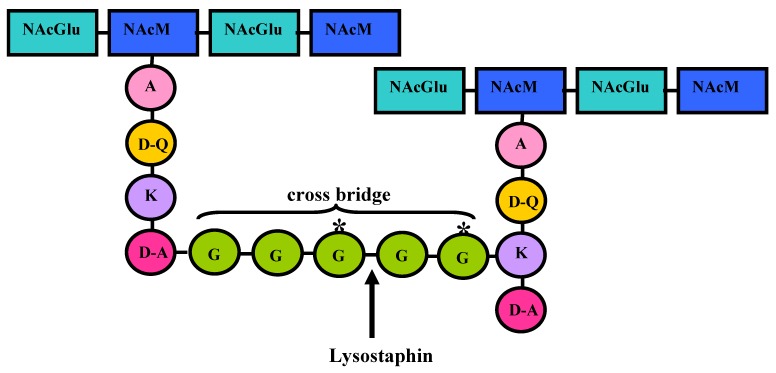
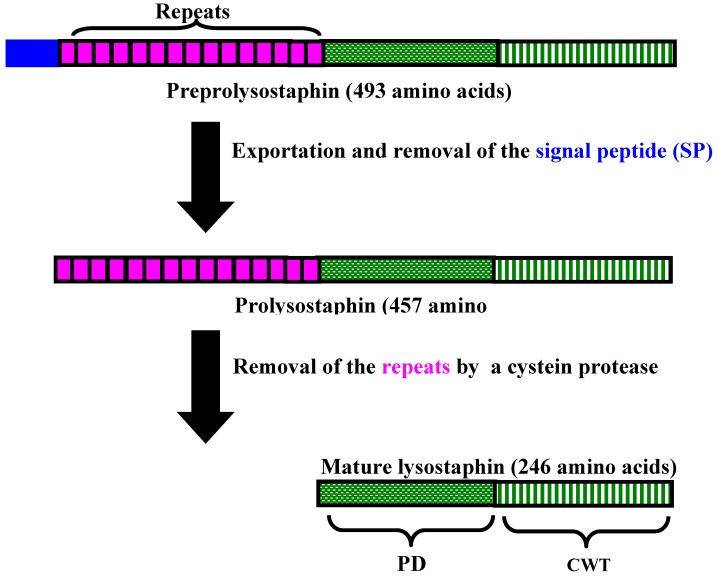
Lysostaphin is an antimicrobial agent belonging to a major class of antimicrobial peptides and proteins known as the bacteriocins. Bacteriocins are bacterial antimicrobial peptides which generally exhibit bactericidal activity against other bacteria. Bacteriocin production is a self-protection mechanism that helps the microorganisms to survive in their natural habitats. Bacteriocins are currently distributed into three main classes. Staphylococcins are bacteriocins produced by staphylococci, which are Gram-positive bacteria of medical and veterinary importance. Lysostaphin is the only class III staphylococcin described so far. It exhibits a high degree of antistaphylococcal bacteriolytic activity, being inactive against bacteria of all other genera. Infections caused by staphylococci continue to be a problem worldwide not only in healthcare environments but also in the community, requiring effective measures for controlling their spread. Since lysostaphin kills human and animal staphylococcal pathogens, it has potential biotechnological applications in the treatment of staphylococcal infections. In vitro and in vivo studies performed with lysostaphin have shown that this staphylococcin has potential to be used, solely or in combination with other antibacterial agents, to prevent or treat bacterial staphylococcal infectious diseases.
溶葡萄球菌酶是一种抗菌剂,属于一类主要的抗菌肽和蛋白质,即细菌素。细菌素是细菌产生的抗菌肽,通常对其他细菌具有杀菌活性。细菌素的产生是一种自我保护机制,有助于微生物在其自然栖息地中生存。目前细菌素分为三大类。葡萄球菌素是由葡萄球菌产生的细菌素,葡萄球菌是具有医学和兽医学重要性的革兰氏阳性菌。溶葡萄球菌酶是迄今为止描述的唯一一种III类葡萄球菌素。它表现出高度的抗葡萄球菌溶菌活性,对所有其他属的细菌无活性。葡萄球菌引起的感染不仅在医疗环境中,而且在社区中仍然是一个全球性问题,需要采取有效措施控制其传播。由于溶葡萄球菌酶能杀死人类和动物的葡萄球菌病原体,它在治疗葡萄球菌感染方面具有潜在的生物技术应用价值。对溶葡萄球菌酶进行的体外和体内研究表明,这种葡萄球菌素有可能单独或与其他抗菌剂联合使用,以预防或治疗细菌性葡萄球菌感染性疾病。