Barwise Amelia, Garcia-Arguello Lisbeth, Dong Yue, Hulyalkar Manasi, Vukoja Marija, Schultz Marcus J, Adhikari Neill K J, Bonneton Benjamin, Kilickaya Oguz, Kashyap Rahul, Gajic Ognjen, Schmickl Christopher N
Multidisciplinary Epidemiology and Translational Research in Intensive Care (M.E.T.R.I.C.), Division of Pulmonary and Critical Care Medicine, Mayo Clinic, 200 1ST Street SW, Rochester, MN, USA.
The Institute for Pulmonary Diseases of Vojvodina, Sremska Kamenica, Faculty of Medicine, University of Novi Sad, Novi Sad, Serbia.
BMC Med Inform Decis Mak. 2016 Oct 3;16(1):127. doi: 10.1186/s12911-016-0367-3.
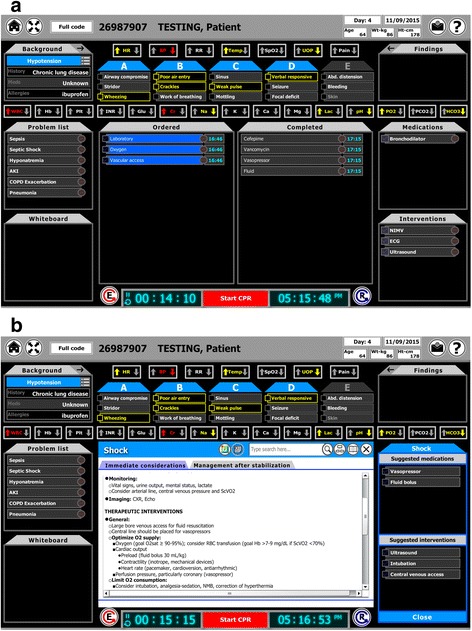
The Checklist for Early Recognition and Treatment of Acute Illness (CERTAIN) is an international collaborative project with the overall objective of standardizing the approach to the evaluation and treatment of critically ill patients world-wide, in accordance with best-practice principles. One of CERTAIN's key features is clinical decision support providing point-of-care information about common acute illness syndromes, procedures, and medications in an index card format.
This paper describes 1) the process of developing and validating the content for point-of-care decision support, and 2) the content management system that facilitates frequent peer-review and allows rapid updates of content across different platforms (CERTAIN software, mobile apps, pdf-booklet) and different languages.
Content was created based on survey results of acute care providers and validated using an open peer-review process. Over a 3 year period, CERTAIN content expanded to include 67 syndrome cards, 30 procedure cards, and 117 medication cards. 127 (59 %) cards have been peer-reviewed so far. Initially MS Word® and Dropbox® were used to create, store, and share content for peer-review. Recently Google Docs® was used to make the peer-review process more efficient. However, neither of these approaches met our security requirements nor has the capacity to instantly update the different CERTAIN platforms.
Although we were able to successfully develop and validate a large inventory of clinical decision support cards in a short period of time, commercially available software solutions for content management are suboptimal. Novel custom solutions are necessary for efficient global point of care content system management.
急性疾病早期识别与治疗清单(CERTAIN)是一个国际合作项目,其总体目标是根据最佳实践原则,规范全球危重症患者评估和治疗的方法。CERTAIN的关键特性之一是临床决策支持,它以索引卡的形式提供有关常见急性疾病综合征、操作和药物的即时护理信息。
本文描述了1)开发和验证即时护理决策支持内容的过程,以及2)促进频繁同行评审并允许在不同平台(CERTAIN软件、移动应用程序、pdf手册)和不同语言中快速更新内容的内容管理系统。
内容基于急性护理提供者的调查结果创建,并通过开放的同行评审过程进行验证。在3年的时间里,CERTAIN的内容扩展到包括67张综合征卡片、30张操作卡片和117张药物卡片。到目前为止,127张(59%)卡片已经经过同行评审。最初使用Microsoft Word®和Dropbox®来创建、存储和共享供同行评审的内容。最近使用Google Docs®使同行评审过程更高效。然而,这些方法都不符合我们的安全要求,也没有能力即时更新不同的CERTAIN平台。
尽管我们能够在短时间内成功开发并验证大量临床决策支持卡片,但用于内容管理的商业软件解决方案并不理想。需要新颖的定制解决方案来高效管理全球即时护理内容系统。