Pham Lan V, Bryant Jerry L, Mendez Richard, Chen Juan, Tamayo Archito T, Xu-Monette Zijun Y, Young Ken H, Manyam Ganiraju C, Yang David, Medeiros L Jeffrey, Ford Richard J
Department of Hematopathology, The University of Texas MD Anderson Cancer Center, Houston, TX, USA.
Division of Translational Medicine, Cell>Point Pharmaceuticals, Centennial, CO, USA.
Oncotarget. 2016 Dec 6;7(49):80599-80611. doi: 10.18632/oncotarget.12413.
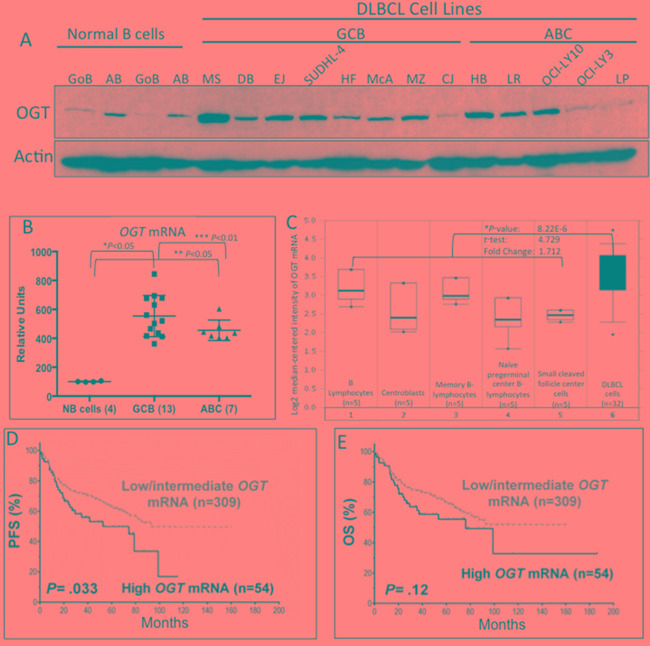
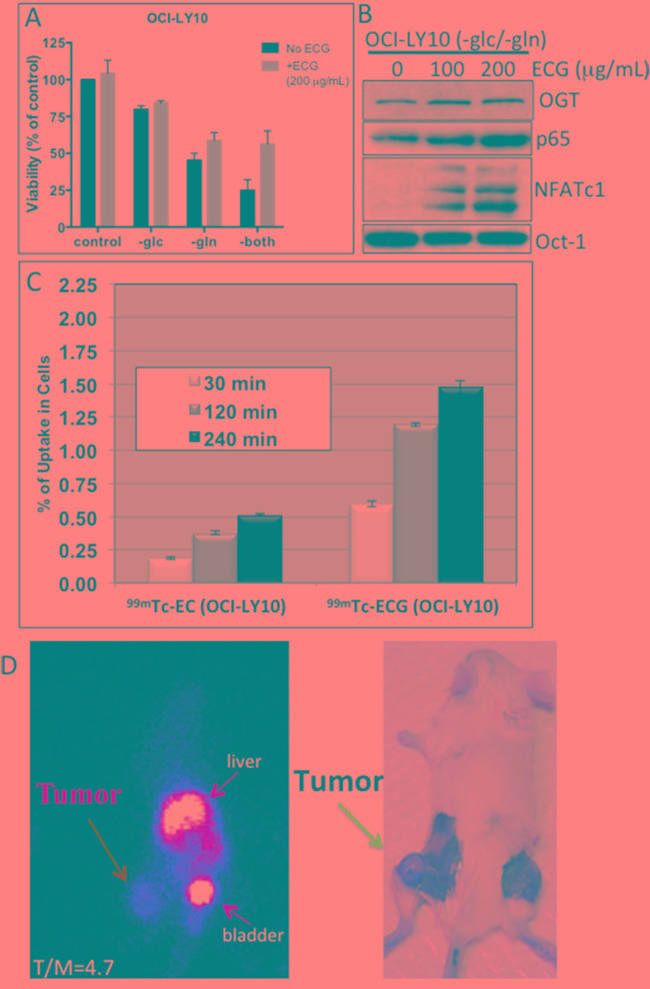
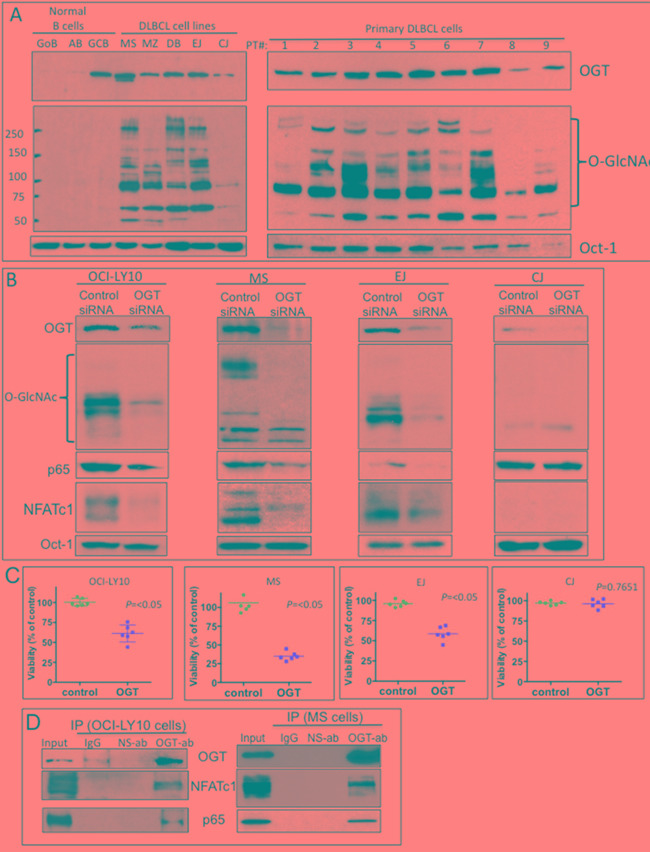
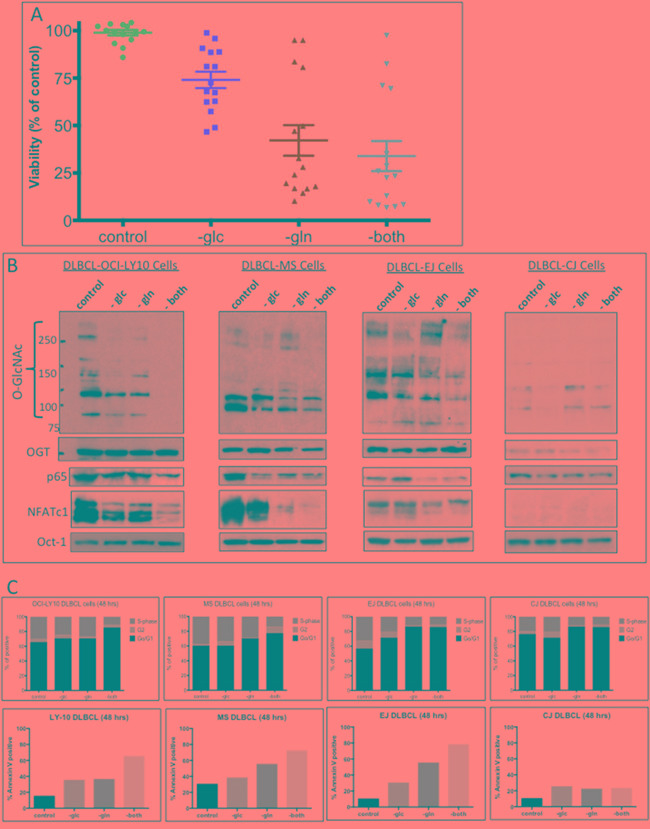
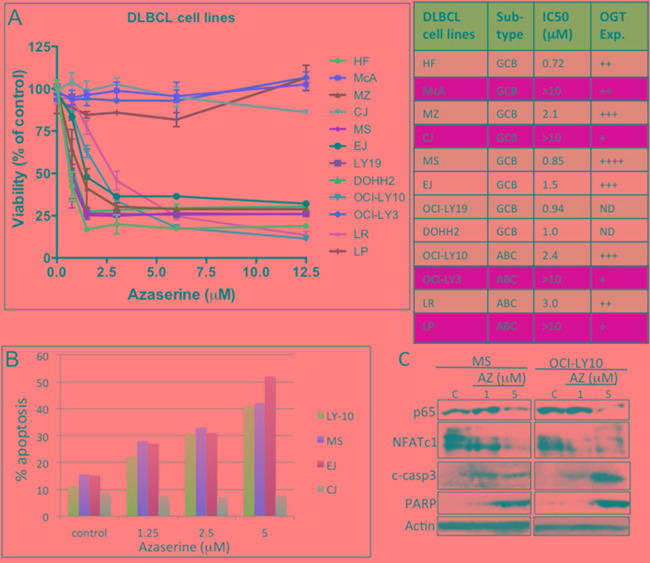
The hexosamine biosynthetic pathway (HBP) requires two key nutrients glucose and glutamine for O-linked N-acetylglucosamine (O-GlcNAc) cycling, a post-translational protein modification that adds GlcNAc to nuclear and cytoplasmic proteins. Increased GlcNAc has been linked to regulatory factors involved in cancer cell growth and survival. However, the biological significance of GlcNAc in diffuse large B-cell lymphoma (DLBCL) is not well defined. This study is the first to show that both the substrate and the endpoint O-GlcNAc transferase (OGT) enzyme of the HBP were highly expressed in DLBCL cell lines and in patient tumors compared with normal B-lymphocytes. Notably, high OGT mRNA levels were associated with poor survival of DLBCL patients. Targeting OGT via small interference RNA in DLBCL cells inhibited activation of GlcNAc, nuclear factor kappa B (NF-κB), and nuclear factor of activated T-cells 1 (NFATc1), as well as cell growth. Depleting both glucose and glutamine in DLBCL cells or treating them with an HBP inhibitor (azaserine) diminished O-GlcNAc protein substrate, inhibited constitutive NF-κB and NFATc1 activation, and induced G0/G1 cell-cycle arrest and apoptosis. Replenishing glucose-and glutamine-deprived DLBCL cells with a synthetic glucose analog (ethylenedicysteine-N-acetylglucosamine [ECG]) reversed these phenotypes. Finally, we showed in both in vitro and in vivo murine models that DLBCL cells easily take up radiolabeled technetium-99m-ECG conjugate. These findings suggest that targeting the HBP has therapeutic relevance for DLBCL and underscores the imaging potential of the glucosamine analog ECG in DLBCL.
己糖胺生物合成途径(HBP)需要葡萄糖和谷氨酰胺这两种关键营养素来进行O-连接的N-乙酰葡糖胺(O-GlcNAc)循环,这是一种翻译后蛋白质修饰,可将GlcNAc添加到细胞核和细胞质蛋白上。GlcNAc增加与癌细胞生长和存活相关的调节因子有关。然而,GlcNAc在弥漫性大B细胞淋巴瘤(DLBCL)中的生物学意义尚不清楚。本研究首次表明,与正常B淋巴细胞相比,HBP的底物和终产物O-GlcNAc转移酶(OGT)在DLBCL细胞系和患者肿瘤中均高表达。值得注意的是,高OGT mRNA水平与DLBCL患者的不良生存相关。通过小干扰RNA在DLBCL细胞中靶向OGT可抑制GlcNAc、核因子κB(NF-κB)和活化T细胞核因子1(NFATc1)的激活以及细胞生长。在DLBCL细胞中消耗葡萄糖和谷氨酰胺或用HBP抑制剂(重氮丝氨酸)处理可减少O-GlcNAc蛋白底物,抑制组成性NF-κB和NFATc1激活,并诱导G0/G1细胞周期停滞和凋亡。用合成葡萄糖类似物(乙二巯基-N-乙酰葡糖胺[ECG])补充葡萄糖和谷氨酰胺缺乏的DLBCL细胞可逆转这些表型。最后,我们在体外和体内小鼠模型中均表明,DLBCL细胞很容易摄取放射性标记的锝-99m-ECG偶联物。这些发现表明,靶向HBP对DLBCL具有治疗意义,并强调了葡糖胺类似物ECG在DLBCL中的成像潜力。