Khan Faidad, Wu Xueqing, Matzkin Gideon L, Khan Mohsin A, Sakai Fuminori, Vidal Jorge E
Hubert Department of Global Health at the Rollins School of Public Health, Emory UniversityAtlanta, GA, USA; National Centre of Excellence in Molecular Biology, University of the PunjabLahore, Pakistan.
Hubert Department of Global Health at the Rollins School of Public Health, Emory University Atlanta, GA, USA.
Front Cell Infect Microbiol. 2016 Sep 27;6:104. doi: 10.3389/fcimb.2016.00104. eCollection 2016.
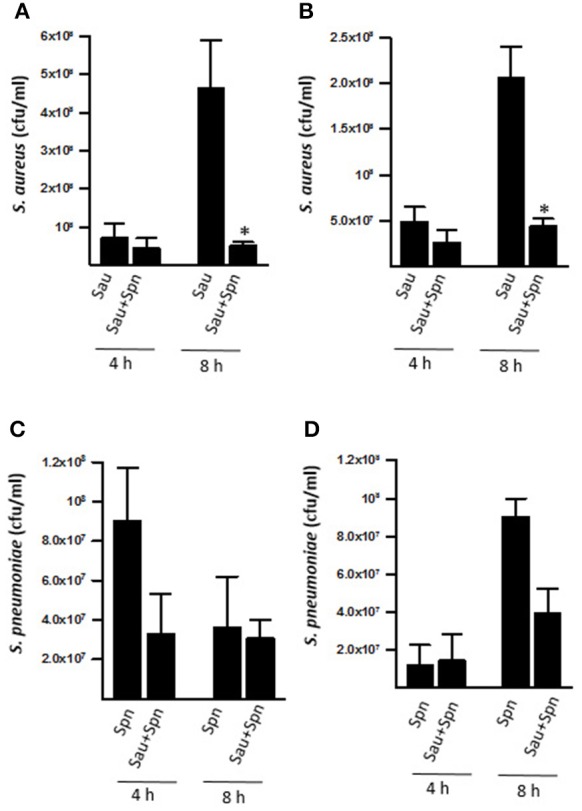
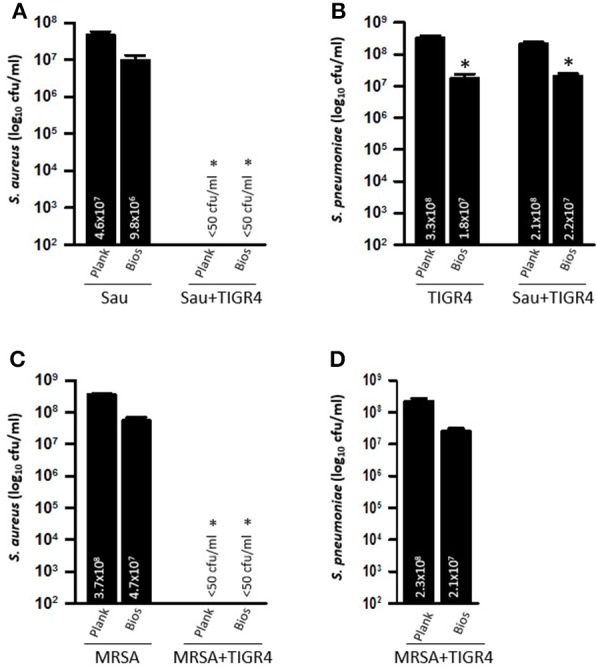
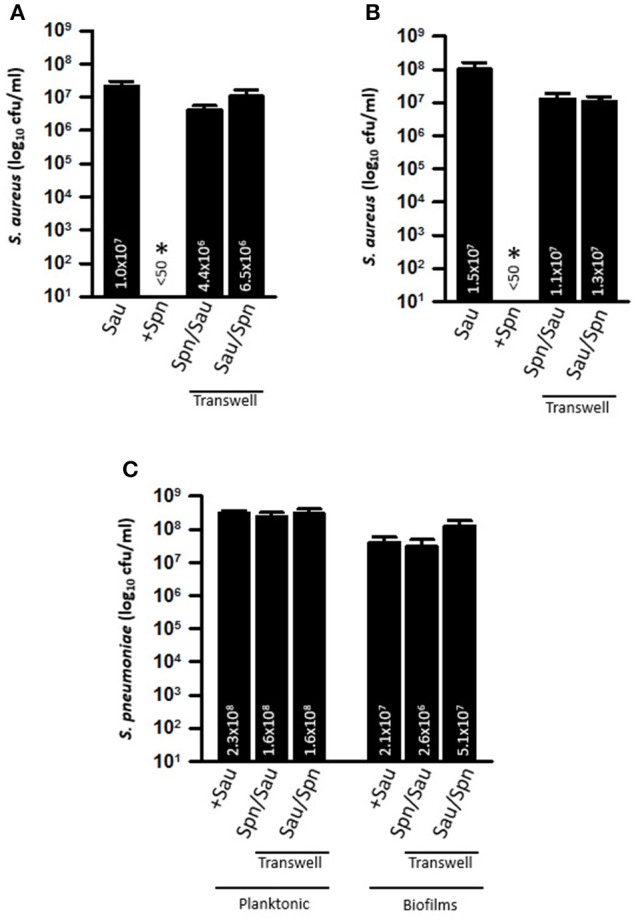
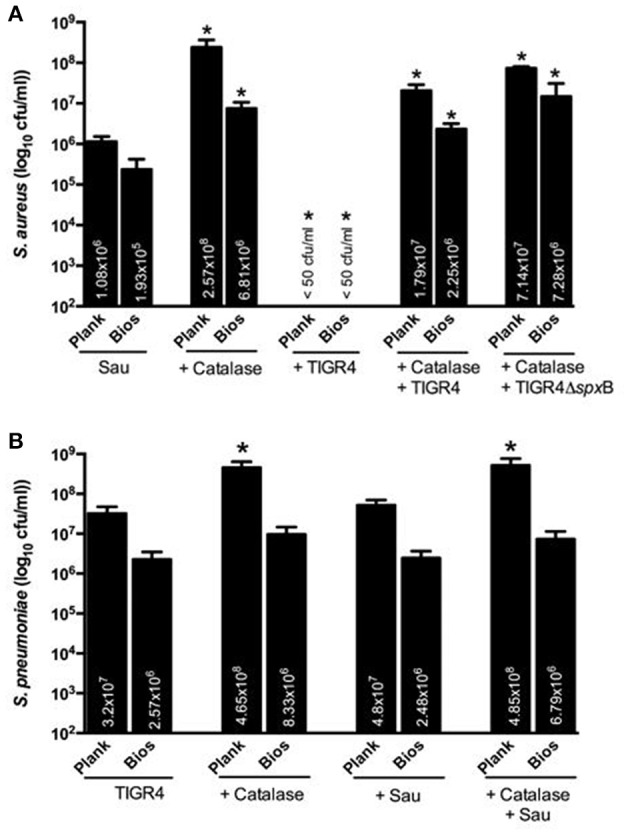
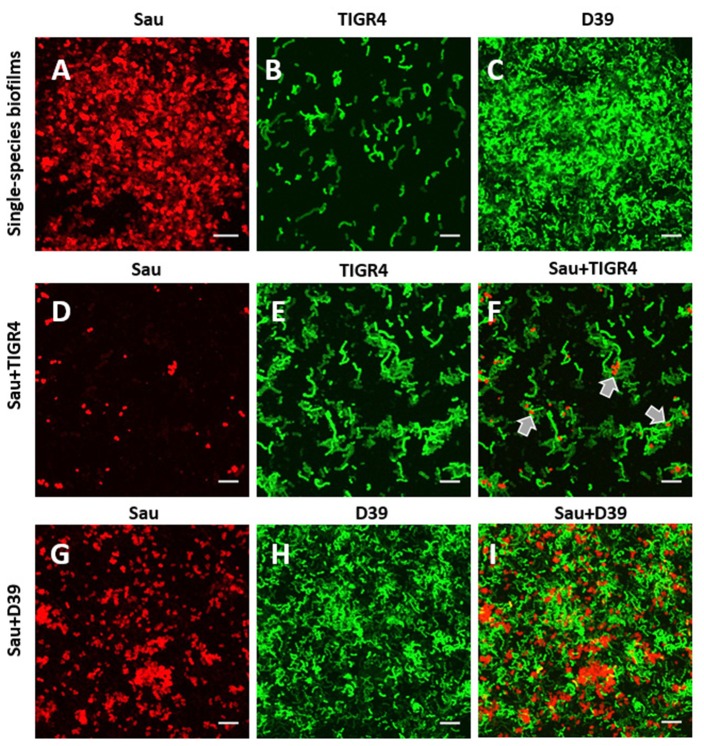
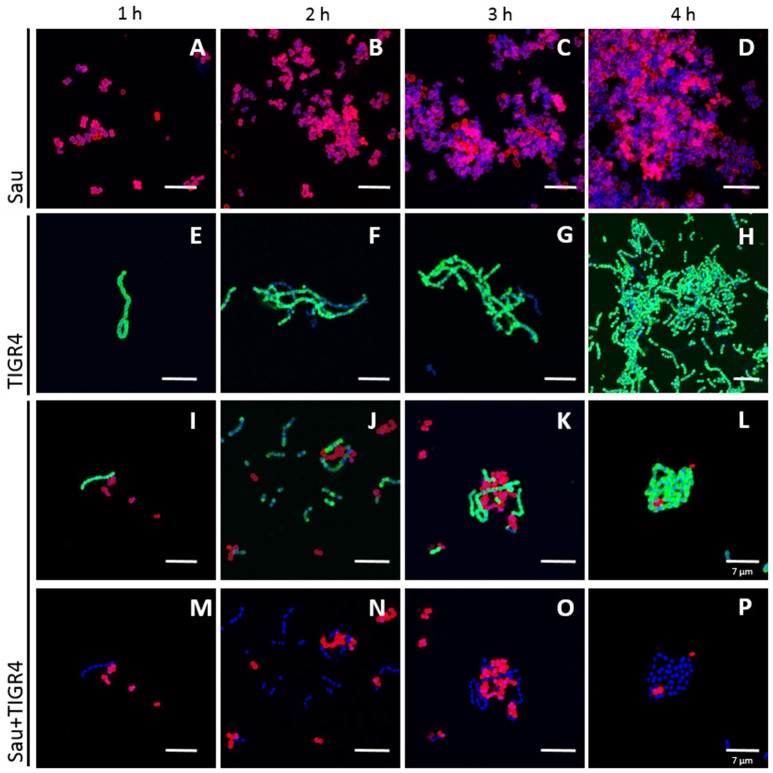
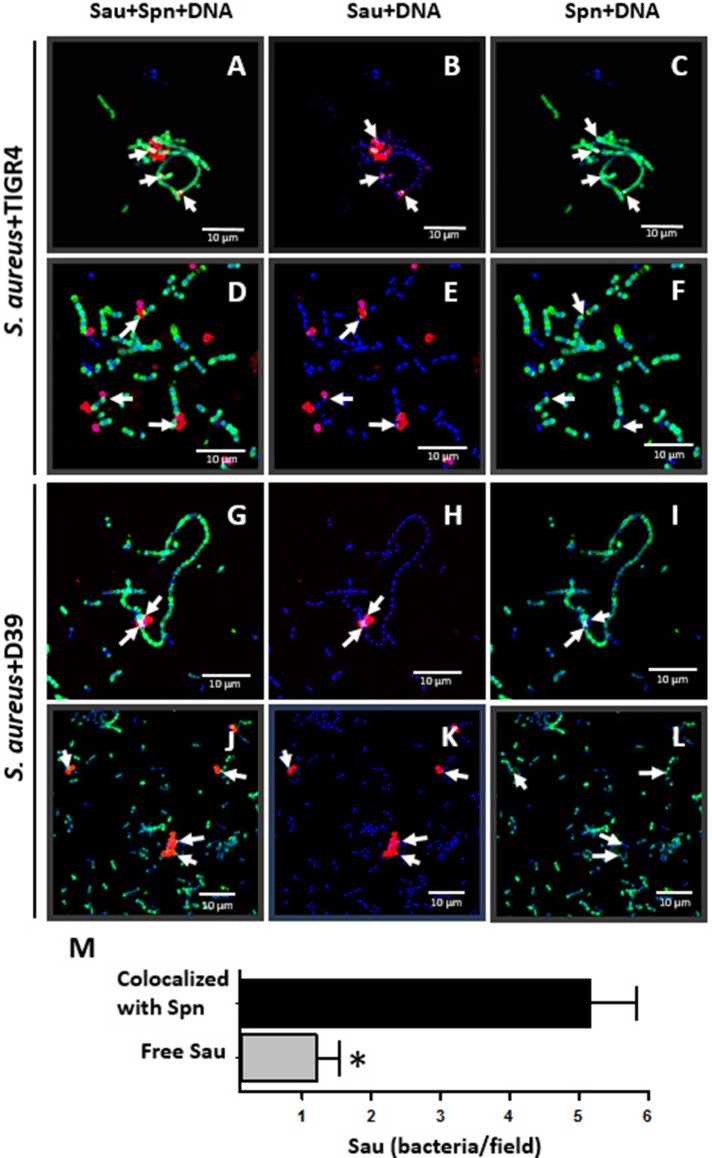
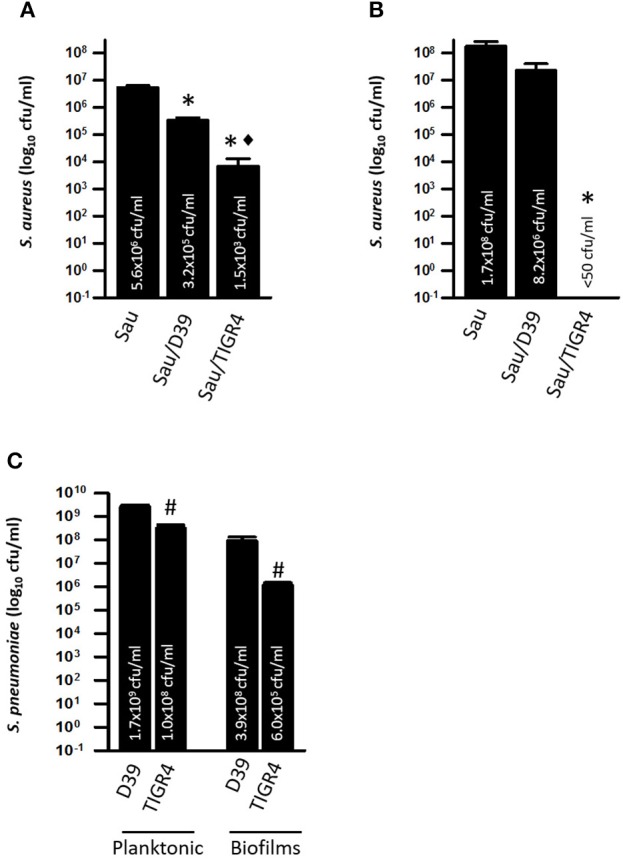
(Sau) strains are a main cause of disease, including nosocomial infections which have been linked to the production of biofilms and the propagation of antibiotic resistance strains such as methicillin-resistant (MRSA). A previous study found that (Spn) strains kill planktonic cultures of Sau strains. In this work, we have further evaluated in detail the eradication of Sau biofilms and investigated ultrastructural interactions of the biofilmicidal effect. Spn strain D39, which produces the competence stimulating peptide 1 (CSP1), reduced Sau biofilms within 8 h of inoculation, while TIGR4, producing CSP2, eradicated Sau biofilms and planktonic cells within 4 h. Differences were not attributed to pherotypes as other Spn strains producing different pheromones eradicated Sau within 4 h. Experiments using Transwell devices, which physically separated both species growing in the same well, demonstrated that direct contact between Spn and Sau was required to efficiently eradicate Sau biofilms and biofilm-released planktonic cells. Physical contact-mediated killing of Sau was not related to production of hydrogen peroxide as an isogenic TIGR4ΔB mutant eradicated Sau bacteria within 4 h. Confocal micrographs confirmed eradication of Sau biofilms by TIGR4 and allowed us to visualize ultrastructural point of contacts between Sau and Spn. A time-course study further demonstrated spatial colocalization of Spn chains and Sau tetrads as early as 30 min post-inoculation (Pearson's coefficient >0.72). Finally, precolonized biofilms produced by Sau strain Newman, or MRSA strain USA300, were eradicated by mid-log phase cultures of washed TIGR4 bacteria within 2 h post-inoculation. In conclusion, Spn strains rapidly eradicate pre-colonized Sau aureus biofilms, including those formed by MRSA strains, by a mechanism(s) requiring bacterium-bacterium contact, but independent from the production of hydrogen peroxide.
(金黄色葡萄球菌)菌株是疾病的主要病因,包括医院感染,这与生物膜的产生以及抗生素耐药菌株(如耐甲氧西林金黄色葡萄球菌,MRSA)的传播有关。先前的一项研究发现,(肺炎链球菌)菌株可杀死金黄色葡萄球菌的浮游培养物。在这项工作中,我们进一步详细评估了对金黄色葡萄球菌生物膜的根除情况,并研究了生物膜杀灭作用的超微结构相互作用。产生感受态刺激肽1(CSP1)的肺炎链球菌D39菌株在接种后8小时内可减少金黄色葡萄球菌生物膜,而产生CSP2的TIGR4菌株在4小时内可根除金黄色葡萄球菌生物膜和浮游细胞。差异并非归因于菌型,因为其他产生不同信息素的肺炎链球菌菌株在4小时内可根除金黄色葡萄球菌。使用Transwell装置进行的实验,该装置将生长在同一孔中的两种细菌物理分离,结果表明肺炎链球菌和金黄色葡萄球菌之间需要直接接触才能有效根除金黄色葡萄球菌生物膜和生物膜释放的浮游细胞。肺炎链球菌对金黄色葡萄球菌的物理接触介导的杀伤与过氧化氢的产生无关,因为同基因的TIGR4ΔB突变体在4小时内可根除金黄色葡萄球菌。共聚焦显微镜图像证实了TIGR4对金黄色葡萄球菌生物膜的根除,并使我们能够观察到金黄色葡萄球菌和肺炎链球菌之间超微结构的接触点。一项时间进程研究进一步表明,早在接种后30分钟,肺炎链球菌链和金黄色葡萄球菌四联球菌就存在空间共定位(皮尔逊系数>0.72)。最后,接种后2小时内,洗涤后的TIGR4细菌的对数中期培养物可根除金黄色葡萄球菌纽曼菌株或MRSA菌株USA300产生的预先定植的生物膜。总之,肺炎链球菌菌株通过一种需要细菌与细菌接触但独立于过氧化氢产生的机制,迅速根除预先定植的金黄色葡萄球菌生物膜,包括由MRSA菌株形成的生物膜。