Baumert Mathias, Pamula Yvonne, Martin James, Kennedy Declan, Ganesan Anand, Kabir Muammar, Kohler Mark, Immanuel Sarah A
School of Electrical and Electronic Engineering, University of Adelaide, Adelaide, Australia.
Dept of Respiratory and Sleep Medicine, Women's and Children's Hospital, Adelaide, Australia.
ERJ Open Res. 2016 Jun 30;2(2). doi: 10.1183/23120541.00003-2016. eCollection 2016 Apr.
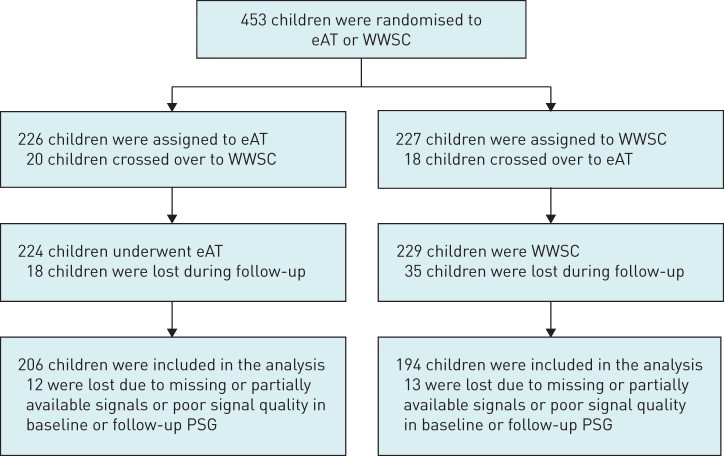
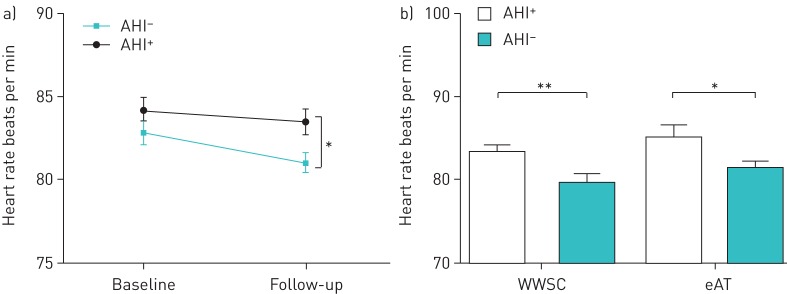
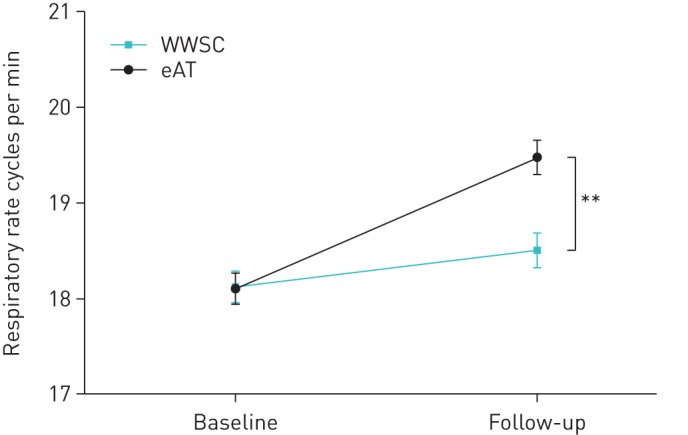
The efficacy of adenotonsillectomy for relieving obstructive sleep apnoea symptoms in children has been firmly established, but its precise effects on cardiorespiratory control are poorly understood. In 375 children enrolled in the Childhood Adenotonsillectomy Trial, randomised to undergo either adenotonsillectomy (n=194) or a strategy of watching waiting (n=181), respiratory rate, respiratory sinus arrhythmia and heart rate were analysed during quiet, non-apnoeic and non-hypopnoeic breathing throughout sleep at baseline and at 7 months using overnight polysomnography. Children who underwent early adenotonsillectomy demonstrated an increase in respiratory rate post-surgery while the watchful waiting group showed no change. Heart rate and respiratory sinus arrhythmia were comparable between both arms. On assessing cardiorespiratory variables with regard to normalisation of clinical polysomnography findings during follow-up, heart rate was reduced in children who had resolution of obstructive sleep apnoea syndrome, while no differences in their respiratory rate or respiratory sinus arrhythmia were observed. Adenotonsillectomy for obstructive sleep apnoea increases baseline respiratory rate during sleep. Normalisation of apnoea-hypopnoea index, spontaneously or surgery, lowers heart rate. Considering the small average effect size, the clinical significance is uncertain.
腺样体扁桃体切除术对缓解儿童阻塞性睡眠呼吸暂停症状的疗效已得到明确证实,但其对心肺控制的确切影响却知之甚少。在儿童腺样体扁桃体切除术试验中纳入的375名儿童中,随机分为接受腺样体扁桃体切除术组(n = 194)或观察等待组(n = 181),在基线和7个月时使用夜间多导睡眠图分析整个睡眠期间安静、无呼吸暂停和无呼吸不足呼吸时的呼吸频率、呼吸性窦性心律不齐和心率。接受早期腺样体扁桃体切除术的儿童术后呼吸频率增加,而观察等待组则无变化。两组的心率和呼吸性窦性心律不齐相当。在随访期间评估与临床多导睡眠图结果正常化相关的心肺变量时,阻塞性睡眠呼吸暂停综合征得到缓解的儿童心率降低,而呼吸频率或呼吸性窦性心律不齐未观察到差异。腺样体扁桃体切除术治疗阻塞性睡眠呼吸暂停会增加睡眠期间的基线呼吸频率。呼吸暂停低通气指数自发或通过手术恢复正常会降低心率。考虑到平均效应量较小,其临床意义尚不确定。