Zander Ryan A, Guthmiller Jenna J, Graham Amy C, Pope Rosemary L, Burke Bradly E, Carr Daniel J J, Butler Noah S
Departments of Microbiology and Immunology, University of Oklahoma Health Sciences Center, Oklahoma City, Oklahoma, United States of America.
Department of Ophthalmology, University of Oklahoma Health Sciences Center, Oklahoma City, Oklahoma, United States of America.
PLoS Pathog. 2016 Oct 12;12(10):e1005945. doi: 10.1371/journal.ppat.1005945. eCollection 2016 Oct.
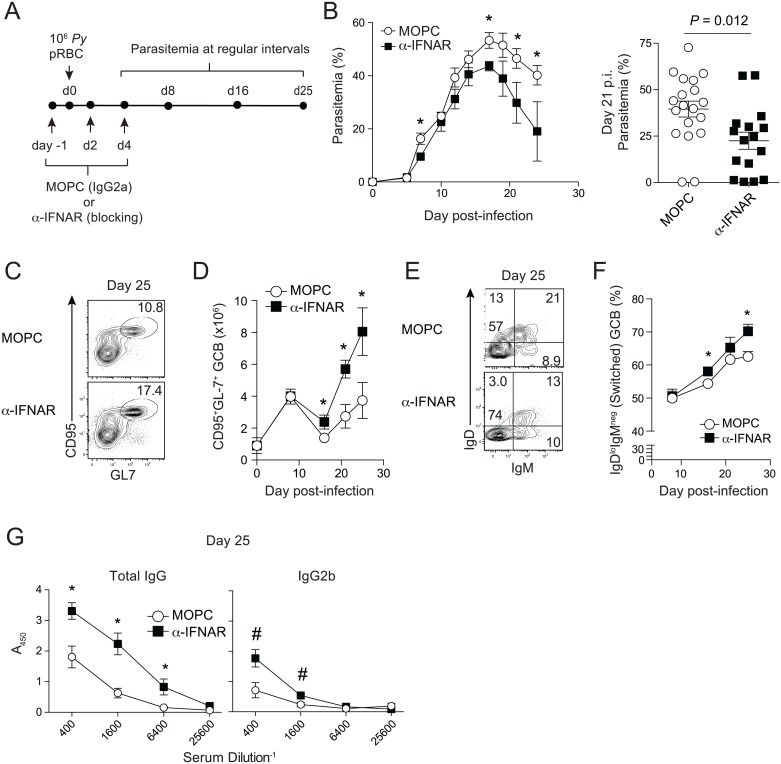
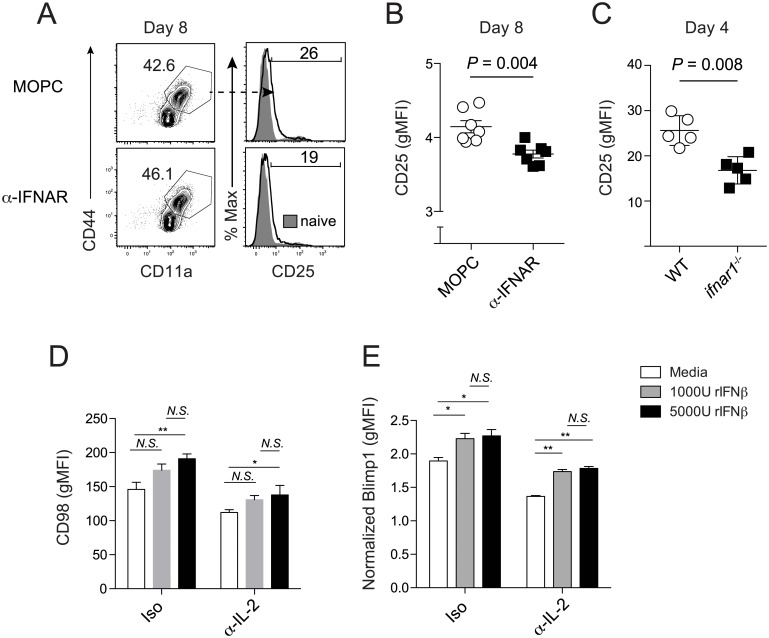
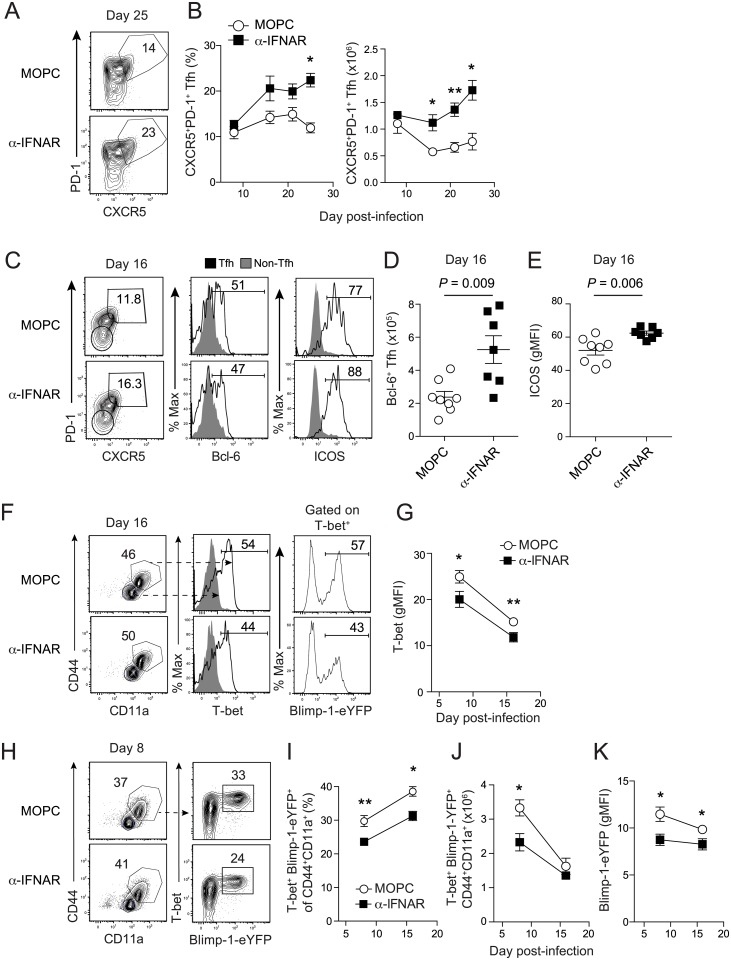
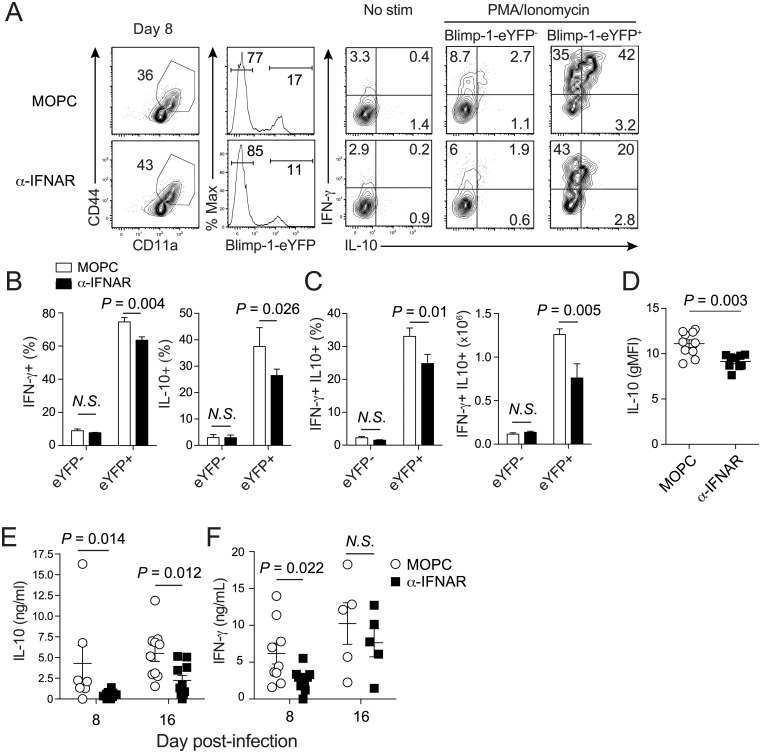
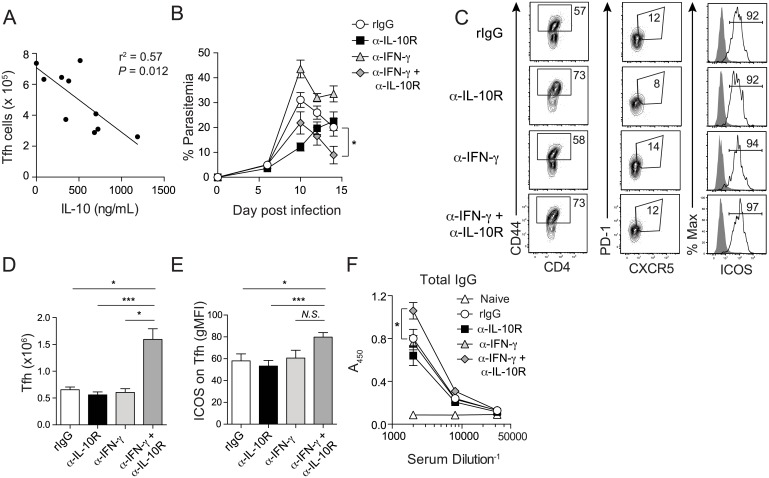
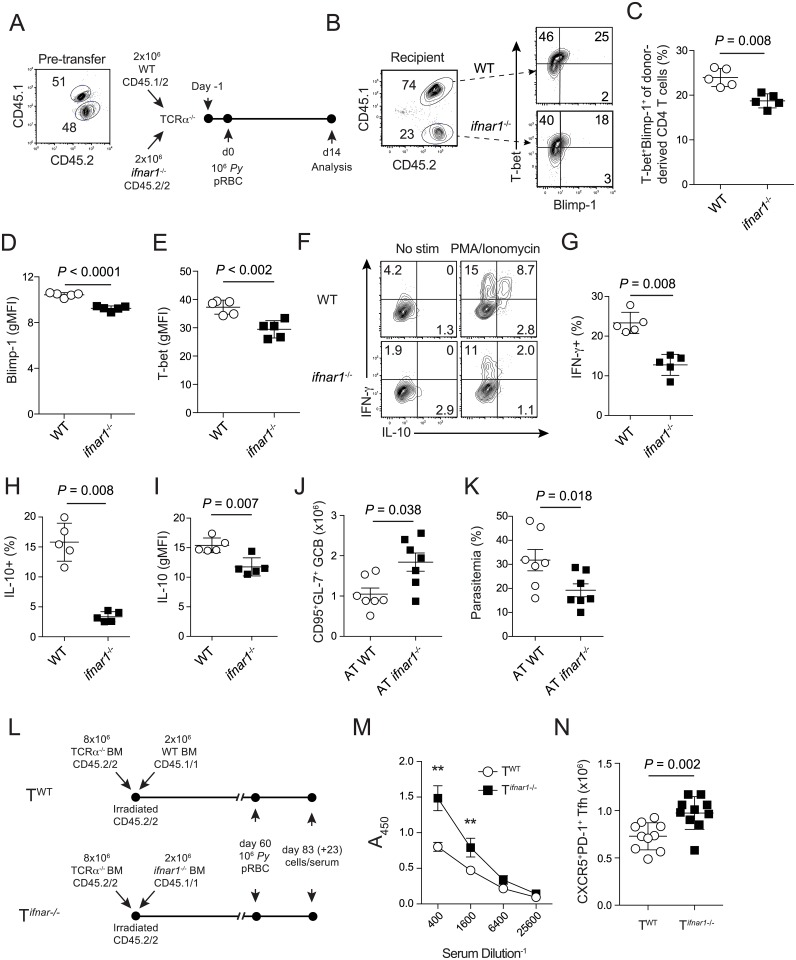
CD4 T cell-dependent antibody responses are essential for limiting Plasmodium parasite replication and the severity of malaria; however, the factors that regulate humoral immunity during highly inflammatory, Th1-biased systemic infections are poorly understood. Using genetic and biochemical approaches, we show that Plasmodium infection-induced type I interferons limit T follicular helper accumulation and constrain anti-malarial humoral immunity. Mechanistically we show that CD4 T cell-intrinsic type I interferon signaling induces T-bet and Blimp-1 expression, thereby promoting T regulatory 1 responses. We further show that the secreted effector cytokines of T regulatory 1 cells, IL-10 and IFN-γ, collaborate to restrict T follicular helper accumulation, limit parasite-specific antibody responses, and diminish parasite control. This circuit of interferon-mediated Blimp-1 induction is also operational during chronic virus infection and can occur independently of IL-2 signaling. Thus, type I interferon-mediated induction of Blimp-1 and subsequent expansion of T regulatory 1 cells represent generalizable features of systemic, inflammatory Th1-biased viral and parasitic infections that are associated with suppression of humoral immunity.
CD4 T细胞依赖性抗体反应对于限制疟原虫复制和疟疾严重程度至关重要;然而,在高度炎症性、以Th1为主导的全身感染过程中调节体液免疫的因素却知之甚少。我们利用遗传学和生物化学方法表明,疟原虫感染诱导的I型干扰素限制了滤泡辅助性T细胞的积累,并抑制了抗疟疾体液免疫。从机制上来说,我们表明CD4 T细胞内在的I型干扰素信号传导诱导T-bet和Blimp-1表达,从而促进调节性T1细胞反应。我们进一步表明,调节性T1细胞分泌的效应细胞因子IL-10和IFN-γ协同作用,限制滤泡辅助性T细胞的积累,限制寄生虫特异性抗体反应,并减少对寄生虫的控制。干扰素介导的Blimp-1诱导这一环路在慢性病毒感染期间也起作用,并且可以独立于IL-2信号传导发生。因此,I型干扰素介导的Blimp-1诱导以及随后调节性T1细胞的扩增代表了全身性、炎症性、以Th1为主导的病毒和寄生虫感染的普遍特征,这些感染与体液免疫抑制有关。