Institut D'Investigacions Biomèdiques August Pi i Sunyer, Barcelona, Spain.
Department of Microbiology, Immunology and Infectious Diseases, Snyder Institute for Chronic Diseases, Cumming School of Medicine, University of Calgary, Calgary, AB, Canada.
Cell Mol Immunol. 2023 May;20(5):489-511. doi: 10.1038/s41423-023-00989-z. Epub 2023 Mar 27.
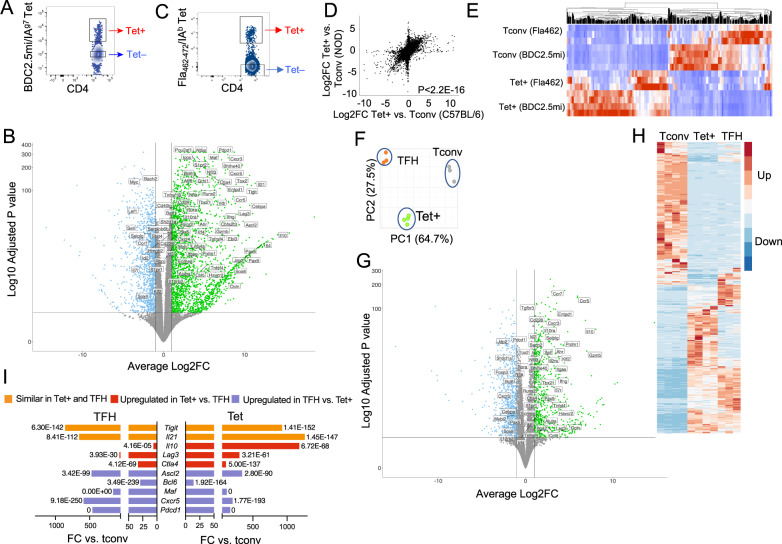
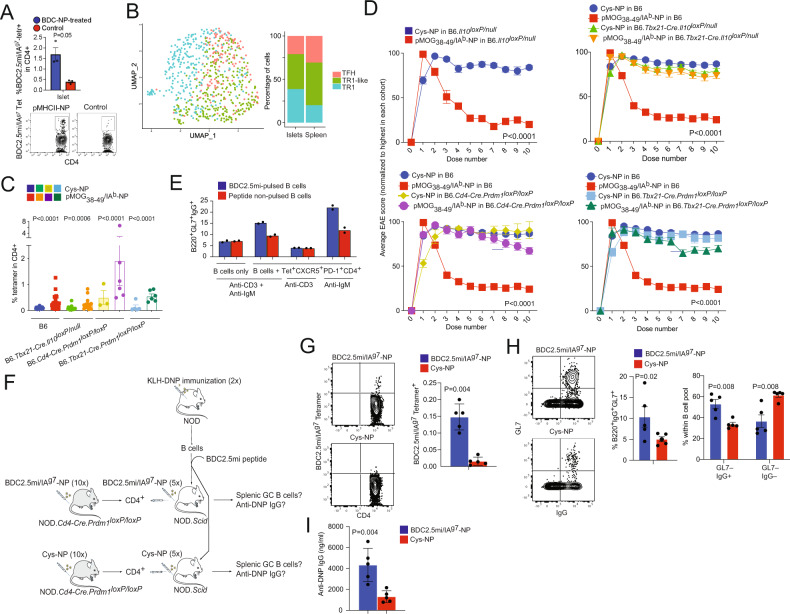
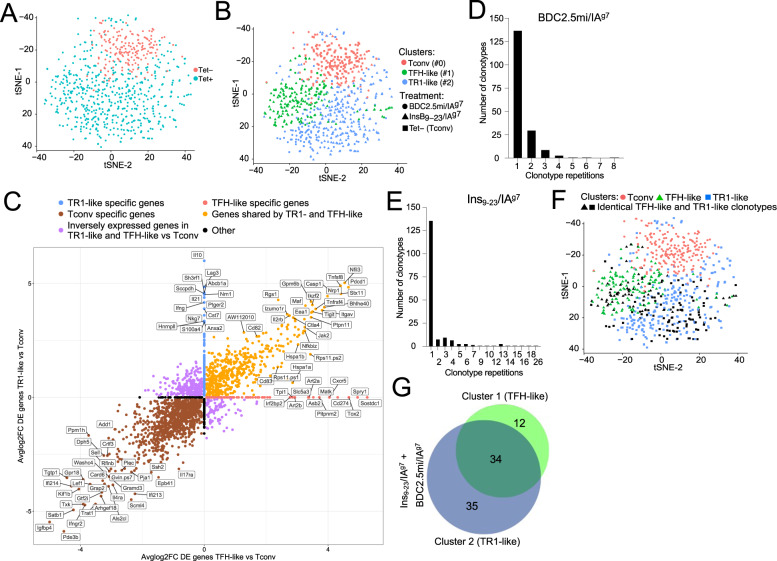
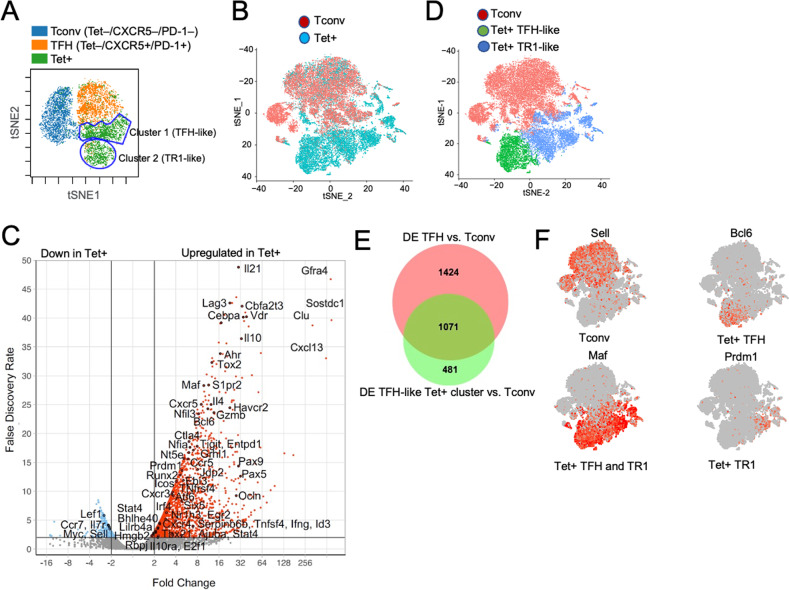
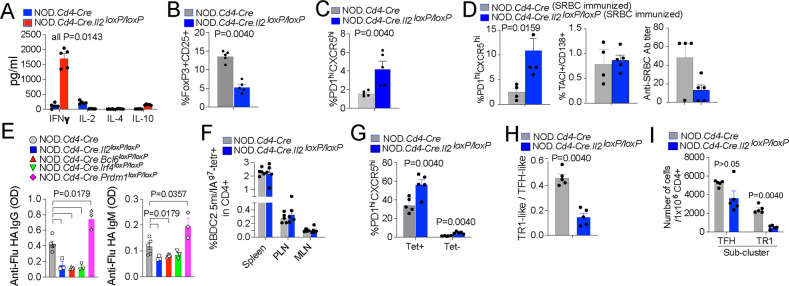
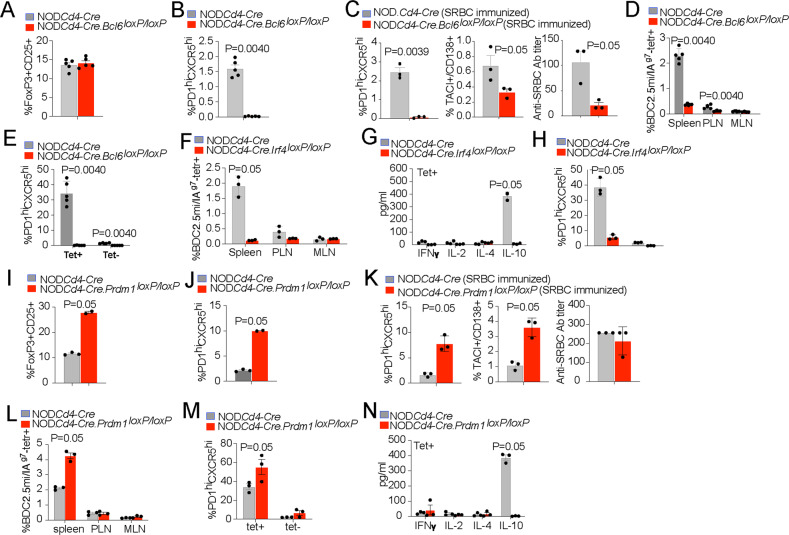
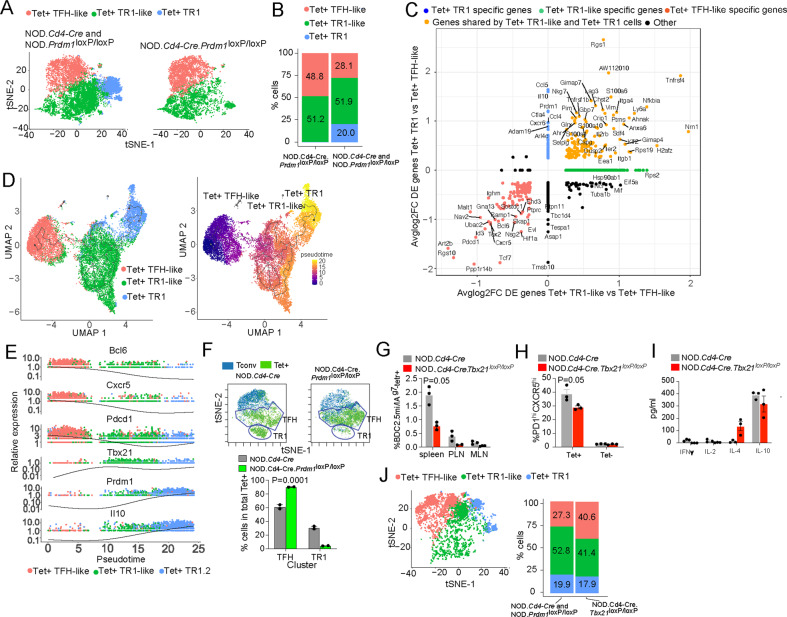
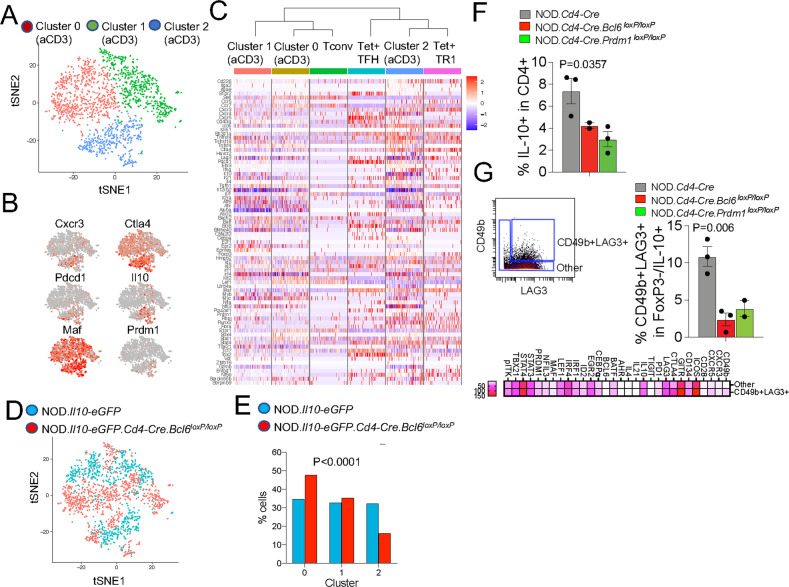
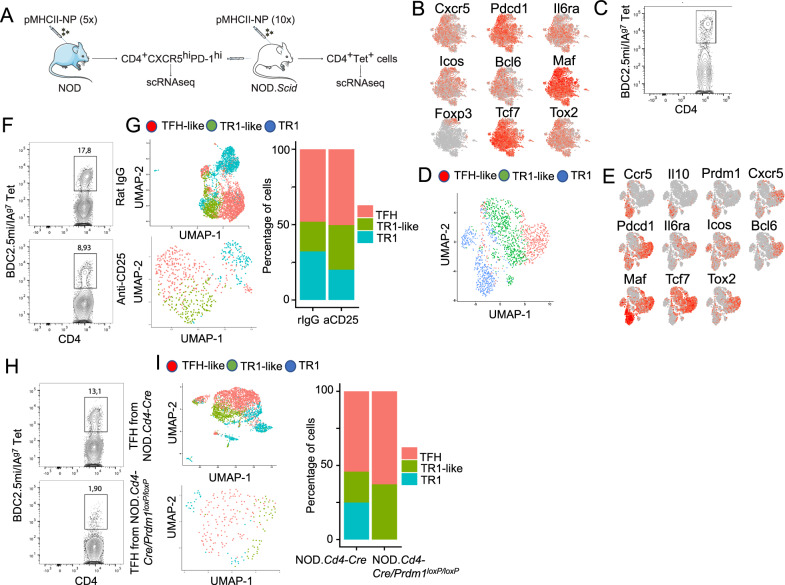
Chronic antigenic stimulation can trigger the differentiation of antigen-experienced CD4 T cells into T regulatory type 1 (TR1) cells, a subset of interleukin-10-producing Treg cells that do not express FOXP3. The identities of the progenitor(s) and transcriptional regulators of this T-cell subset remain unclear. Here, we show that the peptide-major histocompatibility complex class II (pMHCII) monospecific immunoregulatory T-cell pools that arise in vivo in different genetic backgrounds in response to pMHCII-coated nanoparticles (pMHCII-NPs) are invariably comprised of oligoclonal subpools of T follicular helper (TFH) and TR1 cells with a nearly identical clonotypic composition but different functional properties and transcription factor expression profiles. Pseudotime analyses of scRNAseq data and multidimensional mass cytometry revealed progressive downregulation and upregulation of TFH and TR1 markers, respectively. Furthermore, pMHCII-NPs trigger cognate TR1 cell formation in TFH cell-transfused immunodeficient hosts, and T-cell-specific deletion of Bcl6 or Irf4 blunts both the TFH expansion and TR1 formation induced by pMHCII-NPs. In contrast, deletion of Prdm1 selectively abrogates the TFH-to-TR1 conversion. Bcl6 and Prdm1 are also necessary for anti-CD3 mAb-induced TR1 formation. Thus, TFH cells can differentiate into TR1 cells in vivo, and BLIMP1 is a gatekeeper of this cellular reprogramming event.
慢性抗原刺激可引发抗原经验 CD4 T 细胞分化为 T 调节型 1(TR1)细胞,这是一种产生白细胞介素-10 的 Treg 细胞亚群,不表达 FOXP3。这种 T 细胞亚群的祖细胞和转录调节因子的身份仍不清楚。在这里,我们表明,体内不同遗传背景下针对肽-主要组织相容性复合物 II(pMHCII)包被的纳米颗粒(pMHCII-NPs)产生的肽-MHC II 单特异性免疫调节 T 细胞池总是由滤泡辅助性 T(TFH)和 TR1 细胞的寡克隆亚群组成,具有几乎相同的克隆型组成,但功能特性和转录因子表达谱不同。scRNAseq 数据和多维质量细胞术的拟时分析显示,TFH 和 TR1 标志物分别呈逐渐下调和上调趋势。此外,pMHCII-NPs 在 TFH 细胞转输的免疫缺陷宿主中触发同源性 TR1 细胞形成,而 T 细胞特异性敲除 Bcl6 或 Irf4 可阻断 pMHCII-NPs 诱导的 TFH 扩增和 TR1 形成。相比之下,Prdm1 的缺失选择性地消除了 TFH 向 TR1 的转化。Bcl6 和 Prdm1 对于抗 CD3 mAb 诱导的 TR1 形成也是必需的。因此,TFH 细胞可以在体内分化为 TR1 细胞,而 BLIMP1 是这种细胞重编程事件的守门员。