Department of Chemistry, Imperial College London, Imperial College Road, South Kensington Campus, London SW7 2AZ, UK.
Nat Commun. 2016 Oct 13;7:13008. doi: 10.1038/ncomms13008.
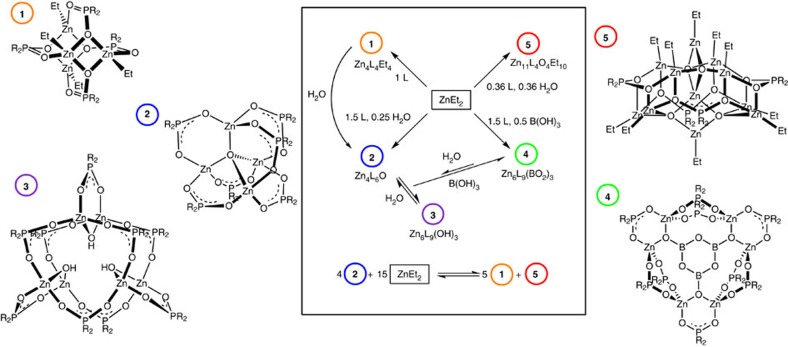
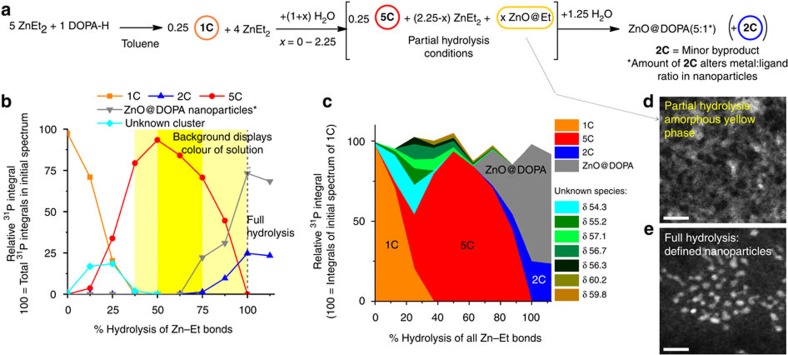
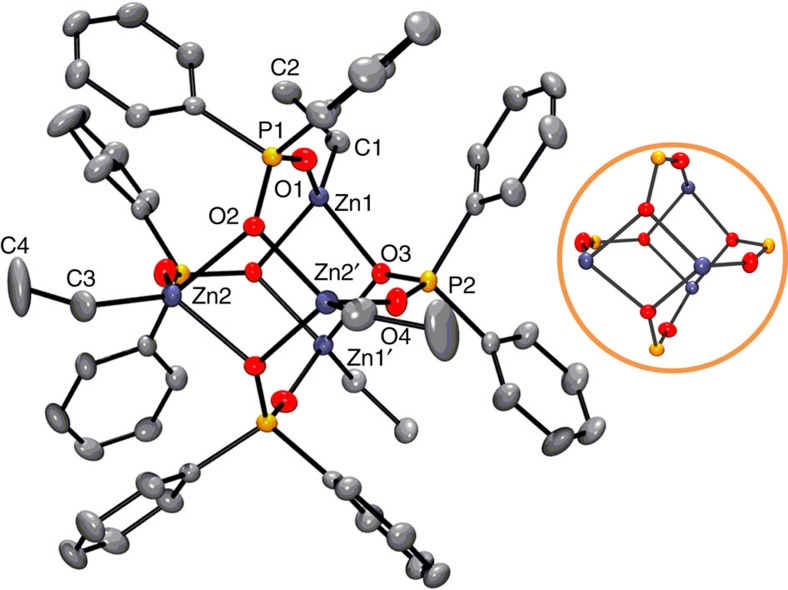
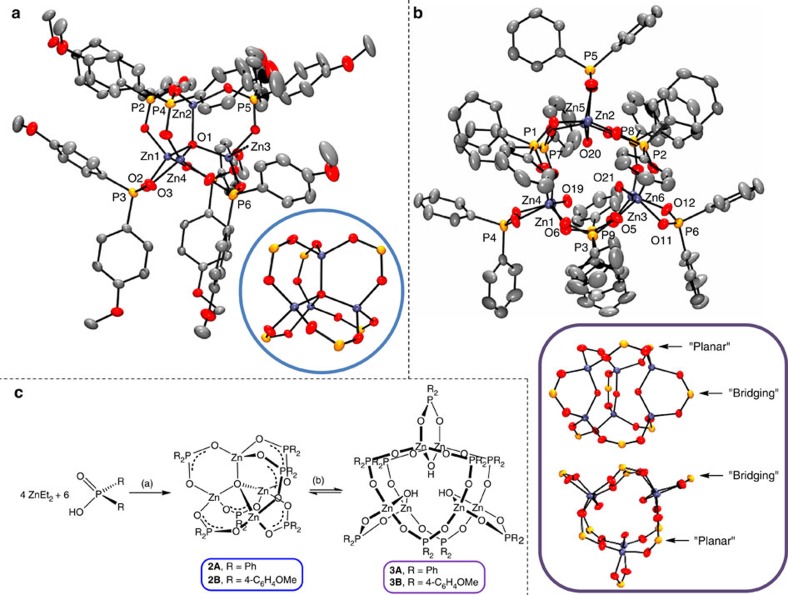
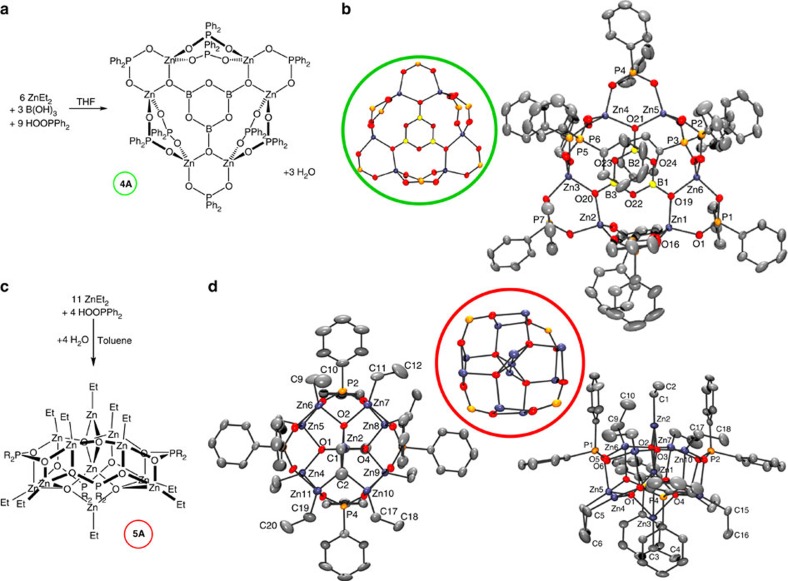
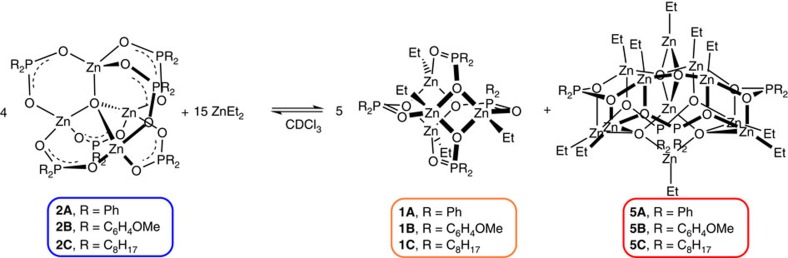
The bottom-up synthesis of ligand-stabilized functional nanoparticles from molecular precursors is widely applied but is difficult to study mechanistically. Here we use P NMR spectroscopy to follow the trajectory of phosphinate ligands during the synthesis of a range of ligated zinc oxo clusters, containing 4, 6 and 11 zinc atoms. Using an organometallic route, the clusters interconvert rapidly and self-assemble in solution based on thermodynamic equilibria rather than nucleation kinetics. These clusters are also identified in situ during the synthesis of phosphinate-capped zinc oxide nanoparticles. Unexpectedly, the ligand is sequestered to a stable Zn cluster during the majority of the synthesis and only becomes coordinated to the nanoparticle surface, in the final step. In addition to a versatile and accessible route to (optionally doped) zinc clusters, the findings provide an understanding of the role of well-defined molecular precursors during the synthesis of small (2-4 nm) nanoparticles.
从分子前体自上而下合成配体稳定的功能纳米粒子得到了广泛的应用,但从机理上研究却很困难。在这里,我们使用磷 NMR 光谱来跟踪膦酸酯配体在一系列配位锌氧簇合成过程中的轨迹,这些锌氧簇含有 4、6 和 11 个锌原子。通过有机金属途径,这些簇在溶液中快速相互转化并基于热力学平衡而不是成核动力学自组装,而不是基于成核动力学自组装。在膦酸酯封端的氧化锌纳米粒子的合成过程中,也可以原位识别这些簇。出乎意料的是,在大多数合成过程中,配体被隔离在稳定的 Zn 簇中,仅在最后一步才与纳米粒子表面配位。除了为(可选掺杂)锌簇提供一种通用且易于接近的途径外,这些发现还为在合成小(2-4nm)纳米粒子过程中理解定义明确的分子前体的作用提供了依据。