Kumar Ranjeet, Ariöz Candan, Li Yaozong, Bosaeus Niklas, Rocha Sandra, Wittung-Stafshede Pernilla
Department of Biology and Biological Engineering, Chalmers University of Technology, 41296, Gothenburg, Sweden.
Department of Chemistry, Umeå University, 90187, Umeå, Sweden.
Biometals. 2017 Feb;30(1):27-35. doi: 10.1007/s10534-016-9976-7. Epub 2016 Oct 15.
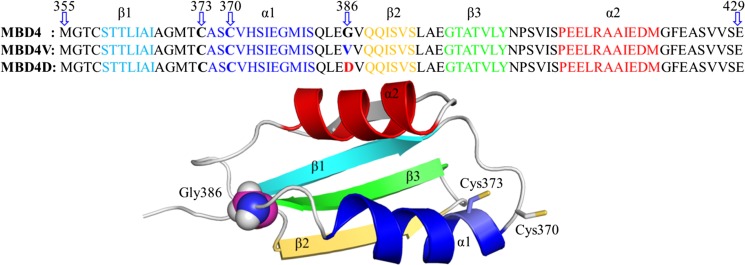
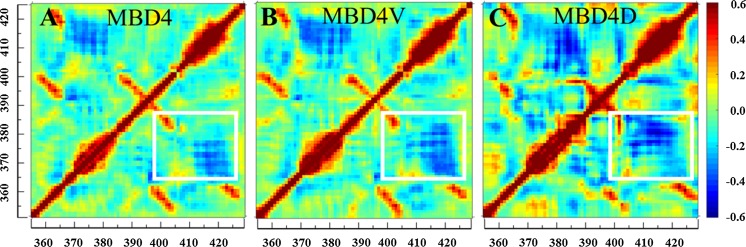
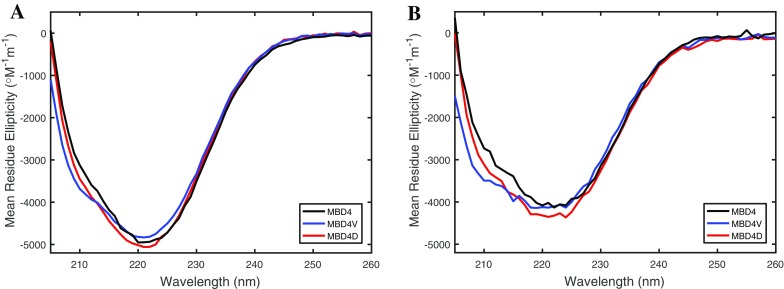
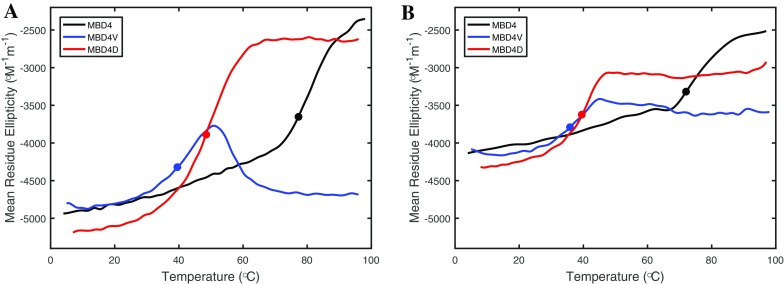
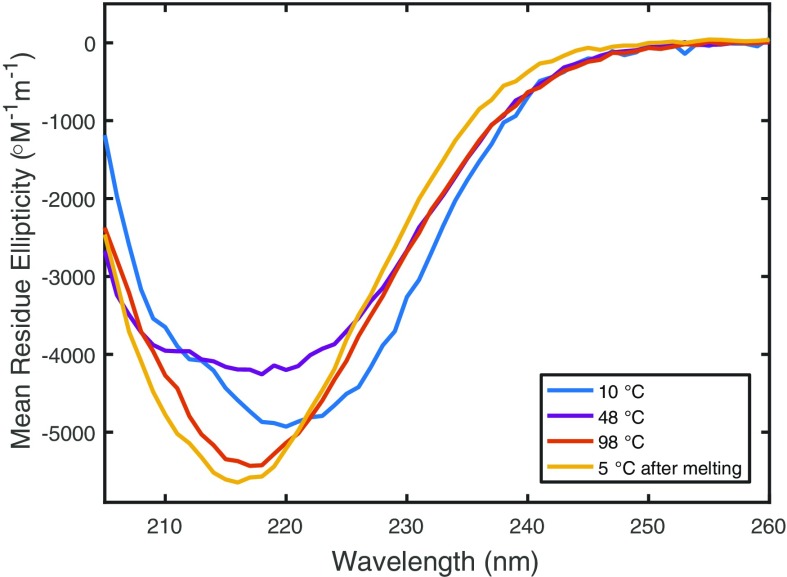
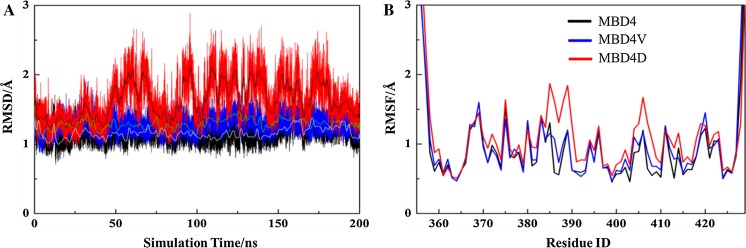
After cellular uptake, Copper (Cu) ions are transferred from the chaperone Atox1 to the Wilson disease protein (ATP7B) for incorporation into Cu-dependent enzymes in the secretory pathway. Human ATP7B is a large multi-domain membrane-spanning protein which, in contrast to homologues in other organisms, has six similar cytoplasmic metal-binding domains (MBDs). The reason for multiple MBDs is proposed to be indirect modulation of enzymatic activity and it is thus intriguing that point mutations in MBDs can promote Wilson disease. We here investigated, in vitro and in silico, the biophysical consequences of clinically-observed Wilson disease mutations, G85V in MBD1 and G591D in MBD6, incorporated in domain 4. Because G85 and G591 correspond to a conserved Gly found in all MBDs, we introduced the mutations in the well-characterized MBD4. We found the mutations to dramatically reduce the MBD4 thermal stability, shifting the midpoint temperature of unfolding by more than 20 °C. In contrast to wild type MBD4 and MBD4D, MBD4V adopted a misfolded structure with a large β-sheet content at high temperatures. Molecular dynamic simulations demonstrated that the mutations increased backbone fluctuations that extended throughout the domain. Our findings imply that reduced stability and enhanced dynamics of MBD1 or MBD6 is the origin of ATP7B dysfunction in Wilson disease patients with the G85V or G591D mutation.
细胞摄取后,铜(Cu)离子从伴侣蛋白Atox1转移至威尔逊病蛋白(ATP7B),以便在分泌途径中整合到依赖铜的酶中。人类ATP7B是一种大型多结构域跨膜蛋白,与其他生物体中的同源物不同,它有六个相似的胞质金属结合结构域(MBDs)。多个MBDs的原因被认为是对酶活性的间接调节,因此MBDs中的点突变可引发威尔逊病这一点很有趣。我们在此通过体外和计算机模拟研究了临床观察到的威尔逊病突变(MBD1中的G85V和MBD6中的G591D)整合到结构域4中的生物物理后果。由于G85和G591对应于所有MBDs中发现的保守甘氨酸,我们在特征明确的MBD4中引入了这些突变。我们发现这些突变显著降低了MBD4的热稳定性,使解折叠的中点温度偏移超过20°C。与野生型MBD4和MBD4D相比,MBD4V在高温下采用了具有大量β-折叠含量的错误折叠结构。分子动力学模拟表明,这些突变增加了贯穿整个结构域的主链波动。我们的研究结果表明,MBD1或MBD6稳定性降低和动力学增强是患有G85V或G591D突变的威尔逊病患者中ATP7B功能障碍的根源。