Yang Diqi, Wang Lei, Lin Pengfei, Jiang Tingting, Wang Nan, Zhao Fan, Chen Huatao, Tang Keqiong, Zhou Dong, Wang Aihua, Jin Yaping
Key Laboratory of Animal Biotechnology of the Ministry of Agriculture, Northwest A&F University, 712100, Shaanxi, China.
J Reprod Dev. 2017 Feb 16;63(1):27-36. doi: 10.1262/jrd.2016-111. Epub 2016 Oct 15.
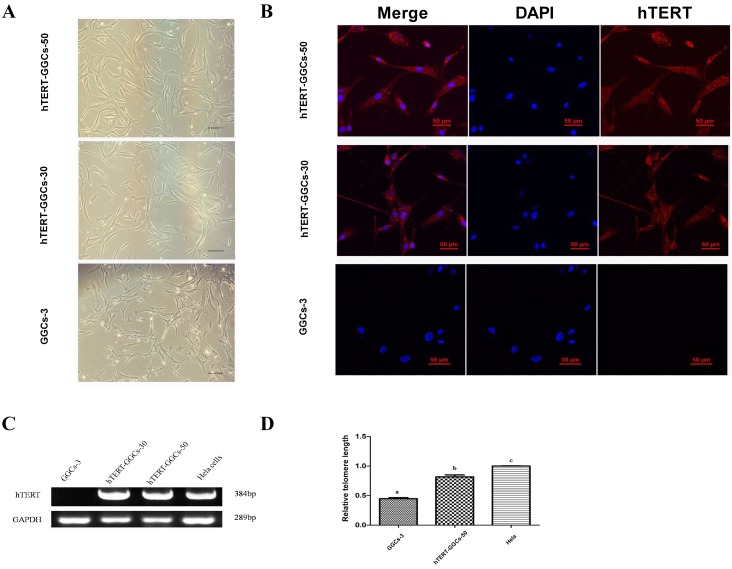
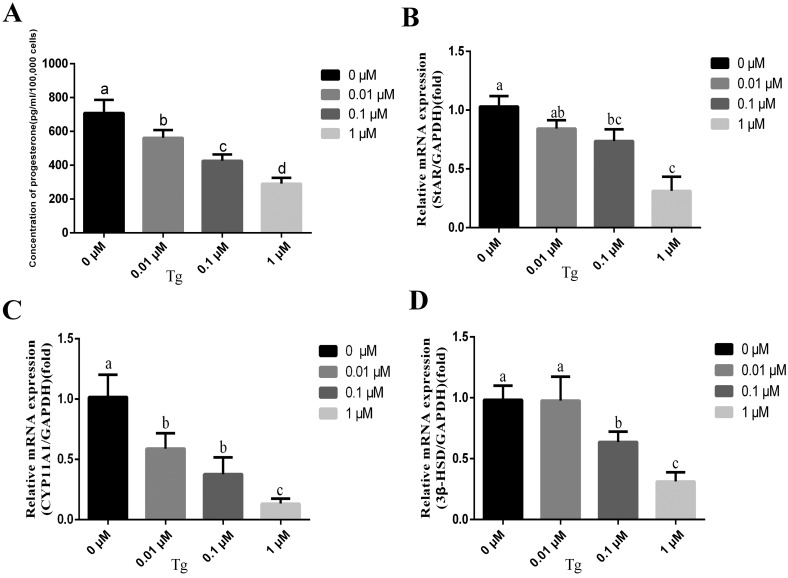
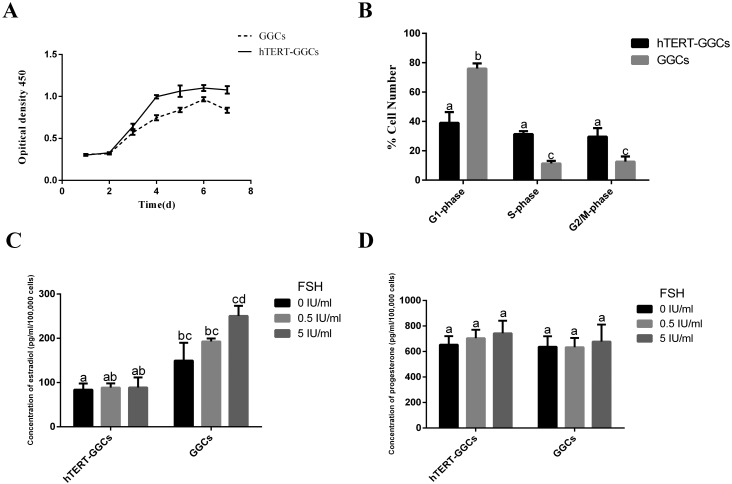
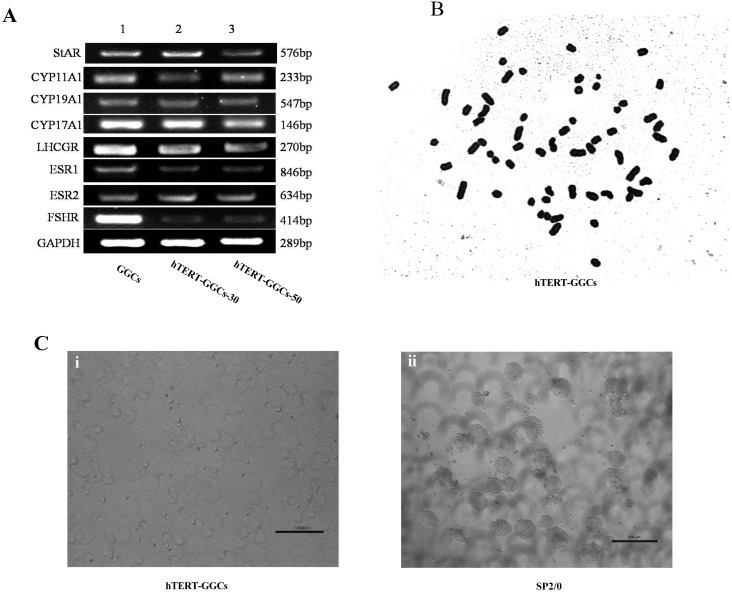
With granulosa and theca cells, the ovaries are responsible for producing oocytes and secreting sex steroids such as estrogen and progesterone. Endoplasmic reticulum stress (ERS) plays an important role in follicle atresia and embryo implantation. In this study, goat granulosa cells were isolated from medium-sized (4-6 mm) healthy follicles. Primary granulosa cells were immortalized by transfection with human telomerase reverse transcriptase (hTERT) to establish a goat granulosa cell line (hTERT-GGCs). These hTERT-GGCs expressed hTERT and had relatively long telomeres at passage 50. Furthermore, hTERT-GGCs expressed the gonadotropin receptor genes CYP11A1, StAR, and CYP19A1, which are involved in steroidogenesis. Additionally, progesterone was detectable in hTERT-GGCs. Although the proliferation potential of hTERT-GGCs significantly improved, there was no evidence to suggest that the hTERT-GGCs are tumorigenic. In addition, thapsigargin (Tg) treatment led to a significant dose-dependent decrease in progesterone concentration and steroidogenic enzyme expression. In summary, we successfully generated a stable goat granulosa cell line. We found that Tg induced ERS in hTERT-GGCs, which reduced progesterone production and steroidogenic enzyme expression. Future studies may benefit from using this cell line as a model to explore the molecular mechanisms regulating steroidogenesis and apoptosis in goat granulosa cells.
卵巢中的颗粒细胞和卵泡膜细胞负责产生卵母细胞并分泌雌激素和孕酮等性类固醇。内质网应激(ERS)在卵泡闭锁和胚胎着床中起重要作用。在本研究中,从中等大小(4 - 6毫米)的健康卵泡中分离出山羊颗粒细胞。通过转染人端粒酶逆转录酶(hTERT)使原代颗粒细胞永生化,以建立山羊颗粒细胞系(hTERT - GGCs)。这些hTERT - GGCs在传代50时表达hTERT且具有相对较长的端粒。此外,hTERT - GGCs表达参与类固醇生成的促性腺激素受体基因CYP11A1、StAR和CYP19A1。另外,在hTERT - GGCs中可检测到孕酮。虽然hTERT - GGCs的增殖潜力显著提高,但没有证据表明hTERT - GGCs具有致瘤性。此外,毒胡萝卜素(Tg)处理导致孕酮浓度和类固醇生成酶表达显著的剂量依赖性降低。总之,我们成功建立了一个稳定的山羊颗粒细胞系。我们发现Tg在hTERT - GGCs中诱导ERS,这降低了孕酮生成和类固醇生成酶表达。未来的研究可能受益于使用该细胞系作为模型来探索调节山羊颗粒细胞类固醇生成和凋亡的分子机制。