Guo Ai-Shun, Huang Yi-Qun, Ma Xu-Dong, Lin Rui-Sheng
Department of Neurosurgery, Zhangzhou Affiliated Hospital of Fujian Medical University, Zhangzhou, Fujian 363000, P.R. China.
Department of Hematology, Zhangzhou Affiliated Hospital of Fujian Medical University, Zhangzhou, Fujian 363000, P.R. China.
Mol Med Rep. 2016 Nov;14(5):4613-4621. doi: 10.3892/mmr.2016.5815. Epub 2016 Oct 6.
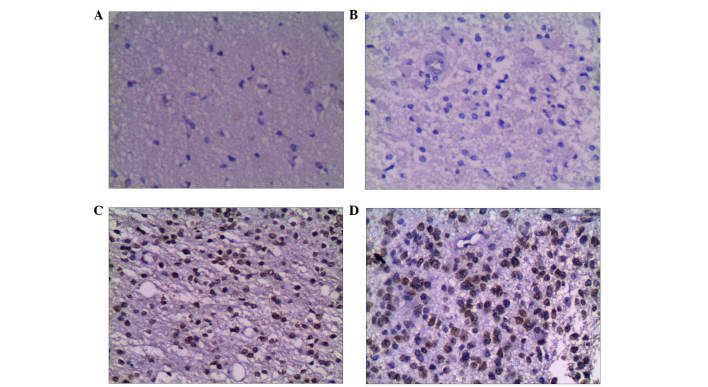
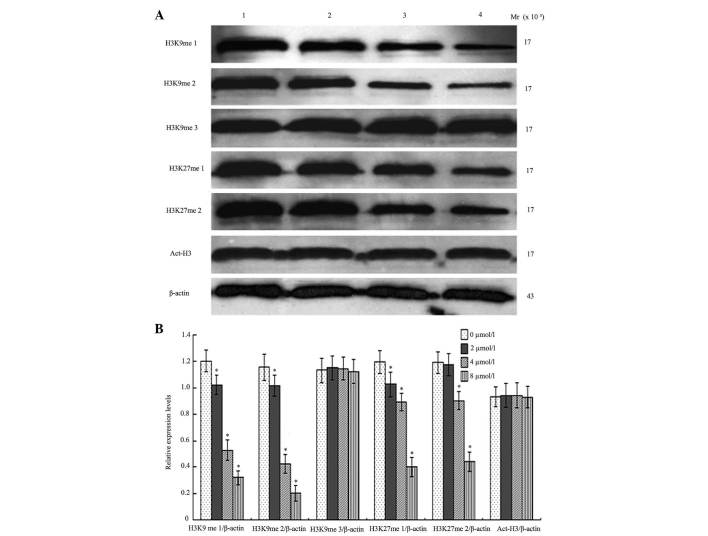
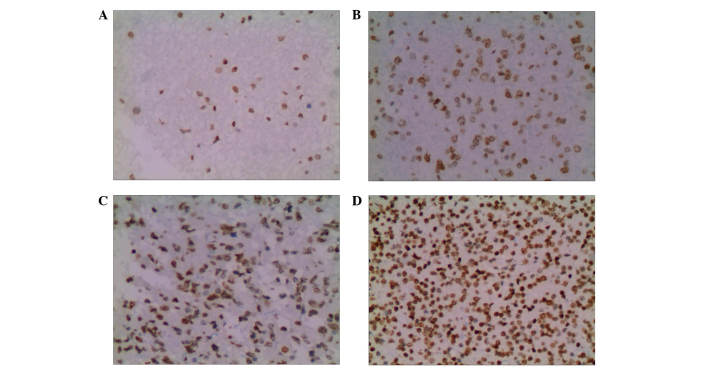
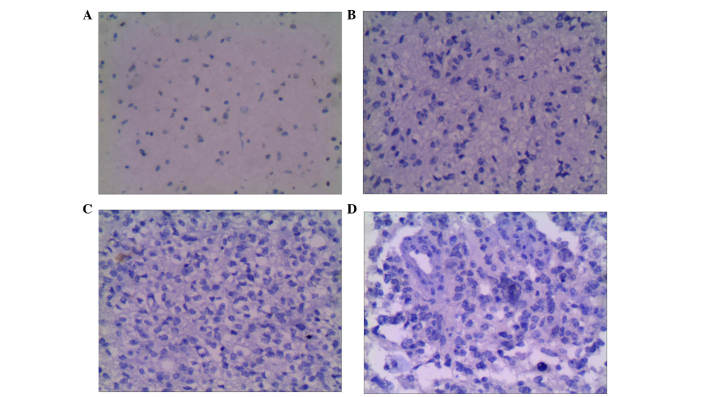
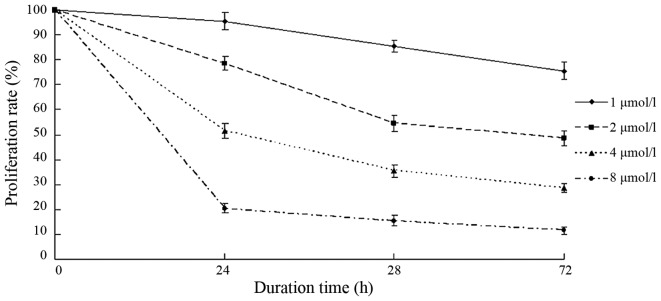
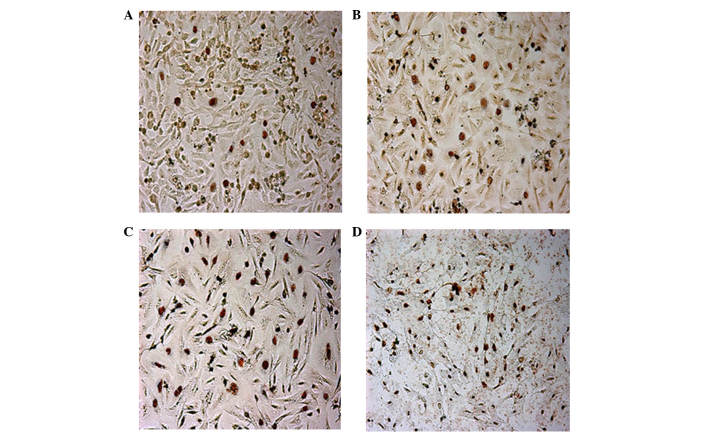
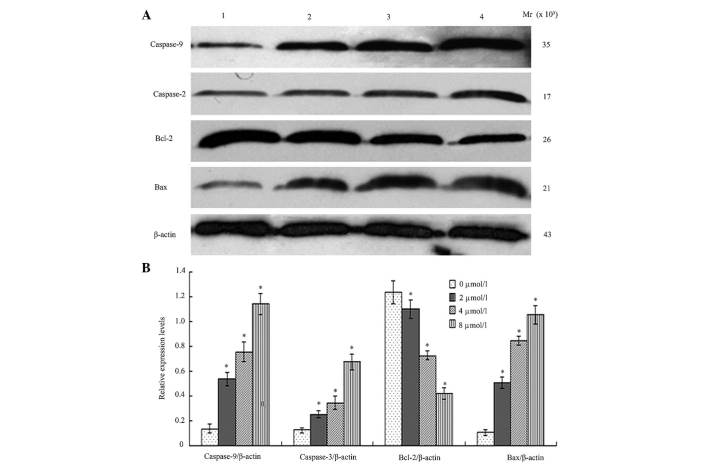
The present study aimed to investigate the differential expression and clinical significance of histone methyltransferase G9a, histone H3K9me2 and histone H3K9me1 in human brain glioma and adjacent tissue samples. It also aimed to observe the effect and mechanism of BIX‑01294, as an inhibitor of methyltransferase G9a, on the proliferation, apoptosis, methylation of H3K9 and H3K27, and the acetylation in U251 glioma cells in vitro. The differential expression of methyltransferase G9a, histone H3K9me2 and histone H3K9me1 in in human brain glioma and adjacent tissues were analyzed by immunohistochemistry, a growth curve of U251 cells following treatment with BIX‑01294 was determined using the MTT assay. In addition, the apoptosis percentage of U251 cells was analyzed by TUNEL assay and the expression levels of apoptosis‑associated proteins, including B‑cell lymphoma 2 (Bcl‑2), Bcl‑2‑associated X protein (Bax), caspase‑9 and caspase‑3, and the acetylation of histones, including H3K27me1, H3K27me2 and H3 in U251 were analyzed by western blot following BIX‑01294 treatment. The positive rate of G9a in glioma tissues was 86% (43/50), which was significantly different from 42% (21/50) in adjacent tissues (P<0.01). The positive rate of H3K9me2 in glioma tissues was 82% (41/50), which was significantly different from 38% (19/50) in adjacent tissues (χ²=18.38; P<0.01). The expression of G9a and H3K9me2 were associated with the World Health Organization (WHO) glioma grade. The positive rate of H3K9me1 in glioma tissues was 54% (27/50) and 44% (22/50) in adjacent tissues, though this result was not significantly different (χ²=1.21, P>0.05). BIX‑01294 inhibited the proliferation of U251, downregulated expression of Bcl‑2, and upregulated expression of Bax, caspase‑3 and caspase‑9, and induced apoptosis of U251. BIX‑01294 downregulated H3K9me1, H3K9me2, H3K27me1 and H3K27me2, however, it did not affect the acetylation of H3K9me3 and H3. High expression of G9a and H3K9me2 in glioma tissue samples was associated with the WHO grade, which indicated that G9a and H3K9me2 may promote generation and development of glioma. BIX‑01294 inhibited proliferation and induced apoptosis of glioma cells, changes in methylation of H3K9 and H3K27 resulting in conformational changes of chromosome may be an underlying mechanism. BIX‑01294 may be a potential novel therapeutic agent in the treatment of glioma.
本研究旨在探讨组蛋白甲基转移酶G9a、组蛋白H3K9me2和组蛋白H3K9me1在人脑胶质瘤及癌旁组织样本中的差异表达及临床意义。同时,观察甲基转移酶G9a抑制剂BIX-01294对U251胶质瘤细胞增殖、凋亡、H3K9和H3K27甲基化以及乙酰化的影响及机制。采用免疫组化法分析甲基转移酶G9a、组蛋白H3K9me2和组蛋白H3K9me1在人脑胶质瘤及癌旁组织中的差异表达,用MTT法测定BIX-01294处理后U251细胞的生长曲线。此外,通过TUNEL法分析U251细胞的凋亡率,用蛋白质免疫印迹法分析BIX-01294处理后U251细胞中凋亡相关蛋白(包括B细胞淋巴瘤-2(Bcl-2)、Bcl-2相关X蛋白(Bax)、半胱天冬酶-9和半胱天冬酶-3)的表达水平以及组蛋白(包括H3K27me1、H3K27me2和H3)的乙酰化水平。胶质瘤组织中G9a的阳性率为86%(43/50),与癌旁组织中的42%(21/50)相比差异有统计学意义(P<0.01)。胶质瘤组织中H3K9me2的阳性率为82%(41/50),与癌旁组织中的38%(19/50)相比差异有统计学意义(χ²=18.38;P<0.01)。G9a和H3K9me2的表达与世界卫生组织(WHO)胶质瘤分级相关。胶质瘤组织中H3K9me1的阳性率为54%(27/50),癌旁组织中为44%(22/50),差异无统计学意义(χ²=1.21,P>0.05)。BIX-01294抑制U251细胞增殖,下调Bcl-2表达,上调Bax、半胱天冬酶-3和半胱天冬酶-9表达,并诱导U251细胞凋亡。BIX-01294下调H3K9me1、H3K9me2、H3K27me1和H3K27me2,但不影响H3K9me3和H3的乙酰化。胶质瘤组织样本中G9a和H3K9me2的高表达与WHO分级相关,提示G9a和H3K9me2可能促进胶质瘤的发生发展。BIX-01294抑制胶质瘤细胞增殖并诱导其凋亡,H3K9和H3K27甲基化改变导致染色体构象变化可能是其潜在机制。BIX-01294可能是治疗胶质瘤的一种潜在新型治疗药物。