Puissant Emeline, Boonen Marielle
Laboratoire de Chimie Physiologique - URPhyM, University of Namur, Namur, Belgium.
PLoS One. 2016 Oct 18;11(10):e0165004. doi: 10.1371/journal.pone.0165004. eCollection 2016.
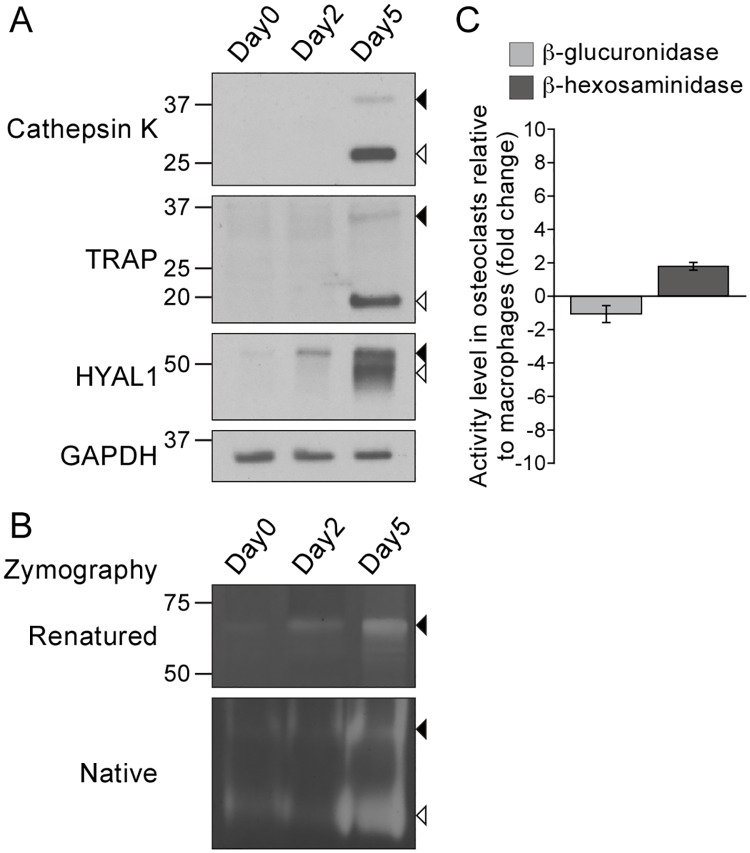
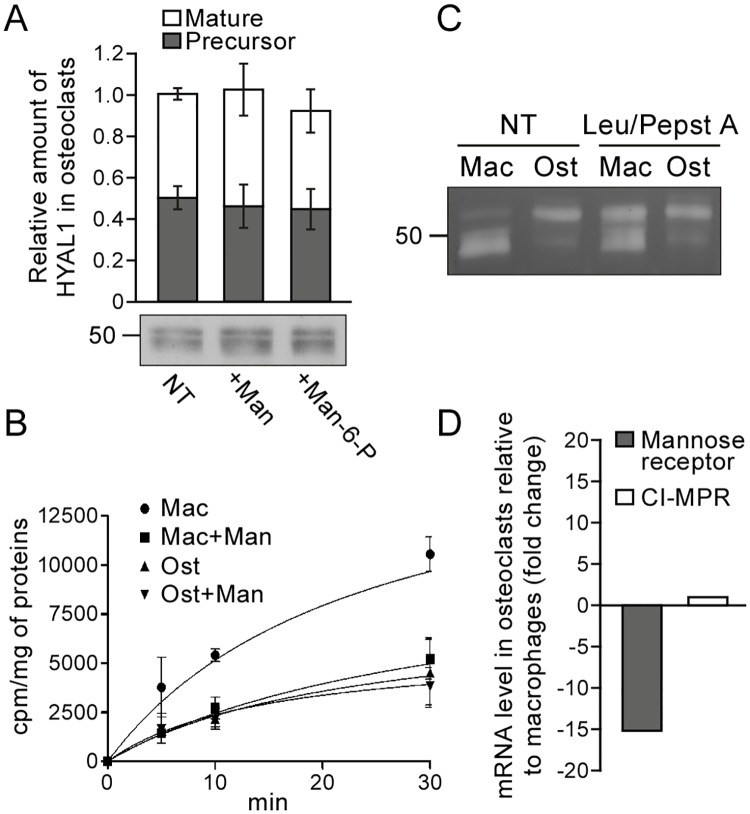
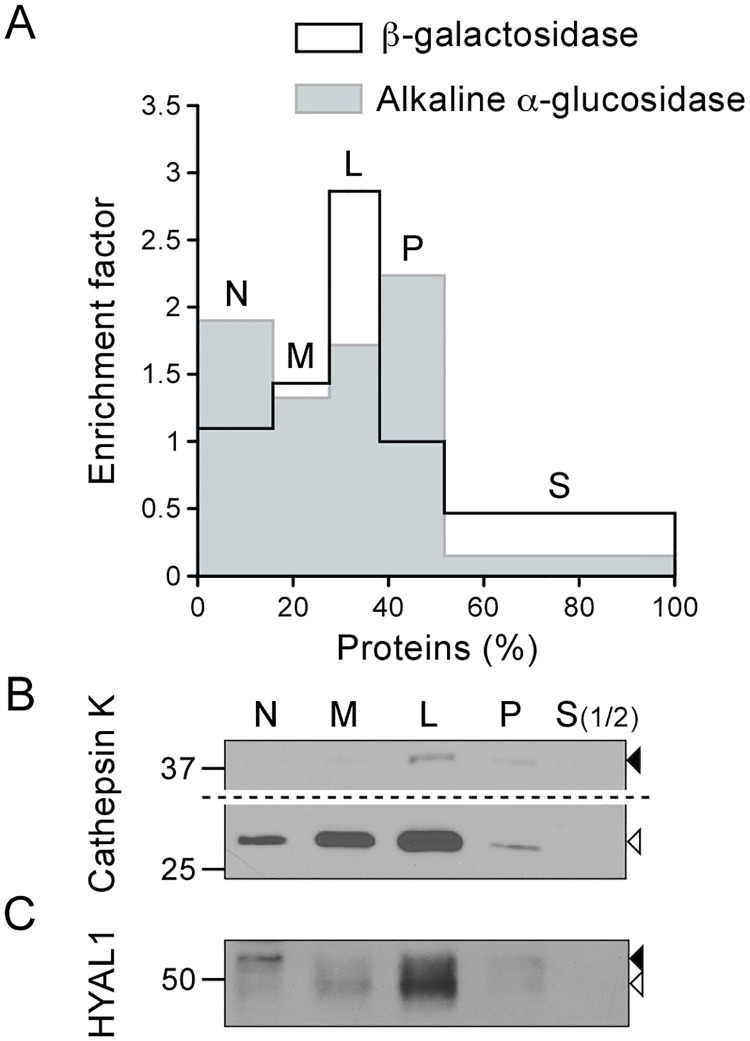
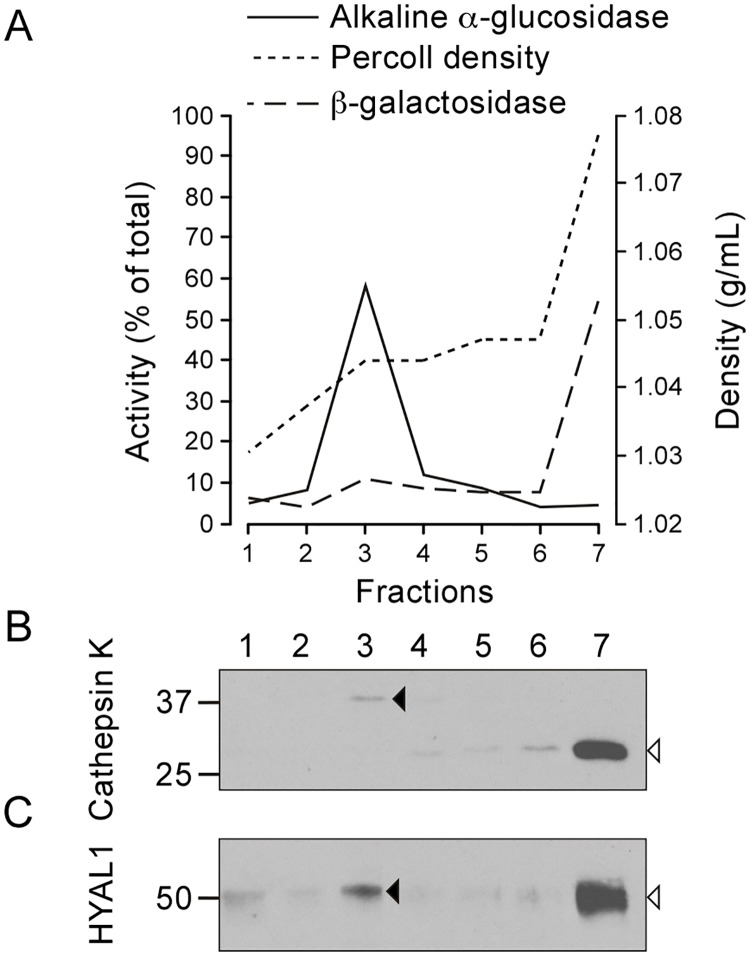
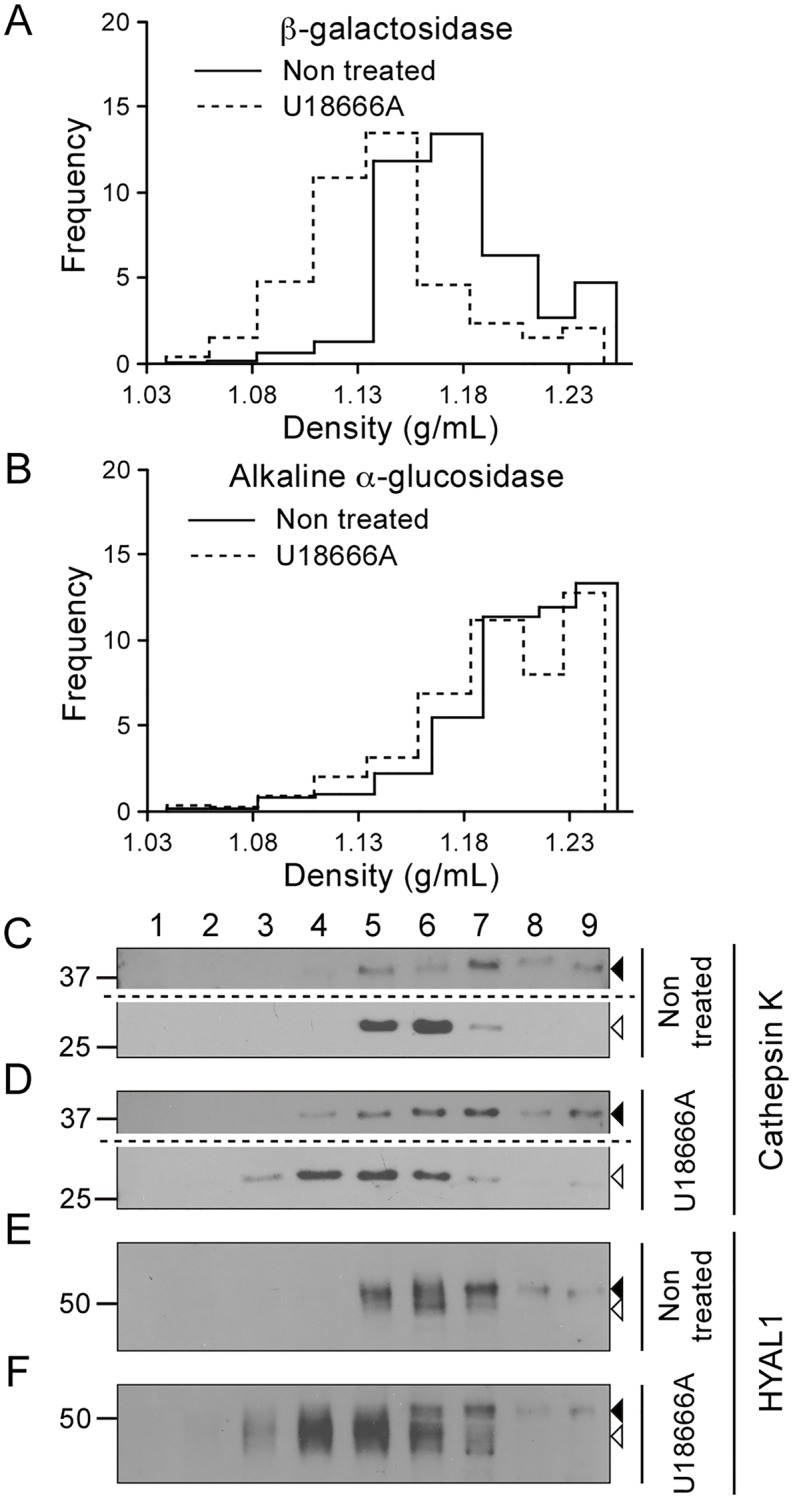
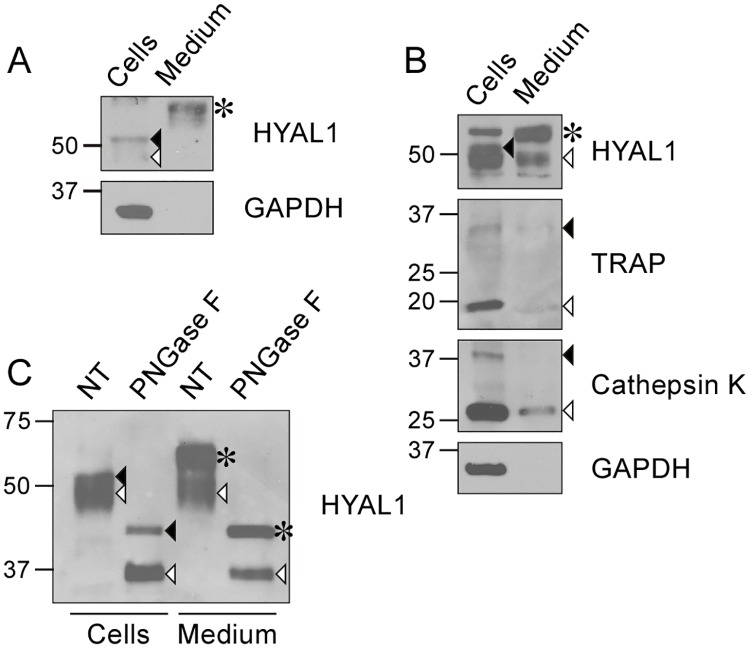
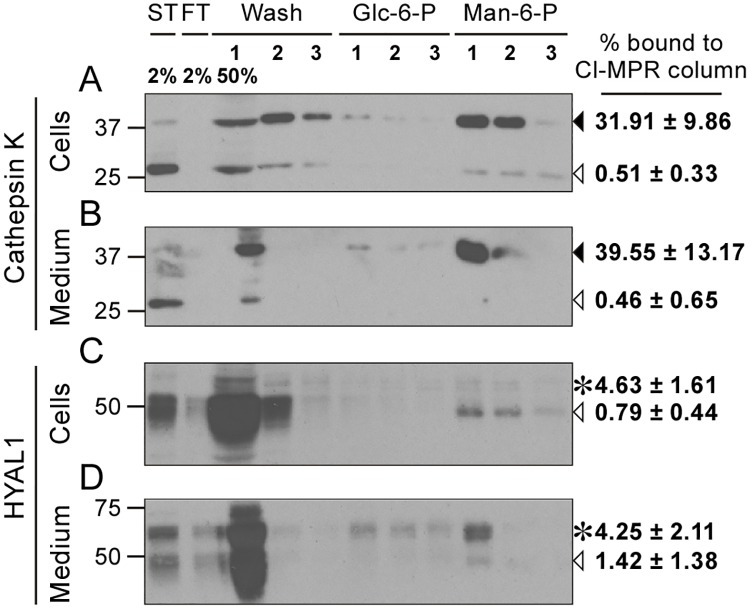
Osteoclasts are giant bone-resorbing cells originating from monocytes/macrophages. During their differentiation, they overexpress two lysosomal enzymes, cathepsin K and TRAP, which are secreted into the resorption lacuna, an acidified sealed area in contact with bone matrix where bone degradation takes place. Here we report that the acid hydrolase HYAL1, a hyaluronidase able to degrade the glycosaminoglycans hyaluronic acid (HA) and chondroitin sulfate, is also upregulated upon osteoclastogenesis. The mRNA expression and protein level of HYAL1 are markedly increased in osteoclasts differentiated from RAW264.7 mouse macrophages or primary mouse bone marrow monocytes compared to these precursor cells. As a result, the HYAL1-mediated HA hydrolysis ability of osteoclasts is strongly enhanced. Using subcellular fractionation, we demonstrate that HYAL1 proteins are sorted to the osteoclast lysosomes even though, in contrast to cathepsin K and TRAP, HYAL1 is poorly mannose 6-phosphorylated. We reported previously that macrophages secrete HYAL1 proforms by constitutive secretion, and that these are recaptured by the cell surface mannose receptor, processed in endosomes and sorted to lysosomes. Present work highlights that osteoclasts secrete HYAL1 in two ways, through lysosomal exocytosis and constitutive secretion, and that these cells promote the extracellular residency of HYAL1 through downregulation of the mannose receptor. Interestingly, the expression of the other main hyaluronidase, HYAL2, and of lysosomal exoglycosidases involved in HA degradation, does not increase similarly to HYAL1 upon osteoclastogenesis. Taken together, these findings point out the predominant involvement of HYAL1 in bone HA metabolism and perhaps bone remodeling via the resorption lacuna.
破骨细胞是起源于单核细胞/巨噬细胞的大型骨吸收细胞。在其分化过程中,它们会过度表达两种溶酶体酶,组织蛋白酶K和抗酒石酸酸性磷酸酶(TRAP),这两种酶会分泌到吸收陷窝中,吸收陷窝是一个与发生骨降解的骨基质接触的酸化封闭区域。在此,我们报告酸性水解酶透明质酸酶1(HYAL1),一种能够降解糖胺聚糖透明质酸(HA)和硫酸软骨素的透明质酸酶,在破骨细胞形成过程中也会上调。与这些前体细胞相比,从RAW264.7小鼠巨噬细胞或原代小鼠骨髓单核细胞分化而来的破骨细胞中,HYAL1的mRNA表达和蛋白水平显著增加。结果,破骨细胞的HYAL1介导的HA水解能力得到显著增强。通过亚细胞分级分离,我们证明HYAL1蛋白被分选到破骨细胞溶酶体中,尽管与组织蛋白酶K和TRAP不同,HYAL1的甘露糖6 -磷酸化程度很低。我们之前报道过巨噬细胞通过组成性分泌分泌HYAL1前体形式,并且这些前体形式被细胞表面甘露糖受体重新捕获,在内体中加工并分选到溶酶体中。目前的工作强调破骨细胞通过溶酶体胞吐作用和组成性分泌两种方式分泌HYAL1,并且这些细胞通过下调甘露糖受体促进HYAL1在细胞外的驻留。有趣的是,另一种主要的透明质酸酶HYAL2以及参与HA降解的溶酶体外切糖苷酶的表达在破骨细胞形成过程中不会像HYAL1那样类似地增加。综上所述这些发现指出HYAL1在骨HA代谢以及可能通过吸收陷窝进行的骨重塑中起主要作用。