Microbiology and Metabolic Engineering of Key Laboratory of Sichuan Province, College of Life Sciences, Sichuan University, Chengdu, 610065, P. R. China.
National Engineering Research Center for Biomaterials, Sichuan University, Chengdu, 610065, P. R. China.
Sci Rep. 2016 Oct 19;6:34103. doi: 10.1038/srep34103.
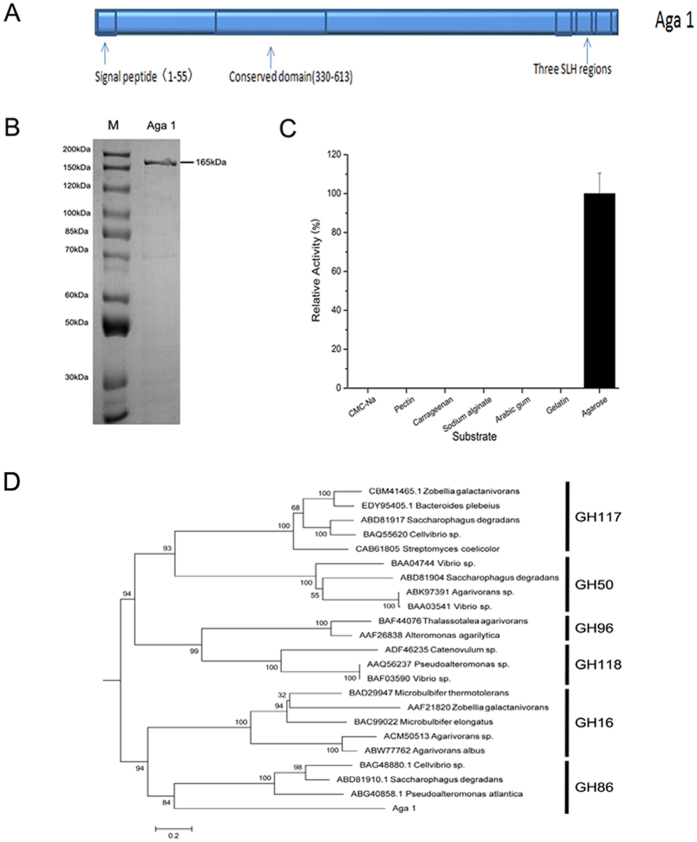
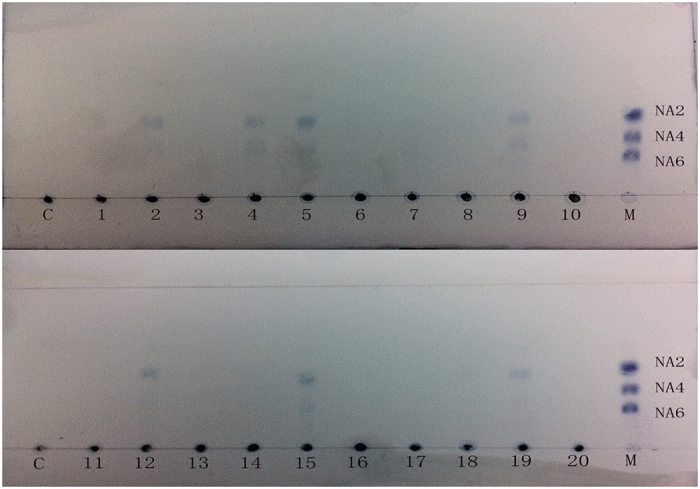
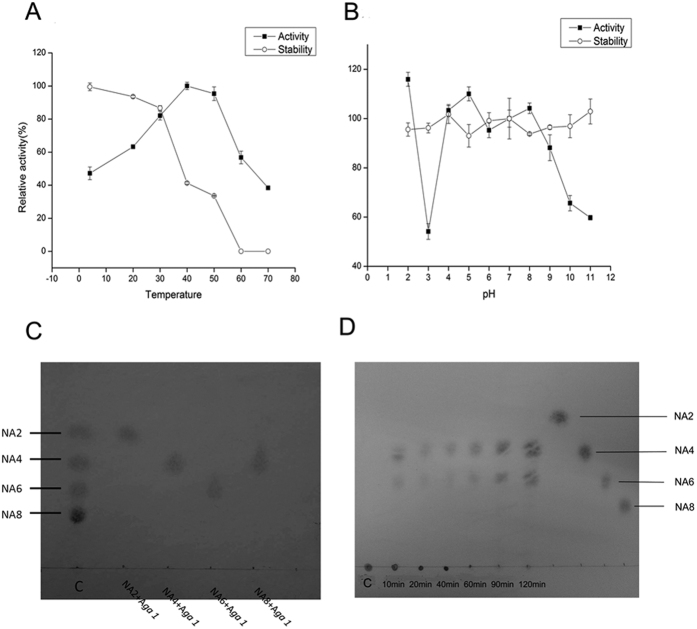
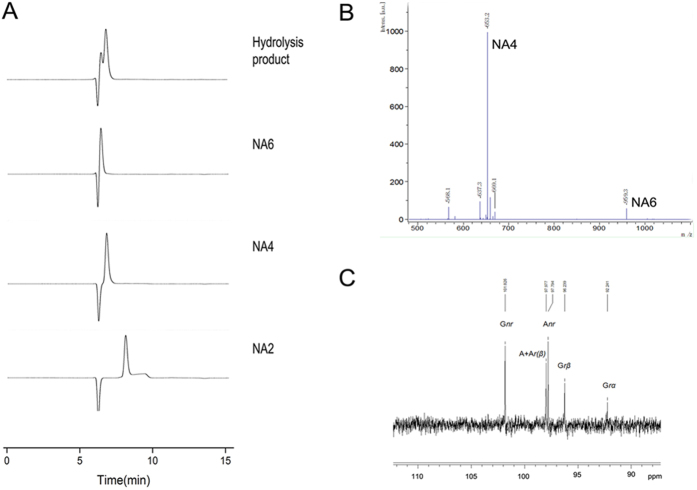
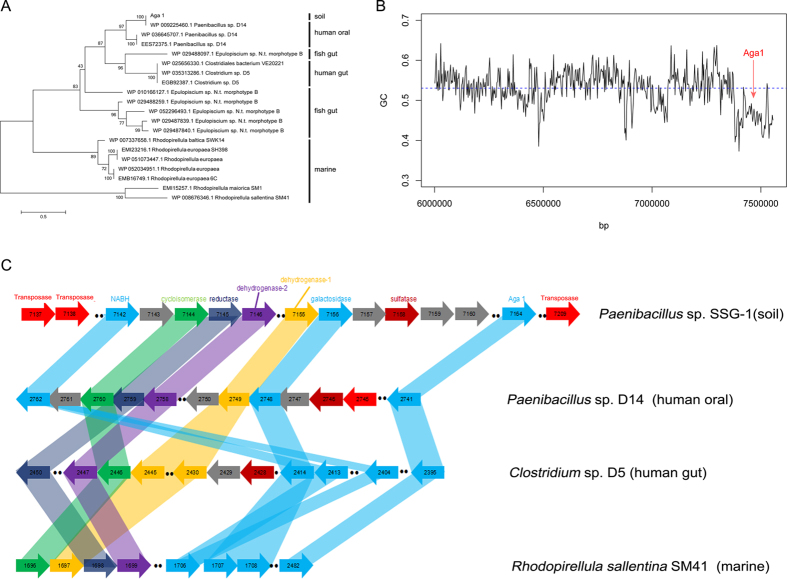
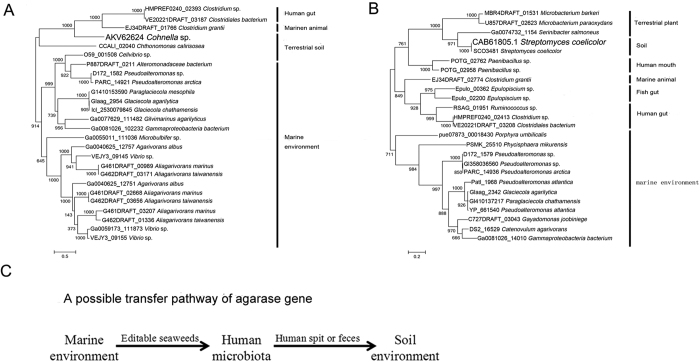
Seaweed is receiving an increasing amount of attention as a "sea vegetable". The microbiota of coastal populations may acquire seaweed associated enzymes through marine food. Several agarases have been found in non-marine environments; however, their origin is unknown. In this study, a hypothetical protein, Aga1, was identified as an agarase from an inland soil agar-degrading bacterium, Paenibacillus sp. SSG-1.Having low similarity to known glycoside hydrolases, Aga1 may be a distant member of the glycoside hydrolase family 86. Aga1 has good pH stability (pH 3-11) and is stable in the presence of various metal ions. Aga1 is an exo-type β-agarase that produces NA 4 (neoagarotetraose) and NA 6 (neoagarohexaose) as its main products. In addition, Aga1 may be a cell-surface-binding protein. The bioinformatic analysis showed aga1 may have been transfered together with its surrounding genes, from marine bacteria to soil bacteria via human microbiota. The use of seaweed as food and the disposal of human faeces or saliva were the most likely reasons for this gene transfer pathway. Notably, the results also indicated that microbes from inland humans may degrade agar and that these microbes may have acquired seaweed associated genes because of increased seaweed in diets.
海藻作为“海菜”越来越受到关注。沿海地区的微生物群可能通过海洋食物获得与海藻相关的酶。在非海洋环境中已经发现了几种琼脂酶;然而,它们的来源尚不清楚。在这项研究中,一种假设蛋白 Aga1 被鉴定为来自内陆土壤琼脂降解细菌 Paenibacillus sp. SSG-1 的琼脂酶。Aga1 与已知糖苷水解酶的相似性较低,可能是糖苷水解酶家族 86 的远亲。Aga1 具有良好的 pH 稳定性(pH 3-11),并能在各种金属离子存在下稳定。Aga1 是一种外切型 β-琼脂酶,其主要产物为 NA 4(新琼四糖)和 NA 6(新琼六糖)。此外,Aga1 可能是一种细胞表面结合蛋白。生物信息学分析表明,aga1 可能与其周围基因一起,通过人类微生物群从海洋细菌转移到土壤细菌。这种基因转移途径最有可能是由于人们食用海藻和处理人类粪便或唾液。值得注意的是,研究结果还表明,内陆人类的微生物可能会降解琼脂,并且由于饮食中增加了海藻,这些微生物可能已经获得了与海藻相关的基因。