Lee Hangil, Kim Yeonwoo, Kim Min Ji, Kim Ki-Jeong, Kim Byung-Kwon
Department of Chemistry, Sookmyung Women's University, Seoul 140-742, Republic of Korea.
Molecular-Level Interfaces Research Center, Department of Chemistry, KAIST, Daejeon 305-701, Republic of Korea.
Sci Rep. 2016 Oct 20;6:35500. doi: 10.1038/srep35500.
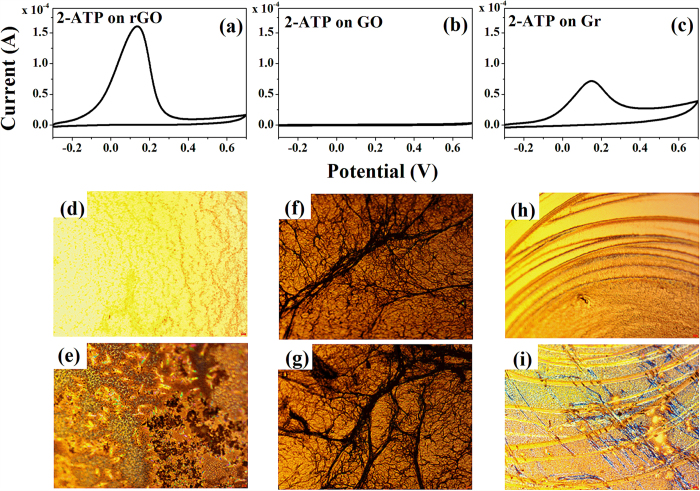
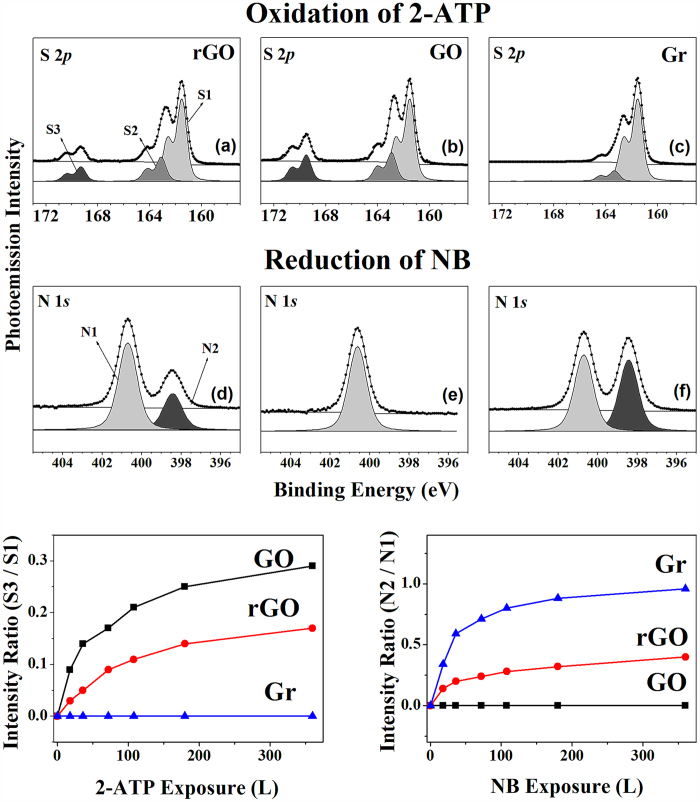
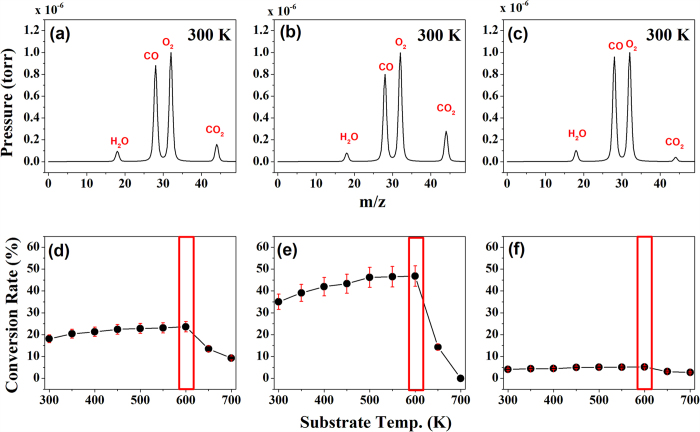
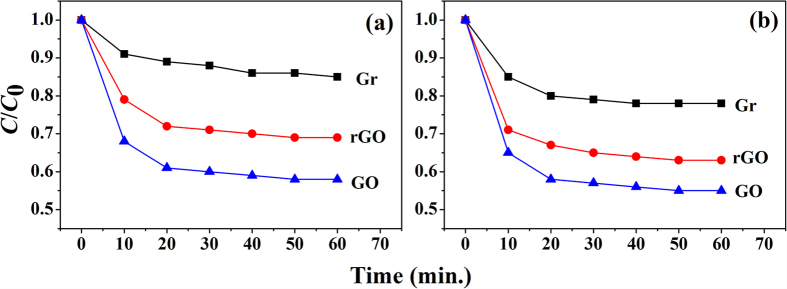
In order to compare the catalytic activities of reduced graphene oxide (rGO), graphene oxide (GO), and graphene, we conducted oxidation of 2-aminothiophenol (2-ATP) and reduction of nitrobenzene (NB) in their presence by using high-resolution photoemission spectroscopy (HRPES). In addition, we determined conversion rates of CO to CO in the presence of these catalysts by performing a residual gas analyzer (RGA) under a UHV condition, Orange II and methylene blue degradations UV-vis spectrophotometry, and electrochemistry (EC) measurements in an aqueous solution, as well as by obtaining cyclic voltammograms and determining the change of the condition of electrodes before and after the oxidation of 2-ATP. We found that we can successively fabricate GO (oxidation) and graphene (reduction) from rGO by controlling the oxidation or reduction procedure time and then clearly comparing the critical properties among them as we perform various oxidation and reduction activities.
为了比较还原氧化石墨烯(rGO)、氧化石墨烯(GO)和石墨烯的催化活性,我们使用高分辨率光电子能谱(HRPES)在它们存在的情况下进行了2-氨基硫酚(2-ATP)的氧化和硝基苯(NB)的还原。此外,我们通过在超高真空条件下使用残余气体分析仪(RGA)、在水溶液中进行紫外可见分光光度法的橙黄Ⅱ和亚甲基蓝降解以及电化学(EC)测量,以及通过获得循环伏安图并确定2-ATP氧化前后电极状态的变化,来测定在这些催化剂存在下CO转化为CO₂的转化率。我们发现,通过控制氧化或还原过程的时间,我们可以从rGO依次制备出GO(氧化)和石墨烯(还原),然后在进行各种氧化和还原活动时清楚地比较它们之间的关键性质。