Chen Jue, Liu Mengjun, Wang Qi, Du Huizhi, Zhang Liwei
Institute of Molecule Science, Key Laboratory of Chemical Biology and Molecular Engineering of Ministry of Education, Shanxi University, Taiyuan 030006, China.
Modern Research Center for Traditional Chinese Medicine, Shanxi University, Taiyuan 030006, Shanxi, China.
Molecules. 2016 Oct 17;21(10):1383. doi: 10.3390/molecules21101383.
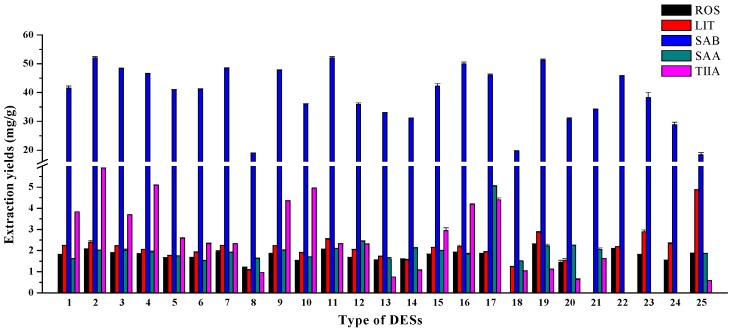
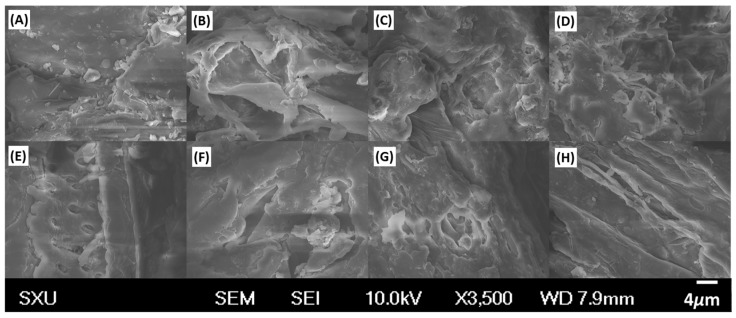
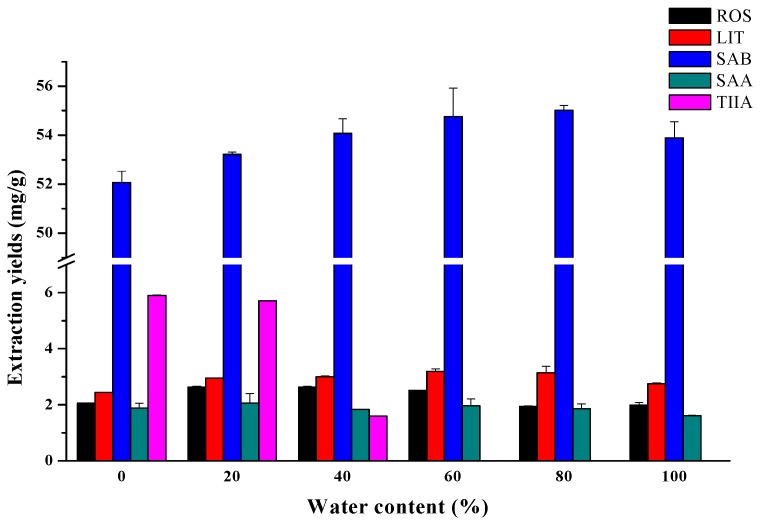
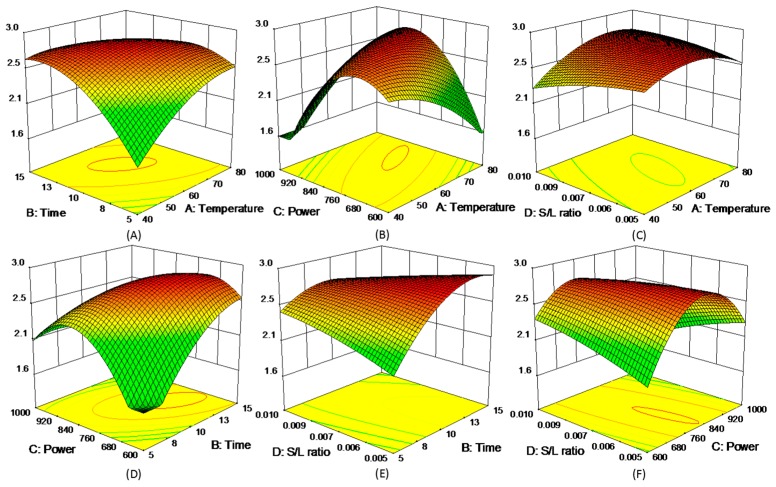
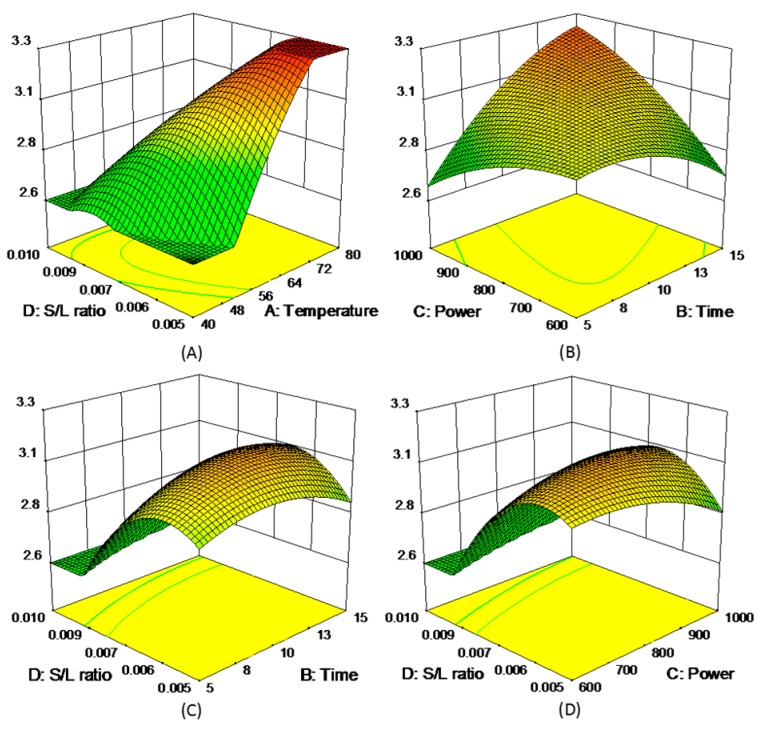
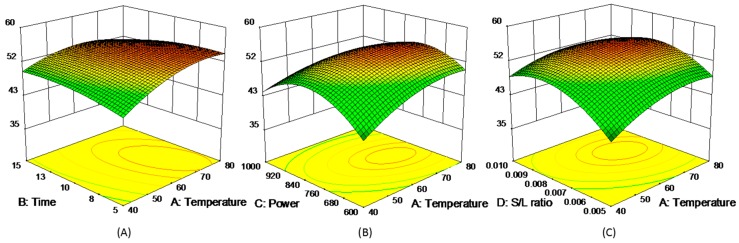
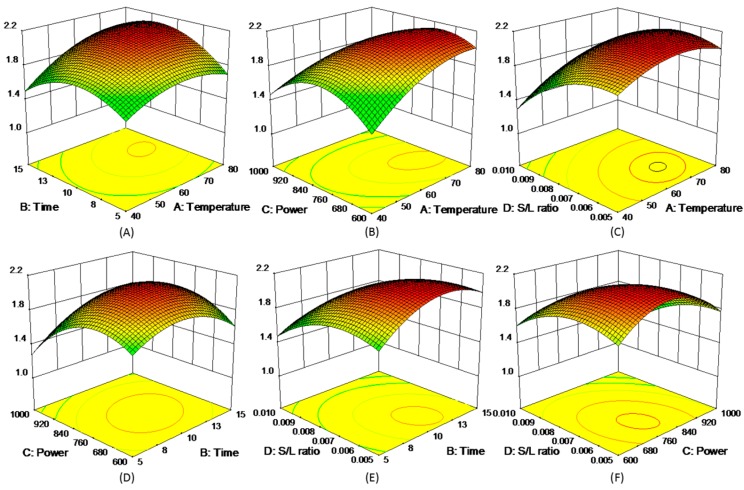
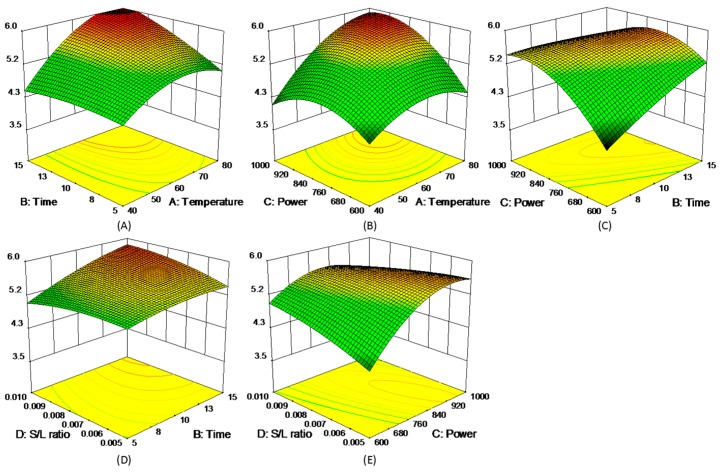
Deep eutectic solvents (DESs) have attracted significant attention as a promising green media. In this work, twenty-five kinds of benign choline chloride-based DESs with microwave-assisted methods were applied to quickly extract active components from Radix . The extraction factors, including temperature, time, power of microwave, and solid/liquid ratio, were investigated systematically by response surface methodology. The hydrophilic and hydrophobic ingredients were extracted simultaneously under the optimized conditions: 20 vol% of water in choline chloride/1,2-propanediol (1:1, molar ratio) as solvent, microwave power of 800 W, temperature at 70 °C, time at 11.11 min, and solid/liquid ratio of 0.007 g·mL. The extraction yield was comparable to, or even better than, conventional methods with organic solvents. The microstructure alteration of samples before and after extraction was also investigated. The method validation was tested as the linearity of analytes (² > 0.9997 over two orders of magnitude), precision (intra-day relative standard deviation (RSD) < 2.49 and inter-day RSD < 2.96), and accuracy (recoveries ranging from 95.04% to 99.93%). The proposed DESs combined with the microwave-assisted method provided a prominent advantage for fast and efficient extraction of active components, and DESs could be extended as solvents to extract and analyze complex environmental and pharmaceutical samples.
深共熔溶剂(DESs)作为一种有前景的绿色介质已引起广泛关注。在本研究中,采用微波辅助法用25种基于氯化胆碱的良性DESs快速从[药材名称未给出]中提取活性成分。通过响应面法系统研究了温度、时间、微波功率和固液比等提取因素。在优化条件下:以氯化胆碱/1,2 - 丙二醇(摩尔比1:1)中20体积%的水为溶剂,微波功率800 W,温度70℃,时间11.11 min,固液比0.007 g·mL,可同时提取亲水性和疏水性成分。提取产率与传统有机溶剂法相当,甚至更高。还研究了提取前后样品的微观结构变化。对该方法进行验证,分析物线性(在两个数量级上²>0.9997)、精密度(日内相对标准偏差(RSD)<2.49,日间RSD<2.96)和准确度(回收率在95.04%至99.93%之间)均符合要求。所提出的DESs与微波辅助法相结合为快速高效提取活性成分提供了显著优势,并且DESs可作为溶剂扩展用于提取和分析复杂的环境和药物样品。