Nam Nguyen Nhat, Do Hoang Dang Khoa, Trinh Kieu The Loan, Lee Nae Yoon
Biotechnology Center, School of Agriculture and Aquaculture, Tra Vinh University, Tra Vinh City 87000, Vietnam.
NTT Hi-Tech Institute, Nguyen Tat Thanh University, Ward 13, District 04, Ho Chi Minh City 700000, Vietnam.
Nanomaterials (Basel). 2023 Mar 24;13(7):1164. doi: 10.3390/nano13071164.
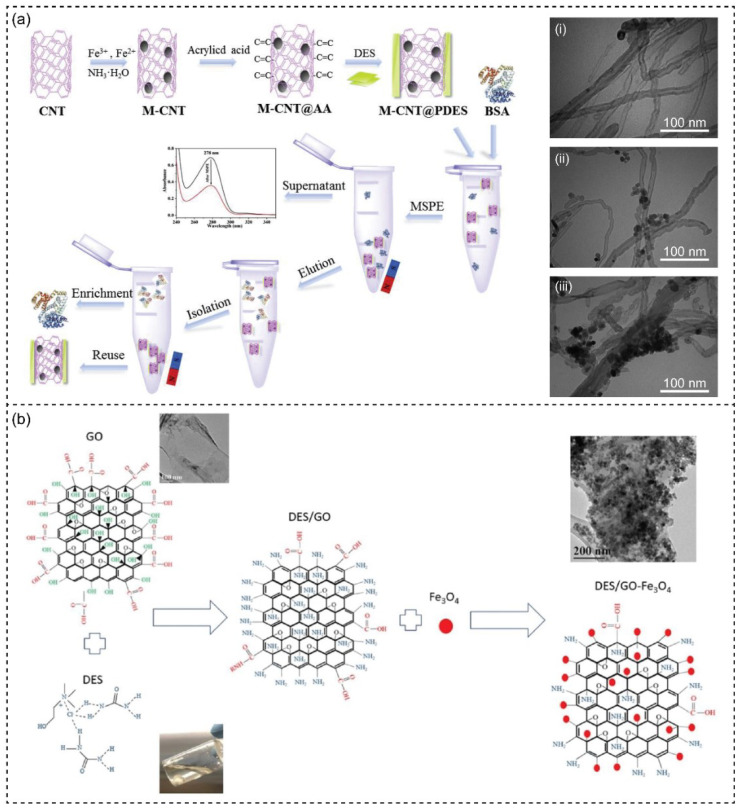
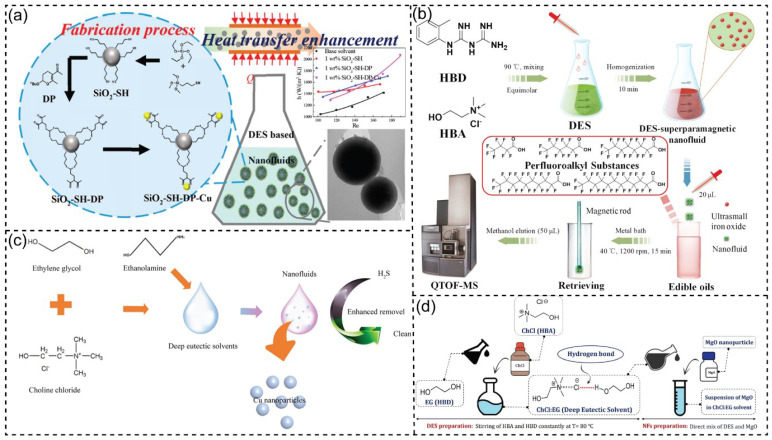
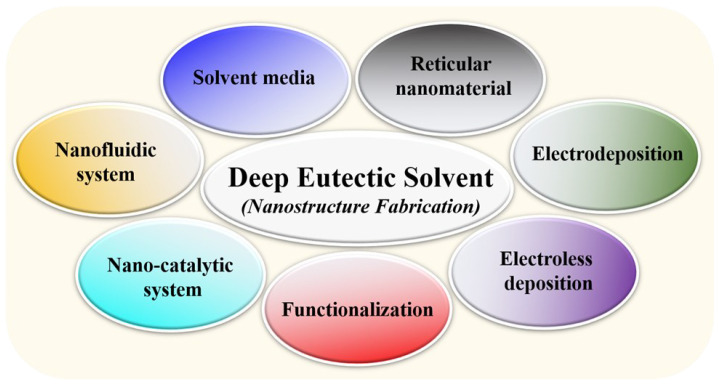
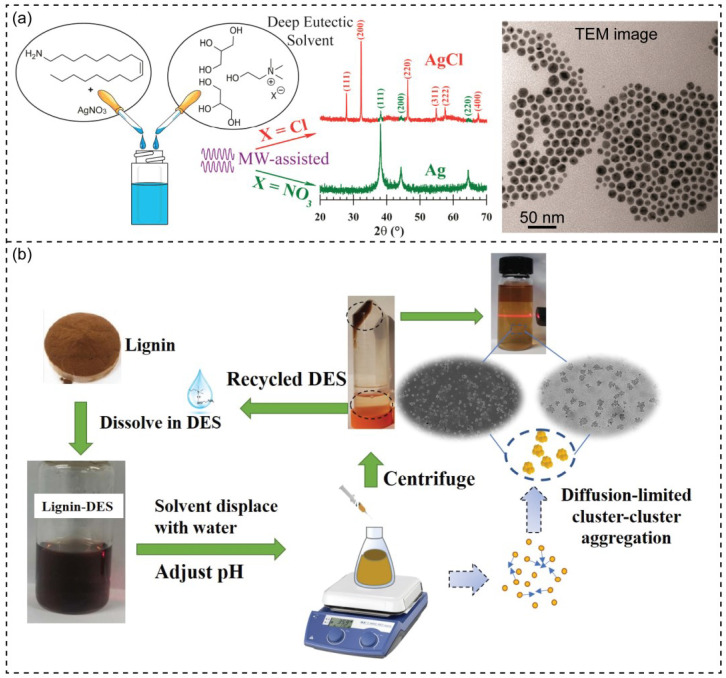
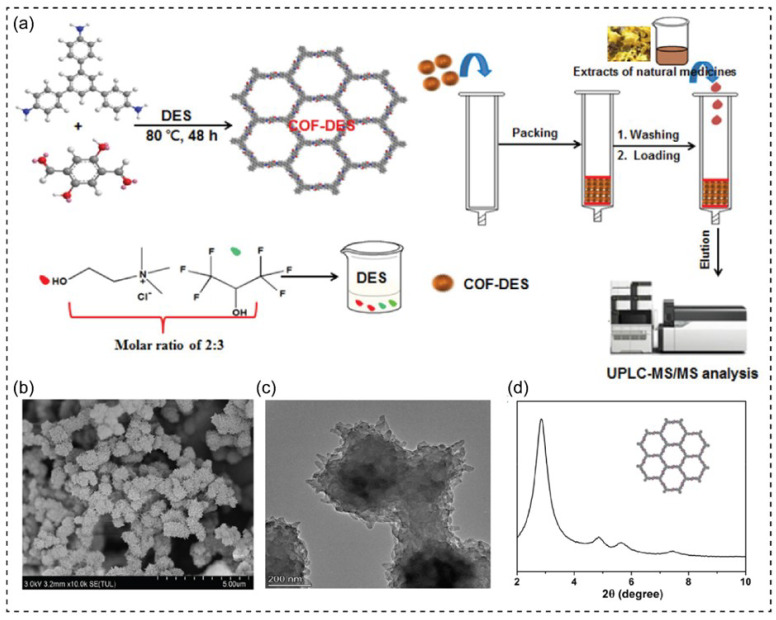
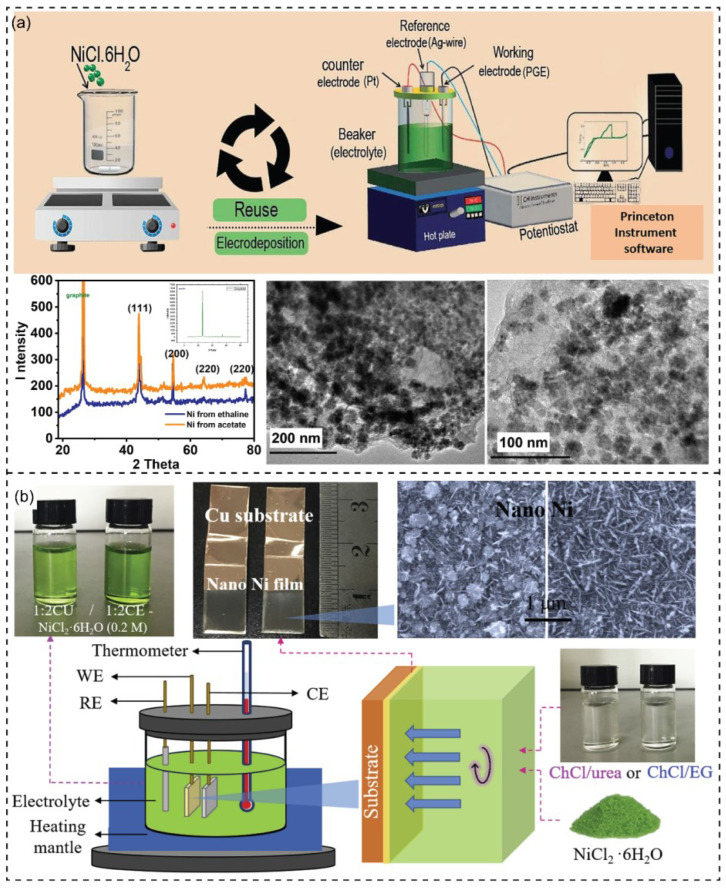
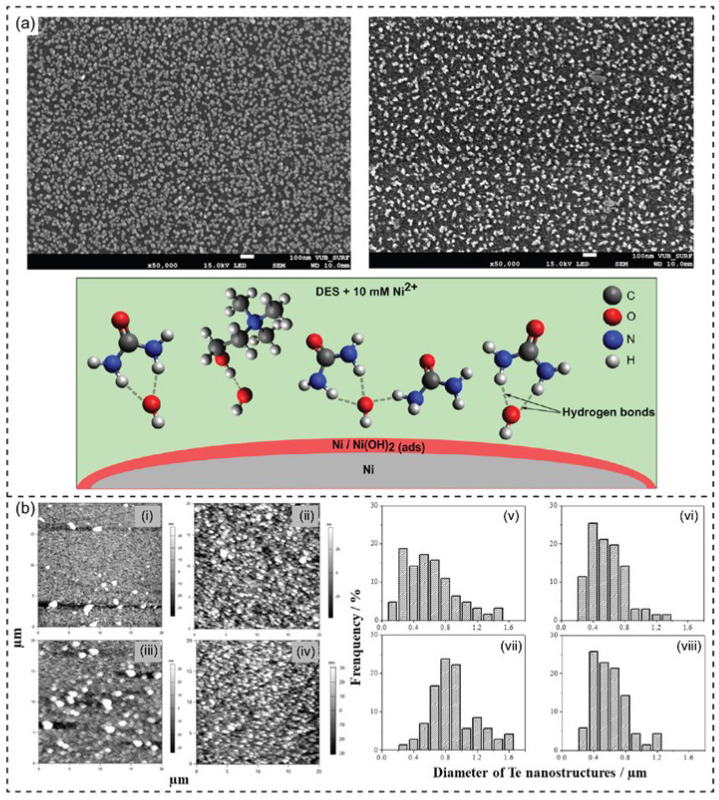
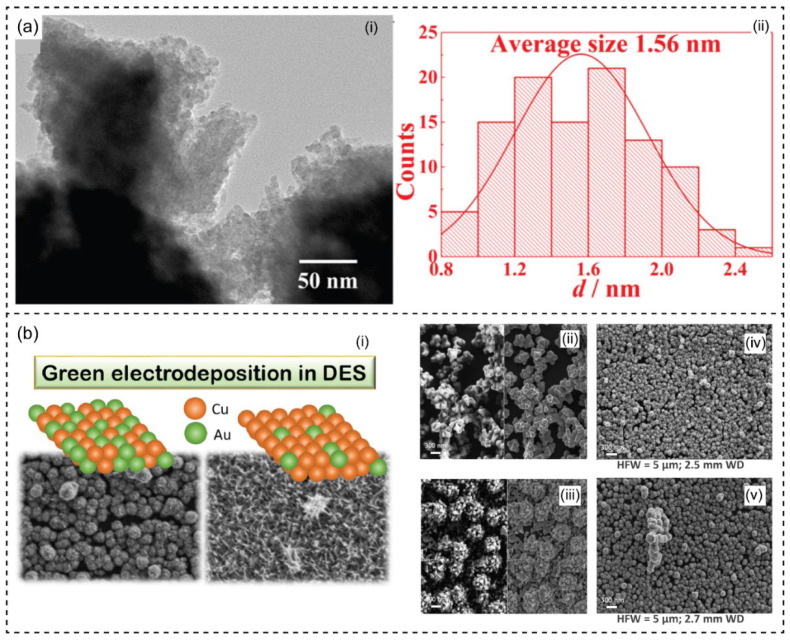
The first report of deep eutectic solvents (DESs) was released in 2003 and was identified as a new member of ionic liquid (IL), involving innovative chemical and physical characteristics. Using green solvent technology concerning economical, practical, and environmental aspects, DESs open the window for sustainable development of nanomaterial fabrication. The DESs assist in different fabrication processes and design nanostructures with specific morphology and properties by tunable reaction conditions. Using DESs in synthesis reactions can reduce the required high temperature and pressure conditions for decreasing energy consumption and the risk of environmental contamination. This review paper provides the recent applications and advances in the design strategy of DESs for the green synthesis of nanomaterials. The strategy and application of DESs in wet-chemical processes, nanosize reticular material fabrication, electrodeposition/electrochemical synthesis of nanostructures, electroless deposition, DESs based nano-catalytic and nanofluidic systems are discussed and highlighted in this review.
深共熔溶剂(DESs)的首份报告于2003年发布,它被认定为离子液体(IL)的新成员,具有创新性的化学和物理特性。DESs运用了涉及经济、实用和环境方面的绿色溶剂技术,为纳米材料制造的可持续发展打开了一扇窗。DESs通过可调的反应条件助力不同的制造过程,并设计具有特定形态和性能的纳米结构。在合成反应中使用DESs可以降低所需的高温高压条件,从而降低能源消耗和环境污染风险。这篇综述文章介绍了DESs在纳米材料绿色合成设计策略方面的最新应用和进展。本文讨论并重点介绍了DESs在湿化学过程、纳米尺寸网状材料制造、纳米结构的电沉积/电化学合成、化学镀、基于DESs的纳米催化和纳米流体系统中的策略及应用。