Huang Wei, Wu Jiyuan, Yang Huiqin, Xiong Yin, Jiang Rui, Cui Tianpen, Ye Duyun
Department of Pathophysiology, Tongji Medical College, Huazhong University of Science and Technology, Wuhan, China.
Laboratory of Clinical Immunology, Wuhan No.1 Hospital, Tongji Medical College, Huazhong University of Science and Technology, Wuhan, China.
Cell Death Differ. 2017 Feb;24(2):263-275. doi: 10.1038/cdd.2016.115. Epub 2016 Oct 21.
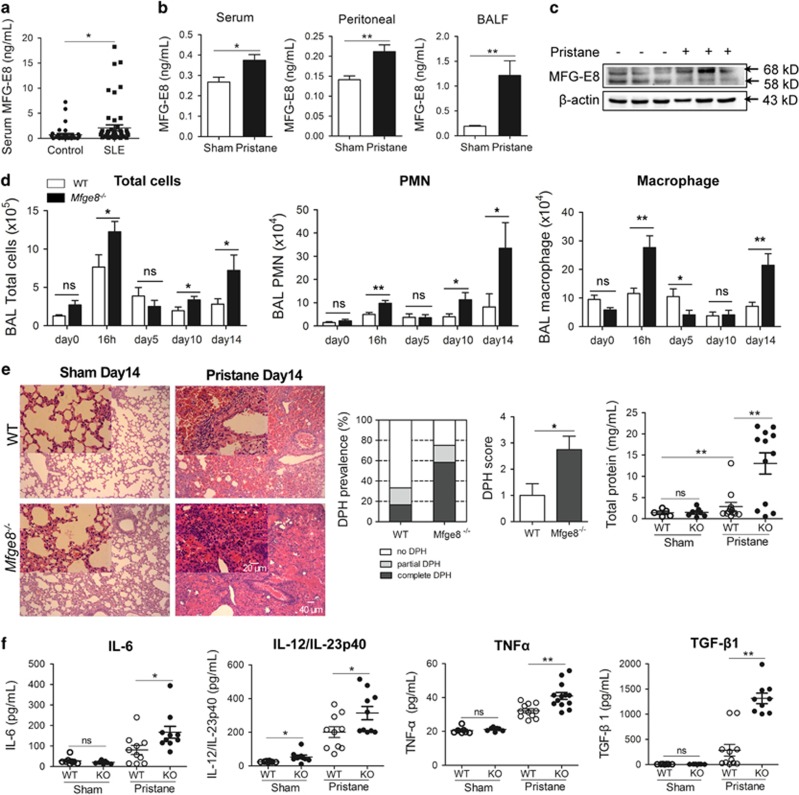
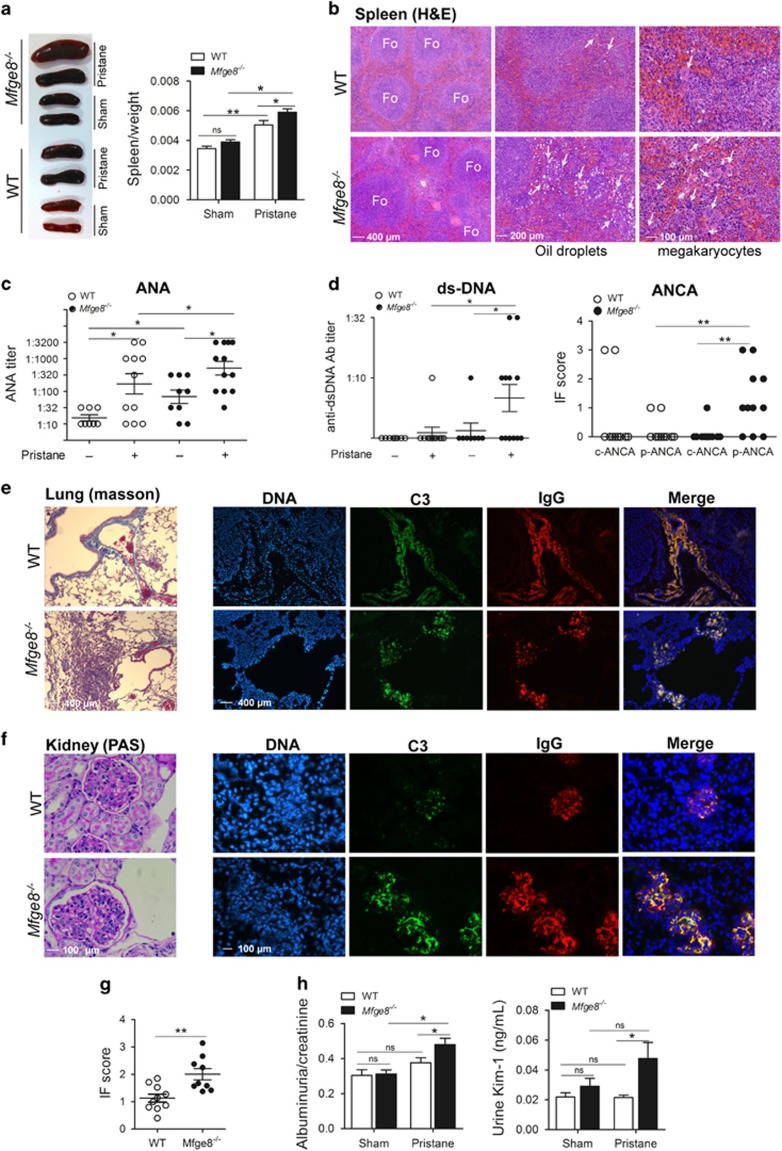
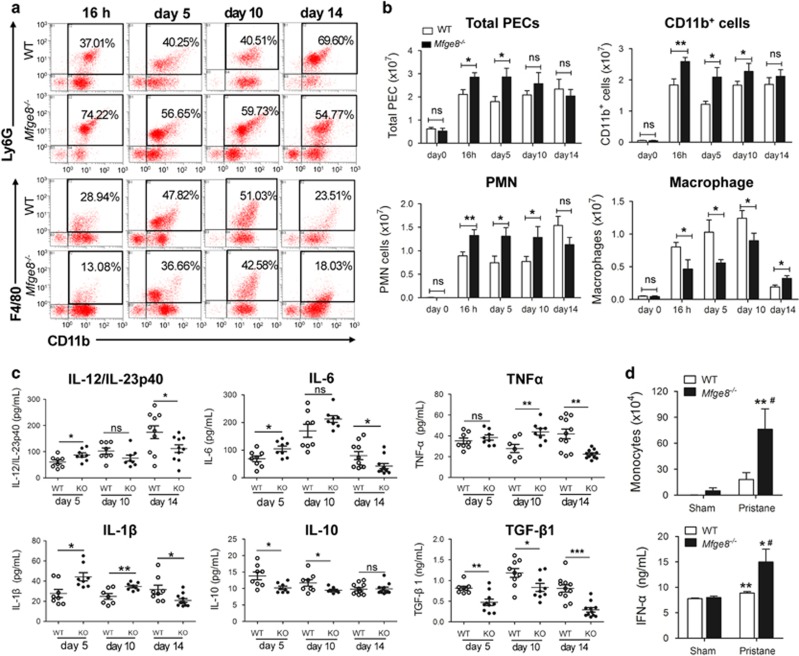
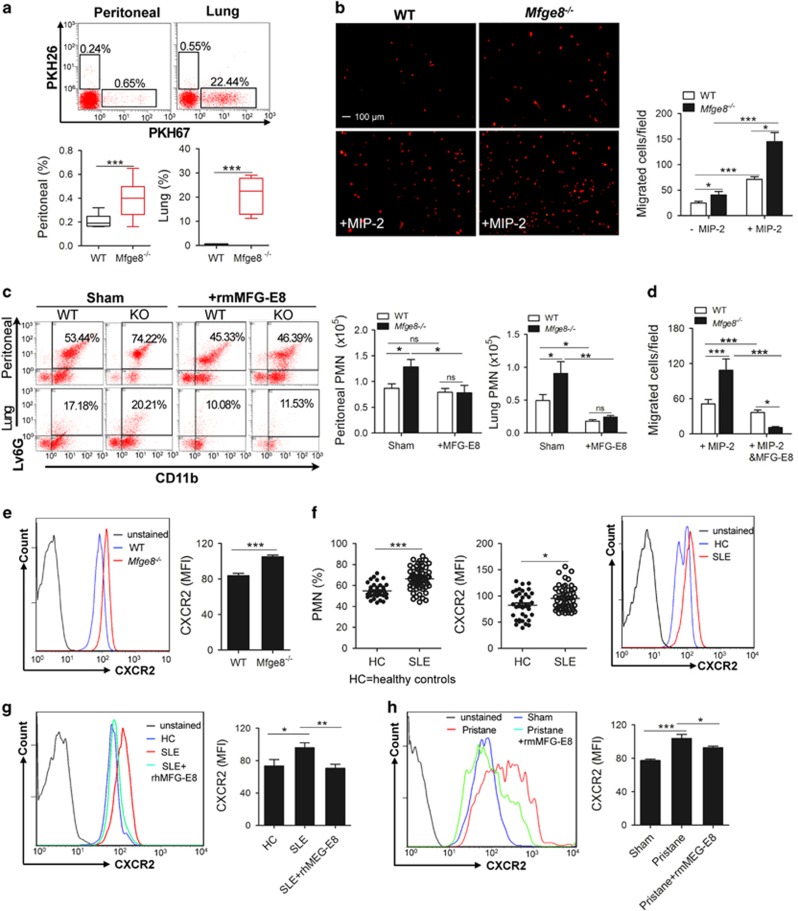
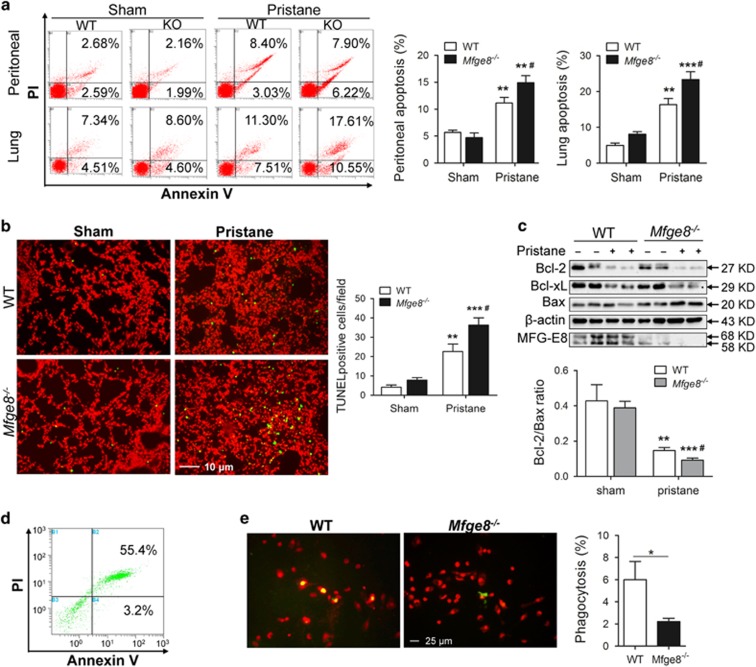
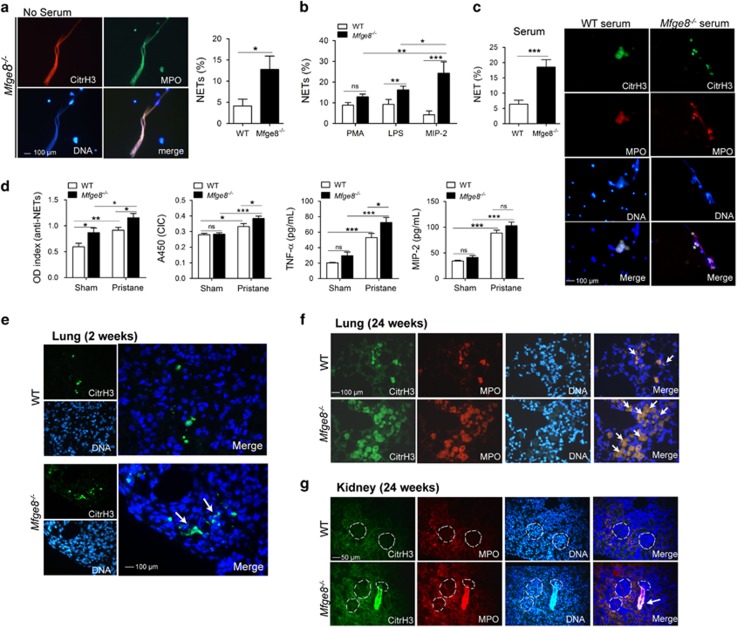
Abnormal features of the systemic lupus erythematosus (SLE)-derived neutrophils, promoted aberrant immune response, have inspired new studies of the induction of autoimmunity and the development of organ damage in SLE. In this study, we explore the effect of milk fat globule-EGF factor 8 (MFG-E8) on the aberrant nitrification features in pristane-induced lupus. SLE patients and mice with pristane-induced lupus develop autoantibodies associated with MFG-E8 overproduction. However, the deletion of MFG-E8 leads to uncontrolled early pulmonary and peritoneal inflammation and tissue damage in mice with pristane-induced lupus. Consistent with these findings, MFG-E8-deficient mice that are exposed to pristane show enhanced neutrophil accumulation and increased neutrophil death, including apoptosis, necrosis and NETosis, as well as impaired phagocytosis of macrophages. The consequences are the expansion of diffuse pulmonary hemorrhage, increased anti-nuclear antibody, anti-dsDNA antibody and anti-neutrophil cytoplasmic antibody levels, and enhanced immune complexes deposition and neutrophil extracellular traps (NETs) formation in the lung and kidney tissues of MFG-E8-deficient mice exposed to pristane. In patients with SLE and mice with pristane-induced lupus, neutrophil accumulation is elevated, which depends on higher expression of the surface receptor CXCR2. After pretreatment with recombinant MFG-E8, the surface expression of CXCR2 on neutrophil is downregulated, and the MFG-E8 deletion increase CXCR2 expression by ~40%. These studies indicate that MFG-E8 reduces neutrophil migration and NETosis via downregulating surface CXCR2 expression in parallel with its role in the phagocytosis of apoptotic neutrophils, suggesting that MFG-E8 may serve as a therapeutic agent for attenuating the early inflammatory responses of SLE and protect patients from lupus-related damage.
系统性红斑狼疮(SLE)来源的中性粒细胞的异常特征会促进异常免疫反应,这激发了对SLE中自身免疫诱导和器官损伤发展的新研究。在本研究中,我们探讨了乳脂肪球表皮生长因子8(MFG-E8)对 pristane诱导的狼疮中异常硝化特征的影响。SLE患者和pristane诱导的狼疮小鼠会产生与MFG-E8过量产生相关的自身抗体。然而,MFG-E8的缺失会导致pristane诱导的狼疮小鼠早期肺部和腹膜炎症失控以及组织损伤。与这些发现一致,暴露于pristane的MFG-E8缺陷小鼠表现出中性粒细胞积累增加和中性粒细胞死亡增加,包括凋亡、坏死和中性粒细胞胞外陷阱形成,以及巨噬细胞吞噬功能受损。结果是弥漫性肺出血扩大、抗核抗体、抗双链DNA抗体和抗中性粒细胞胞浆抗体水平升高,以及暴露于pristane的MFG-E8缺陷小鼠的肺和肾组织中免疫复合物沉积增加和中性粒细胞胞外陷阱(NETs)形成增强。在SLE患者和pristane诱导的狼疮小鼠中,中性粒细胞积累增加,这取决于表面受体CXCR2的更高表达。用重组MFG-E8预处理后,中性粒细胞表面CXCR2的表达下调,而MFG-E8缺失使CXCR2表达增加约40%。这些研究表明,MFG-E8通过下调表面CXCR2表达来减少中性粒细胞迁移和NETosis,同时其在凋亡中性粒细胞的吞噬作用中也发挥作用,这表明MFG-E8可能作为一种治疗剂来减轻SLE的早期炎症反应并保护患者免受狼疮相关损伤。