Sorbonne Université, INSERM, Immunology-Immunopathology-Immunotherapy (i3), Paris, France.
Assistance Publique - Hôpitaux de Paris (AP-HP), Hôpital Pitié-Salpêtrière, Biotherapy (CIC-BTi) and Inflammation-Immunopathology-Biotherapy Department (i2B), Paris, France.
Front Immunol. 2024 May 24;15:1393096. doi: 10.3389/fimmu.2024.1393096. eCollection 2024.
Antibody production and the generation of memory B cells are regulated by T follicular helper (Tfh) and T follicular regulatory (Tfr) cells in germinal centers. However, the precise role of Tfr cells in controlling antibody production is still unclear. We have previously shown that both Tfh and Tfr cells express the IL-1R1 agonist receptor, whereas only Tfr cells express the IL-1R2 decoy and IL-1Ra antagonist receptors. We aimed to investigate the role of IL-1 receptors in the regulation of B cell responses by Tfh and Tfr.
We generated mice with IL-1 receptors inactivated in Tfh or Tfr and measured antibody production and cell activation after immunisation.
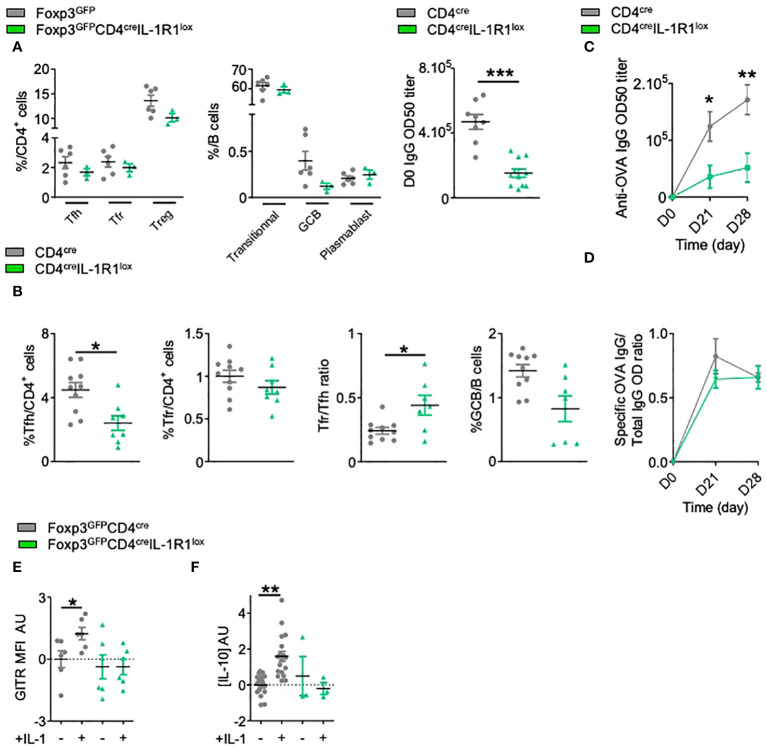
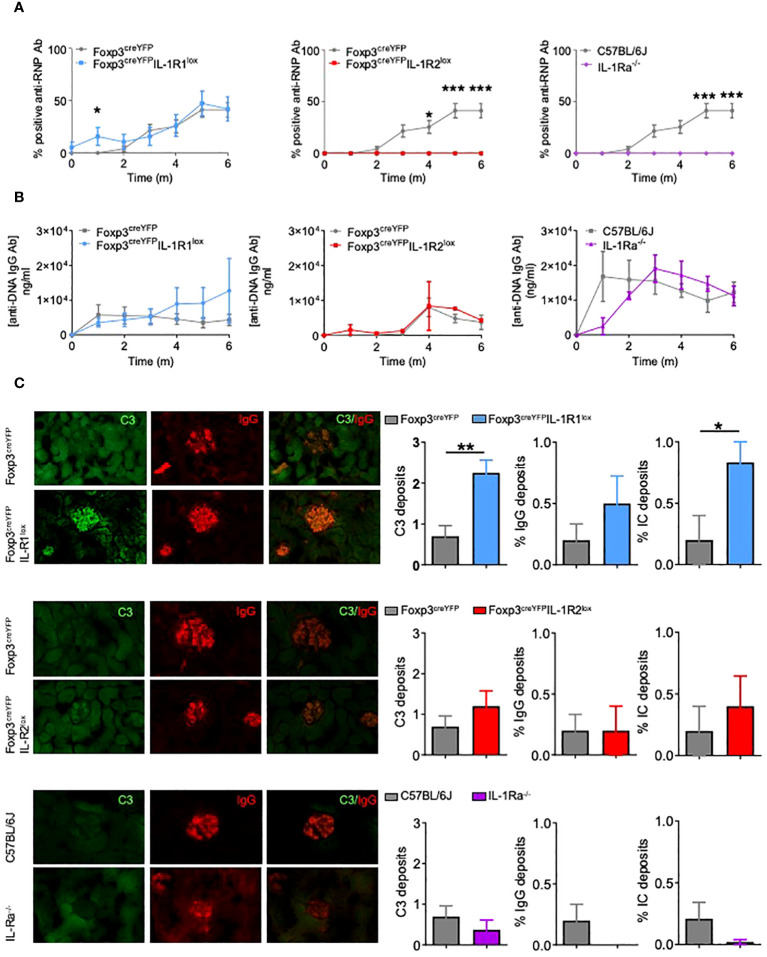
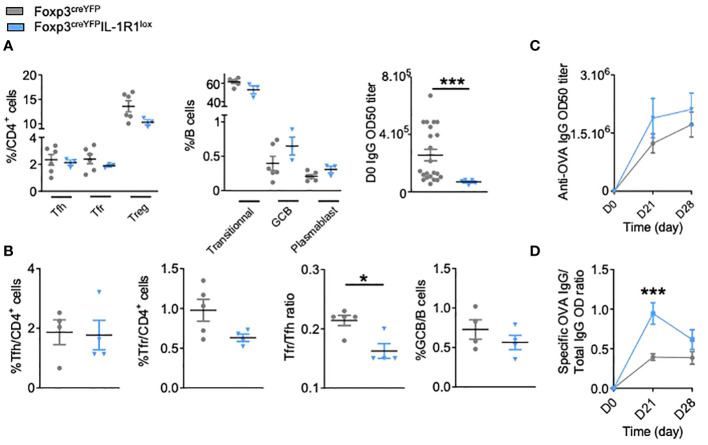
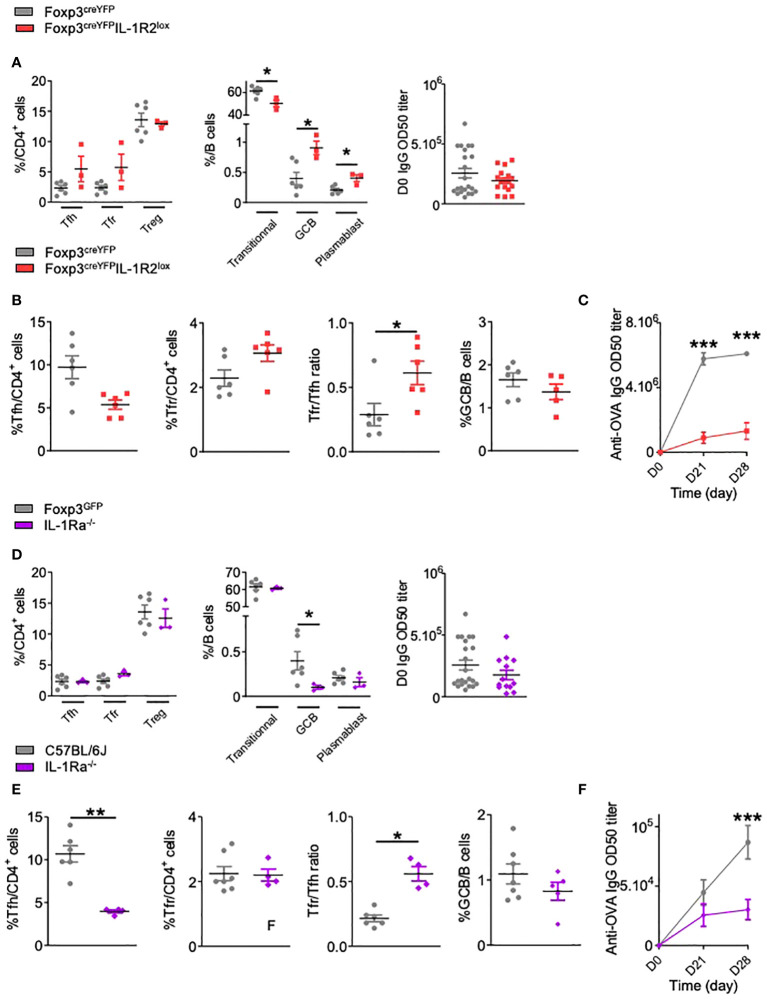
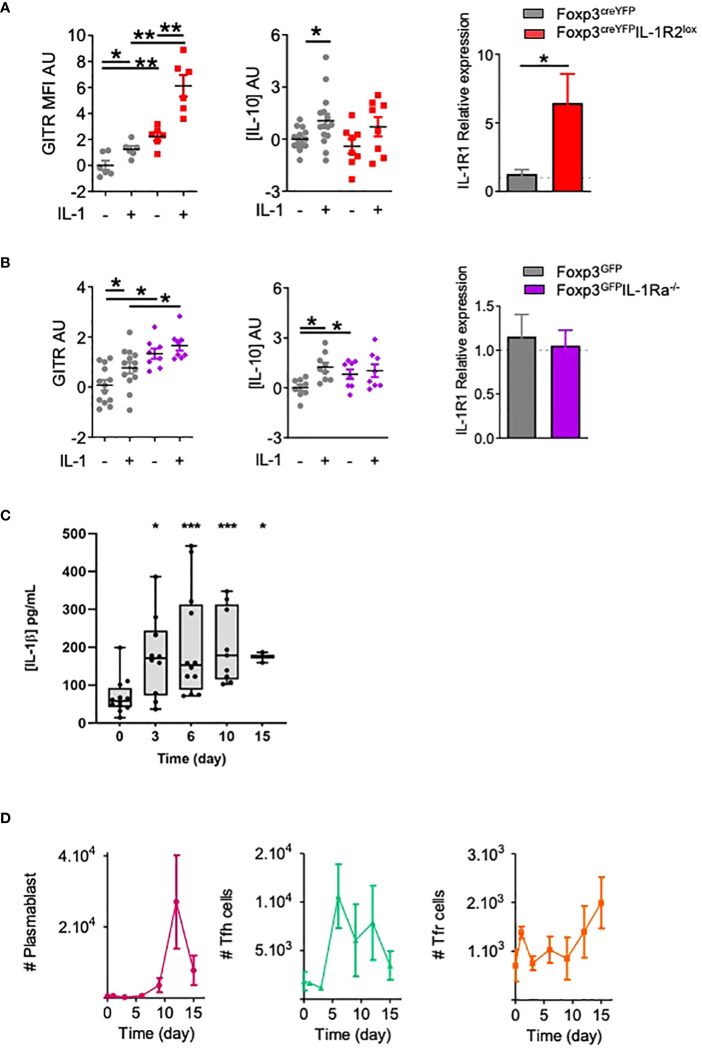
While IL-1β levels are increased in the draining lymph node after immunisation, antigen-specific antibody levels and cell phenotypes indicated that IL-1β can activate both Tfh and Tfr cells through IL-1R1 stimulation. Surprisingly, expression of IL-1R2 and IL-1Ra on Tfr cells does not block IL-1 activation of Tfh cells, but rather prevents IL-1/IL-1R1-mediated early activation of Tfr cells. IL-1Rs also regulate the antibody response to autoantigens and its associated pathophysiology in an experimental lupus model.
Collectively, our results show that IL-1 inhibitory receptors expressed by Tfr cells prevent their own activation and suppressive function, thus licensing IL-1-mediated activation of Tfh cells after immunisation. Further mechanistic studies should unravel these complex interactions between IL-1β and follicular helper and regulatory T cells and provide new avenues for therapeutic intervention.
在生发中心,T 滤泡辅助(Tfh)和 T 滤泡调节(Tfr)细胞调节抗体产生和记忆 B 细胞的生成。然而,Tfr 细胞在控制抗体产生中的确切作用仍不清楚。我们之前的研究表明,Tfh 和 Tfr 细胞均表达 IL-1R1 激动剂受体,而只有 Tfr 细胞表达 IL-1R2 诱饵和 IL-1Ra 拮抗剂受体。我们旨在研究 IL-1 受体在 Tfh 和 Tfr 调节 B 细胞反应中的作用。
我们生成了 Tfh 或 Tfr 细胞中 IL-1 受体失活的小鼠,并在免疫后测量了抗体产生和细胞激活。
虽然免疫后引流淋巴结中的 IL-1β 水平增加,但抗原特异性抗体水平和细胞表型表明,IL-1β 可以通过 IL-1R1 刺激激活 Tfh 和 Tfr 细胞。令人惊讶的是,Tfr 细胞上的 IL-1R2 和 IL-1Ra 表达不会阻断 IL-1 对 Tfh 细胞的激活,而是防止 Tfr 细胞的 IL-1/IL-1R1 介导的早期激活。IL-1Rs 还调节实验性狼疮模型中自身抗原的抗体反应及其相关病理生理学。
总的来说,我们的结果表明,Tfr 细胞表达的 IL-1 抑制性受体阻止了它们自身的激活和抑制功能,从而在免疫后允许 IL-1 介导的 Tfh 细胞激活。进一步的机制研究应揭示 IL-1β 和滤泡辅助和调节性 T 细胞之间的这些复杂相互作用,并为治疗干预提供新途径。