Moran Kelly R, Del Valle Sara Y
Analytics, Intelligence and Technology Division, Los Alamos National Laboratory, Los Alamos, New Mexico, United States of America.
PLoS One. 2016 Oct 21;11(10):e0164541. doi: 10.1371/journal.pone.0164541. eCollection 2016.
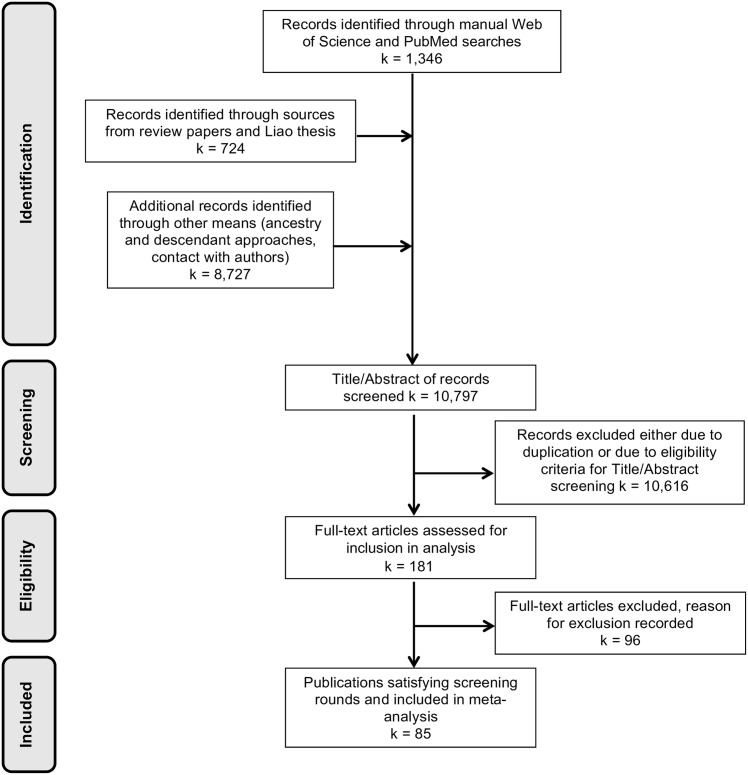
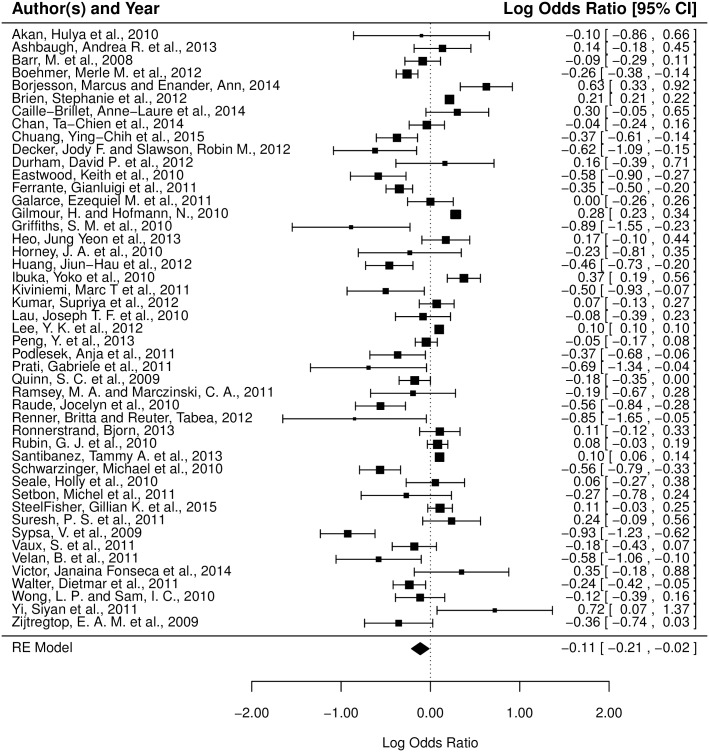
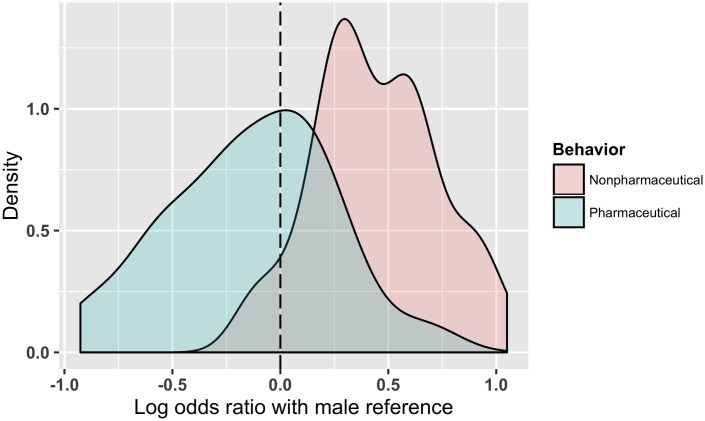
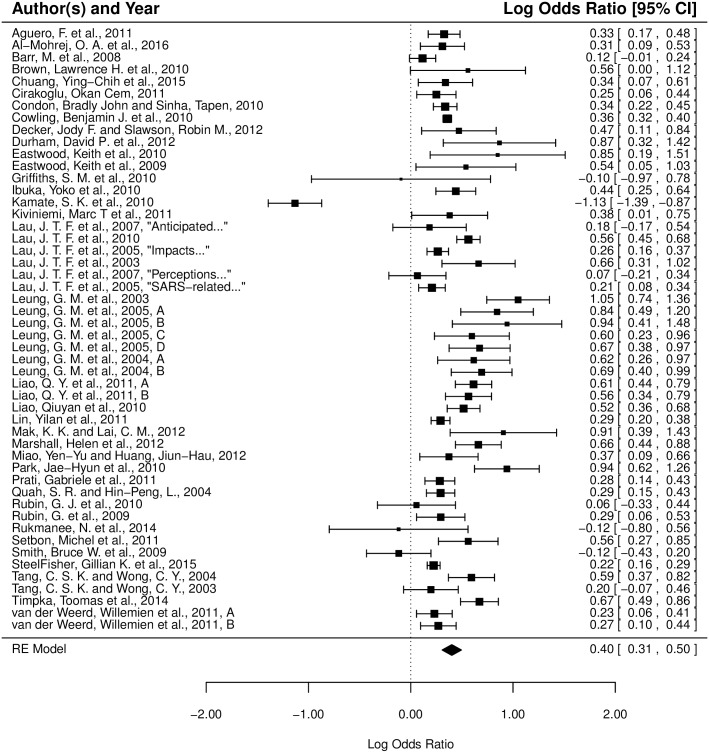
Respiratory infectious disease epidemics and pandemics are recurring events that levy a high cost on individuals and society. The health-protective behavioral response of the public plays an important role in limiting respiratory infectious disease spread. Health-protective behaviors take several forms. Behaviors can be categorized as pharmaceutical (e.g., vaccination uptake, antiviral use) or non-pharmaceutical (e.g., hand washing, face mask use, avoidance of public transport). Due to the limitations of pharmaceutical interventions during respiratory epidemics and pandemics, public health campaigns aimed at limiting disease spread often emphasize both non-pharmaceutical and pharmaceutical behavioral interventions. Understanding the determinants of the public's behavioral response is crucial for devising public health campaigns, providing information to parametrize mathematical models, and ultimately limiting disease spread. While other reviews have qualitatively analyzed the body of work on demographic determinants of health-protective behavior, this meta-analysis quantitatively combines the results from 85 publications to determine the global relationship between gender and health-protective behavioral response. The results show that women in the general population are about 50% more likely than men to adopt/practice non-pharmaceutical behaviors. Conversely, men in the general population are marginally (about 12%) more likely than women to adopt/practice pharmaceutical behaviors. It is possible that factors other than pharmaceutical/non-pharmaceutical status not included in this analysis act as moderators of this relationship. These results suggest an inherent difference in how men and women respond to epidemic and pandemic respiratory infectious diseases. This information can be used to target specific groups when developing non-pharmaceutical public health campaigns and to parameterize epidemic models incorporating demographic information.
呼吸道传染病的流行和大流行是反复出现的事件,给个人和社会带来高昂代价。公众的健康保护行为反应在限制呼吸道传染病传播方面发挥着重要作用。健康保护行为有多种形式。行为可分为药物性(如接种疫苗、使用抗病毒药物)或非药物性(如洗手、戴口罩、避免乘坐公共交通工具)。由于呼吸道流行和大流行期间药物干预存在局限性,旨在限制疾病传播的公共卫生运动通常会同时强调非药物性和药物性行为干预。了解公众行为反应的决定因素对于设计公共卫生运动、为数学模型提供参数化信息以及最终限制疾病传播至关重要。虽然其他综述已对健康保护行为的人口统计学决定因素相关研究进行了定性分析,但本荟萃分析定量整合了85篇出版物的结果,以确定性别与健康保护行为反应之间的全球关系。结果表明,一般人群中的女性采取/践行非药物性行为的可能性比男性高约50%。相反,一般人群中的男性采取/践行药物性行为的可能性比女性略高(约12%)。本分析未涵盖的药物性/非药物性状态以外的因素可能是这种关系的调节因素。这些结果表明,男性和女性对流行性和大流行性呼吸道传染病的反应存在内在差异。这些信息可用于在开展非药物性公共卫生运动时针对特定群体,并为纳入人口统计学信息的流行病模型提供参数。