Sundaram Arvind Y M, Hughes Timothy, Biondi Shea, Bolduc Nathalie, Bowman Sarah K, Camilli Andrew, Chew Yap C, Couture Catherine, Farmer Andrew, Jerome John P, Lazinski David W, McUsic Andrew, Peng Xu, Shazand Kamran, Xu Feng, Lyle Robert, Gilfillan Gregor D
Department of Medical Genetics, Oslo University Hospital and University of Oslo, Oslo, Norway.
Zymo Research Corp., 7062 Murphy Ave., Irvine, CA, 92614, USA.
BMC Genomics. 2016 Oct 21;17(1):816. doi: 10.1186/s12864-016-3135-y.
ChIP-seq is the primary technique used to investigate genome-wide protein-DNA interactions. As part of this procedure, immunoprecipitated DNA must undergo "library preparation" to enable subsequent high-throughput sequencing. To facilitate the analysis of biopsy samples and rare cell populations, there has been a recent proliferation of methods allowing sequencing library preparation from low-input DNA amounts. However, little information exists on the relative merits, performance, comparability and biases inherent to these procedures. Notably, recently developed single-cell ChIP procedures employing microfluidics must also employ library preparation reagents to allow downstream sequencing.
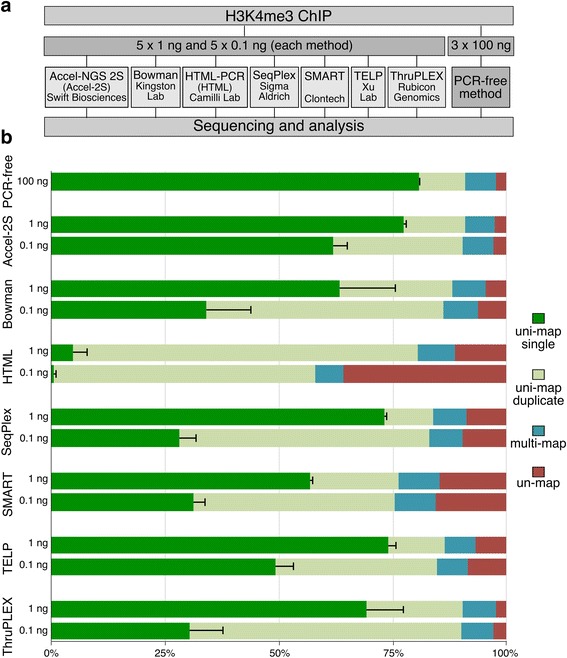
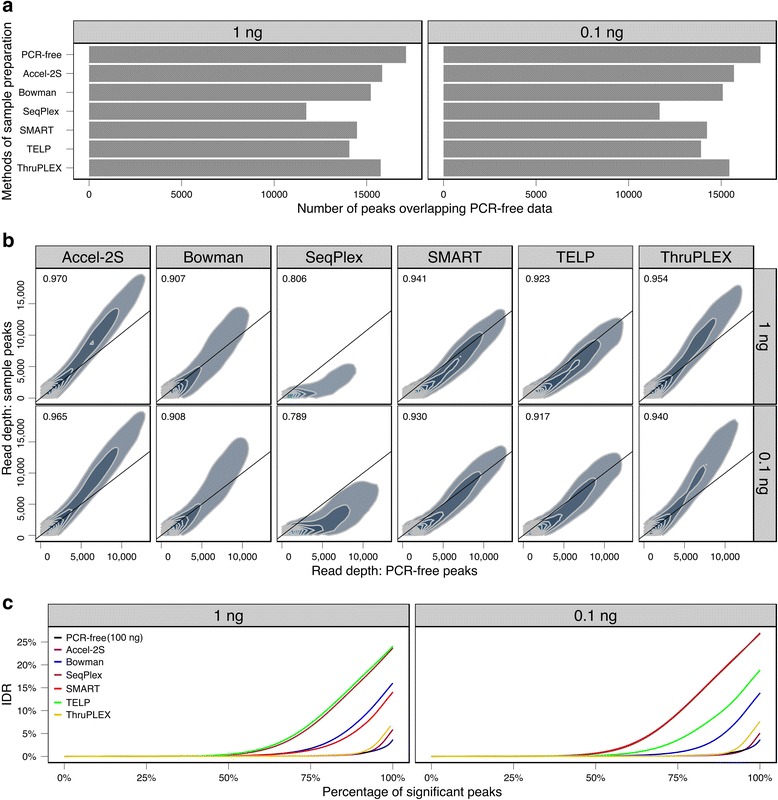
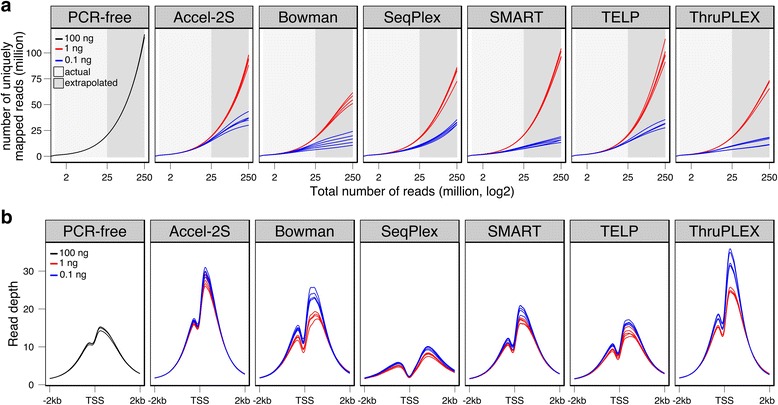
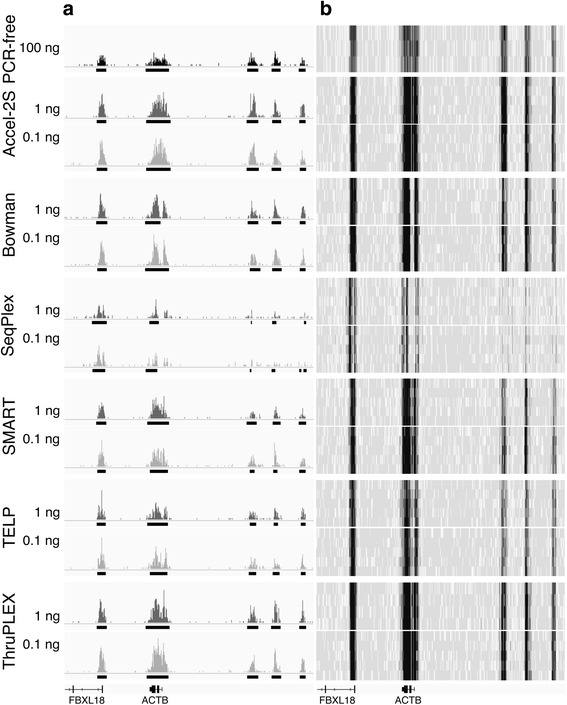
In this study, seven methods designed for low-input DNA/ChIP-seq sample preparation (Accel-NGS® 2S, Bowman-method, HTML-PCR, SeqPlex™, DNA SMART™, TELP and ThruPLEX®) were performed on five replicates of 1 ng and 0.1 ng input H3K4me3 ChIP material, and compared to a "gold standard" reference PCR-free dataset. The performance of each method was examined for the prevalence of unmappable reads, amplification-derived duplicate reads, reproducibility, and for the sensitivity and specificity of peak calling.
We identified consistent high performance in a subset of the tested reagents, which should aid researchers in choosing the most appropriate reagents for their studies. Furthermore, we expect this work to drive future advances by identifying and encouraging use of the most promising methods and reagents. The results may also aid judgements on how comparable are existing datasets that have been prepared with different sample library preparation reagents.
染色质免疫沉淀测序(ChIP-seq)是用于研究全基因组蛋白质-DNA相互作用的主要技术。作为该过程的一部分,免疫沉淀的DNA必须经过“文库制备”,以便后续进行高通量测序。为便于分析活检样本和稀有细胞群体,最近出现了多种方法,可从低输入量的DNA进行测序文库制备。然而,关于这些方法的相对优点、性能、可比性和内在偏差的信息却很少。值得注意的是,最近开发的采用微流体技术的单细胞ChIP程序也必须使用文库制备试剂才能进行下游测序。
在本研究中,针对1 ng和0.1 ng输入的H3K4me3 ChIP材料的五个重复样本,采用了七种设计用于低输入量DNA/ChIP-seq样本制备的方法(Accel-NGS® 2S、Bowman法、HTML-PCR、SeqPlex™、DNA SMART™、TELP和ThruPLEX®),并与“金标准”无PCR参考数据集进行比较。检查了每种方法在无法映射的读数、扩增产生的重复读数的发生率、重现性以及峰识别的灵敏度和特异性方面的性能。
我们在一部分测试试剂中发现了一致的高性能,这应该有助于研究人员为其研究选择最合适的试剂。此外,我们期望这项工作通过识别和鼓励使用最有前景的方法和试剂来推动未来的进展。这些结果也可能有助于判断使用不同样本文库制备试剂制备的现有数据集的可比性如何。