Shah Bharat V, Patel Zamurrud M
Institute of Renal Sciences, Global Hospital, Parel, Mumbai, 400012, India.
BMC Nephrol. 2016 Oct 21;17(1):156. doi: 10.1186/s12882-016-0360-1.
Chronic kidney disease (CKD) is a worldwide public health problem and more so in India. With limited availability and high cost of therapy, barely 10 % of patients with incident end stage renal disease (ESRD) cases get treatment in India. Therefore, all possible efforts should be made to retard progression of CKD. This article reviews the role of low protein diet (LPD) in management of CKD subjects and suggests how to apply it in clinical practice.
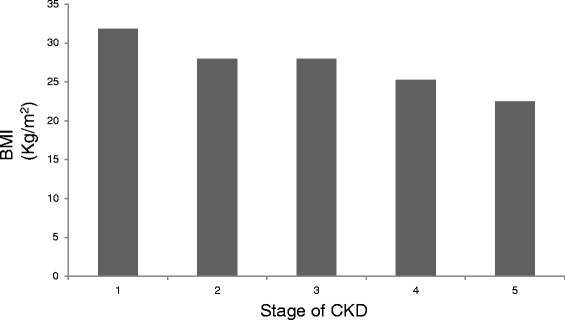
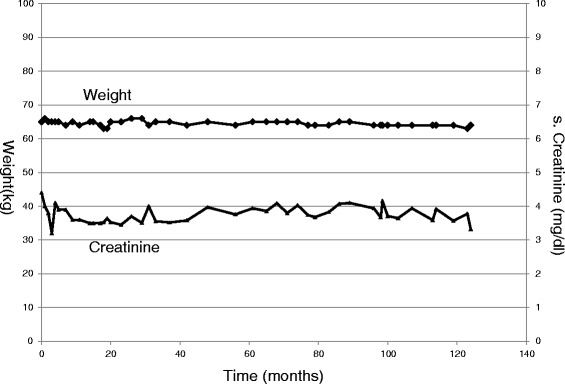
The role of LPD in retarding progression of CKD is well established in animal experimental studies. However, its role in human subjects with CKD is perceived to be controversial based on the modification of diet in renal disease (MDRD) study. We believe that beneficial effect of LPD could not be appreciated due to shorter duration of follow-up in the MDRD study. Had the study been continued longer, it may have been possible to appreciate beneficial effect of LPD. It is our contention that in all cases of CKD that are slowly progressive, LPD can significantly retard progression of CKD and delay the need for renal replacement therapy (RRT). To be able to apply LPD for a long period, it is important to prescribe LPD at earlier stages (1,2,3) of CKD and not at late stage as recommended by KDIGO guidelines. Many clinicians are concerned about worsening nutritional status and hence reluctant to prescribe LPD. This actually is true for patients with advanced CKD in whom there is spontaneous decrease in calorie and protein intake. In our experience, nutritional status of patients in early stages (1,2,3) of CKD is as good as that of healthy subjects. Prescribing LPD at an early stage is unlikely to worsen status. The role of LPD in retarding progression of CKD is well established in animal experimental studies. Even in human subjects, there is enough evidence to suggest that LPD retards progression of CKD in carefully selected subjects. It should be prescribed to those with good appetite, good nutritional status and a slowly progressive CKD at an early stage (stage 1,2,3). It may also be prescribed at stage 4 & 5 of CKD if the appetite and nutritional status are good.
慢性肾脏病(CKD)是一个全球性的公共卫生问题,在印度更为突出。由于治疗资源有限且成本高昂,在印度,仅有约10%的新发终末期肾病(ESRD)患者能够得到治疗。因此,应尽一切可能努力延缓CKD的进展。本文综述了低蛋白饮食(LPD)在CKD患者管理中的作用,并提出了在临床实践中如何应用LPD的建议。
LPD在延缓CKD进展中的作用在动物实验研究中已得到充分证实。然而,基于肾病饮食改良(MDRD)研究,其在CKD患者中的作用存在争议。我们认为,由于MDRD研究的随访时间较短,LPD的有益作用未能得到体现。如果该研究持续更长时间,可能会发现LPD的有益作用。我们认为,在所有缓慢进展的CKD病例中,LPD可显著延缓CKD的进展,并推迟肾脏替代治疗(RRT)的需求。为了能够长期应用LPD,重要的是在CKD的早期阶段(1、2、3期)而非KDIGO指南推荐的晚期阶段就开始使用LPD。许多临床医生担心营养状况恶化,因此不愿开具LPD。对于晚期CKD患者,热量和蛋白质摄入量会自发减少,情况确实如此。根据我们的经验,CKD早期阶段(1、2、3期)患者的营养状况与健康受试者相当。在早期阶段开具LPD不太可能使情况恶化。LPD在延缓CKD进展中的作用在动物实验研究中已得到充分证实。即使在人类受试者中,也有足够的证据表明,在精心挑选的受试者中,LPD可延缓CKD的进展。对于食欲良好、营养状况良好且处于早期阶段(1、2、3期)的缓慢进展性CKD患者,应开具LPD。如果食欲和营养状况良好,在CKD的4期和5期也可开具LPD。