Armstrong Richard A, McKee Ann C, Alvarez Victor E, Cairns Nigel J
Vision Sciences, Aston University, Birmingham, B4 7ET, UK.
VA Boston, Boston, MA, 02130, USA.
J Neural Transm (Vienna). 2017 Feb;124(2):185-192. doi: 10.1007/s00702-016-1635-1. Epub 2016 Oct 21.
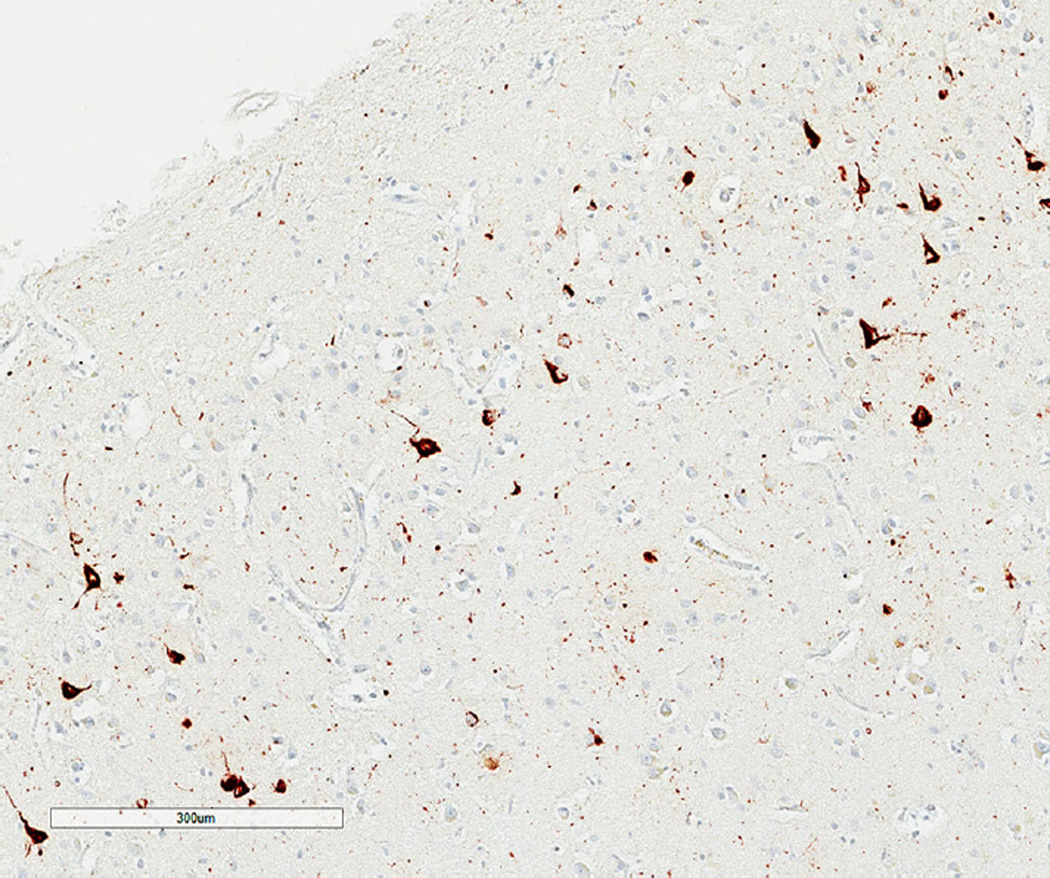
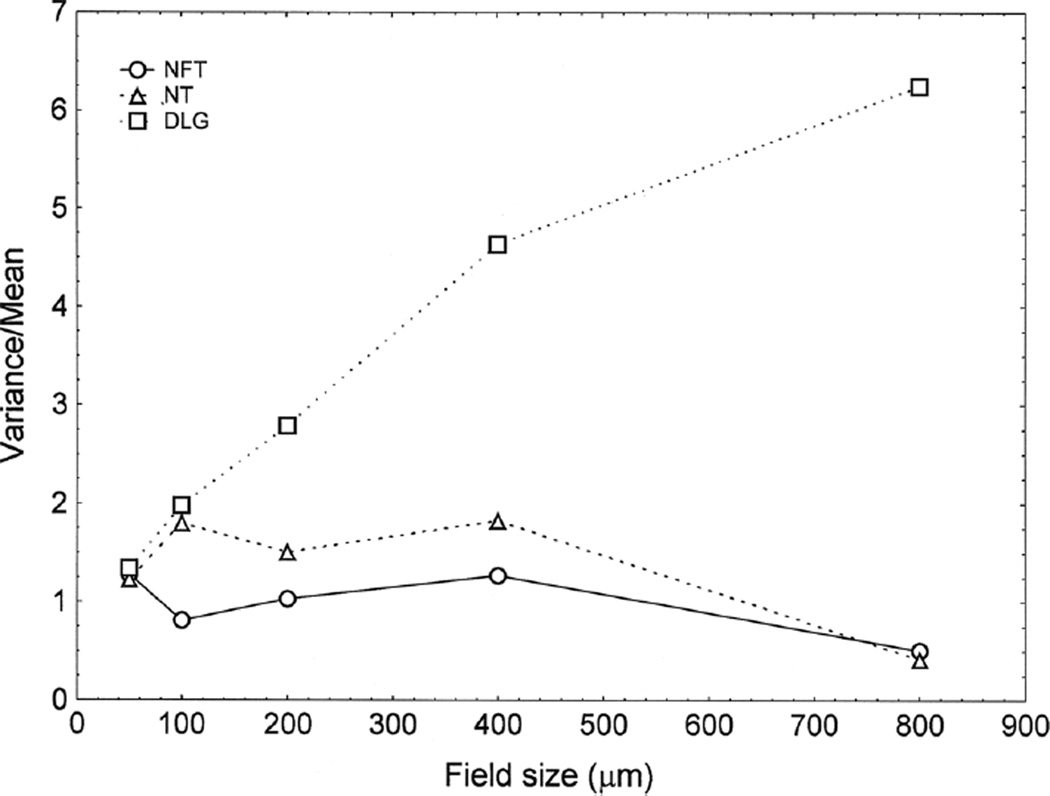
Chronic traumatic encephalopathy (CTE) is a neurodegenerative disorder which may result from repetitive brain injury. A variety of tau-immunoreactive pathologies are present, including neurofibrillary tangles (NFT), neuropil threads (NT), dot-like grains (DLG), astrocytic tangles (AT), and occasional neuritic plaques (NP). In tauopathies, cellular inclusions in the cortex are clustered within specific laminae, the clusters being regularly distributed parallel to the pia mater. To determine whether a similar spatial pattern is present in CTE, clustering of the tau-immunoreactive pathology was studied in the cortex, hippocampus, and dentate gyrus in 11 cases of CTE and 7 cases of Alzheimer's disease neuropathologic change (ADNC) without CTE. In CTE: (1) all aspects of tau-immunoreactive pathology were clustered and the clusters were frequently regularly distributed parallel to the tissue boundary, (2) clustering was similar in two CTE cases with minimal co-pathology compared with cases with associated ADNC or TDP-43 proteinopathy, (3) in a proportion of cortical gyri, estimated cluster size was similar to that of cell columns of the cortico-cortical pathways, and (4) clusters of the tau-immunoreactive pathology were infrequently spatially correlated with blood vessels. The NFT and NP in ADNC without CTE were less frequently randomly or uniformly distributed and more frequently in defined clusters than in CTE. Hence, the spatial pattern of the tau-immunoreactive pathology observed in CTE is typical of the tauopathies but with some distinct differences compared to ADNC alone. The spread of pathogenic tau along anatomical pathways could be a factor in the pathogenesis of the disease.
慢性创伤性脑病(CTE)是一种可能由重复性脑损伤导致的神经退行性疾病。存在多种tau免疫反应性病变,包括神经原纤维缠结(NFT)、神经毡丝(NT)、点状颗粒(DLG)、星形细胞缠结(AT)以及偶尔出现的神经炎斑块(NP)。在tau蛋白病中,皮质中的细胞内含物聚集在特定的层内,这些聚集物平行于软脑膜呈规则分布。为了确定CTE中是否存在类似的空间模式,我们研究了11例CTE患者以及7例无CTE的阿尔茨海默病神经病理改变(ADNC)患者的皮质、海马和齿状回中tau免疫反应性病变的聚集情况。在CTE中:(1)tau免疫反应性病变的各个方面均有聚集,且这些聚集物常常平行于组织边界呈规则分布;(2)与伴有相关ADNC或TDP - 43蛋白病的病例相比,在两种共病最少的CTE病例中,聚集情况相似;(3)在一部分皮质脑回中,估计的聚集物大小与皮质 - 皮质通路的细胞柱大小相似;(4)tau免疫反应性病变的聚集物很少与血管存在空间相关性。无CTE的ADNC中的NFT和NP随机或均匀分布的情况较少,且与CTE相比,更常出现在明确的聚集体中。因此,CTE中观察到的tau免疫反应性病变的空间模式是tau蛋白病的典型特征,但与单独的ADNC相比存在一些明显差异。致病性tau蛋白沿解剖学通路的扩散可能是该疾病发病机制中的一个因素。