Department of Anatomy and Medical Imaging and Centre for Brain Research, Faculty of Medical and Health Science, University of Auckland, Auckland, 1023, New Zealand.
Acta Neuropathol Commun. 2022 Aug 6;10(1):108. doi: 10.1186/s40478-022-01413-9.
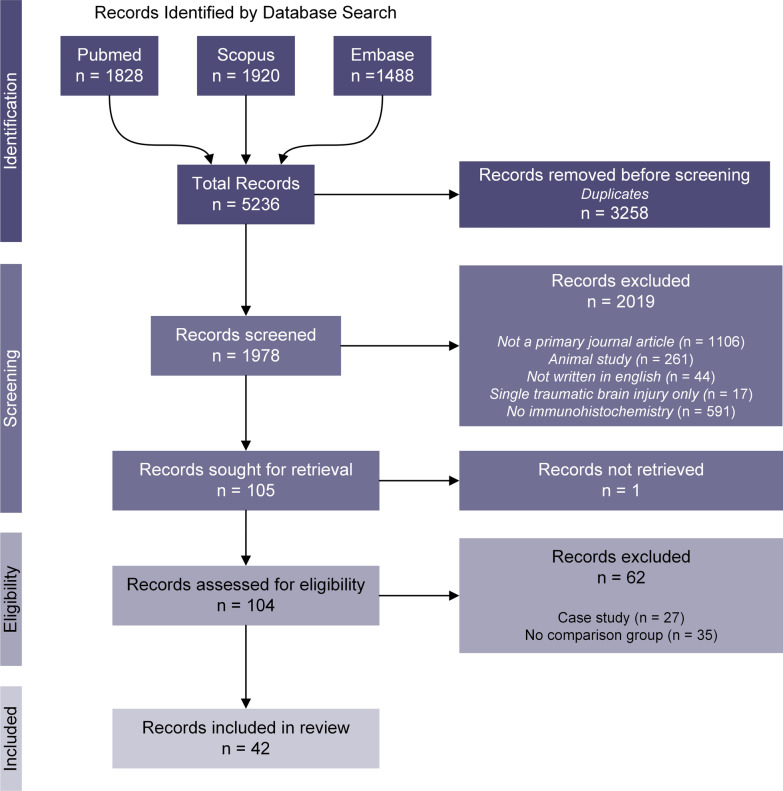
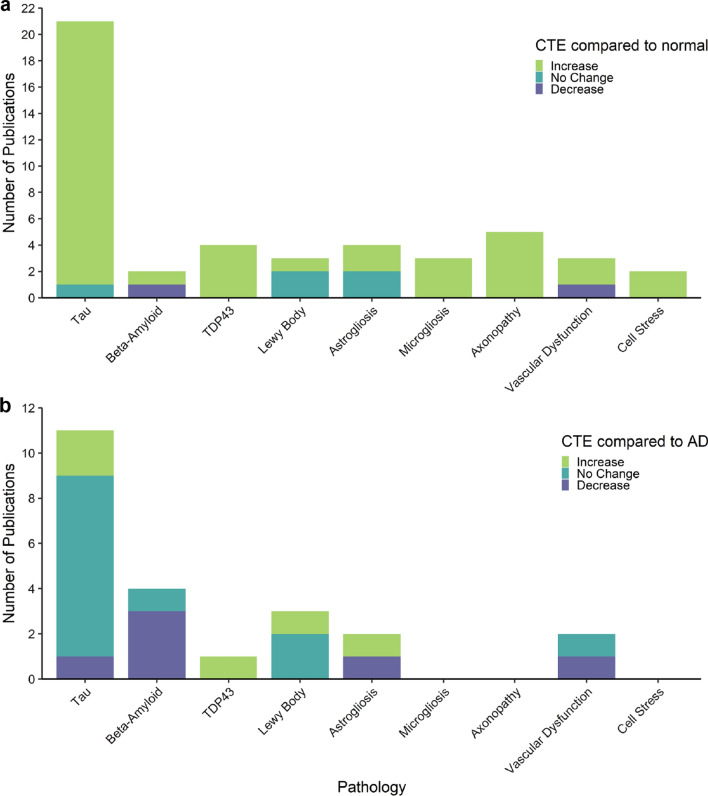
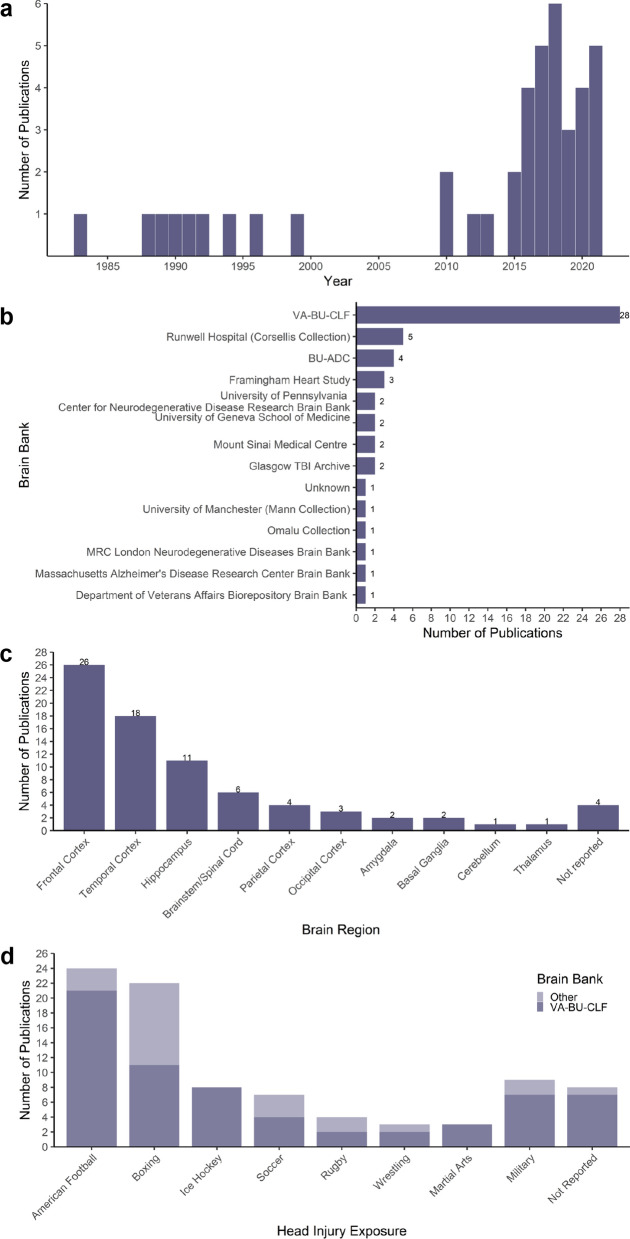
Chronic traumatic encephalopathy (CTE) is a neurodegenerative disease associated with repetitive head trauma and is characterised by the perivascular accumulation of hyperphosphorylated tau (p-tau) in the depths of cortical sulci. CTE can only be diagnosed postmortem and the cellular mechanisms of disease causation remain to be elucidated. Understanding the full scope of the pathological changes currently identified in CTE is necessary to identify areas requiring further research. This systematic review summarises the current literature on CTE pathology from postmortem human tissue histology studies published until 31 December 2021. Publications were included if they quantitively or qualitatively compared postmortem human tissue pathology in CTE to neuropathologically normal cases or other neurodegenerative diseases such as Alzheimer's disease (AD). Pathological entities investigated included p-tau, beta-amyloid, TDP-43, Lewy bodies, astrogliosis, microgliosis, axonopathy, vascular dysfunction, and cell stress. Of these pathologies, p-tau was the most frequently investigated, with limited reports on other pathological features such as vascular dysfunction, astrogliosis, and microgliosis. Consistent increases in p-tau, TDP-43, microgliosis, axonopathy, and cell stress were reported in CTE cases compared to neuropathologically normal cases. However, there was no clear consensus on how these pathologies compared to AD. The CTE cases used for these studies were predominantly from the VA-BU-CLF brain bank, with American football and boxing as the most frequent sources of repetitive head injury exposure. Overall, this systematic review highlights gaps in the literature and proposes three priorities for future research including: 1. The need for studies of CTE cases with more diverse head injury exposure profiles to understand the consistency of pathology changes between different populations. 2. The need for more studies that compare CTE with normal ageing and AD to further clarify the pathological signature of CTE for diagnostic purposes and to understand the disease process. 3. Further research on non-aggregate pathologies in CTE, such as vascular dysfunction and neuroinflammation. These are some of the least investigated features of CTE pathology despite being implicated in the acute phase response following traumatic head injury.
慢性创伤性脑病(CTE)是一种与反复头部创伤相关的神经退行性疾病,其特征是皮质沟深处的磷酸化tau(p-tau)的血管周围积聚。CTE 只能在死后诊断,疾病发病机制的细胞机制仍有待阐明。了解目前在 CTE 中确定的病理变化的全貌对于确定需要进一步研究的领域是必要的。本系统综述总结了截至 2021 年 12 月 31 日发表的关于 CTE 病理学的死后人体组织组织学研究的现有文献。如果出版物定量或定性地比较了 CTE 与神经病理学正常病例或其他神经退行性疾病(如阿尔茨海默病(AD))的死后人体组织病理学,则将其纳入。研究的病理实体包括 p-tau、β-淀粉样蛋白、TDP-43、路易体、星形胶质细胞增生、小胶质细胞增生、轴突病、血管功能障碍和细胞应激。在这些病理学中,p-tau 是研究最多的,关于血管功能障碍、星形胶质细胞增生和小胶质细胞增生等其他病理特征的报道有限。与神经病理学正常病例相比,CTE 病例中 p-tau、TDP-43、小胶质细胞增生、轴突病和细胞应激均持续增加。然而,对于这些病理学与 AD 的比较,目前尚无明确共识。用于这些研究的 CTE 病例主要来自 VA-BU-CLF 脑库,美式足球和拳击是反复头部受伤暴露的最常见来源。总体而言,本系统综述突出了文献中的空白,并提出了未来研究的三个优先事项,包括:1. 需要对具有更多样化头部受伤暴露概况的 CTE 病例进行研究,以了解不同人群之间病理变化的一致性。2. 需要更多比较 CTE 与正常衰老和 AD 的研究,以进一步阐明 CTE 的病理特征,用于诊断目的,并了解疾病过程。3. 进一步研究 CTE 中的非聚集性病理学,如血管功能障碍和神经炎症。尽管这些病理学在创伤性头部损伤后的急性期反应中被牵连,但它们是 CTE 病理学中研究最少的特征之一。