Škovierová Henrieta, Vidomanová Eva, Mahmood Silvia, Sopková Janka, Drgová Anna, Červeňová Tatiana, Halašová Erika, Lehotský Ján
Biomedical Center Martin, Department of Molecular Medicine, Jessenius Faculty of Medicine in Martin, Comenius University in Bratislava, 03601 Martin, Slovakia.
Department of Medical Biochemistry, Jessenius Faculty of Medicine in Martin, Comenius University in Bratislava, 03601 Martin, Slovakia.
Int J Mol Sci. 2016 Oct 20;17(10):1733. doi: 10.3390/ijms17101733.
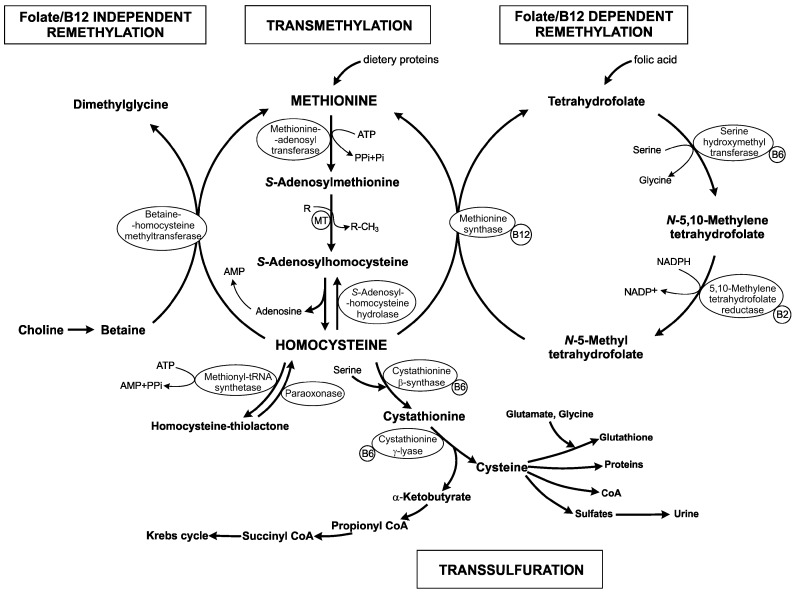
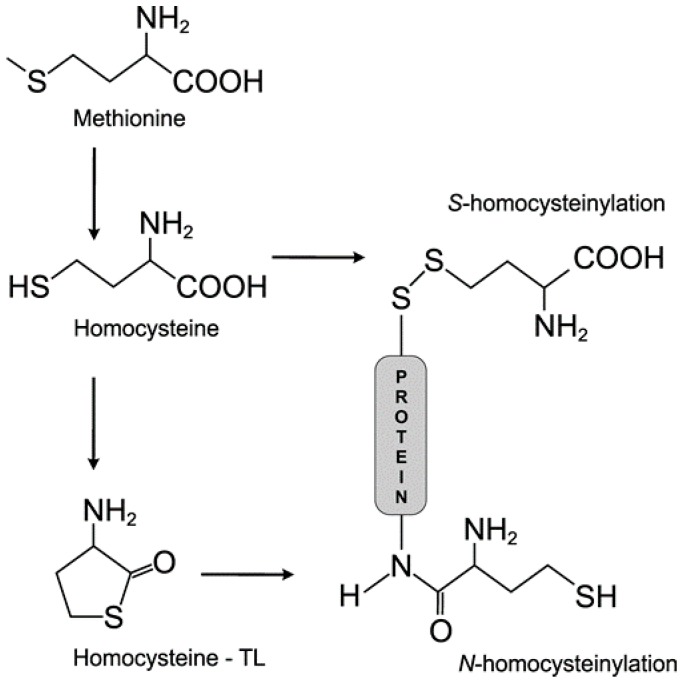
Homocysteine (Hcy) is a sulfur-containing non-proteinogenic amino acid derived in methionine metabolism. The increased level of Hcy in plasma, hyperhomocysteinemia, is considered to be an independent risk factor for cardio and cerebrovascular diseases. However, it is still not clear if Hcy is a marker or a causative agent of diseases. More and more research data suggest that Hcy is an important indicator for overall health status. This review represents the current understanding of molecular mechanism of Hcy metabolism and its link to hyperhomocysteinemia-related pathologies in humans. The aberrant Hcy metabolism could lead to the redox imbalance and oxidative stress resulting in elevated protein, nucleic acid and carbohydrate oxidation and lipoperoxidation, products known to be involved in cytotoxicity. Additionally, we examine the role of Hcy in thiolation of proteins, which results in their molecular and functional modifications. We also highlight the relationship between the imbalance in Hcy metabolism and pathogenesis of diseases, such as cardiovascular diseases, neurological and psychiatric disorders, chronic kidney disease, bone tissue damages, gastrointestinal disorders, cancer, and congenital defects.
同型半胱氨酸(Hcy)是一种含硫的非蛋白质氨基酸,由蛋氨酸代谢产生。血浆中Hcy水平升高,即高同型半胱氨酸血症,被认为是心血管和脑血管疾病的独立危险因素。然而,Hcy究竟是疾病的标志物还是致病因素仍不明确。越来越多的研究数据表明,Hcy是整体健康状况的重要指标。本综述阐述了目前对Hcy代谢分子机制的理解及其与人类高同型半胱氨酸血症相关病理的联系。异常的Hcy代谢可能导致氧化还原失衡和氧化应激,从而导致蛋白质、核酸、碳水化合物氧化以及脂质过氧化增加,这些产物已知与细胞毒性有关。此外,我们研究了Hcy在蛋白质硫醇化中的作用,这会导致蛋白质的分子和功能修饰。我们还强调了Hcy代谢失衡与疾病发病机制之间的关系,如心血管疾病、神经和精神疾病、慢性肾病、骨组织损伤、胃肠道疾病、癌症和先天性缺陷。