Abolins-Abols Mikus, Hope Sydney F, Ketterson Ellen D
Department of Biology Indiana University Bloomington Indiana.
Department of Fish and Wildlife Conservation Virginia Tech Blacksburg Virginia.
Ecol Evol. 2016 Aug 20;6(18):6546-6555. doi: 10.1002/ece3.2347. eCollection 2016 Sep.
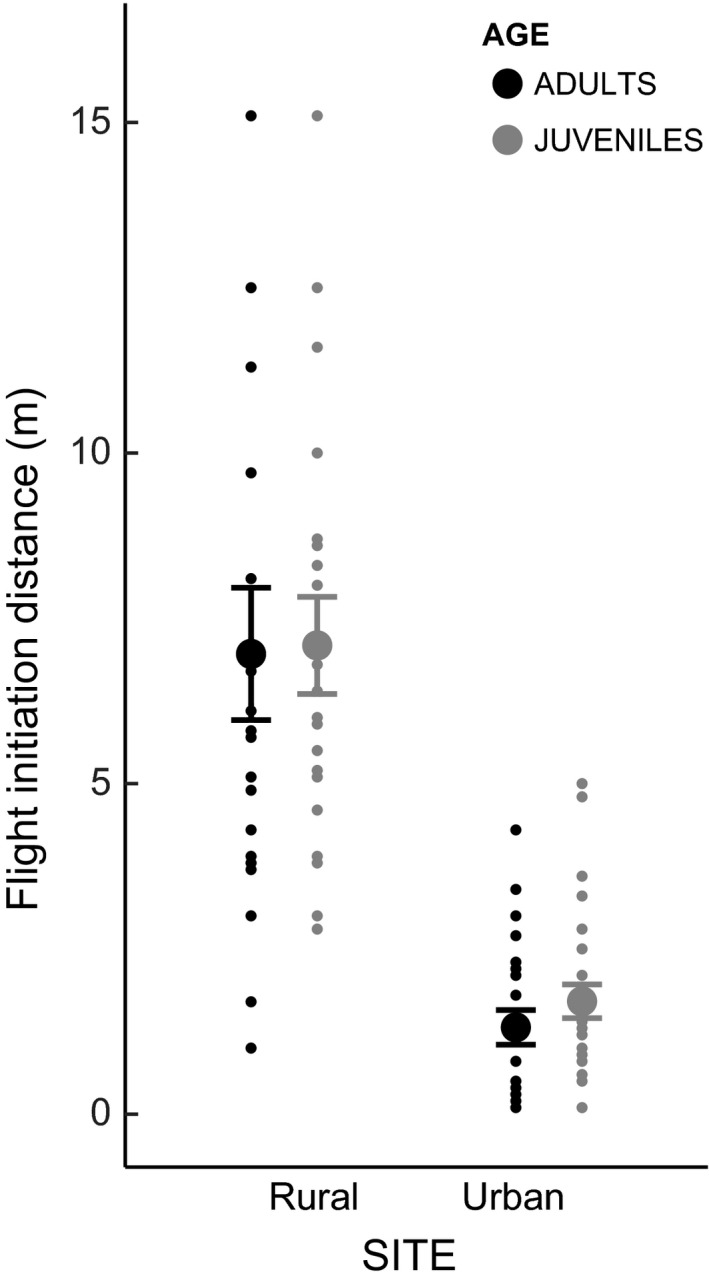
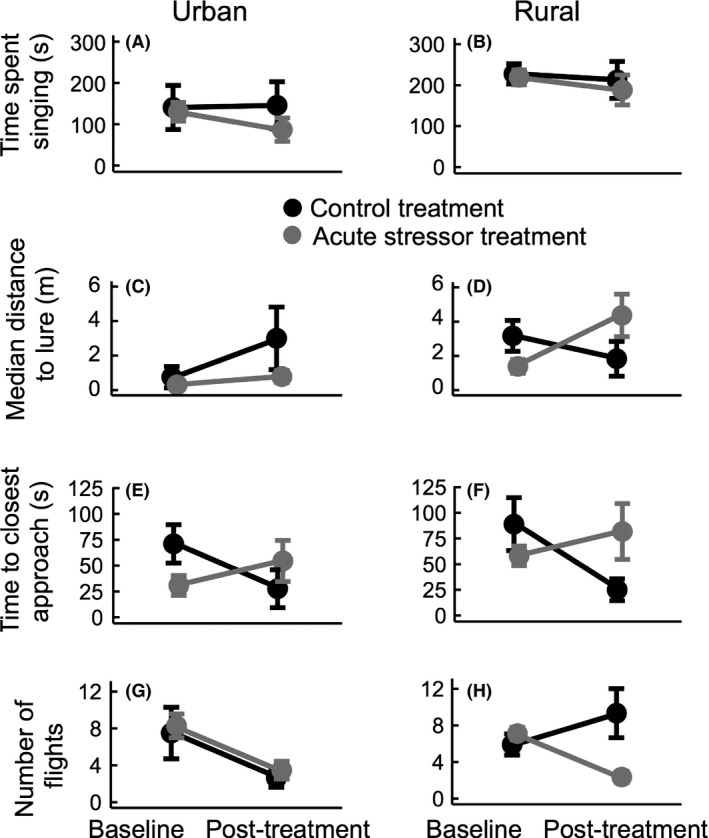
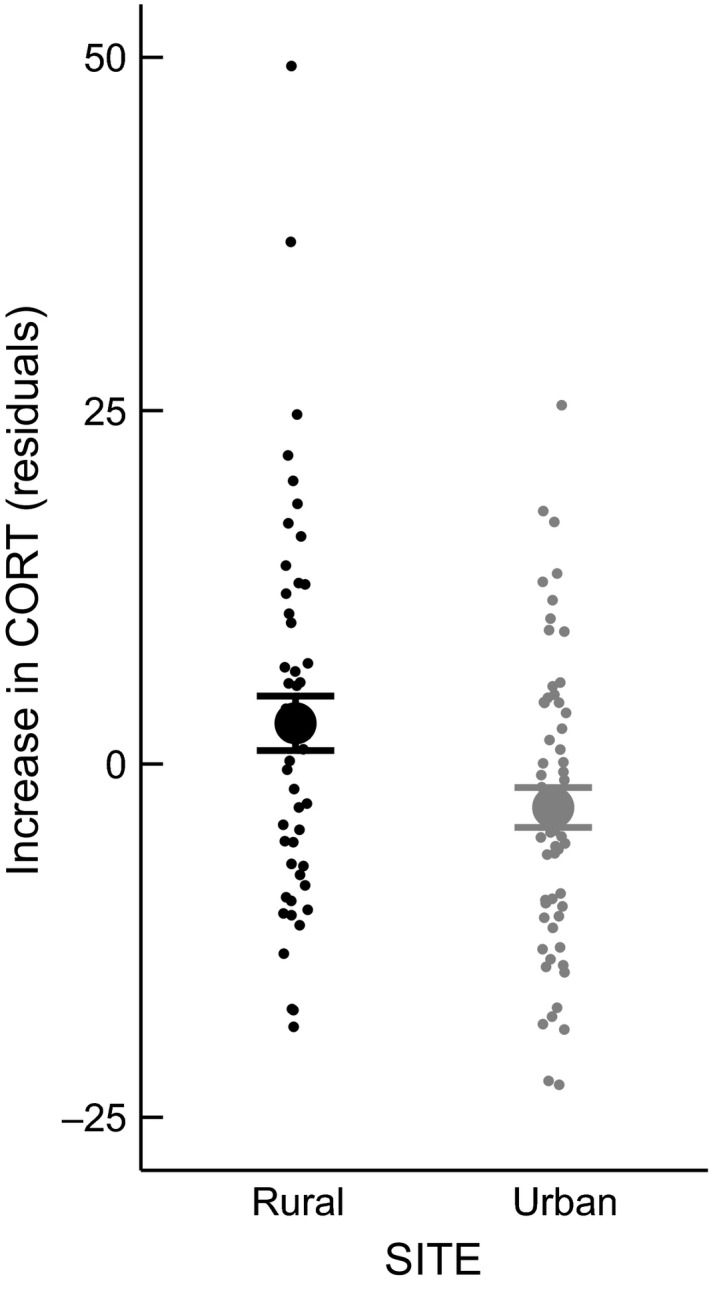
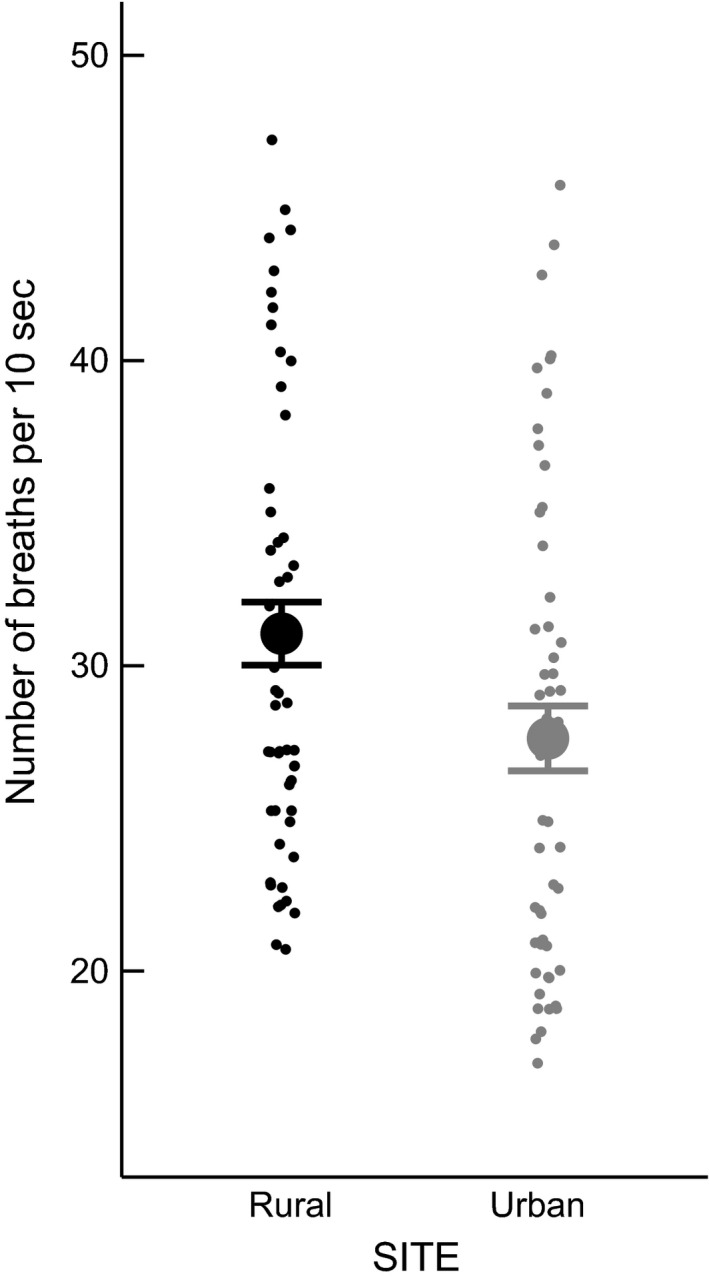
The life-history trade-off between self-maintenance and reproduction posits that investment in one function decreases investment in the other. Manipulating the costs and benefits of functions involved in a trade-off may alter this interaction. Here we ask whether investment in self-maintenance during a stress response alters territorial behavior in wild Dark-eyed Juncos and whether rural and urban birds, which are known to differ in the magnitude of the stress response (greater in rural), also differ in the degree to which stress reduces territorial behavior. In rural and urban habitats, we measured territorial behavior using song playback, followed by either an acute stressor (capture and collection of a blood sample) or a nonstressful control situation. The following day, we again measured territorial behavior, predicting greater reduction in territorial behavior in individuals exposed to the stressor but a lesser reduction in territorial behavior in the urban as compared to the rural environment. We further assessed individual and population differences in response to stressors by measuring flight initiation distance, breath rate, and corticosterone levels in the blood. The rural population had a higher physiological and behavioral stress response than the urban population, and acute capture stress had a lasting (24 h) negative effect on territorial behavior, but only in the rural habitat. However, individual-level differences in measures of the stress response did not explain variation in the impact of stress on territorial behavior. Our findings show that stressors can have a negative effect on territorial behavior, but that this effect may differ between populations that vary in their stress ecology.
自我维持与繁殖之间的生活史权衡假定,对一种功能的投入增加会减少对另一种功能的投入。操纵权衡中所涉及功能的成本与收益可能会改变这种相互作用。在此,我们探讨在应激反应期间对自我维持的投入是否会改变野生暗眼灯草鹀的领地行为,以及已知在应激反应强度上存在差异(农村个体更强)的农村和城市鸟类在应激降低领地行为的程度上是否也存在差异。在农村和城市栖息地,我们通过播放歌声来测量领地行为,随后施加一个急性应激源(采集血样)或设置一个无应激的对照情境。第二天,我们再次测量领地行为,预计暴露于应激源的个体的领地行为减少幅度更大,但与农村环境相比,城市个体的领地行为减少幅度较小。我们还通过测量飞行起始距离、呼吸频率和血液中的皮质酮水平,进一步评估了个体和种群对应激源反应的差异。农村种群的生理和行为应激反应比城市种群更高,急性捕捉应激对领地行为有持续(24小时)的负面影响,但仅在农村栖息地如此。然而,应激反应指标在个体水平上的差异并不能解释应激对领地行为影响的变化。我们的研究结果表明,应激源可能会对领地行为产生负面影响,但这种影响在应激生态学存在差异的种群之间可能有所不同。